The Last Garden in England by Julia Kelly

Sometimes an un-read book follows you — nay, stalks you. This was the case with The Last Garden In England. The publisher kindly sent me a digital advanced reading copy back in 2020 and I dipped into a few pages and said to myself, ‘why, yes, this is a book I will enjoy”... but put it aside. Then a gardening friend raved about the same book (now published) and said she would give me her copy, I thanked her but said I had already had copy from the publisher. I sat down and read the first chapter, but got busy with the holidays, and abandoned it once again. Then the beautiful physical copy –(just gaze upon that cover) — arrived as a Christmas gift from my sister with a note saying — “this looks like a perfect book for you”.

“Uncle, uncle – I give up”, I said to this book that had been nipping at my heels and opened it with the vow to read it straight through. Which I finally did
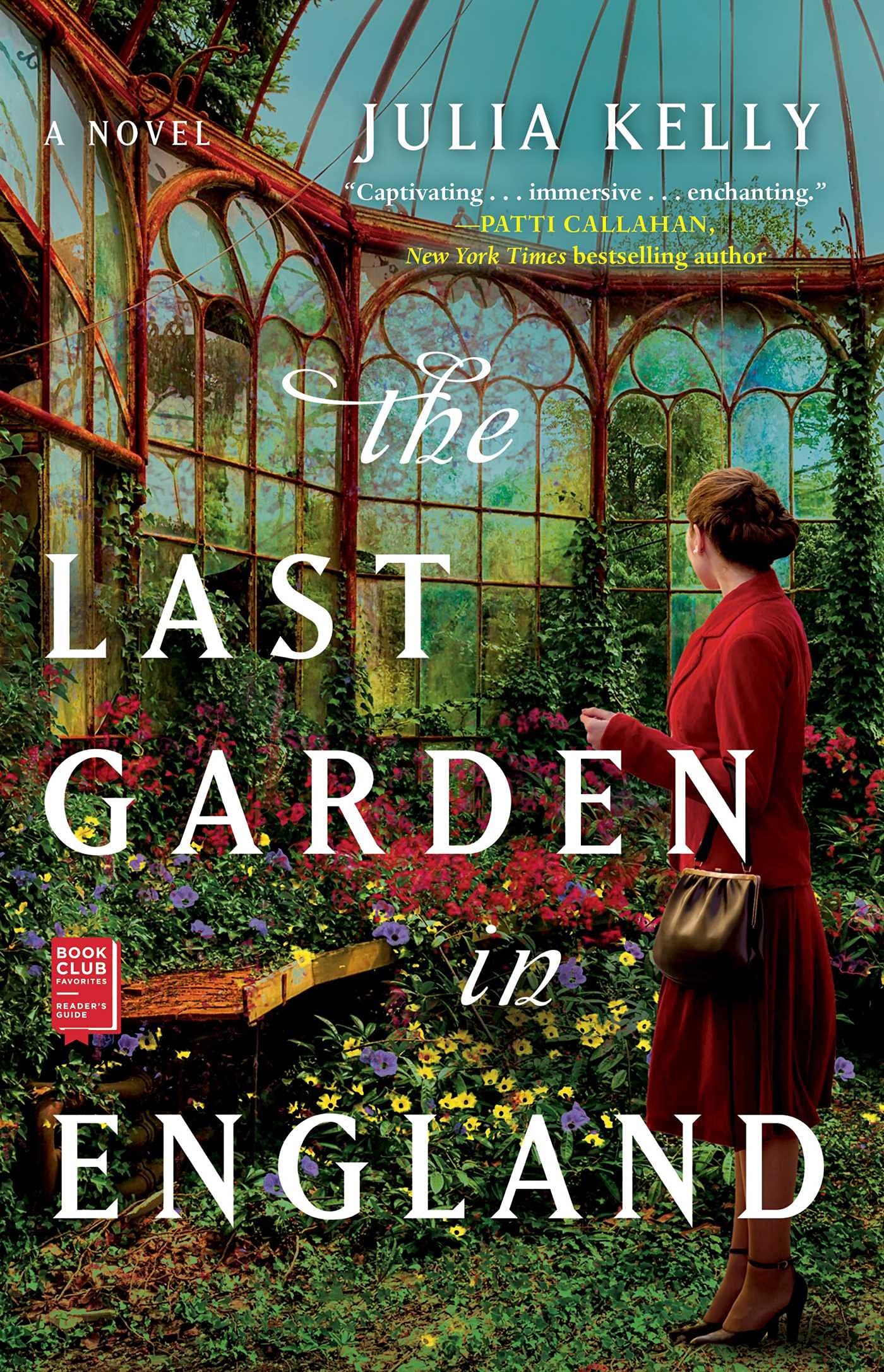
The Last Garden in England is historical fiction centering around a garden at the fictional Highbury House estate.

It’s 1907 when Venetia Smith is commissioned to design the estate’s garden. Then during the war in 1944, Highbury House is converted to a convalescent hospital. And, in the present day, Emma Lovett is hired to breath new life into the now long-neglected gardens.

We follow five different women who are connected by the lure and love of this garden garden.

I can hear you now, five women set in set in three different time periods, that sounds complicated. Trust me — it’s not, Ms. Kelly does a fine job in keeping all the characters and time lines not only clear, but compelling.

The gardens come to life and are resurrected through these women and we see how these gardens influenced and connected their lives in very different yet similar ways. The three different time periods each had their own distinctive restrictions and freedoms for each of the women.

I’ll tell you a bit more about the characters and the time periods just to get you hooked.

In 1907, Venetia Smith has made a name for herself as a garden designer to the affluent showing off their wealth with sumptuous country houses. When she is hired to design the gardens of Highbury House, she is determined to make them a triumph, but the gardens, and the people she meets do more – they change her life forever.

During WWII, in 1944, land girl Beth Pedley arrives to work on a farm on the outskirts of the village and she hopes this is a place she can settle. Stella Adderton, on the other hand, is desperate to leave her position as the estate cook to pursue other dreams. And perhaps my favorite character is the widow Diana Symonds, the mistress of the Highbury House who is anxiously trying to cling to her pre-war life even though her home has been transformed into a convalescent hospital for wounded soldiers. But as war threatens the treasured gardens, these three very different women are drawn together by circumstances and secrets.

And in the present day, Emma Lovett, is a landscape designer who specializes in bringing long-neglected gardens back to life. Emma has just been given the opportunity to restore the gardens of the famed Highbury House estate, designed back in 1907 by her hero Venetia Smith. But as Emma dives deeper into the gardens’ past, she begins to uncover long hidden secrets.

Yes, The Last Garden in England is centered on a garden, but this not just any garden. This is an remarkable garden with separate garden rooms — there’s a tea garden, a children’s garden, then a bride’s garden, and my favorite the winter garden. Ms. Kelly gives highly accurate descriptions of the garden itself and the plants within. There are lots of roses, some supposedly bred just for the garden. (I took note to see if any of them actually exist.)

If you go to the authors website HERE, you can see videos and read about the gardens that influenced the writing of the book. Venetia is based on the famous garden designer Gertrude Jekyll. Ms. Kelly even created a map of her imagined Highbury Estate garden.

I admit The Last Garden in England was indeed the perfect book for me. A grand English house, an engaging story, characters I cared about and all tied together with a believable connection through the decades. Ms. Kelly’s rich descriptions of the garden really enriched the story which made this a very appealing read.

I only regret it took me so long to read it, but now just having finished it I realize this was the perfect time with spring arriving and my garden crying for attention.

If you’re like me, and want to be delightfully transported to a country estate garden, I highly recommend this wonderful novel.

Be sure to read the Author’s Note at the end to learn about the people, historical facts and existing gardens that inspired author Julia Kelly.

A digital Advanced Readers Copy was provided by Gallery Books via Netgalley

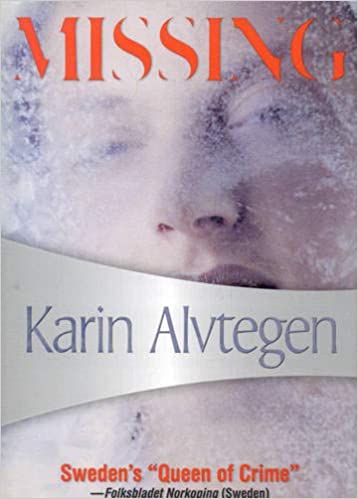
Missing by Karin Alvtegen

Note: clever planter boxes at base.

I love to go explore the little free libraries in various neighborhoods in the city. This one was one of my latest explorations.

I seldom take home a book, and sometimes leave a paperback or two. But you know me, the inevitable happened and, yes, I found a book that intrigued me so much, it came home with me.

Missing is the U.S. debut of Karin Alvtegen, Sweden’s queen of crime writing and the winner of the Edgar award for best novel of the year. Later when I opened it, I found myself immediately immersed.

The opening scene gripped me and, as cliche as it might sound, the first chapter left me wanting more.

Born into a life of privilege, Sybilla has chosen to live her life homeless in Stockholm. With her thrift shop suit and heels, she often sits at a hotel bar and charms a visiting businessman into paying for her dinner and hotel room. One night she chooses the wrong man and when he’s found dead the next morning she is forced to flee. Now she must hide among the homeless of Stockholm, taking each day as it comes, with just a backpack for her possessions, and constantly on the move.

Of course Sybilla is the prime suspect and her situation only gets worse when more victims are found murdered in a similar manner. Ms. Alvtegen skillfully develops the character of Sybilla by interspersing scenes from her childhood alongside her current life on the run.

Scandinavian mysteries have become popular here in the US, since the Girl with the Dragon Tattoo. I’m not a fan of the stark writing and bleak atmosphere. But Missing spun fast-paced plot, so I keep turning the pages. And I found the somewhat different perspective intriguing, with the story told by Sybilla the hunted suspect and an innocent one at that.

I found myself invested in the Sybilla’s survival on the street and hiding from the police. With dramatic twists and turns, I was unable to figure out the real killer, and why Sybilla left her privileged life, until the last 6 pages.

Ms. Alvtegen also adds in the background of Sybillas long-lost child. Trust me, all three story lines eventually intertwine into completion. Moreover, the motive for the murders was an interesting surprise and the resolution of the mystery made sense and was satisfying.

Missing was an absorbing and suspenseful story which I found somewhat reminiscent of Ruth Rendell’s writing. It was an interesting insight into Swedish society. A mystery, yes, but it’s also a commentary on those who are forced to live on the streets by unforeseen circumstances or by choice.

I have placed Missing back into another free little library, so someone else will get to enjoy this culturally different page-turner that kept me reading until the last page.

Taste by Stanley Tucci

With some pride, I admit I make a mean spaghetti sauce – a recipe handed down from my maternal great-grandmother who got the original from a newly immigrated Italian family – or so the story goes. Anyway it is Husband’s favorite meal and I make it on his birthday with plenty of extra sauce to freeze for during the following months.

This year, I deviated for Husband’s birthday. Why you may ask? Well I had just started Stanley Tucci’s memoir Taste and the way he describes his families’ ragu made my mouth water. The book contained the recipe (among others) and I followed it to the letter. It was very, very good, – a little simpler, a bit lighter, and fresher. It won’t replace my mother’s/great grandmother’s version, but it was in one of the first few chapters –and I just had to try it.

But lets get to the book shall we? Taste falls into the genre of narrative cookbooks, but this is more of a memoir of meals and should come with the following advisory:

Warning. Reading this book may cause unexpected weight gain.

Stanley Tucci recently had a CNN series touring Italy and …eating … and eating. As I watched the series, I remember how much I like Stanley Tucci – he is funny, smart, and good looking. I loved him in ‘The Devil wears Prada,’ and ‘Julie and Julia. But reading this book, I was also reminded of his film from 20+ years ago ‘The Big Night’ which showcases his love of cooking and food.

Taste is Mr. Tucci’s own story about the importance of food and family. His upbringing and relationship to food throughout his life. A funny and wry writer who leads you through his life, career, the ups and downs, interlaced with frequent recipes, memorable meals and food experiences.

With charm and wit, he shares personal anecdotes to show how food influenced his life and how food connects him to his family and Italian heritage. He also shares his health battles and a very relatable (we were all there) section on how his family handled the pandemic.

Reading Mr. Tucci, I was in the presence of a foodie of the best sort. One who makes sure you are comfortable, with a drink in your hand, and takes undisguised joy in preparing a wonderful meal for loved ones to enjoy around a warm and welcoming table. But it’s not just the cooking and preparing of food. Taste shares Mr. Tucci’s love of good ingredients and our relationship to those ingredients is of great importance.

To me, eating well is not just about what tastes good but about the connections that are made through the food itself. I am hardly saying anything new by stating that our links to what we eat have practically disappeared beneath sheets of plastic wrap. But what are also disappearing are the wonderful, vital human connections we’re able to make when we buy something we love to eat from someone who loves to sell it, who bought it from someone who loves to grow, catch, or raise it. Whether we know it or not, great comfort is found in these relationships, and they are very much a part of what solidifies a community.

While I found Taste a little jumpy and in need of some editing, it was really enjoyable. There are many fun vignettes and the food descriptions are absolutely wonderful — see advisory above. He describes his mother’s wonderful cooking, praises restaurants where he had fantastic meals (sadly many now closed), and goes on (and on — where was his editor?) about food that made a lasting impression on him. His description of the best spaghetti carbonara he’s ever had will have you salivating. And if you’re still using grocery store parmesan in the green can, Taste will have you contemplating saving your pennies dollars for some real Parmigiano Reggiano.

Mr. Tucci is a Hollywood star with famous friends and he does do some name dropping which he endearingly fesses up to right at the beginning. He is also able to frequent the best butchers, greengrocers, and specialty food shops in London where he now lives. Mr. Tucci’s pleas to find the best ingredients may be hard to swallow (pun definitely intended) for some more moderate food budgets. But try to overlook those and enjoy the read.

Taste is a delightful romp through Stanley Tucci’s life, table and career.

HERE is the Tucci Ragu Recipe – well worth making.

Warning: Taste contains profanity, and if you’re squeamish, there is a home slaughter of a goat.

Passing by Nella Larsen

After my disappointment in The Vanishing Half, a kind Book Barmy follower sent me a note and suggested I try the classic, Passing by Nella Larsen. He went on to say it was a much better book, and an important one at that. A insightful story of racial identity and its falsehoods.

That was more than a year ago and although I made a note, it slipped my mind (like many things these past couple of years).

Fast forward to present day and while looking through my shelves for another book, I came across a copy of Passing which I forgot I had.

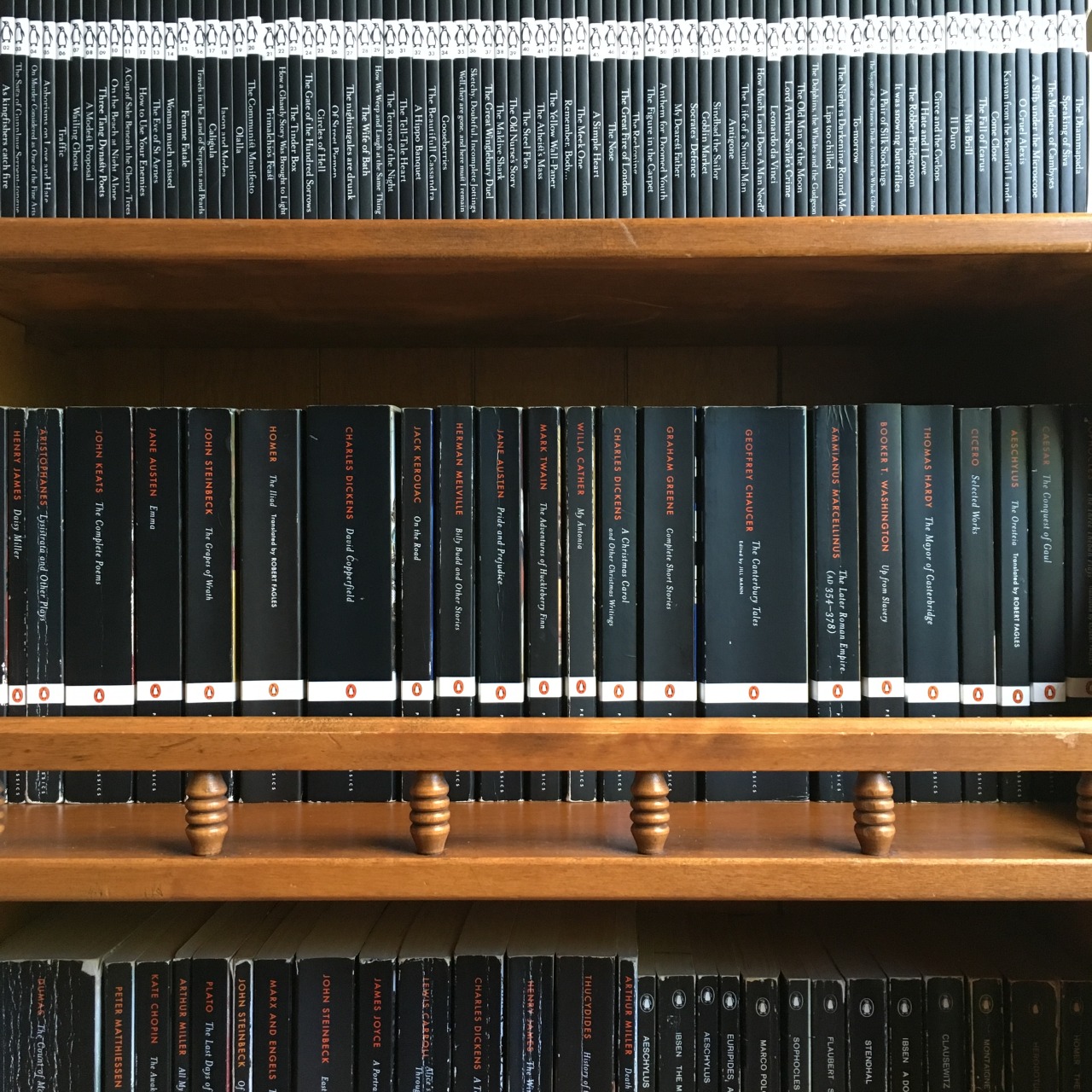
You see, I have a fondness for this Penguin Classics series and their lovely black spines…but trust me I don’t have as many as pictured here from the library of this blogger. I do have a small stack amongst my books and they are important reads (which I tell myself I should be reading) and most quite slim.

When I saw that Netflix was airing a film based on the book, I decided I must read it before watching the film. With that motivation, I finished Passing in just two evenings (and late into one night), and I’m grateful for the excellent tip from a reader – this was a riveting and thought-provoking novella.

But first a little author background (apologies, if you don’t know this by now, I tend to geek out on the background of authors and the genesis of their writing).

Nella Larson (1891-1964) was born in Chicago to mixed race parents. A Danish mother and her father, also with a mixed race heritage, was Afro-Caribbean. Ms. Larson was caught in between worlds, not quite white, not quite black, so it was natural for her to write of her life experiences. And that’s what she does in Passing.

The story is set in Harlem and revolves around two women, Irene Redfield and Clare Kendry, both light skinned, one secure and happy. Irene accepts her racial identity, while Clare is passing as a white woman and is burdened with all the insecurities her secret causes. Clare married a white, racist man and she lives in a society that would reject her if they knew the truth.

Ms. Larsen takes her readers back to the Harlem Renaissance when African Americans were beginning to come into their own in northern society. It’s also fascinating look at two black women living a glamorous lifestyle in the 1920s.

The trouble with Clare was, not only that she wanted to have her cake and eat it too, but that she wanted to nibble at the cakes of other folk as well.

I found Passing beautifully written and Ms. Larsen’s characters are developed with such visual clarity and verbal accuracy that they dominate the novel. These characters have very different and often astonishing perceptions of racial identity.

It’s funny about passing. We disapprove of it and at the same time condone it. It excites our contempt and yet we rather admire it. We shy away from it with an odd kind of revulsion, but we protect it.

I don’t want to give too much away but there are number of subtexts in the book; the complex relationship between Clare and Irene, repressed homosexual desire, and emotional abuse. Ms. Larsen controls all these stories perfectly; she reveals plot points at exactly the right time and lets the characters drive the narrative.

When it comes to the end, don’t be frustrated – the author lets the reader decide the future. So just give it a good think.

I highly recommend this slim novella – and its examination of the various ways in which everyone is ‘passing’. While written in 1929, it couldn’t be more timely and relevant.

Passing – The Film:

The Netflix film was beautiful and received excellent reviews. Shot entirely in black and white, I found it a fine adaptation of the book. The setting and clothes are stunning. And oh the hats – the hats!

Well worth watching, but please, only after you’ve read the book.

N.B. Another geeky note: Nella Larsen holds her own place in history for being the first African-American woman to receive a Guggenheim fellowship,

A New Year

We spent the Christmas holiday in Palm Springs, as we wanted a change of scene – and that it was. Very unusual to see cactus and palm trees decorated, but we soon settled in and enjoyed the warmer weather.

We stayed at the iconic Palm Springs Tennis Club which is where Sinatra, Sammy Davis Jr., and gang hung out to play tennis and drink by the pool.

I did some reading in the beautiful lobby.

Husband played a bit of tennis in between rain showers

We also got in a little pool time.

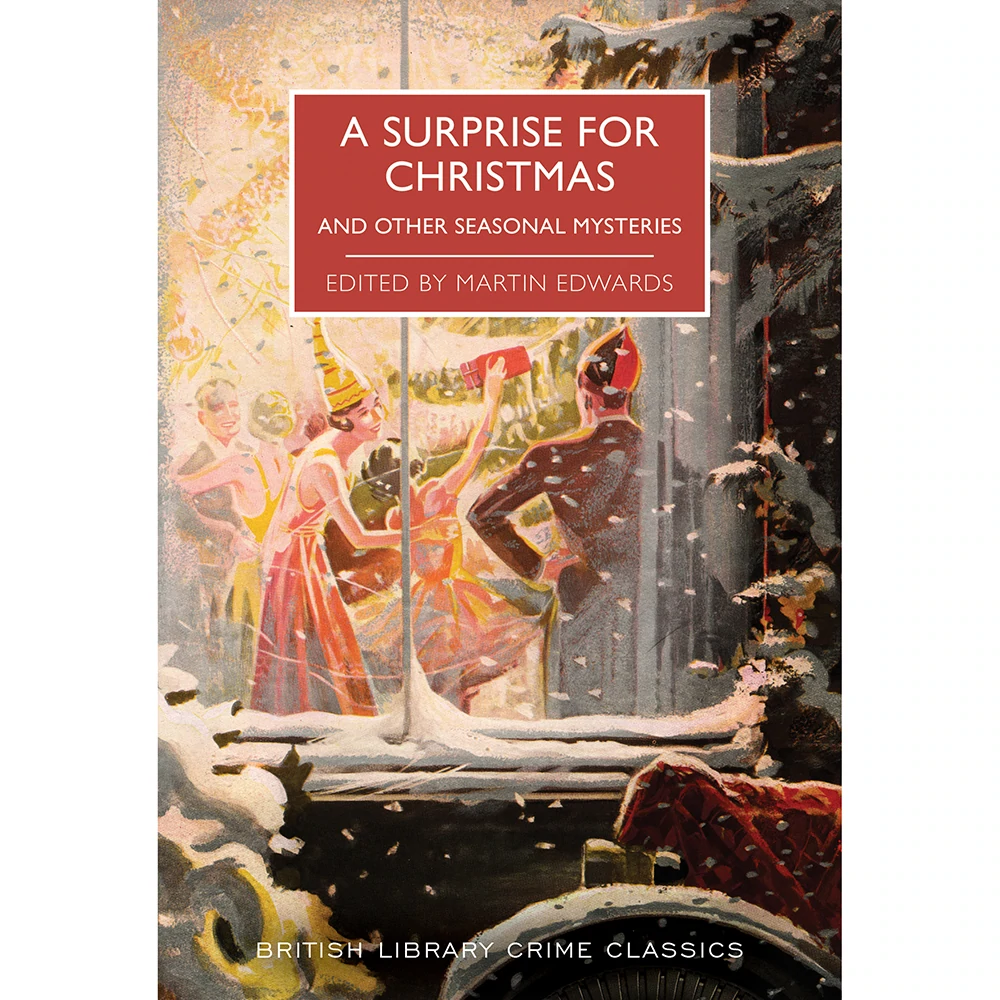
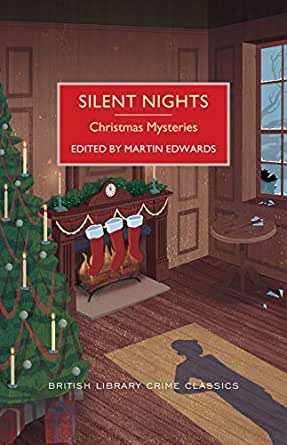
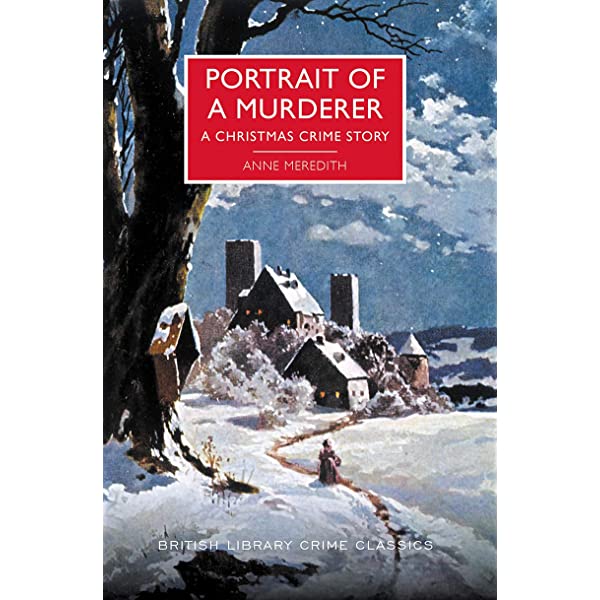
The room came with the Turner Classic channel which we don’t get at home. It rained several evenings, so we happily watched some great old holiday films — in between I read this great reissue by the British Library Crime series and Poisoned Pen Press.

This is a collection of mysteries from the Golden Age of mysteries. The anthology contains short stories from both well-known authors such as Cyril Hare and Carter Dickson. But there are also some largely unknown authors

Martin Edwards, who is a regular editor in the British Library series, gives a informative overview of the author at the beginning of each story and tells us how they fit into this age of crime writing.

This collection, as the title says, are written with a Christmas theme and the stories do not disappoint. Here’s just a few in the collection:

Blind Man’s Hood: Carter Dickson (1937)- an eerie and chilling tale in the Christmas tradition of Dickens. Wonderful storytelling and a very enjoyable read.

Twixt the Cup and the Lip: Julian Symons (1965)- an extremely good tale of a perfectly-planned jewel robbery in a London department store, just before Christmas.

A Christmas Tragedy: Baroness Orczy (1909)- an investigation, by Lady Molly, of a country house murder on Christmas Morning, narrated by her maid. An interesting tale, including a wronged suitor and a callous young woman. Our Lady uses psychology to reveal the perpetrator.

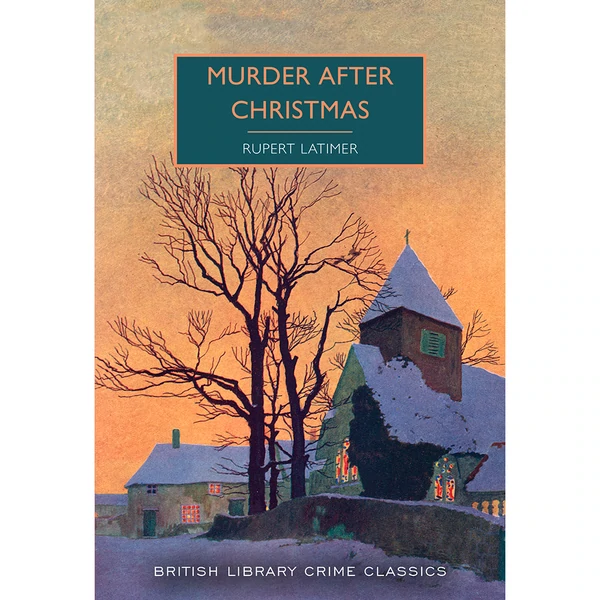
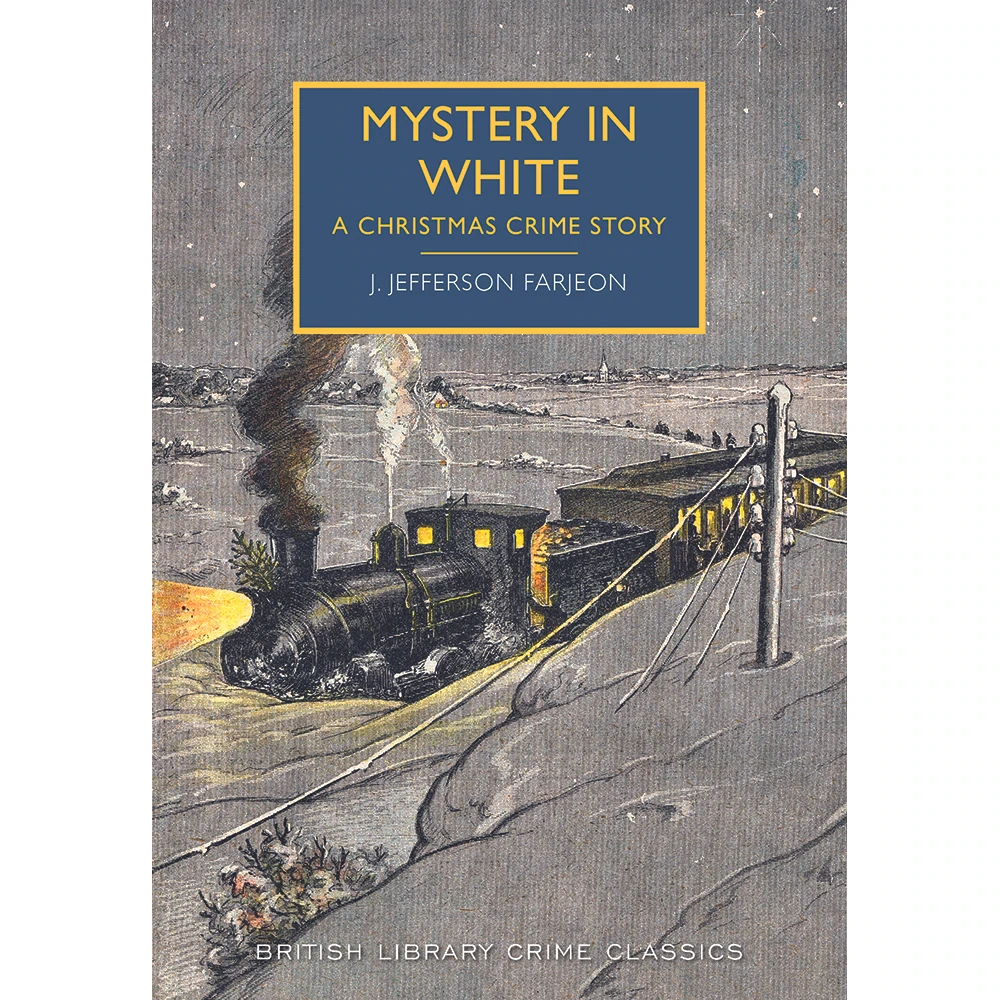
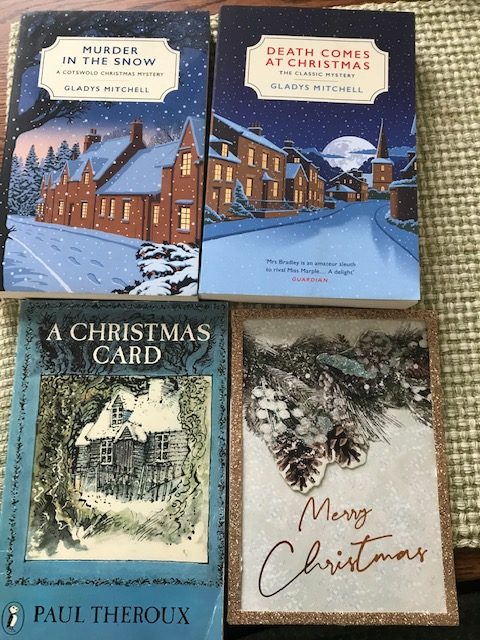
I’ve collected quite a few in this Christmas themed series and I am not ashamed to admit it’s largely due to the covers – aren’t they great? I just lay them all out during the holidays — picking and choosing my reading at random.

If you’re not familiar with this wonderful series you can check them out HERE.

Happy New Year. I don’t know about you, but I’m approaching this new year with caution — what will it bring?

Jólabókaflóð

Here’s the Book Barmy annual holiday post…

In Iceland, it is a Christmas Eve tradition to give a book as a gift.

This is called Jólabókaflóð, or the Christmas Book Flood.

This time of year the sun doesn’t rise until 11 AM & it’s dark by 3 PM.…

So after a brisk (and chilly!) afternoon walk around town with the rest of their neighbors, families snuggle into their homes with a hot drink and enjoy their new books.

Wishing all my fellow book lovers a traditional Jólabókaflóð

Merry Christmas and happy reading, from Book Barmy headquarters

P.S. Husband and I are spending the holidays in much warmer climes…

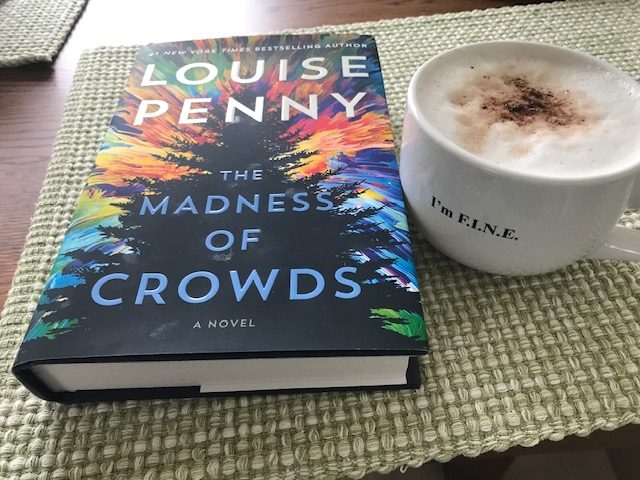
The Madness of Crowds by Louise Penny

I purchased The Madness of Crowds as soon as it was released — supporting my local bookstore.

My–my, just look at those gorgeous end pages!

My reading of Louise Penny’s latest installment was accompanied with my Three Pines cup, a gift from my sister after a trip to Quebec and Brome Lake Books in Knowlton. Also a devoted Louise Penny fan, she and her husband explored the area that inspired the fictional Three Pines setting. Here’s the MAP they used from the bookstore’s website.

You Louise Penny fans already know what ” I’m F.I.N.E ” stands for, but if not; we must consult the foul mouthed, cranky poet, and one of Three Pines most colorful characters.

“I’m FINE” according to Ruth Zardo is:

  • F: F#*&ed Up
  • I: Insecure
  • N: Neurotic
  • E: Egotistical

But, as usual I digress — on to the book.

The good news is that we’re back in Three Pines with Chief Inspector Armand Gamache, Jean-Guy Beauvoir, Clara, Myrna, Gabri, Olivier, Ruth Zardo, and her muttering duck are all present and accounted for. It’s Three Pines in the winter with mugs of hot chocolate, ice skating, bonfires, and the very cold weather.

They stepped outside, and though they were braced for it, the bitter cold still stole their breaths.  It scraped the flesh of their faces and made their eyes water.

The Madness of Crowds very admirably utilizes the pandemic and its aftermath as the timely plot line for this mystery. But, I overcame my initial dismay at the topic (haven’t we all had enough of this pandemic and why couldn’t Three Pines have been spared?) and started reading. Ms. Penny soon addressed our shared pandemic fatigue…

Though the pandemic was now over, it had left behind a population worn down.  People were tired of being self-disciplined, of self-isolating.  Of social distancing and wearing masks.  They were exhausted, shell-chocked, from months and endless months of worrying about their children, their parents, their grandparents.  Themselves.

After 70 pages, things came together and I started to understand that the ‘madness of crowds’ referred to the overall theme of this book — the blind devotion to misinformation which leads to unprincipled and often evil ideas.

The bad news is that this post-pandemic Three Pines world is full of harsh truths; eugenics, crowd behavior, rape and torture of women, experimental treatment of the mentally ill, failed public health policies, dementia, and most upsetting — threats to disabled children. So, be warned, The Madness of Crowds is not the escape we’ve come to depend on in Ms. Penny’s books. But, importantly, it also presents thought-provoking questions about ethics and human relationships in a post-COVID world.

Hey there, don’t worry Ms. Penny still writes with her usual empathy, insights, sensitivity, and her trademark delightful humor…

Stephen was up by then and dressed as always in a crisp shirt, sweater, and gray flannels.  Ready for a board meeting, should one arise.

“She’s right”, said Myrna, turning astonished eyes on the mad poet [Ruth] at the other end of the sofa.  “She was bound to be right eventually,” said Clara.  “Law of averages.”

I struggled a bit with the last part of the book and its parade of red herrings. Without giving anything away, there is also a final scene, where Armand Gamache lets a gun lie in a room with suspects — waiting for it to be used. This is an antithesis to everything we know about his character.

Don’t get me wrong, The Madness of Crowds still delivers a well-written and complex mystery with the wonderful characters, and great food of Three Pines. But it also slaps the reader right across the face with humanity’s darker side.

We are seeing an evolution in Ms. Penny’s writing. She started out writing charming and cheerful Quebec mysteries set in the camelot-like setting of Three Pines. I can’t fault Ms. Penny for reflecting the news of our current times and for moving her craft into new vistas.

It’s just that I miss her old style and earlier books. I wish we had a real Gamache, whose musings on horrible behaviors could help us to understand why some chose such dreadful paths — and to help us feel less afraid.

And say “all will be well”.

Now I’m off to my annual holiday readathon, chosen from my as-yet-unread collection.

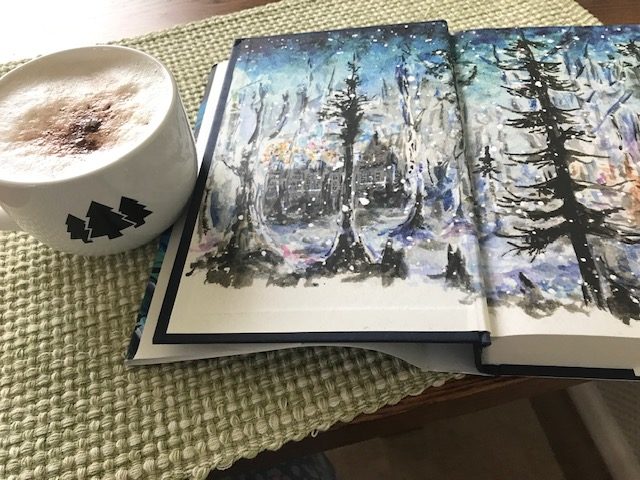
The last image is a favorite Christmas card I received — with lots of glitter and cheer.

Warning: If you love someone who is disabled, or if you lost someone you love to Covid, this book may be triggering.

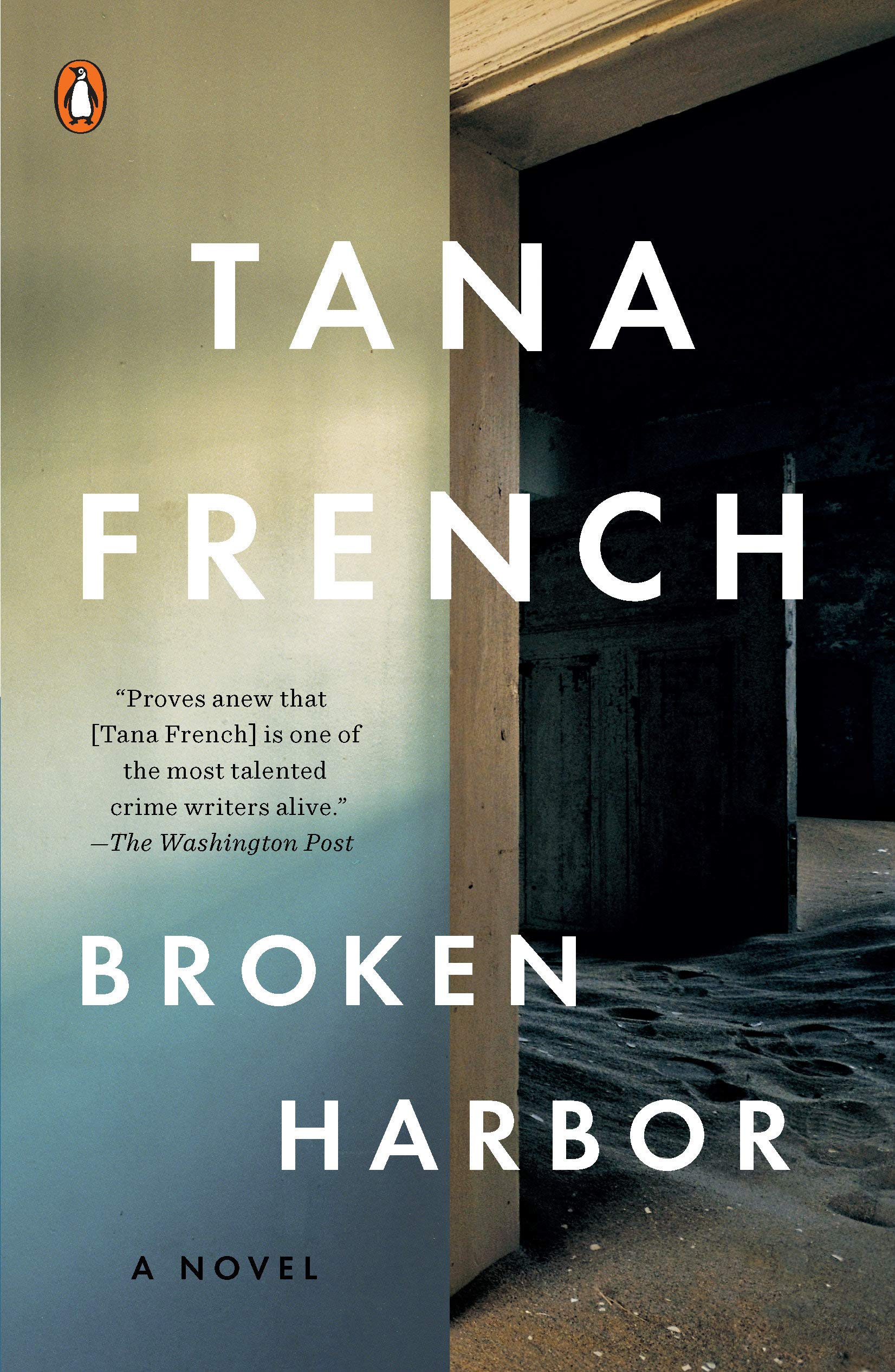
Broken Harbor by Tana French

Halloween night at our house. As with every year, we anxiously await trick or treaters, but over the years they have dwindled. And this year, none — even our favorite 5 (no I’m-almost-6!) year old didn’t get to stop by.

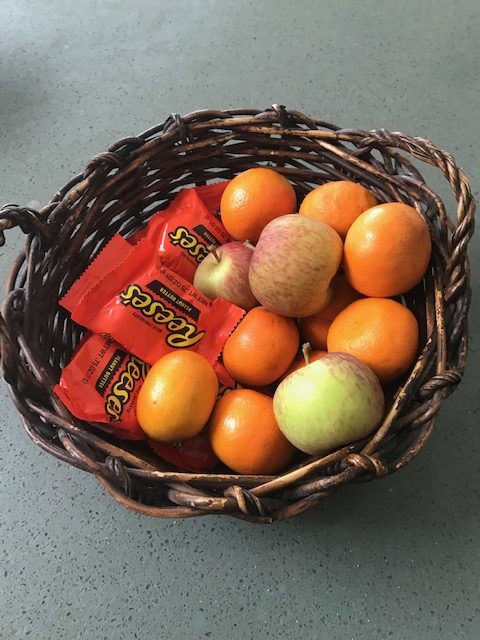
Our basket sat untouched by the front door .

Where was everyone? Down on the beach where the city closed the highway to traffic.

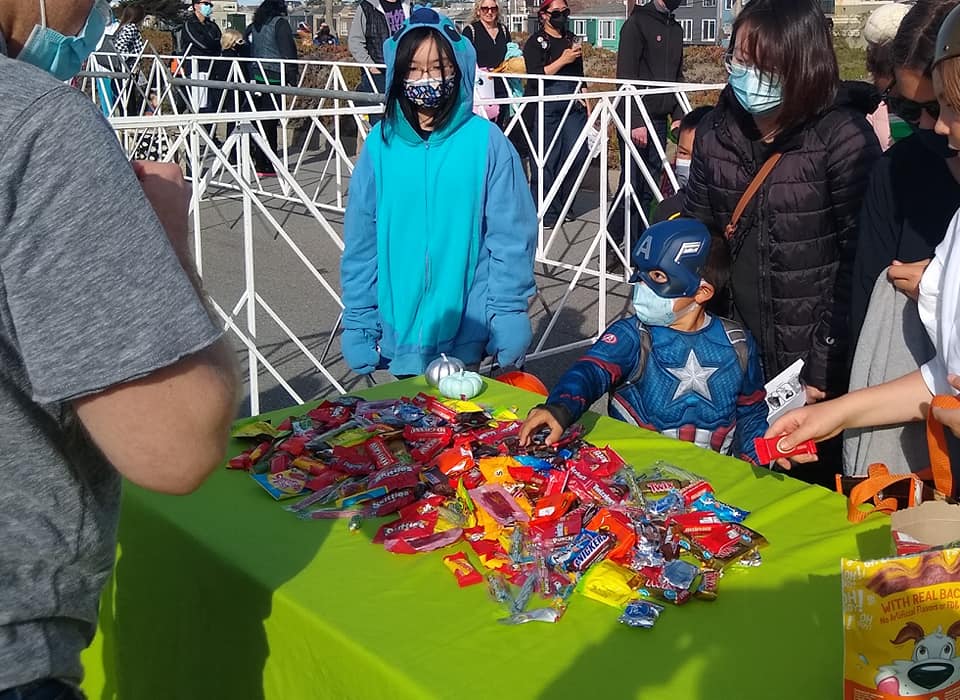
Safe and fun for all involved. No crossing streets, no cars. Tables set up by volunteers, parents, and local groups to serve treats (lots of treats) for the revelers. There were costume parades, pumpkin carving, and a photographer to capture it all. It’s the new, safer, and arguably better Halloween for everyone.

Full disclosure, we were loath to venture into the fray of sugar-frenzied kids and exhausted parents. So, I gathered these photos from our local Facebook page as evidence. (Click each to make larger – the family portrait is especially stunning.)

As night fell, we closed our curtains knowing our neighborhood little ones had a wonderful time. So what to do on a silent doorbell Halloween night? Settle in with a cup of tea and finish my book – and perhaps a Reeses (see lonely basket above).

Broken Harbor by Tana French

I’m a big fan of Tana French and am reading her Dublin Murder Squad series in order — I inhaled the first three and started Broken Harbor as my October, Halloween-ish read.

French is notorious for her debut novel, In The Woods (2007) which violated one of the key rules of the murder mystery genre (I won’t tell!). Her other books, The Likeness (2008) and Faithful Place (2010), have also distinguished themselves for their realistic (read gruesome) crime scenes, detailed, nuanced characters, and a loosely linked cast of detective protagonists.

Each of Ms. French’s installments take the point of view of a different member of the detective team. Broken Harbor is the fourth and there are two more in what is now commonly referred to as the Dublin Murder Squad series.

Broken Harbor tells a case from Mick “Scorcherˮ Kennedy’s view point. Kennedy is the big man of the Dublin Murder Squad. He plays strictly by the books and has a relentless work ethic. Thatʼs how one of biggest cases of the year ends up in his hands. A horrific case; a report that an entire family of four — mother, father, daughter and son – have been found dead in Broken Harbor.

Broken Harbor is a half-abandoned, so-called, luxury housing development on the coast near Dublin. The developers fled during the economic crash, leaving behind empty and abandoned homes. A few families are hanging on, despite the crumbling foundations and shoddy workmanship. The Spain family, are now dead in what they had hoped would be their forever home.

Of course all is not what it seems. The first surprise is that the mother is still alive, but badly beaten and clinging to life with multiple stab wounds. The second wrinkle is that Kennedy is given a new rookie partner to work with, Richie Curran, who has managed to pull himself out of lower class squalor by his bootstraps to a hard-fought position on the Dublin Murder Squad. The third complicating factor is that Broken Harbor used to be known by the less lyrical name of Brianstown and is also the place where Kennedy’s own mentally imbalanced mother committed suicide by walking into the sea with his now-mentally ill youngest sister Dina.

How’s that for a plot set up? I found it hard to like Kennedy when he first appeared in Faithful Place, but here Ms. French gives him a complexity that I found compelling.

I’m the least fanciful guy around, but on nights when I wonder whether there was any point to my day, I think about this: the first thing we ever did, when we started turning into humans, was draw a line across the cave door and say: Wild stays out. What I do is what the first men did. They built walls to keep back the sea. They fought the wolves for the hearth fire.

Kennedy presses hard to solve this case pressuring his young rookie to exhaustion. But the interplay between them is engaging, as the older, more experienced detective guides the younger one down a path that may, or may not, be right one.

Although not really a character, the Broken Harbor housing development plays a major role. The economic crash that brought down so many dreams sets a haunting scene. The half-built development where many of the houses lie vacant or are inhabited by squatters, abandoned bulldozers and torn plastic-covered windows flapping in the breeze — the whole thing reads desolation and shattered hopes. The reader can feel the isolation and the hopelessness left behind. It’s easy to identify with a generation that played by the rules, did what they were supposed to do, only to find that they had been sold a bill of goods and that were now trapped.

Kennedy tells it like this:

In every way there is, murder is chaos. Our job is simple, when you get down to it: we stand against that, for order. I remember this country back when I was growing up. We went to church, we ate family suppers around the table, and it would never even have crossed a kid’s mind to tell an adult to fuck off. There was plenty of bad there, I don’t forget that, but we all knew exactly where we stood and we didn’t break the rules lightly. If that sounds like small stuff to you, if it sounds boring or old-fashioned or uncool, think about this: people smiled at strangers, people said hello to neighbors, people left their doors unlocked and helped old women with their shopping bags, and the murder rate was scraping zero. Sometime since then, we started turning feral. Wild got into the air like a virus, and it’s spreading. Watch the packs of kids roaming inner-city estates, mindless and brakeless as baboons, looking for something or someone to wreck. Watch the businessmen shoving past pregnant women for a seat on the train, using their 4x4s to force smaller cars out of their way, purple-faced and outraged when the world dares to contradict them. Watch the teenagers throw screaming stamping tantrums when, for once, they can’t have it the second they want it. Everything that stops us being animals is eroding, washing away like sand, going and gone. The final step into feral is murder.

There are to things to reveal to you about this novel. Kennedy’s sister who is suffering from mental health issues is left to either stay with Kennedy or their older sister and often escaping unsupervised into the streets of Dublin. Why is there no mental healthcare offered to her? And — trigger warning, the murder of the two children is described in detail, not once, but several times.

One thing I’ve picked up from Ms. French’s books is that she is the queen of obfuscation — a connoisseur of finding the cracks in our so-called civilized lives and gleefully pointing them out. The reader has to come to grips with the fact that nothing ever works out – for anyone.

And as dark as that sounds, I found Broken Harbor rich with detail and complexity of motivation. A complex contradiction of madness and guilt, as well as loyalty and family relationships. The characters are real and flawed and beautiful. And the story is twisty, heartbreaking, and oh so human. The final confession was so well written that it made me choke-up and re-read it again.

And while this novel delivers a human villain, when all is said and done, it’s the recession of 2008 that is the ultimate offender and the reader sees how almost every character in the book was hurt as a result.

And, as with each of Ms. French’s series, I find myself highly invested in the future of the investigator almost more than the investigation itself — Broken Harbor is no different in that regard. I eagerly look forward to the next in line on my bookshelf.

An Ideal Reading Experience

Here’s something other book bloggers have started — describe your ideal reading experience — past, future, real, or imagined.

Mine was real and a long time ago — a friend loaned me her beach house, just north of the city, for a long weekend. (Delightfully, I went alone, as Husband was away on a business trip). My friend was an avid reader so I knew I didn’t need to bring any books, her shelves were abundant — full of beachy, vacation type reads.

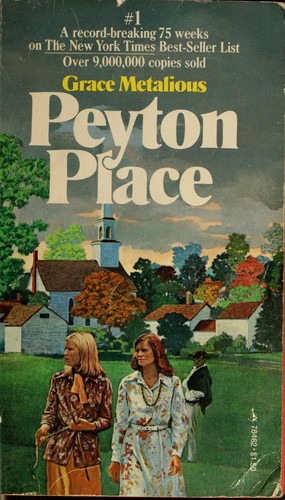
I pulled out Peyton Place, by Grace Metalious which I had never read and decided it was the perfect trashy read. Turns out not that trashy after all, actually a well-written exposé on the lives, secrets and lies in a small New England town.

It opens with this vividly painted first line ~~ “Indian summer is like a woman. Ripe, hotly passionate, but fickle, she comes and goes as she pleases so that one is never sure whether she will come at all, nor for how long she will stay.”

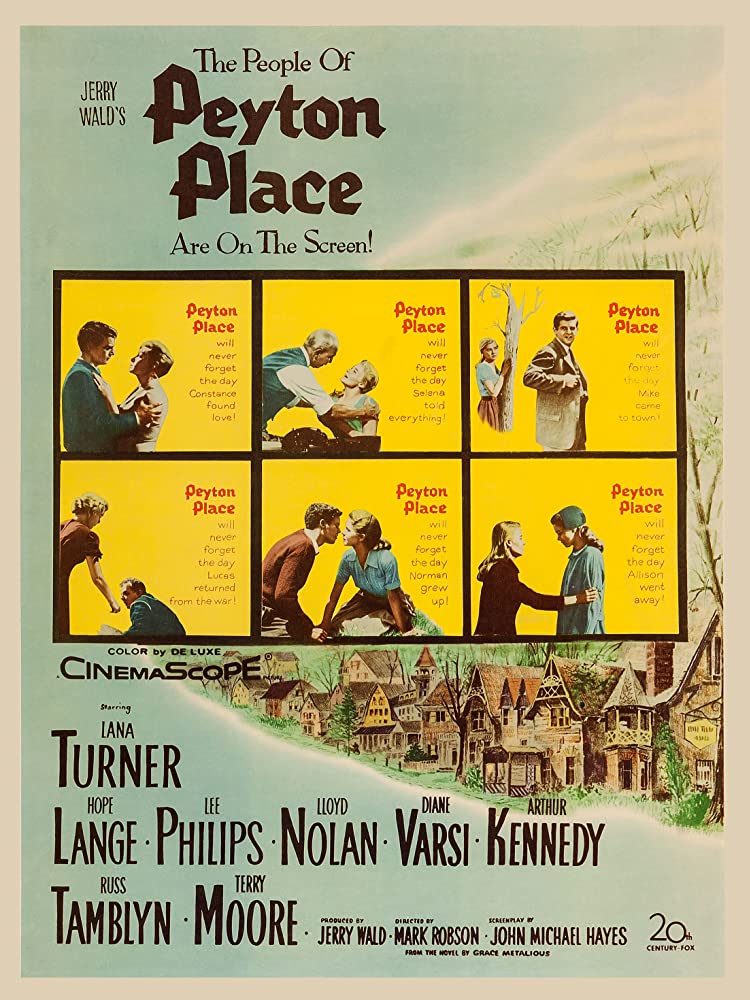
I finished Peyton Place over that long weekend and the other evening recalled this wonderful reading experience when I watched the film, which was surprising riveting and wonderfully over-dramatic, in that typical 1950’s campy style.

Not only did the book sell millions of copies when it was first published in 1956, it spawned not one, but two films, and a long-lived television soap opera. Ms. Metalious participated in the early stages of the first film but then when several key plot points were omitted she abandoned the project and openly detested the film — which had nine academy award nominations.

There’s as much drama surrounding the publishing of the book as the book itself — which is covered in the sequel Return to Peyton Place – both in book and film forms. Adding to this drama is that the story behind Peyton Place is based on the true story of 20-year-old Barbara Roberts who, in 1947, shot and killed her father and buried his body in the sheep pen. It all took place in Gilmanton, New Hampshire which is near where I lived back East. The film “Peyton Place” had its premiere in Camden, where many scenes had been shot and is one of Husband and my favorite towns in Maine.

So back to the subject. My ideal reading experience was this one — devouring my friends beat-up paperback copy of Peyton Place – sun hat shading me, feet propped up on the deck railing, and ice tea at hand – over a long weekend at the beach.

sigh…

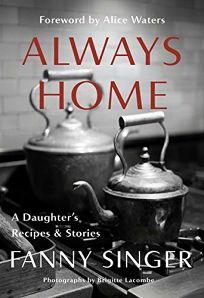
Always Home by Fanny Singer

A fellow foodie friend loaned me his signed copy of this book — calling it the perfect escapist read during the pandemic. Given the title, I had to laugh and agree.

I just finished Always Home, having dipped in and out of it for many months now.

But first a little background; Fanny Singer is the daughter of Alice Waters, one of our most beloved chefs and founder of the famous Chez Panisse restaurant.

Alice was an early advocate of sourcing only the best local ingredients and is also known for her edible schoolyard program in Berkeley. And, although I am now weary of Alice and her endless publicity, I was fascinated to read this lovely memoir by her daughter, Fanny, who grew up in the glow of this revered chef.

Husband and I have been fortunate to have dined at Chez Panisse (and the more casual upstairs Fanny Cafe) and Always Home brings Fanny, her family, and behind the scenes of the restaurant to life. Turns out, Fanny was partially raised in the restaurant kitchens, surrounded by attentive chefs and prep cooks. Hers was a life full of love and really, really yummy food. Even Fanny’s lunchboxes were meticulously curated by her culinary-obsessed mother:

My lunches were not broken into courses as much as they were divided into multiple parts. There was a largish container that held a salad, a medium container for garlic bread (levain toast rubbed with olive oil and garlic), another for a season fruit compote or macédoine, a very small jar with a vinaigrette because, of course, we were both aware of the perils of prematurely dressing the salad.

Of course, I was intrigued by the recipes throughout the book and made notes to copy such delights as authentic French Citron pressé, various simple salad dressings, real Aioli, and Franny’s roast chicken which requires such high oven heat, that it comes with a warning to disable your smoke detectors.

I found Alice Waters’s quirks weirdly fascinating–her tendency to drink from bowls rather than mugs and to “jettison her silverware and delve in with her fingers,” expressing “a primal impulse to be closer to the thing she was eating, to be more sensuously acquainted.” Alice is dogmatic about sourcing only organic, locally-sourced ingredients and it’s revealed as what it actually is – an life-long obsession — which is termed “Chez shopping”.

But mostly I was drawn into the beauty of this life — how even the simplest meal could be made special, the focus on the fresh ingredients, and even the endless curation of flower arrangements everywhere:

Flowers were for my mom not just a confection to be enjoyed at the restaurant, but a part of what made any room complete. Billowing leafy branches and a few stems of some decidedly un-showy flower seem to be permanently installed in a large green urn in the far corner of the kitchen.

Fanny’s childhood trips to France are some of the best parts of Always Home — how their French friends sought beat up Brocantes (antiques) to restore, the overgrown but abundant garden, and evening meals outside under heavily scented rose bushes.

At the same time, this was (and is) a privileged life of wealth — surrounded by renowned cooks, celebrated artists, the access to abundant food resources, and the Berkeley bohemian culture. There is no shortage of name dropping, and a wee bit of trying-too-hard-overwriting. But, in the end, Fanny’s love and admiration for her mother emanates from every page:

There is a quality of ‘homecoming’ that transcend location, and not just because I reach deep into my repertoire of my mother’s recipes to animate her table through mine, but also she is somehow present even when she is not.

Always Home is charming, funny, full of love and really, really (did I say really?) good food. And, hey, any book that helps make a home special for those we love, and perhaps even ourselves, is beyond value these days.

But let’s turn to one of my favorite foodie writers Ruth Reichl — here is her review of Always Home

You will probably pick up this book because you’re curious about how it feels to grow up with Alice Waters as your mother. But you will inevitably be captivated by Fanny Singer’s sensuous voice and sensible soul. The writing’s lovely, but more than that, Fanny has struck a kind of brutal honesty that is extremely rare and completely beautiful. Her writing makes you want to taste every flavor she describes, and soon you’ll be dashing into the kitchen to make watercress soup, wild fennel cakes, and breakfast pudding. But the really important thing is that I’m pretty sure everyone who reads it will come away with the same feeling that I have: Why don’t I live my life like this? How can I do better? I love this book.”

A side note, this is quite an expensive book, however it feels nicely substantial in one’s hands, it’s printed on heavy paper, and contains many beautifully produced photographs. And the best — it’s bound so it will stay open for the recipes. Such a pleasure to have a book printed with that sort of craft and thought.