The Murder of Roger Ackroyd by Agatha Christie

Back in January, I watched a PBS documentary on the work and life of Agatha Christie. It turned out to be a most enjoyable hour of television. You can watch it HERE.

I was very keen on Agatha Christie’s novels as a teen, as we had them on the family bookshelves. But for some reason, in my adult years, I stopped reading them. I can’t remember why — perhaps it was the overly convoluted plots or the one-dimensional characters. I do enjoy catching the odd Miss Marple on PBS. But it’s been years (and years) since I’ve read any of her mystery novels.
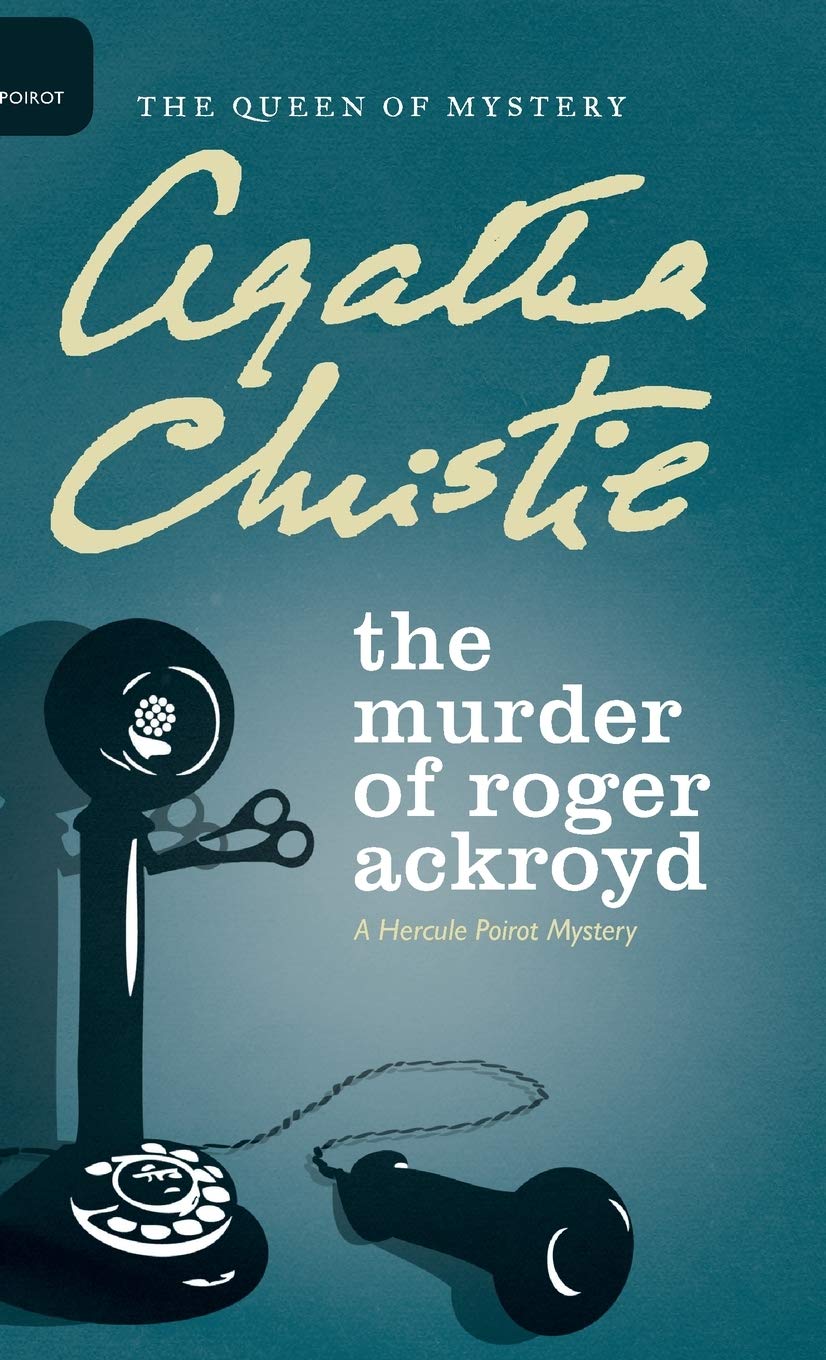
This documentary re-kindled my interest, especially when it hailed The Murder of Roger Ackroyd as one of the finest mysteries ever written and went on to say it breaks all the rules of traditional mystery writing — Having just finished a very thoughtful and wonderful book (more in a future post), I went to my handy digital library system and downloaded the novel to my Kindle. Turns out it’s one of Christie’s Herclue Poirot novels.
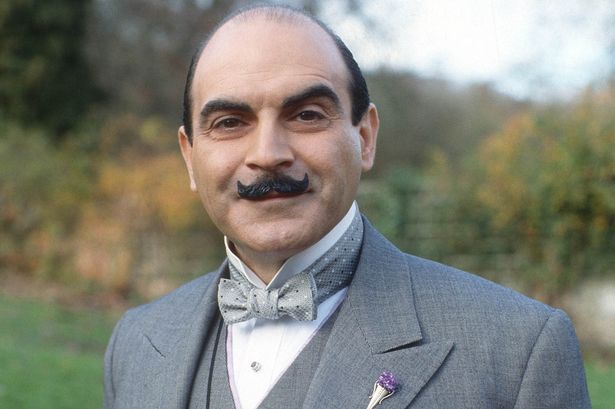
Now, I’ve never been a fan of Poirot either in novel or television — I’ve always found his character a bit ridiculous and pretentious – sorry to all you David Suchet fans.

On the other hand, Poirot has been called one of the greatest fictional detectives of all time, and given I was committed to reading such a highly acclaimed Christie novel, I plowed right in.

There’s a certain charm of tradition that comes with Agatha Christie’s novels, and I soon settled in to the once-familiar writing style. Patiently, I waited for Poirot to complete at least one or two sentences — at least before he solved the mystery. But I soon got used to that as well.

Poirot has retired to a small English village and is happy to putter around his garden and cottage. But he is soon drawn in to investigate two deaths. One due to an overdose of a sleeping drug, which some called accidental and others suicide. The other is a more obvious murder, as the victim, Roger Ackroyd, has been stabbed. Poirot, of course, will have to use his little gray cells to solve these two seemingly unrelated deaths. He is aided in his investigation by the town doctor, Dr. Sheppard, and his gossipy sister, Caroline. We soon meet a parade of interesting characters — and most of them seem to have had a motive to kill Roger Ackroyd. Poirot eliminates them from consideration one-by-one. Until we come to the murderer, that is.

In case you haven’t read The Murder of Roger Ackroyd, I won’t give away any more that that. I will tell you it was a real surprise and quite clever ending. I finished it with a sigh of contentment, but I also kicked myself because I had considered the final murder suspect early on, but due to Agatha Christie’s deftness in offering up red herrings and other plausible paths, I abandoned my supposition far too soon. But in the end:

“Everything is simple, if you arrange the facts methodically”

The characters are, per usual, a bit one-dimensional, but perhaps it’s pandemic brain (or my older self), this time I found them enjoyable. The sister, Caroline, was a especially funny character in this novel. All-in-all I enjoyed revisiting Dame Christie’s writing.

You can read the book just relaxing on a Saturday afternoon and enjoy the twists and reveals as they come. However, I plan to re-read it to see where I was lead astray, the clues I missed, and upon second reading better appreciate the art of this brilliantly written murder mystery. Either way — it will be a satisfying experience.

Full disclosure And Then There Were None is still my most favorite Christie novel.

___________________

I don’t know if I’m cheating to offer you this — HERE’S the film adaptation.

I am trying to decide whether or not I want to watch it. Pandemic brain says “oh why not?” But Book Barmy brain says “no, no, don’t do it! — the book is always better.”

I know, I know – this is a very trivial decision. I should be using my little grey cells on other things, like world peace, Oprah’s interview with royalty, or what to make for dinner (again!)

~~~ I’m obviously bored.

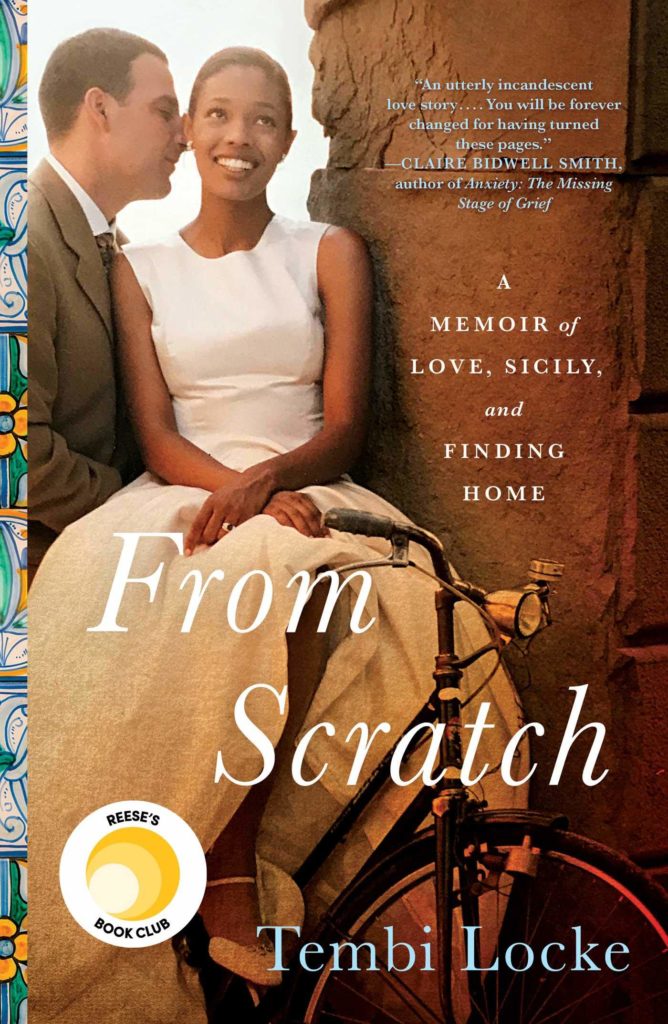
From Scratch by Tembi Locke

Friends and loved ones often say I have too many books. I still love these clueless souls, but they don’t understand. It’s not that I have too many books, it’s that these books are quite happy on my shelves, just waiting for me to find them.

Such was the case with From Scratch. A friend gave me this book and because we have different tastes in reading, it has languished in my ‘maybe I’ll read, maybe I won’t’ section. Rattling around the house on a rainy afternoon, I picked it up and decided to give it a try. I didn’t have any idea what I was getting into when I started this book, but before long I was deeply entangled in a beautiful story of love and loss, and all that comes with it.

“In Sicily, every story begins with a marriage or a death. In my case it’s both. And so it was that I found myself driving a rusted Fiat through a winding country road on the outskirts of Alimunusa, a small Sicilian village, with my husband’s ashes in a small wooden box tucked between my legs.”

So begins this luscious memoir by Tembi Locke (that word luscious will be back). Tembi is an American television and film actress and she recounts her college semester abroad in Florence where she meets Saro, a chef. At first, Tembi is not interested in a relationship. But, for Saro, it’s love at first sight. She tries to discourage him, but he doesn’t give up. He makes her amazing romantic meals in his restaurant, he brings her flowers, in short, he woos her until she falls for him too.

When the semester ends and Tembi goes back to California, Saro eventually comes to the US where their relationship blossoms. They marry in Florence several years later. They build a happy life in Los Angeles, with fulfilling careers, luscious meals, deep friendships and the love of their lives: a baby girl they adopt at birth.

I can hear you…

Don’t leave me now folks, there’s so much more.

There are gorgeous food descriptions and beautiful Sicilian countryside. There are cultural and family dramas to work through when Saro’s Italian family rejects Tembi because she is black. They navigate their way through two clashing cultures and eventually create their own.

Saro develops cancer and they struggle through ten years of his sickness …and as we know from the first paragraph, sadly he dies. Yes, From Scratch is sad (have tissues nearby) but it is also a fascinatingly upbeat tale, that once I was 50 pages in, I had to give it my complete attention.

Saro’s death changes Tembi’s relationship with his family. After his death, Tembi returns to Saro’s family home every summer with their daughter. And, against the backdrop of Sicilian culture & countryside — they heal and cook together – a new relationship and mutual appreciation develops. They connect as a family and Saro’s family lay aside their previous rejection of both the marriage and her. Tembi and her daughter soon also accept and understand the Sicilian culture:

I was witnessing another example of the way community functioned so tightly here, for better or for worse. Each of the women on this street will be called upon and expected to participate in the illness or death of the others. They held one another up, it was a custom as ancient and alive as the ruins of Sicily’s Harrah temple.

From Scratch shines with the food –there are luscious (there’s that word again) descriptions of food and how it bridged relationships, how it can be both comforting and sensual, but mostly it’s shows food’s significance to every family and culture.

Tembi tells of the Sicilian homemade tomato sauce, fresh made pasta, olive oil made from olives grown on the family’s land, fresh bread, lemons, herbs, and bonus — there is a collection of these family recipes at the end of the book — many of which I’ve marked to try.

This beautiful reflection on grief and healing is sometimes overly dramatic, but the majority of the writing is poetic, warm and heartfelt. This memoir is an age-old story of love, loss, reconciliation and belonging. Yes, it’s sad but yet also joyful. The food, the language, the love, the families– all of it — well just luscious.

From Scratch was a captivating read. I’m glad I found it on my happily-waiting book shelves.


After I closed the book, I made Husband his favorite pasta sauce and hugged him close and tight.

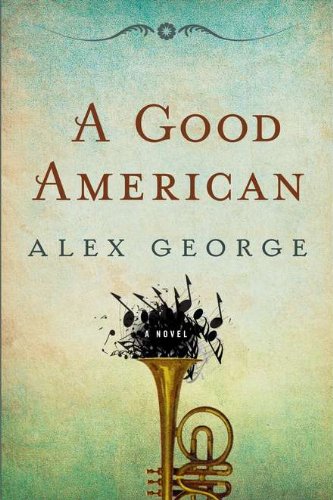
A Good American by Alex George

Sometimes, just sometimes, a book just grabs the reader by the lapels and never lets go. Such was the case for me with A Good American. I opened it on a rainy night in January and was immediately engrossed in this multi-generational story of an immigrant German family.

It’s 1904 Germany, and Jette Furst has fallen in love after hearing Frederick Meisenheimer’s wonderful singing through a garden hedge on one of her walks.

They meet face-to-face and fall in love, but Jette’s socially conscious mother disapproves of the poor young man with no real prospects and disowns her daughter because of the relationship. The young couple fall pregnant, and knowing that her mother will not accept this situation, Jette and Frederick decide to embark for a new life in a new land. Bound first for New York, they find themselves en route to New Orleans and then through a chance encounter, they end up in to the small town of Beatrice, Missouri – where there is a thriving German immigrant community. As with all unexpected changes in course, this move will create a new path for their lives, the lives of their children, and grandchildren.

Told through the voice of their Grandson, the family story is told of four generations of Meisenheimer’s with gentle humor and and heartbreak. I loved one of the early scenes where Fredrick hires a man in a bar to teach him English over the course of the few weeks they have left in New Orleans. Fredrick is a good student and soon is excitingly speaking his new language, only to discover when they arrive in Missouri, that no one will converse with him and they actually turn their backs in disdain. Finally someone explains that the rascal teacher taught Fredrick Polish as a prank – which was met with hostility given the beginnings of WWI in Europe.

Mr. George enthralls with his story of the Meisenheimer family; their struggles, successes, talents, love, sorrows, family secrets — at the same time he weaves in the major historic events of the 20th century which impact their new country. The family has musical talents throughout the generations, so even during the bleakest times, the family can fall back on the joys of their music.

The book does has it flaws so be prepared for an excessively (and in my opinion), unnecessarily violent lynching scene. And when the story draws to a close and we are reading the adolescent grandson’s own story there is an overabundance of masturbation scenes. I’m not a prude, and I understand puberty, but I found it excessive.

But in the end, I was able to put aside these flaws because Mr. George is a fine storyteller — and he tells his story – as all good storytellers do – with a gripping narrative, well developed characters, and a keep-turning-the- pages plot. It’s a rich and highly relatable story of an immigrant family — quite possibly a similar story for any our of families.

What was most compelling about A Good American is the depiction of the struggles to live the American dream and assimilate. This is a perfect time to read this story, when I fear we have forgotten that we are, and always will be — a nation of hard working immigrants with dreams of a better life all trying so hard to be good Americans.


I also recommend Finding Your Roots on PBS. Took me awhile to warm up to the somewhat slow pacing, but now I find the show fascinating. Much like Antiques Roadshow, but then again, I’m an antique myself.

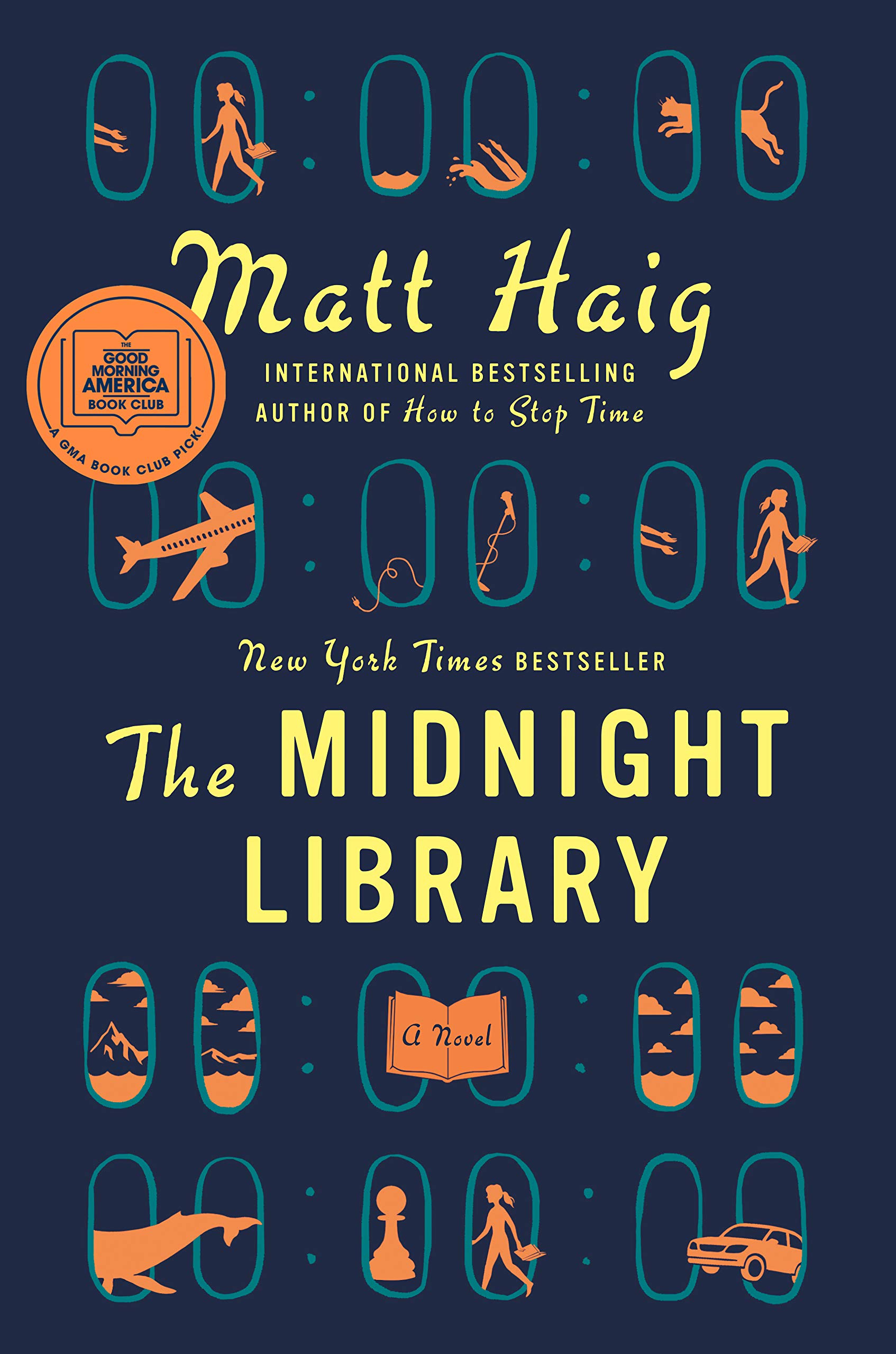
The Midnight Library by Matt Haig

When I read this quote in the New York Times Book Review: Absorbing …exactly what’s wanted in these troubled and troubling times, I made a point to put a hold on The Midnight Library from the library. My turn came up in early January, and I thought great timing – the book got great reviews, is on the best seller list, and I decided a dose of fantasy was in order.

Trigger warning – this book deals with suicide, which Mr. Haig handles with hope, but a bit simplistically.

Similar (but yet different) to Life After Life (one of my favorite books of last year), The Midnight Library takes on the possibility of living a life over and over again – but with the twist of what if you could view every possible outcome of your life?

The book opens with Nora Seed, who finding her life sad and hopeless decides to end it all. However, life, and the universe, isn’t finished with her yet. Instead she finds herself in a vast library with endless books all of which contain different versions of the life she could have lived. The librarian is none other than her beloved librarian from high school — Mrs. Elm.

This “midnight library” is a place of infinite shelves where all the books are variations of your life. But it is best described by Mrs. Elm:

Between life and death there is a library, she said, the shelves go on forever. Every book provides a chance to try another life you could have lived. To see how things would be different if you had made other choices.

Together they look at her ‘Book of Regrets’ and Nora agrees to choose various books, and finds herself inhabiting the bodies of a number of different versions of herself, all living lives that could potentially have been hers.

As Mrs. Elm goes on to explain,

Every life contains many millions of decisions. Some big, some small. But every time one decision is taken over another, the outcomes differ. An irreversible variation occurs, which in turn leads to further variations.

After each life lived, Nora returns to the library – not having found the right life and her Book of Regrets changing after each.

Like most humans, while I have loved and still love my life, I sometimes wonder if I had done things differently — what my life might be like. If I’d stuck with music or gone to a different college…the ‘what if’s’ kept me reading The Midnight Library.

Nora has fascinating, but unbelievable alternate lives to choose from — she was an Olympic swimmer, a glacierologist, a doctor, and a rock star. I found myself wondering where is the boring office job life?

Okay, by now, you can tell I didn’t enjoy this book as much as I hoped to. With the ‘trying on these lives in search of a better one’ concept — the ending was clear from the third life she inhabited. I also found it very unsettling that Nora has no idea who the people are in these alternative lives nor does she know her role. I found it annoying having to wade through how lost and confused Nora was every time she enters a new life.

Nora was an interesting character, tightly wound and intense which made some of her dialogue clever. As here:

You’re overthinking this Nora,” said Ravi, “I have no other type of thinking available”.

To be a human was to continually dumb the world down into an understandable story that keeps things simple.

Then the book just got plain old sappy. With such statements as: ‘Never underestimate the big importance of small things.’ And, this slap-in-the-face advice to someone contemplating suicide; ‘Now go on, live, while you still have the chance.’

I finished The Midnight Library only because I wanted to see if I had predicted the ending correctly (I had) and because my book was due to expire digitally in a few hours.

I came away with many unresolved issues, the most important of which was that the author entirely skipped over the consequences of inhabiting other lives. Nora’s actions while inhabiting her alternate lives would have real world consequences for another version of her life.

The concept of consequences is what makes time travel/parallel lives books so fascinating – as with A Connecticut Yankee in King Arthur’s Court.

Life After Life did an excellent job of consequences, as did Mr. Haig’s other book which I enjoyed much more How to Stop Time.

Read any of those books instead.

Fran Lebowitz

Back — way back – with a brand new MBA in Marketing and Advertising, I longed to work in New York City. Madison Avenue was the mecca for advertising agencies (no, not like Mad Men, in the 1960’s I’m not that old). But after taking a look at the salaries (pitiful) and the NYC rents (astronomical), Husband and I decided I should look at other advertising positions in more reasonable locations. Ended up here in San Francisco, which back then was still affordable. Now I’m happiest just visiting, but have never lost my love of New York City. Sssh – I used to watch Sex and The City just to see the New York scenes and locations.

Recently, a friend told me about a new Netflix documentary staring Fran Lebowitz and Martin Scorsese.

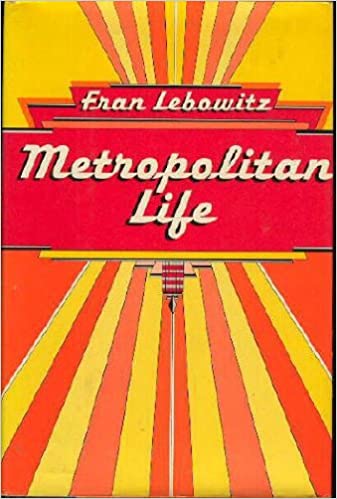
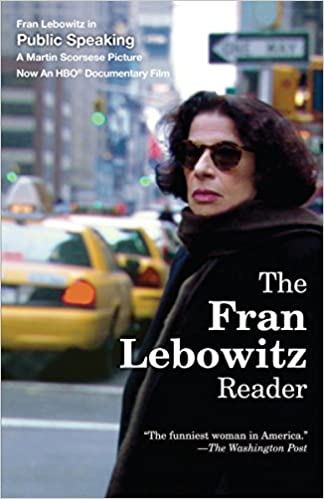
Before I go on, in case you don’t know, Fran Lebowitz is a NYC icon. She moved from New Jersey to New York in her 20’s with jobs taxi driving, belt peddling, and apartment cleaning (“with a small specialty in Venetian blinds”). At twenty-one, she began a column called “I Cover the Waterfront,” for Andy Warhol’s Interview magazine. Then she published two books of essays — Metropolitan Life and Social Studies – both wonderful. She never really wrote anything else and has since made her living on the social commentary speaking circuit.

I adore Fran (who has been compared to Dorthy Parker – another favorite of mine) she is snarky, complaining, smart and very funny. I always remember right after 9/11 Fran was interviewed and said she was on the phone with a friend after the first tower was hit and when the second tower was similarly struck, Fran said to her friend; “it’s a terrorist attract” and her friend replied, “oh Fran you are always so negative”.

But as usual, I digress – back to the show. First watch the trailer HERE and then come back. I wait right here…

Trust me, this is well worth your time. I watched all seven episodes over the last week or so and loved each and every moment. Martin and Fran are friends and their chemistry is delightful. He asks great questions and then stands back and lets her go. She does complain about her fellow New Yorkers, about the lack of good bookstores, New York real estate ~~ but she also loves music and good art. On music she says ” It’s like a drug that doesn’t kill you”.

But this documentary series stole my heart with her musings on reading (she’s a devoted reader), buying books (her library boasts 10,000 books) and the love of all things bookish. One of her famous quotes I had as a postcard on my bulletin board for years. “Think before you speak. Read before you think.” The last episode is all about libraries and her love of books. I may re-watch that one…or perhaps the whole series again.

Her books are hard to find and a quick look on-line shows ridiculous prices. I stupidly got rid of my original hard backs …

…in favor of a paperback collection which includes both books and one of her other writings.

I highly recommend watching Pretend it’s a City and then on your next venture into a used bookstore (whenever that may be) try and locate her books. Or of course, you can always find them at your local library. You’re in for some chuckle out loud reading.

I’ll leave you with some of my favorite Fran Lebowitz quotes:

“When you leave New York, you are astonished at how clean the rest of the world is. Clean is not enough.”

“To lose yourself in a book is the desire of the bookworm. I mean to be taken. That is my desire.”

“Now, nature, as I am only too aware, has her enthusiasts, but on the whole, I am not to be counted among them. To put it bluntly, I am not the type who wants to go back to the land; I am the type who wants to go back to the hotel.”

“As a teenager you are at the last stage in your life when you will be happy to hear that the phone is for you.”

And a personal favorite:

“In real life, I assure you, there is no such thing as algebra. ”

2021 Early Days

It’s been rainy and damp since New Year’s day. I know it’s nothing compared to living where it’s been snow, then rain, then ice – brrr

This is what I’ve been doing each morning ~~

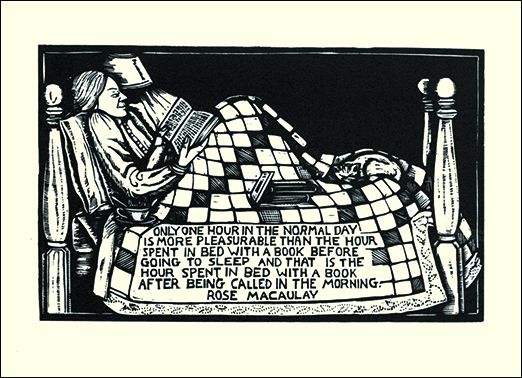
Woodcut by Mary Azarian (Her website HERE)

Call me decadent, but I’ve been getting a cup of tea and going back to bed snuggled under the duvet, rain on the windows and reading my book.

I’m fortunate that I don’t have to attend any Zoom meetings or make any phone calls, so am taking advantage.

I could grow accustomed to this habit.

Here’s what I’m reading and I’m loving it.

2021 seems a great time to get into a multi-generational immigrate family tale. This one is about a German immigrant family and it’s at turn funny and heartbreaking.

I’ll tell you all about it…after my tea.

End of year reading…

I did read two of my Christmas books after all. But the bulk of the Christmas mysteries will have go back on the shelf for next year. Like everyone else, now I’m ready for a new year and new reading.

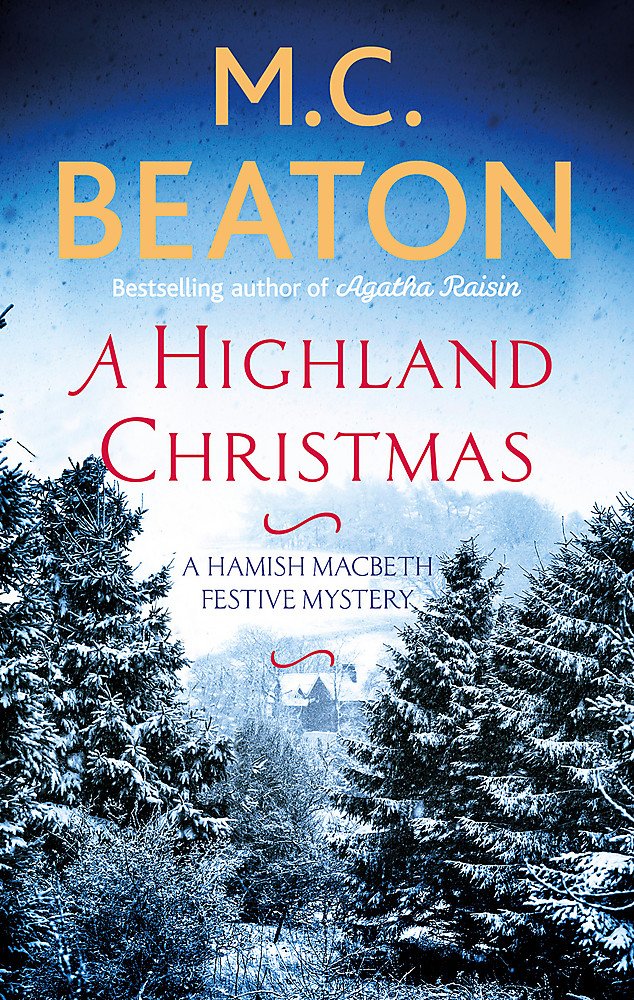
A Highland Christmas by M.C. Beaton

M.C. Beaton wrote my favorite Agatha Raisin cozy mystery series, but I’d never read any of this series featuring Hamish MacBeth. M.C. Beaton (aka Marion Gibbons) died in 2019 and is most famously know for these two mystery series. In this short novel, Hamish’s family has abandoned him for Floridian warmth, so he is left alone for Christmas.

At first it felt a bit un-Christmassy with no-one but Hamish having any Christmas spirit and I was about to put it to one side. But I persevered & was so glad I did, because it turns into a enjoyable feel-good Christmas tale.

There are no murders in this one — there is a lost cat, stolen Christmas lights and figuring out what made the grumpy old women into the witch everyone thinks she is — not to mention putting on a Christmas concert for the local old people’s home all while trying to sort out his love life.

A simple story with good characters, lovely settings, and holiday atmosphere.

Jane and the Twelve Days of Christmas by Stephanie Barron

I started this series when it first debuted back in 1996 (beginning with Jane and the Unpleasantness at Scargrave Manor). The series re-imagines Jane Austen as amateur detective. I read the first three and then decided I would rather read (and re-read) the actual Jane Austen novels.

This one being set at Christmas got saved for a rainy holiday season and we’ve had just that — so I dipped in.

The tale opens on Christmas Eve, 1814, as Jane Austen; her sister, Cassandra; and her mother are traveling to spend the Christmas season with her brother James and his family. James is now the rector of Steventon, where Jane grew up, so this is also a journey of return to her childhood home and neighborhood. As they gather to enjoy the twelve days of Christmas together, there is much to celebrate: Mansfield Park is selling nicely; Napoleon has been banished; British forces have seized Washington, DC; and on Christmas Eve, John Quincy Adams signs the Treaty of Ghent, which will end a war nobody in England really wanted.

It won’t spoil anything to tell you that Jane is involved in two somewhat convoluted murders and then searches down a spy who is attempting to aid Napoleon in his war against England. Also, fair warning, like Jane Austen’s books themselves, there are multiple characters, often with the same first names, and complicated familial relations. (I have a little book I found in a used bookstore called Who’s Who in Jane Austen and the Brontes which is invaluable when reading either Austen or Bronte, and now sadly out of print.)

The Austen’s and friends know how to celebrate the holiday season — there are lavish descriptions of food, festivities and dress. But also some bleak accounting of the cold, damp houses, as well as the varying impacts of societal class and wealth.

I had forgotten the delight in Ms. Barron’s writing which deftly captures the style and wit of Austen, as well Regency manners and a true ear for Austen’s dialect. The author painstakingly sifted through Austen’s letters and writings, as well as extensive biographical information, to create a finely detailed portrait of Austen’s life—with a dash of fictional murder.

Jane and the 12 Days of Christmas can be read as a standalone; but you do need to know that the gimmick of the series is a collection of Jane Austen’s personal journals have been discovered (imagined) which tell of her involvement in solving a number of murder mysteries.

As one reviewer said: this series imagines Jane Austen as she might have been in the world of death by murder and intrigue, as opposed to death by boredom.

A digital review copy was kindly provided by Soho Crime via NetGalley.


Now it’s time for a brand new year – please, oh yes please?

I don’t know about any of you, but I’m planning to go to bed early tonight I’m tired – really tired of 2020.


Holiday Advertising

Oh my gosh I almost forgot to give you my annual gift – the best Holiday Commercials I could find.

During this most unusual holiday, advertisers worldwide got the memo — not only is money tight for countless families, but 2020 has left exactly no one in a holly, jolly mood. So many of this year’s holiday ads convey the message that Christmas isn’t about extravagant presents or big get-togethers; it’s about the little moments shared with the ones you love.

Turn up your sound, expand to full screen and enjoy these ads – from me to you! Happy and Safe Holidays everyone.

https://www.youtube.com/watch?v=2N2eSsIWtNI&feature=emb_logo

This German ad for a pharmacy has gone viral, and for good reason: A grandfather’s weightlifting regimen isn’t just a vanity project, as the final moments of this ad reveals. (Translated from German, the tagline at the end reads, “So that you can take care of what really matters in life.”)

https://www.youtube.com/watch?v=gQdLD6kk960&feature=emb_logo

When a young ballerina’s performance is canceled due to COVID, her little sister ensures that with the help of neighbors the dancer can put on a (socially distanced) performance. Oh, and also with the help of some Amazon purchases, of course.

https://youtu.be/63o9tgPK9r8

In this ad, the North Pole elves convince Santa — played by Steve Carell — to “rethink their whole approach” to Christmas this year (unsaid reason: the pandemic) to find inventive ways to spread the holiday spirit. From Santa team Zoom calls to the bottling of things such as grandpa’s old stories, the elves find a way. “This year has been harder than ever,” Santa tells them and, really, he’s telling us, “and yet, you all found a way to pull this off.”

In this animated commercial from Erste, a Central European financial services company, the elderly, and unhappy, Edgar seemingly prefers to spend time alone in his room, until a loving caretaker finds a way to bring his past into the present. What does it have to do with financial services? Nothing – in the Advertising business that’s called “borrowed interest”

In this over-the-top Coke ad, a father forgets to mail his daughter’s letter to Santa Claus, so he sets off on an epic journey to hand deliver the letter to the North Pole… only to realize that his daughter wants something only he can give.

https://youtu.be/rqlgWXgOa_c

Speaking of kids with heartwarming wish lists, the young girl in this ad just wants to see her friend and neighbor who has suddenly disappeared. But the woman comes back again on Christmas, hospital bracelet around her wrist, and smiles all around.

https://youtu.be/7tbx9HN3qk8

And now for something completely different: Capital One spokesperson Samuel L. Jackson reunites with Pulp Fiction costar John Travolta in this ad, with Travolta playing a Jolly St. Nick who puts Samuel on the naughty list for his naughty words.

The starry-eyed granddaughter in this sad, yet poignant animated short proves it’s never too late connect with loved ones — or to put old traditions in a new light.

https://youtu.be/Juv2c0xgGno

The U.K.’s Waitrose supermarket chain (formerly John Lewis) is well known for pulling out the grand gestures for its Christmas ads. This year, though, it focuses on small moments — a chain of random acts of kindness that spreads holiday cheer. As always, the ad is beautifully produced, if slightly strange.

Christmas Night Reading

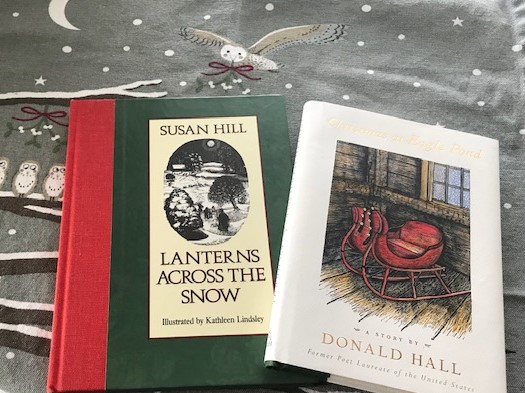
Turns out I wasn’t in the mood for Christmas murder mysteries after all. So I pulled two slim volumes off my shelf and read them last evening in my cheery reading Christmas nook.

Both books were discovered during a 2019 hot and humid summer trip to New England – when my mind was far away from Christmas.

I discovered the first book when I was accidentally left behind at our friend’s home in Maine. Everyone else had driven off in two cars to their nearby lake cottage and each car thought I was in the other one – I had just ducked into the powder room to change into a swim suit. I was not in the least dismayed. All alone, I happily browsed the bookshelves of a kindred spirit book lover. I discovered this little treasure – read it while in front of a fan — and made note of the title so I could get my very own copy – which I did this year.

Lanterns Across the Snow by Susan Hill

This is a gentle little book about an English country Christmas at the turn of the last century. Fanny reminiscences about Christmas Eve, Christmas Day, and St. Stephen’s Day when she was nine years old.

A happy childhood is like a magic circle. Lit from within, it throws a beam forward into the present. Snow always fell on Christmas Eve, fat and soft as goose feathers, to lie like a quilt upon the ground all winter. That is what Fanny remembers, now that she is old, at another Christmas time.

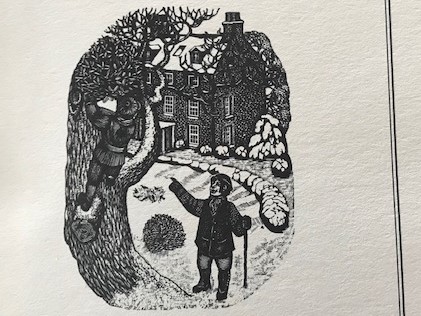
This story brings back the magical of Christmas Eve and the expectation of luscious foods, that were not available every day of the year. The contrasts of cold and warmth, of hope and despair, of birth and death all wrapped up in a warm and nostalgic atmosphere. It even has some lovely woodcut illustrations.

It’s short but sweet, and would make great reading for Christmas Eve or a cold winter night by the fire.

Christmas at Eagle Pond by Donald Hall

When visiting New Hampshire, I always try to visit Toadstool Books and dip into one of their three independent bookstores, each of which are beautifully curated. This visit they had a special section dedicated to Donald Hall, the 14th US poet laureate who lived on a farm in New Hampshire. And, although it was July, I purchased this Christmas book to bring home to my collection.

In December of 1940, twelve-year-old Donnie Hall gets on a train from his comfortable Connecticut home to fulfill a dream: to spend Christmas with his grandparents on their farm on Eagle Pond in southern New Hampshire.

He tells of a Christmas in the country; family dinners, being snow-bound, horse-drawn buggies, wood-burning stoves, milking cows in a frigid barn before dawn, and making popcorn balls for the church Christmas party. A vivid portrait of a vanished New England

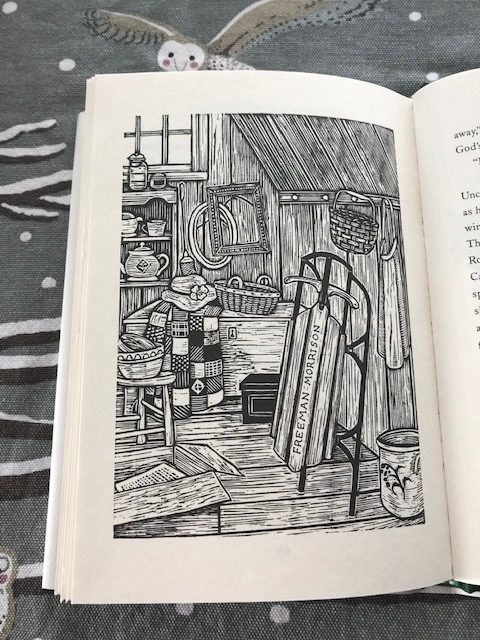
The illustrations by Mary Azarian are lovely and fit perfectly with the book’s tone.

I’m going to break my rule and give away this little book’s secret, which is revealed in Mr. Hall’s note at the book’s end — he never really got to spend Christmas at his grandparents’ farm when he was a boy. Instead, in his eighties, having inherited Eagle Pond Farm and done most of his greatest work as a poet there, he imagines what a Christmas at Eagle Pond would have been like for his twelve-year-old self. Based on the stories tole by his mother and his grandparents, he wanted to give himself “the thing I most wanted, a childhood Christmas at Eagle Pond.”

This is a beautifully spare and gorgeously written little Christmas tale.


Unlike my intended holiday mystery reads — these slim volumes are quite simple, don’t have a complicated plot, there’s no mystery, and no conflict. That made them my perfect Christmas night’s reading. And, what so many of us want this Christmas to be.