The Bucolic Plague by Josh Kilmer-Purcell

I can imagine you read that title and thought– What? How inappropriate. Book Barmy toting a book about a plague? But please read that title carefully folks — it’s a ‘bucolic’ plague — not the scary plague.
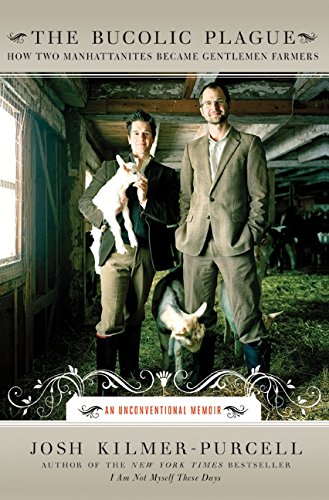
The very timely-titled The Bucolic Plague is a wonderfully funny memoir about what happens when two New Yorker’s (one an ex-drag queen) do the unthinkable: start over, have a herd of kids, and get a little dirty. (That bit is from the books’ inside cover blurb — but it was too good not to copy).

One autumn Sunday, Josh Kilmer-Purcell and his partner, Dr. Brent Ridge, were headed back to Manhattan after apple picking in upstate New York. They stumbled into the little town of Sharon Springs — where they found their dream home — the historic 19th-century Beekman mansion — complete with a 60-acre farm. And so they bought it — using most of their savings.

And now a brief message from Book Barmy: Ahh, you say, I’ve read this type of book before, city folks move to the country and find their bliss. Trust me, this is NOT that book.

From the Author’s Caution:

This book is not about living your dream. It will not inspire you. You will not be emboldened to attempt anything more than making a fresh pot of coffee. The author reminds you that there are plenty of other memoirs out there written by courageous souls who have broken with their past … and have successfully achieved goals… The author notes that those memoirs are generally full of more s#@* than a barn at the end of a long winter.

Back to our regularly scheduled post: Now our intrepid couple had to figure out how to balance their busy careers during the week (Josh, an advertising executive and Brent a VP for Martha Stewart Living). They envisioned leisurely weekends away from the city as gentlemen farmers. Then Josh hires a live-in caretaker who just happens to bring along his herd of goats. And, well, if they have goats, they might as well have chickens. How about a cow for cheese? And they must have a garden. And then a bigger garden. When they gave friends and family handmade goat milk soap at Christmas – they began taking orders for the soap and soon Beekman 1802 was born and grew into an artisan mercantile company.

Later, after the publication of this book, they launched their own reality show called The Fabulous Beekman Boys (google it) and even had a role on The Amazing Race (they won!).

The Bucolic Plague is the unvarnished story of their journey — as they make their way from hectic Manhattan lives to even more hectic, but bucolic, lives on a farm. They face harsh realities, failures, doubts, and stinky, filthy chores. Just to give you a taste of their new normal — they encountered an invasion of flies (as icky as it sounds), a tricky birth of triplet goats (not for the fainting type), and the perils of food preserving (at least no one got sick).

There are celebrity encounters — mostly with Martha Stewart, who Mr. Kilmer-Purcell regards with a mix of wonder, snark and disbelief. His account of transporting a flock of baby goats into NYC for an appearance on Martha’s television show is downright hilarious.

The couple’s relationship struggles under the financial strains and a schedule that leaves little room for sleep, let alone, togetherness. Throughout The Bucolic Plague, I was rooting for this couple to stay together and make a success of their farm.

Book Barmy pro-tip, do not read this book in bed, as you will irritate your sleeping partner. I was snorting and cackling all the way through the many adventures of Josh and Brent. I had trouble putting it down and tried, with little success, to ration it out, so it wouldn’t end too soon.

Mr. Kilmer-Purcell has written a laugh-out-loud funny, yet moving, account of dreams lost and then realized. And no such journey can be complete without compromise, set-backs, and great heart.

So — you’re hunkered down, staying at home and you want something light- hearted and fun to read, then The Bucolic Plague is highly recommended.

My only complaint is that book didn’t have any photos of their beautiful house and farm. So here you go ~~

Stay home, read good books — stay well, read good books.
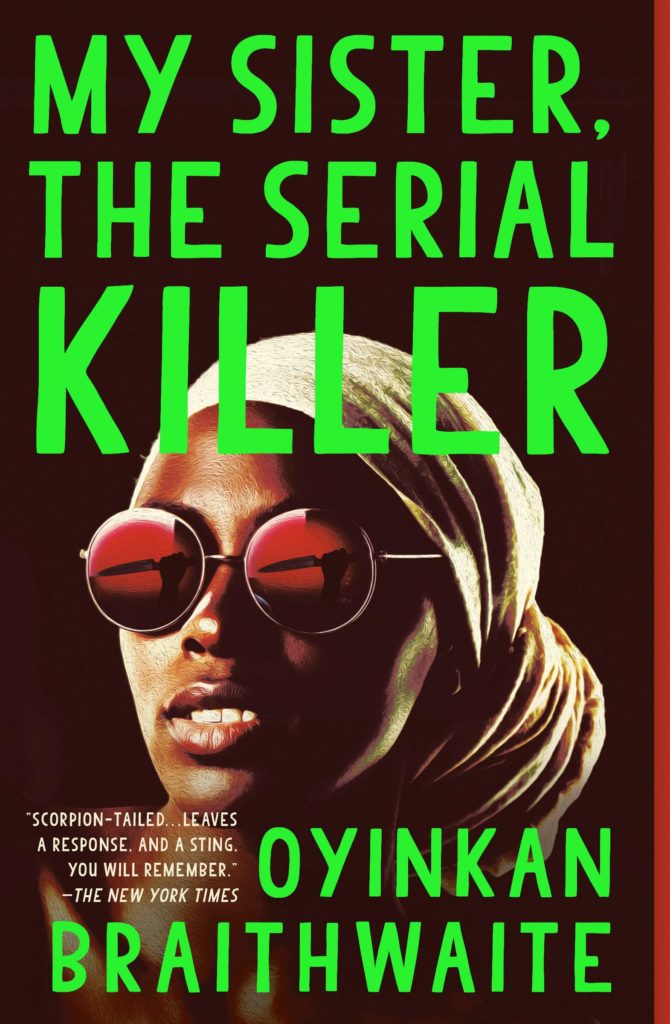

My Sister, the Serial Killer by Oyinkan Braithwaite

Today is my younger sister’s birthday. I bought her this book as a joke gift, never intending to read it.

But, then I read good reviews and learned that it was up for both the Booker and the Woman’s Prize. So, with the deadline of my sister’s birthday approaching, I opened it up the other week and dove in.

Korede’s sister Ayoola has the inconvenient habit of killing her boyfriends, the latest named Femi:

“Femi makes three, you know. Three and they label you a serial killer.”

My Sister the Serial Killer is written by a Nigerian novelist, and is set in Lagos, Nigeria. Korede’s younger sister Ayoola is many things: beautiful, self-involved, vain, everyone’s darling, and yes, a serial killer. Korede works as a nurse and lives at home with her mother and Ayoola. She is fastidious in her job, but doesn’t really have any friends due to keeping her sister’s secrets and cleaning up her messes, literally.

We begin in the middle of the action: Ayoola calls Korede in the middle of the night for help — she has stabbed her newest boyfriend. Out of necessity, Korede has become an expert at crime scene cleaning and evidence concealment. (Bleach is the best way to remove blood if you’re wondering or know your own serial killer.) Her life has become move the body, dispose of the body, clean up after the body, and hardest of all — stop her sister from carrying on with her social media posting as if nothing happened – and advising Ayoola to at least act sad about her latest ‘missing’ boyfriend.

But, everything changes when Ayoola sets her sites on a doctor Korede’s secretly in love with. Forced to sit back and watch in utter fear as Ayoola successfully flirts with him, Korede is faced with an inner battle to save the man she loves or to protect her sister.

Driven by her passion, and the fear she and her sister might get caught ~~ because, oops, Korede confessed everything to a patient who was in a coma but is now awake—Korede makes choices she never even imagined were possible.

The sisters’ story goes back and forth from their troubled childhood, to the present, to the near past, and onward. The story becomes deeper and more nuanced than one would first assume — as more history is revealed.

Nigerian culture is sprinkled throughout. There’s the heat, the food, and the traffic. The police are portrayed as corrupt and easily bribed. Even though their dead father was cruel and abusive, the mother and daughters are expected to host the annual lavish party to remember him.

My Sister, The Serial Killer isn’t a crime novel as such – there’s no mystery and no detection. It’s really the story of sisters and their relationship — the loyalty and the rivalry. It’s often darkly funny, but also tense, and unexpectedly poignant. There’s a scene where Ayoola is happily lapping ice cream while her (murdered) boyfriend’s sister is sobbing in grief — which stopped me cold.

This is a short little novel which you could read in one sitting, but you’ll want to linger, as it’s a very artfully written book. And, as an added bonus, you’ll learn how to clean a crime scene – just in case a family member goes rogue.

Happy Birthday to my wonderful sister, who, as far as I know, is not a serial killer.

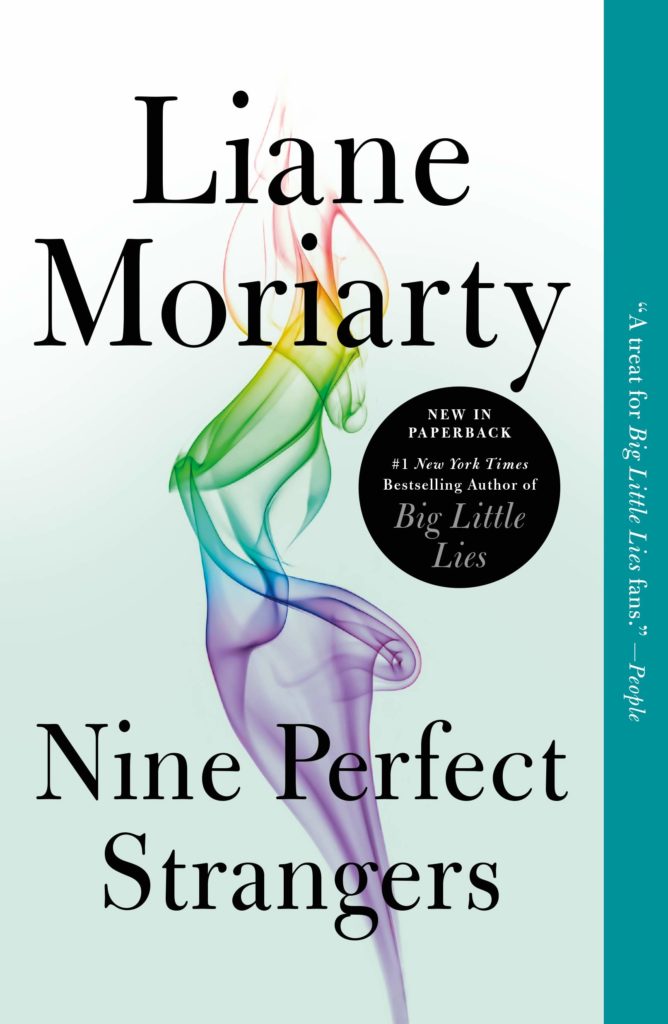
Nine Perfect Strangers by Liane Moriarty

I didn’t intend to read this book — it wasn’t on my TBR list or even on my radar, but read inhale it, I did.

It was a really slow day at the bookstore and I was shelving fiction when I recognized Ms. Moriarty’s name from one of my favorite TV series Big Little Lies. This popular Australian author is known for writing a book a year, and I would categorize her novels as Chic-Lit Thriller (I just made that up).

I decided to randomly pick one of her titles to browse through it – just browse, mind you – there’s a ton of books at home to read, I told myself.

Seventy two hours later, I closed Nine Perfect Strangers and looked around blurry eyed, as if emerging from a cave.

The setting is Tranquillum House, a remote health resort in Australia and nine people have gathered to revive their lives — some to loose weight, some to gain mindfulness, and others just to get a fresh start. Frances Welty, a middle-aged, romance writer whose novel sales have been dwindling, arrives at the health resort with a bad back and a broken heart. She quickly realizes that most of her fellow guests don’t look to be in need of a health resort at all. The owner/director of the resort is odd, but charismatic, and Frances wonders if she should leave or stick it out. But stay she does and as she participates in the meditation, Tai Chi, and drinks the daily smoothies – Frances begins to feel a great deal better.

Several chapters go into the psyche and problems of each of the guests. We learn about their problems; marriage issues, a family recovering from the loss of a child, a has-been soccer player – all of them seeking health and bliss. But, the main focus is on Frances and Masha, the spa director. I laughed out loud at Frances and nodded in agreement at her attitude towards wellness and dieting. I had empathy for some of the characters and frustration with others, but overall I had anxiety on behalf of all of them — Tranquillum House is not all it appears to be. To paraphrase Bette Davis – fasten your seat belts, it’s going to be total nutter of a ride.

As the plot unspools, the transformative spa treatments start to take a dark turn. Masha gets weirder and the guests start to have strange interludes. I’ll stop there and won’t divulge any more. Just know there are lots of plot twists and some Agatha Christie-type scenes — all of which kept me turning the pages and turning the pages…

Nine Perfect Strangers is not high literary fiction, instead it has a ridiculous plot with some cliché characters, but it is also quirky, fun, and entertaining. The ending is a bit over the top, but the final chapters nicely tie up each characters’ story. I was on the edge of my seat throughout the book — Ms. Moriarty certainly can write a page turner and I now understand why she is a best selling author.

But now, afterwards, I think the experience was akin to eating cotton candy. Lots of fun — but why?

____________________________________________________________________________

I’ve read that Nicole Kidman bought the rights to Nine Perfect Strangers and is planning a series. Come to think of it, she would make the perfect Masha.

Three on Tea

I’m known for being a tea snob lover (see HERE) and I often receive books about tea. During my January clear out of books, I came across three books about tea, two of which I’ve read, a third which I just started last night — and all totally enjoyed. So grab yourself a cup of tea and lets talk about them — okay?

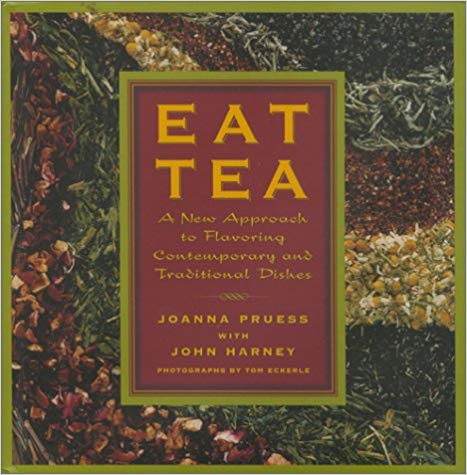
A present from my sister, this cookbook takes tea out of the cup and into food. I was doubtful at first, but Eat Tea gives ideas and recipes for such dishes as Tea Smoked Chicken, Orange Jasmine Biscotti, Green Tea Crusted Salmon, and one of my favorites ~~ Earl Grey Chocolate Mousse. The opening chapters cover how to brew tea for cooking and how to match various teas with food. Okay, so it’s not an everyday cookbook, but it lives with my other cookbooks because it’s so darn unusual. I think I’ll make the biscotti for a tea-loving friend who’s coming to visit next week.

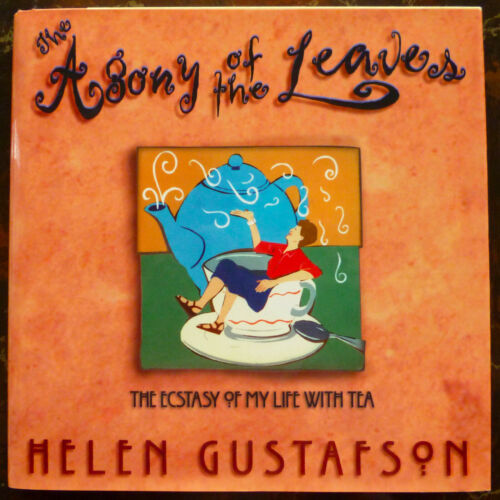
Ms. Gustafson was a tea expert, tea buyer and lecturer…but is probably best known as the former tea guru for Berkeley’s infamous Chez Panisse restaurant (just go with it ~~ it’s California). She was quite the character, you can learn more about her HERE.

The Agony of the Leaves refers to the swirling action of the loose tea leaves immersed in boiling water and has been used for centuries to describe when the oxygen of the boiling water allows the tea leaf to release it’s flavor. Couldn’t get more tea nerdy than that — but fear not, this quirky little book is more a memoir than a pedantic tea book. Ms. Gustafson’s life was influenced by tea and the tales of her adventures and travels are surprisingly entertaining. The book opens with a wonderful chapter called Teatime in the Sun Room which describes her midwest childhood tea times (every day except Sunday), in a sun filled room, complete with mis-matched china, a sky-blue teapot and home made treats. The book goes into poetic rapture about the qualities of Darjeeling which she calls the ‘mindblowers of the tea world’ and goes on to explain that the harder it is to explain what the tea tastes like the better your Darjeeling. The book talks about all sorts of tea brands I’d never heard of before, such as Bramah Ceylon Tea and Drysdale Breakfast Tea. Ms. Gustafson is not a fan of favored teas, but does admit that, like many other L.O.L.’s (little old ladies) she does enjoy Constant Comment tea (what does it mean that it’s one of my favorites too ? — sigh). There’s a wonderful chapter which pays homage to San Francisco’s iconic, but now closed, Waters Upton Tearoom — with its comfy couches, equestrian decor and down the back alley toilet. Sadly, The Agony of the Leaves is out of print, but you will find copies in used bookstores and on-line. If you are a tea lover or know one, it would make a great gift. Any tea lover will – well – love it.

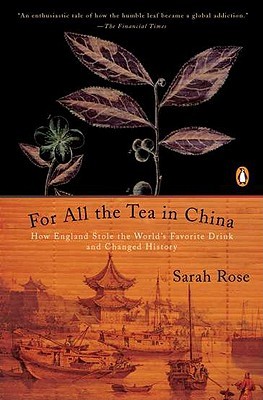
Aren’t you just pulled in by this dramatic title? For all the Tea in China: How England Stole the World’s Favorite Drink and Changed History. I’m only three chapters into this slim book, a gift from a friend, but I’m enthralled already. It reads more like an adventure story than a history of the tea trade. The book tells the remarkable account of Robert Fortune, a Scottish gardener, botanist, and plant hunter. In 1848, Fortune was hired by the British East India Company to make a clandestine trip into the interior of China—territory forbidden to foreigners—to steal the closely guarded secrets of tea horticulture and manufacturing. Fortune’s journeys into China are at the heart of this history and as one reviewer called it — a wild combination of Indiana Jones and PBS garden shows. Count me in. I’ll tell you more when I finish.

So there you go, three books I thought I might get rid of during my annual January Book Clean Out ~~ but now that I’ve spent time with each of these tea lovers tomes – they’re staying.

Turns out I’m actually hopeless at culling books and, you know what, I don’t care.

TV Barmy

My back is much better, thanks for asking. Did some Tai Chi every day, ice packs, stretching, and generally took it easy. Which meant I had time, not only to read, but also to catch up on some TV. Especially now that football season is over I get a chance to watch some shows of my own and I have some delights I want to share with you.

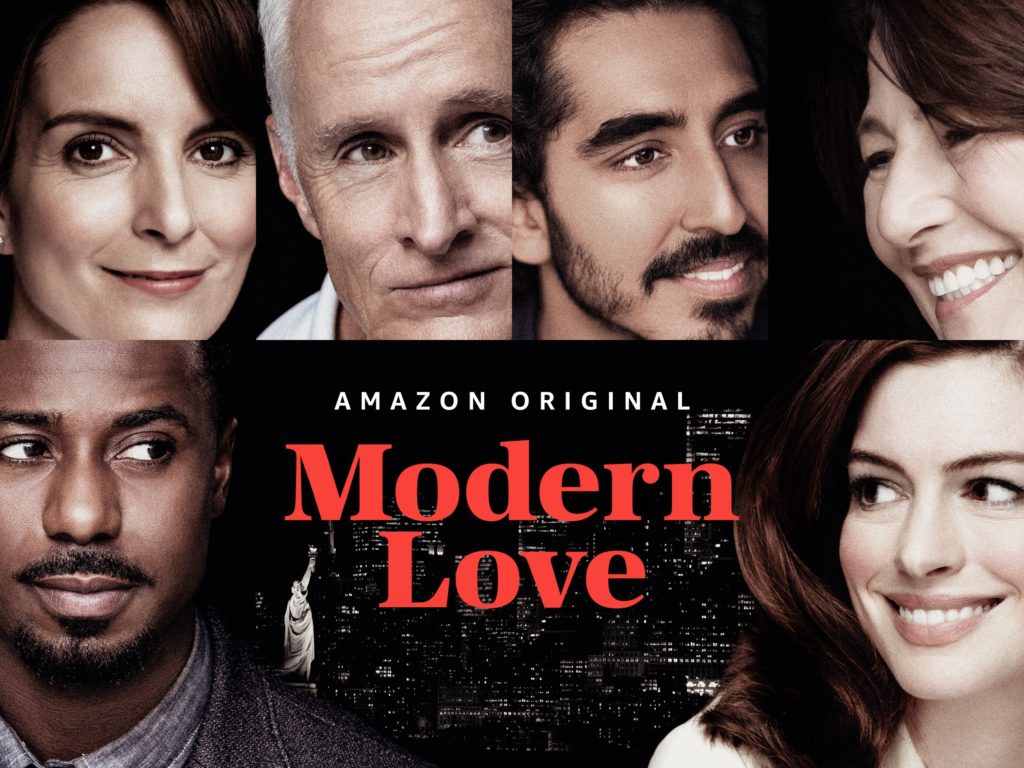
I’m in love with Modern Love. A co-production of Amazon Studios and the New York Times, this anthology series explores love in all of its complicated and beautiful forms. Each of the eight episodes brings to life a different story inspired by the New York Times popular Modern Love column. I found every episode beautifully written and acted — and either heart warming or heart breaking. A bonus — it features some great actors such as Jane Alexander, Tina Fey, Anne Hathaway, Dev Patel and John Slattery. Streaming now on Amazon Prime.

Good Girls. I stumbled across this show and watched because of Christina Hendricks (from Mad Men), but was quickly drawn in. I even got Husband hooked. Three woman, all at their wits end and desperate for cash, decide to rob a small grocery store — but are soon unwittingly deep into the world of crime. Sounds dark, but it’s not. It’s funny with lots of twists you don’t expect. It’s also action packed, joke packed, fun packed. If you like humor spiced with lots of drama you will love this wacky comedy. Find the first two seasons on Netflix and season three is just starting on NBC or on-demand.

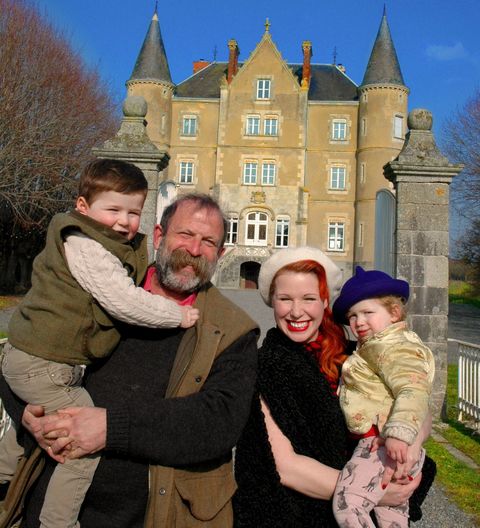
Escape to the Chateau A documentary series which follows a British family as they trade in their two-bed apartment in Essex for a dilapidated 19th-century French chateau. Upon finding their fairytale castle, the pair begin work to restore it back to its former glory. With a limited budget to renovate 45 rooms, as well as improve and maintain acres of land, it is a huge task for the couple who want to create a beautiful venue for weddings and events. Dick, an engineer, is constantly struggling with heating systems and electrical issues, while his wife Angel gets creative with the chateau’s vintage decor. What is fascinating about this series is the couple’s perseverance through all sorts of setbacks. You’ll applaud as they conquer each seeming insurmountable task. This PBS series is hard to find – we have our DVR player to record it whenever it finds an episode.

To coin the NPR phrase – TV Worth Watching.

That’s enough — I’ve got cabin fever, I’m out to the garden and for a walk now that I’m mobile again.

Crooked by Cathryn Jakobson Ramin

I’m a New Year’s cliche.

Early January I started back with Classical Stretch– a PBS series Husband faithfully does every morning and claims great rewards — (no more need for his knee brace when playing tennis, etc.) However, I tend to forget to breathe, which is very, very bad, and as a result, I twisted my back. Cut to severe pain – out of commission. Doctor diagnosed a herniated disc – my second one — darn it. So as I gingerly stretched (breathe, darn it, breathe) and took short walks, I suddenly remembered I had this book ~~ Crooked: Outwitting the Back Pain Industry and Getting on the Road to Recovery.

I dug it out and found my bookmark still 1/3 of the way through. I restarted and read along as, Ms. Ramin, an investigative reporter takes us through her experiences with back pain, caused by a horse riding accident in her teens, and continued through three decades. In an attempt to search out the best practices among the plethora of back treatment options, she peels back the cover on the often profit seeking ‘crooked’ back pain industry. She interviewed spine surgeons, pain management doctors, physical medicine and rehabilitation physicians, exercise physiologists, physical therapists, chiropractors, and specialized bodywork practitioners. Further she talked to back pain sufferers – those still suffering and those recovered.

The first part of the book discusses the problems of the back care industry, and the often quick leap to back surgery and other invasive treatments. Ms. Ramin, as a journalist, submits herself to various treatments in the name of research and exposes corrupt practices and doctors. The author is not a fan of chiropractors or their treatment practices. They are, it turns out, pretty loosely regulated.

(N.B. I know many people who benefit greatly from chiropractors and, so for me, this may still be an option.)

I somewhat skimmed through this section as I’m not that bad, and neither I or my doctor are even considering surgery. But I did learn that disc problems like mine are not helped by removing or fusing a disc. Herniated discs will go back in place and get well. Which led me to the the second part of the book, which focuses on solutions.

I honed right in on my diagnosis, and learned that discs don’t actually slip. They are securely attached to the end plates of our vertebrae, but they do bulge and herniate. The dubious good news is that as we get older the less likely discs will herniate, because they dry out.

Ms. Ramin reinforces that our sedentary lifestyles with too much sitting, heads constantly forward, and a c-curved spine causes deterioration of the spine, muscle loss, and resulting pain. Then I read (and re-read) the best chapter in the book — The Back Whisperers. Turns out proper reconditioning with exercises and soft tissue work can make such a difference. She talks about how we limit our movements and hold our backs in awkward positions to avoid back pain — which promotes further back de-conditioning. (I’m automatically straightening up as I write this). She goes into detail on the importance of proper body conditioning with correctly executed exercises and how to reduce the effects of poor posture and body movement.

Yes, Crooked reveals the dark side of the (money making) back pain industry and spends a lot of time on what NOT to do. But happily, there’s plenty of advice of what one should look into: Non impact exercise such as Tai Chi, Pilates and Yoga; body movement classes such as Feldenkries; and PT sessions with a certified orthopedic clinical specialist who importantly, should not be connected with a surgery practice. (See I took lots of notes)

In the end, I came away with the sobering thought that there is no cure for chronic back pain. But can it be successfully managed and one can return to a normal life. For me, that doesn’t mean running a marathon — just now the ability to walk and climb stairs without pain. And eventually back to my garden, exercise classes, hiking, working at my book store, and, of course being able to travel/traverse around far flung destinations.

I highlighted this quote:

“You are going to hurt while you go through treatment – I know myself that it is no picnic. But the opportunity cost of not climbing out the other side is not acceptable.” She adds: “Back pain is not the unsolvable enigma of modern medicine, but successful rehabilitation takes sweat, persistence and a lifetime of hard work.”

Talk about hard word, Crooked is a result of just that — with its incredible amount of research. I wholeheartedly prescribe this book and a personal thank you goes out to Ms. Ramin.

What the book doesn’t discuss is that when your back hurts – the universe suddenly makes you fumble fingered – dropping everything from the soap in the shower to your keys — just sayin’.

See you. I’m getting up now to do a beginners Tai Chi session – turns out there’s all sorts of videos on You Tube.

Any other advice from my Book Barmy gang would be greatly appreciated.


My copy of Crooked was most generously provided by the author several years ago.

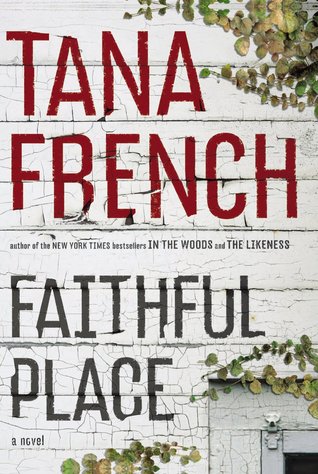
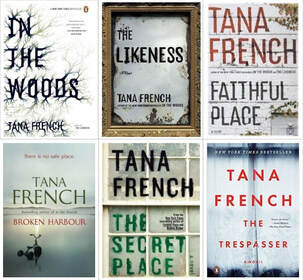
Faithful Place by Tana French

Faithful Place is the third installment in the Dublin murder squad series and I’m just as jazzed about this one as the first two — In the Woods and The Likeness.

What is unique about this series is that a character who had a minor role in one book may be the protagonist in another — with a case told from their perspective. You don’t have to read Ms. French’s series in order – but I am.

Here we have the foul-mouthed, manipulative Frank from the second book, The Likeness which focused on Cassie, a female undercover officer. But in Faithful Place we get a better understanding of Frank’s hardscrabble childhood and gain insight into his toughness.

Frank is called back to his poor childhood neighborhood of Faithful Place, Dublin — which he has avoided for years. His sister calls to tell him that his first love Rosie Daly’s suitcase has been found.

Twenty two years ago, Frank was in love with Rosie whose father forbid the romance, assuming that his own family, poor as it might be, was stationed above the Mackeys. Frank and Rosie are determined to escape their families and inevitable destinies by running away to London. They saved their money, bought the tickets, and on the night they were to leave, Frank sneaked out to wait for Rosie ~~ but she never showed up. With his heart broken, Frank fled the rough neighborhood of Faithful Place vowing never to return. Now he’s drawn back to investigate the discovery of her suitcase and long ago disappearance.

“I waited there in the shadows, watching the plumes of smoke that my breath sent into the lamplight, while the bells tolled three and four and five. The night faded to a thin sad gray and round the corner a milk cart clattered over cobblestones towards the dairy, and I was still waiting for Rosie Daly at the top of Faithful Place.”

“The suitcase was by the window. It was a pale-blue thing with rounded corners, spotted over with big patches of black mold, and it was a crack open; someone had forced the pathetic tin locks. What got to me was how small it was… Rosie had been heading for a whole new life with something she could carry one-handed.”

The opening pages of Faithful Place draws you in, as we go back in time to Frank’s younger years in this rough Dublin neighborhood. There are many flashbacks, which under a lesser writer can be confusing and superfluous, but Ms. French handles them with such genius that a reader will never loose track of what’s happening.

Frank’s perspective is often cruel, unforgiving, and especially self serving. But here is where Ms. French shines. One can’t help but become deeply involved with her characters. And, as you keep reading and start to scratch the surface you see why Frank is such a mess (can everyone say ‘family discord’? ). About a third of the way through the book, I fell hard for Frank and my heart ached for him. In Faithful Place, Frank faces unanswered questions, unethical behaviors, and ultimately himself. Ms. French takes us on this roller coaster ride all while deftly adding layer upon layer to the mystery

It’s difficult to pigeonhole Ms. French’s novels – they are so much more than mere police thrillers or murder mysteries. Her books are atmospheric, yet literary, and deliver complex insights into what brings people to the precipices in their lives — and then — what ultimately saves them.

If you’re not reading this Tana French series, you’re seriously missing out.

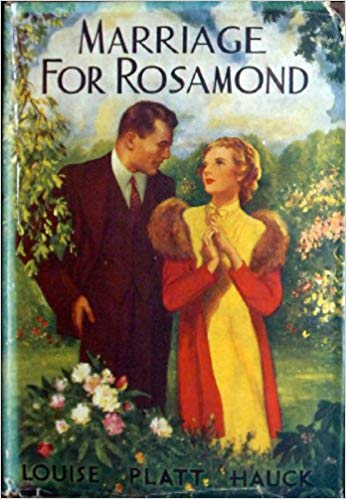
Marriage for Rosamond by Louise Platt Hauk

I’m sure most everyone is bored by this, but sometimes it bears repeating.  I volunteer at the Friends of the S.F. Library Bookstore, and every so often we get vintage books.

For five dollars I took this charmer home.  Just look at that cover, can you blame me?  (Volunteering yet still buying books — this is why Husband has gray hair.)

Marriage for Rosamond was written in 1937 and published by Madison Square Books which sports the following marketing blurb on the back with a listing of their titles:

Books for every taste and mood — outstanding novels, delightful romances, thrilling mysteries, two-gun Westerns.

Can’t you just picture these colorful volumes carelessly stacked on musty bookshelves in knotty pine summer homes in upstate New York, with comfortably shabby furniture, porch swings, and long afternoons reading…

Okay, sorry folks, I’m back from my daydreaming digression.

Marriage for Rosamond was one of Madison Square’s romances, the chick-lit of the 1930’s.

The plot revolves around the innocent and privileged Rosamond who falls in love with Jim.  But in this period piece they don’t just fall in love, they woo, for pages and pages.  I almost gave up, but when they finally get married and Rosamond moves to Jim’s grand home in Kansas City, the plot actually got more interesting and there were some simple, but unforeseen developments.

Jim has a sickly brother Rich, and Jim dotes upon him.  Rich moves into their house and while he doesn’t seem all that ill, he has trouble recovering from small health setbacks.  Rosamond has mixed feelings, recognizing that Jim is being manipulated — but she decides to stick it out as a loving and devoted wife:

[She] learned hard lessons during these weeks.  She learned to sit quietly by while Jim talked of Rich; his accident, the possible weakening of his reserve strength, his childhood illnesses.  She learn to eat her meals with Jim sunk into depressed silence or starting up when one of the nurses came downstairs.  She learned — and this was the bitterest lesson of all! — that she did not count at all with Jim, at least while Rich was so ill.

When Rosamond is called upon to be Rich’s full time caregiver — the situation becomes intolerable.  Rosamond flees back to her devoted grandfather and their comfortable family home.  All seems over with the marriage — but in the end the story revolves around to a satisfying ending.

What I found most interesting about Marriage for Rosamond was the author’s writing style — typical of the period.  The literate vocabulary was a joy with proper usage of words such as ~~ benighted, quiddity, indubitably and vivant.

And, the often sentimental passages, which border on the saccharine, in this context are merely old-fashioned and somehow touching:

She dropped a velvet cheek against his hand…

Jim was too close to the weaving to see the pattern…

For me this romantic novel was a master class in 1930’s American domestic drama and while it was sometimes over dramatic, it was never overwrought.

I had a grand time reading Marriage for Rosamond

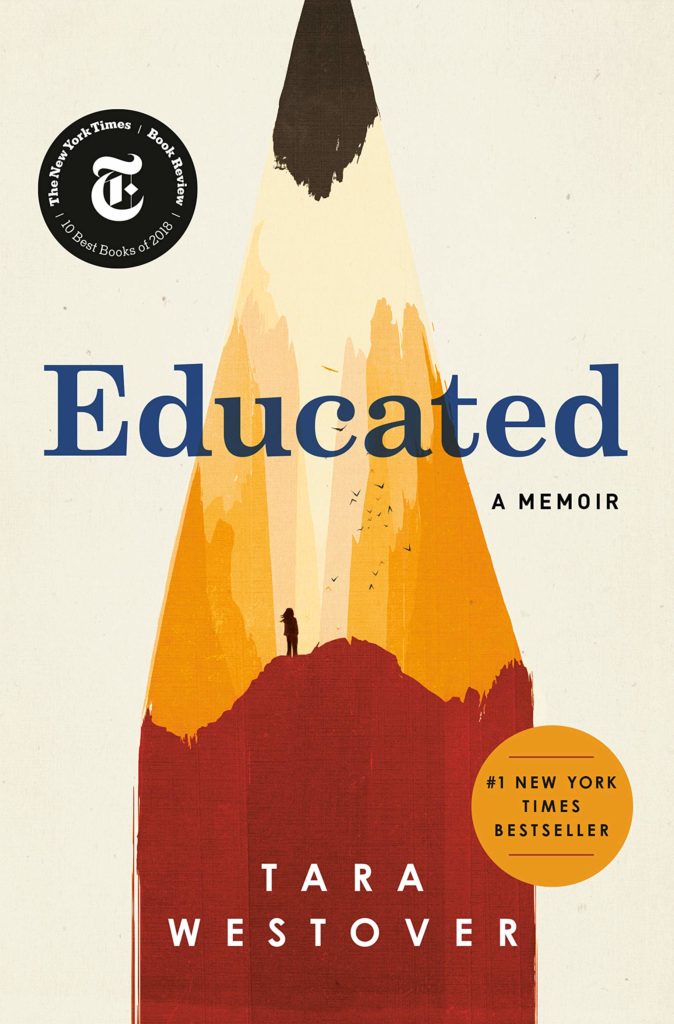
Educated by Tara Westover

I’m late to the party on this one. It seems everyone has read this gripping memoir about a young girl who, kept out of school, escapes her survivalist family, goes on to college and eventually earns degrees from Harvard and Cambridge. Ms. Westover has been interviewed by all the major press and television outlets and Educated was on the bestseller list for many, many weeks.

Tara’s father, Gene Westover is a self-appointed prophet, with a psychotic nature, as well as revolutionary religious beliefs. He traumatizes his family both emotionally and physically. His children are indentured workers for his scrap metal business — and they suffer burns, head injuries, and deep wounds. No medical intervention was allowed, so these dreadful injuries are treated at home with the mother’s homemade collection of herbs, tinctures, and salves. The children and their mother are manipulated and controlled by Gene who demands loyalty at all costs.

On the highway below, the school bus rolls past without stopping. I am only 7, but I understand that it is this fact more than any other that makes my family different. We don’t go to school. Dad worries that the government will force us to go, but it can’t because it doesn’t know about us. Four of my parents’ seven children don’t have birth certificates. We have no medical records because we were born at home and have never seen a doctor or nurse. We have no school records because we’ve never set foot in a classroom.

I kept having to put Educated aside, not because of the writing — no, no — Ms. Westover writes beautifully — but because this book is so very hard. This is no sugar coated story – this is grim reality and I needed many breaks from this mesmerizing but cruel account.

I no longer needed breaks once Tara strikes out on her own and surmounts many, many hurdles — from passing the testing required to get into Brigham Young, to interacting with the outside world. She makes friends, gains mentors and discovers just how much she doesn’t know. This second half of the book tells of her struggle to be ‘educated’ and her pursuits to pass the next course, the next level, the next requirement which takes her eventually to earn a PhD from Cambridge University.

During this time Tara goes back home to try and help her sister in law (married to Tara’s abusive brother) and then again to nurse her father after a horrific burn accident. Each visit leaves her with a new perspective that even this craziest of upbringing was, in her child’s view — normal.

Not knowing for certain, but refusing to give way to those who claim certainty, was a privilege I had never allowed myself. My life was narrated for me by others. Their voices were forceful, emphatic, absolute. It had never occurred to me that my voice might be as strong as theirs.

Having grown up loving school and education, I found the notion of being deprived even the basic education just heartbreaking. I finished Educated feeling wrung out, yet I still must recommend this incredible memoir. Educated is beautifully written, heartrendingly insightful, and uplifting.

So if you think your New Year’s resolutions are insurmountable – read Educated – getting back to the gym will seem like a cake walk.

A digital review copy was kindly provided by Random House via Netgalley.

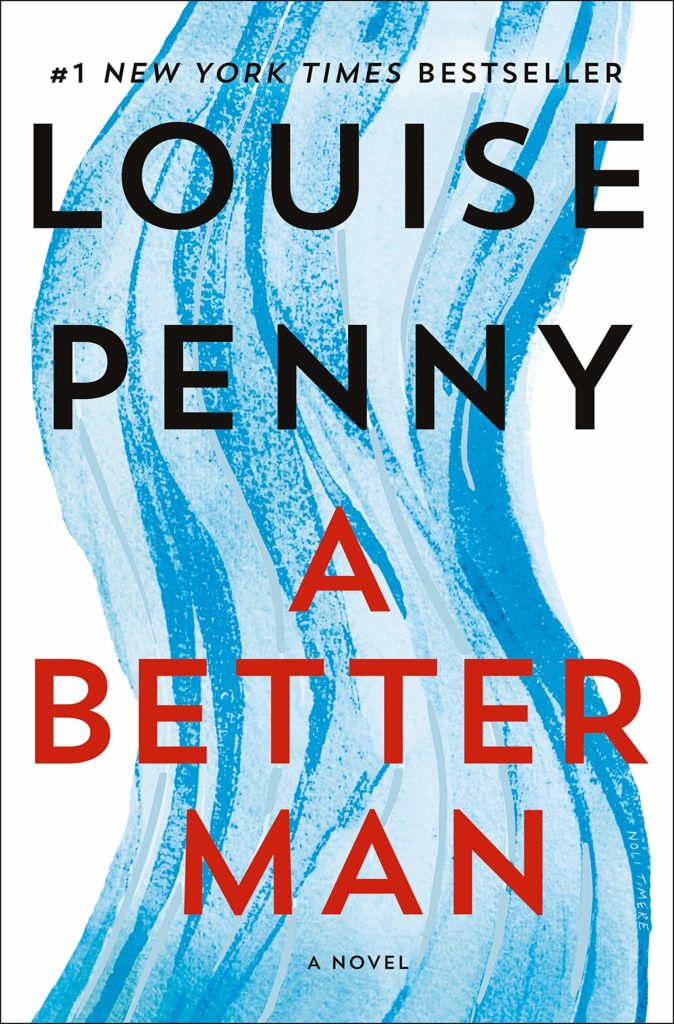
A Better Man by Louise Penny

A Better Man is the latest installment in Ms. Penny’s bestselling mystery series. If by chance, you’ve been banished in Siberia and aren’t aware of this series, please drop everything and start with her first Still Life – you should read them in order.

Don’t start with this one as you’ll just get confused. A Better Man, uses many references from her previous novels.

It’s Gamache’s first day back as head of the Surete’s homicide department, a job he temporarily shares with his second-in-command, and son-in-law, Jean-Guy Beauvoir. There’s massive flooding in Quebec and the mystery begins when a father reports his daughter missing. Sadly, the daughter is found dead in the flood waters and it becomes clear that she had been abused by her husband and was also pregnant. So, of course the main suspect is this abusive husband…but perhaps not.

Ms. Penny takes us through plot twists and sub plots, scattering suspects as we go along. There are surprising dynamics that lead to the crime(s) committed here — from the psychology of spousal abuse — to the Surete’s highly questionable manipulation of a suspect’s social media account.

I always look forward to the cozy time back in the village of Three Pines, where the characters (and the reader) can gather sustenance from the community. But we only get short respites in the village and its characters. Clara deals with harsh critique of her latest art — all brutally served up via social media. Ruth meddles where she shouldn’t and Myrna has a sweetheart.

I will take a short break here to quote the New York Times on this book:

“a constantly surprising series that deepens and darkens as it evolves”

And there it is – A Better Man (like her previous two installments) is deeper and darker and for this reader that takes some getting used to. 

 Ms. Penny’s still writes beautifully and deftly takes the story in multiple directions, always building the tension.  But it is darker world for Three Pines and our beloved characters. 

Spousal abuse is only part of the dark story — Gamache’s past still haunts him and his career. Social media is used to hurt and maim. Global warming is causing unprecedented flooding. And is Gamache or Jean Guy the better man?

Yes, the series is turning darker, more brooding, but perhaps just more reflective of today’s societal influences. I still maintain that Ms. Penny delivers some of the best mystery writing out there.

And, true to form I found myself furiously caught up in A Better Man with much late night page turning.

Ms. Penny, I’m your biggest fan.