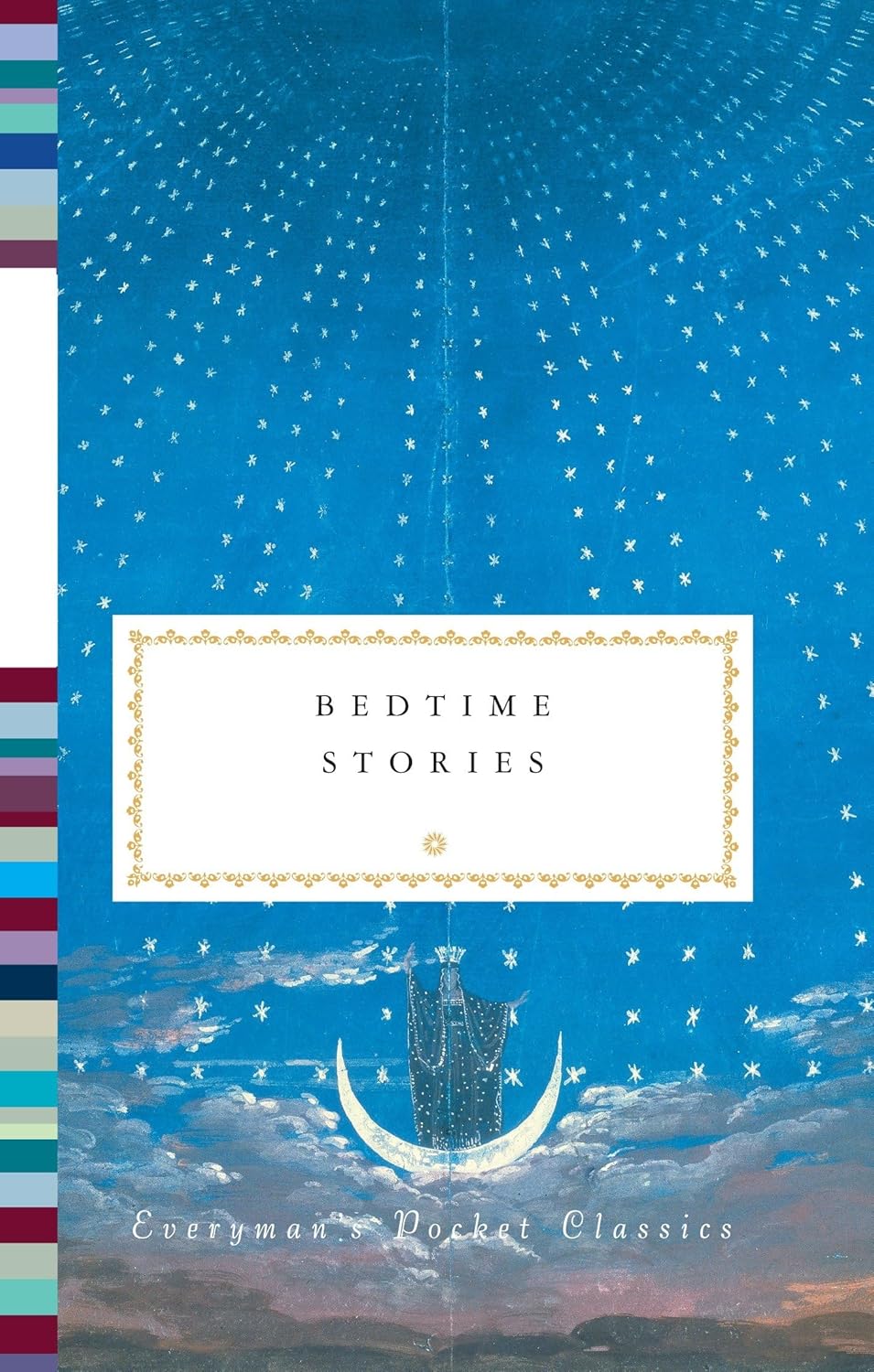
Bedtime Stories Edited by Diana Secker Tesdell 

We’ve been rearranging our guest room in preparation for some lovely visitors coming over the holidays. Found some some nice bedside tables and got rid of a bookcase that was much too large for the small room.

In clearing out the books from that bookcase, I found this lovely little volume, which I kept near the bed for guests. It’s from the Everyman’s Library Pocket Classics Series which was founded in 1906 by the famous Joseph Dent, a visionary publisher. He promised ‘infinite riches in a little room’. Lovely to hold, these little books have sewn bindings (quite rare), come with attached bookmark ribbons (love those) and beautiful covers. And each comes with the famous archaic quote

Everyman,

I will go with thee,

and be thy guide,

In thy most need, to go by thy side

But enough about the printing publication, what about the book itself?

Continue reading Bedtime Stories Edited by Diana Secker Tesdell 

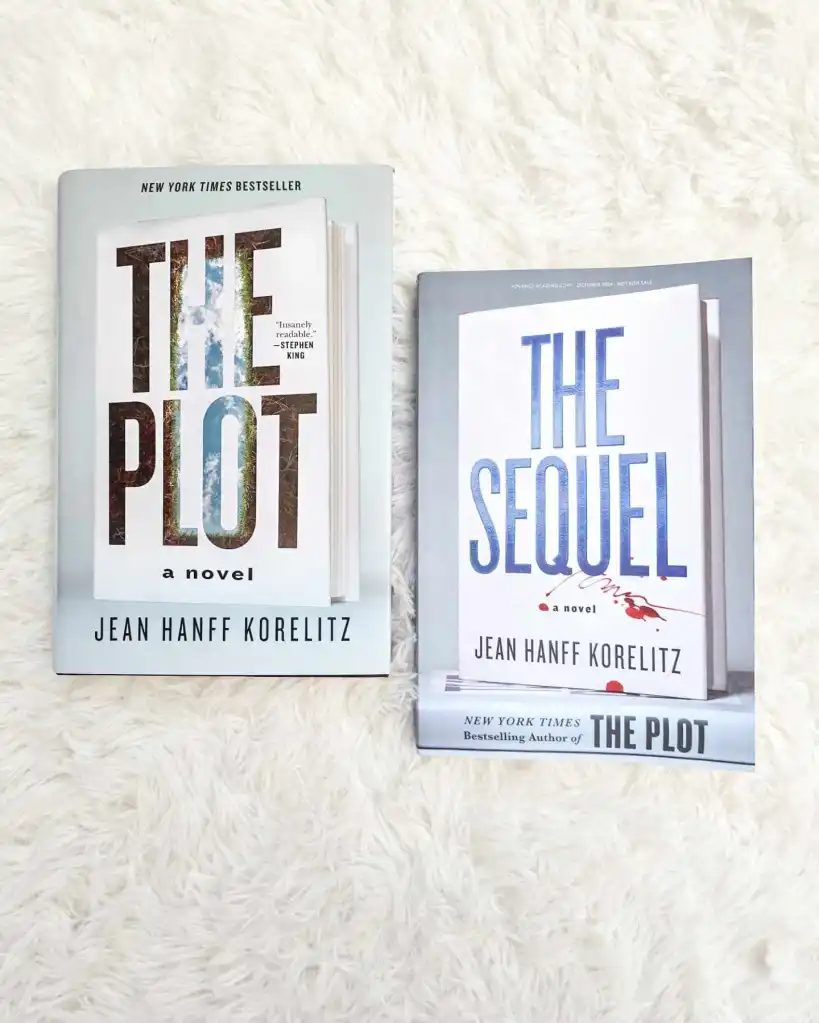
The Sequel by Jean Hanff Korelitz

The Sequel is aptly named, as it is truly the sequel to The Plot.

I’ll start with commenting on The Plot which is the first book in this series. You must read it first, so you’ll understand Anna’s story as a whole. Jake is a novelist who experienced early modest acclaim, but he hasn’t been able to replicate that success in his subsequent books.

He is now a writing instructor at small, second-rate writing program in Vermont. Jake borrows a plot idea from a student and expects no one would ever notice. But someone does and begins sending him notes threatening him. The anonymous notes torments him and he perpetually worried that he would be exposed. His wife, Anna has steps in to take care of things for Jacob. And in the end, laid to rest those anonymous accusations of plagiarism that so tormented him. But there is so much more to this book than this simple recap. My full review HERE

Continue reading The Sequel by Jean Hanff Korelitz

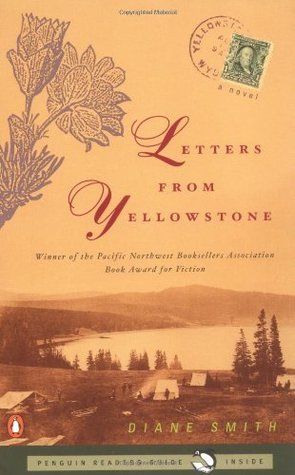
Letters from Yellowstone by Diane Smith

Once I finished The Correspondent, I was reminded of another epistolary novel which I once started but never finished. So, I unearthed Letters from Yellowstone and finished it over the next two evenings.

In the spring of 1898, A. E. (Alexandria) Bartram—a spirited young woman with a love for botany—is invited to join a field study in Yellowstone National Park. The study’s leader, a mild-mannered professor from Montana, is less than pleased to discover that A.E. is actually a woman.

Once he and the other scientists overcome their shock, they forge ahead on a summer of research and adventure. They move from Mammoth Hot Springs to a camp high in the back country. They struggle with weather, rugged terrain and each other. As they make their way collecting amid Yellowstone’s beauty, the group is conflicted by differing views on science, nature, and economics.

This compelling story of a woman botanist and the assorted characters she meets during her Yellowstone summer drew me in from the beginning. And while some of the letters do slow down the pace, Ms. Smith does an admirable job with the epistolary format, language and manners of that time period,

Letters from Yellowstone contains bits of humor and much excitement, but most interestingly, it’s also a love letter to the joys of botanical discovery, as well as a thoughtful reflection on environmentalism, Native American displacement, and feminism at the dawn of a new century.

N.B.: The book does a wonderful job introducing non scientific readers to the wild flowers, plants, trees and wildlife of Yellowstone ~~ which can be viewed online at the National Parks Service websites.

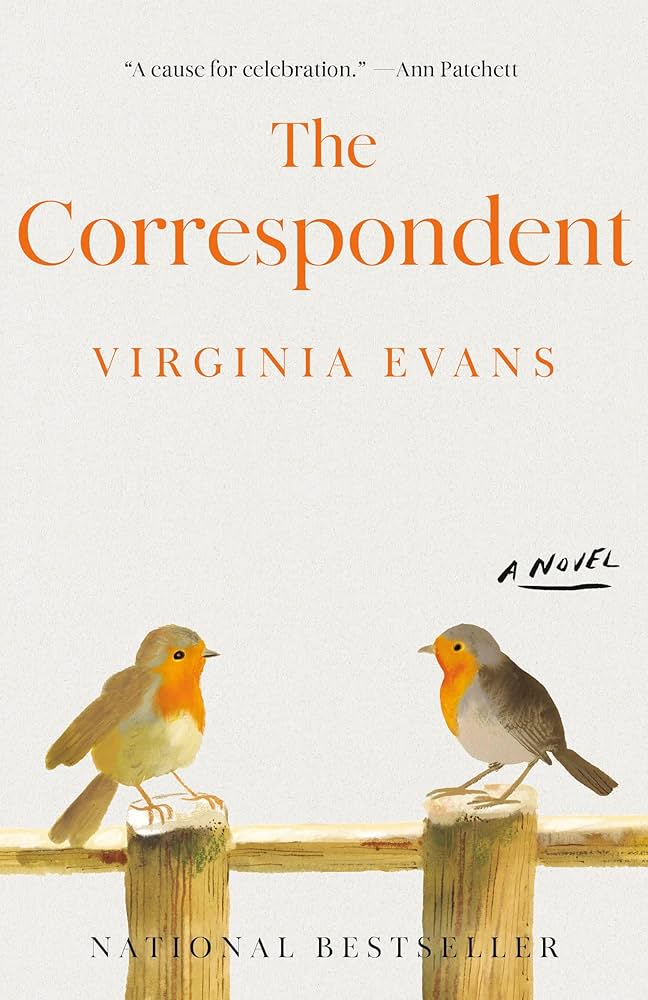
The Correspondent by Virginia Evans

Everyone, and I mean everyone, in the book world has been talking about The Correspondent. So when my reserve came through from my library, I raced over to get it and set aside my current books to dive right in.

Book Barmy readers know I adore epistolary novels — those written in the form of letters and/or emails. They can be tricky and often clunky, but Ms. Evans has masterfully nailed this one.

The Correspondent is centered on Sybil van Antwerp, aged 72 when we begin reading her letters, she’s crotchety and outspoken, intelligent and well read, independent and set in her ways. She lives alone and has just found out she will be losing her sight gradually over the next few years.

I was immediately pulled in to this uncompromising catalog of letters that through small reveals unfolds Sybil’s life, loves, regrets, guilt, and culpability. She’s made a few horrendous and life altering mistakes in her time, for which she has gut wrenching guilt. Sybil makes amends where she can, but that’s not always possible. In short, she lives just as we all do, trying the best she knows how.

Learning about her complexities, as well as her backstory was one of those wonderful reading experiences which I call the “book tingle”. (She often mentions the books she’s reading — her tastes are very similar to mine – could she be my new best friend?)

She maintains a correspondence with several writers including Ann Patchett, Joan Didion, who she calls a friend, and George Lucas among others. Sybil maintains because she writes physical letters, sent through the mail – attention must be paid, and she inevitably gets replies.

Sybil’s letter to Larry McMurtry after re-reading Lonesome Dove for the third time – left me choked up and nodding in agreement as it’s one of my all time favorite books:

“I am an old woman and my life has been some strange balance of miraculous and mundane.” Regarding the ending of Lonesome Dove and the bitter disappointment of the characters: “What I had seen those years ago as a lack of mercy became to me a presence of courage — to hurt them! To leave them in dismay! It was courageous because it was unbearable but it was true.”

I devoured this novel in two days and got lost in her life story where nothing was ever black or white, but always varying shades of grey.

Sadly I must return this copy to the library, but plan to purchase The Correspondent, not only to re-read but to add my collection of beloved epistolary novels. It will be happy alongside 84 Charing Cross Road, The Guernsey Literary and Potato Peel Society, and Love and Saffron.

Please treat yourself to this moving, funny and exquisitely written novel.

Here are some of my favorite quotes from The Correspondent- (which I am sure to underline once I have my own copy):

I didn’t know it was happiness at the time, because it felt like busyness and exhaustion and financial stress and self doubt.

Remember: words, especially those written, are immortal. [the] simpler value of the written letter, which is, namely, that reaching out in correspondence is really one of the original forms of civility in the world

I have found it to be absolutely astounding, all the trouble living has turned out to be. Things nobody ever warned me about.
I wish someone would have thought to say to me, earlier on, ‘Sybil, over and over again serpents will emerge from the bottom of the sea and grab you by the feet.’ Of course I didn’t say anything of the sort to my own children, and I probably never would.

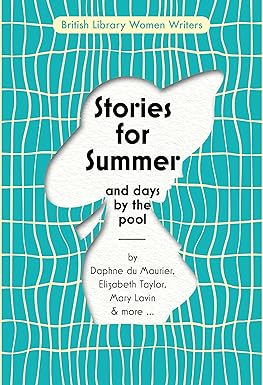
Stories for Summer – and Days by the Pool

Summer is officially over, but here in our foggy city by the bay, it’s finally the beginning of our good weather. We’ve put the deck cushions out and I’ve been enjoying the warm sun (with hat and sunscreen) and dipping into this book.

When I spotted Stories for Summer on display in my local used bookstore I just had to have it. Look at that cover and the list of authors includes many of my favorites.

New to me, and hard to find in this country, The British Library has issued a Women Writers series, reissuing lesser-known novels by female authors from the 20th century for modern-day readers to enjoy.

From the introduction:

Whether on a Greek island, in a French chateau, or at Kew Gardens, each summer story shows a significant day, hour or moment in the life of women from many walks of life. And whether you’re able to take this book to a beautiful beach or are reading for some summery escape, I hope you’ll enjoy meeting new authors and perhaps re-encountering much-loved ones. (Introduction by series consultant Simon Thomas.)

I enjoyed going to Lake Como for Elizabeth Bowen’s Requiescat. Stuart has come to see the recently widowed Mrs Majendie, who was married to his friend, Howard. As this subtly crushing story unfolds, it reveals the true nature of Stuart’s feelings for Mrs Majendie, hinting at what might have been if their paths had brought them together.

She was less beautiful than he had remembered her, and very tall and thin in her black dress. Her composure did not astonish him; her smile, undimmed, and the sound of her voice recalled to him the poignancy of his feelings when he had first known her, his resentment and sense of defeat—she had possessed herself of Howard so entirely. She was shortsighted, there was always a look of uncertainty in her eyes until she came quite near one, her big pupils seemed to see too much at once and nothing very plainly.

Daphne du Maurier’s The Pool, tells the tale of two young children, Deborah and Roger, who stay at their grandparents’ country house during the summer holidays. This story opens with this glorious description, which seems to set the scene for an idyllic summer.

The children ran out on to the lawn. There was space all around them, and light, and air, with the trees indeterminate beyond. The gardener had cut the grass. The lawn was crisp and firm now, because of the hot sun through the day; but near the summer-house where the tall grass stood there were dew-drops like frost clinging to the narrow stems.

As this disquieting story unfolds, a palpable sense of darkness creeps in, reflecting Deborah’s fascination with a nearby woodland area and pool, to which she offers small tokens, such as a pencil stub, as ritual sacrifices. Du Maurier is known for her unnerving, atmospheric short fiction, and The Pool is very much in this vein, casting an unsettling spell over Deborah’s secret visits.

In Afternoon in Summer by Sylvia Townsend Warner – A young married couple in the country for the summer decide to bike up to a pub some way down the road. When they arrive, hot and thirsty, they find it not open for tea and have to wait an hour and a half for it to open, so they journey on looking for a church, and there they start their afternoon adventure. I enjoyed the writing on this and it’s piqued my interest in trying this author again. I didn’t get along with her Lolly Willows.

Kew Gardens by Virginia Woolf chronicles various people who stroll through Kew Gardens, noticing a flower or two, and we catch a phrase or two of their conversation. A piece that celebrates the beauty of Kew Gardens.

I have many more stories to read in this beautifully produced book and there are lots of sunny days to come so I will keep it handy to dip in and out of ~~ as another reviewer said, this is the literary equivalent of a box of chocolates.

Uh oh… I just did a search and found the full series there are 26 in all, and two jumped out at me — don’t these look yummy? But I will resist as I have waaay too many holiday books I have yet to read.

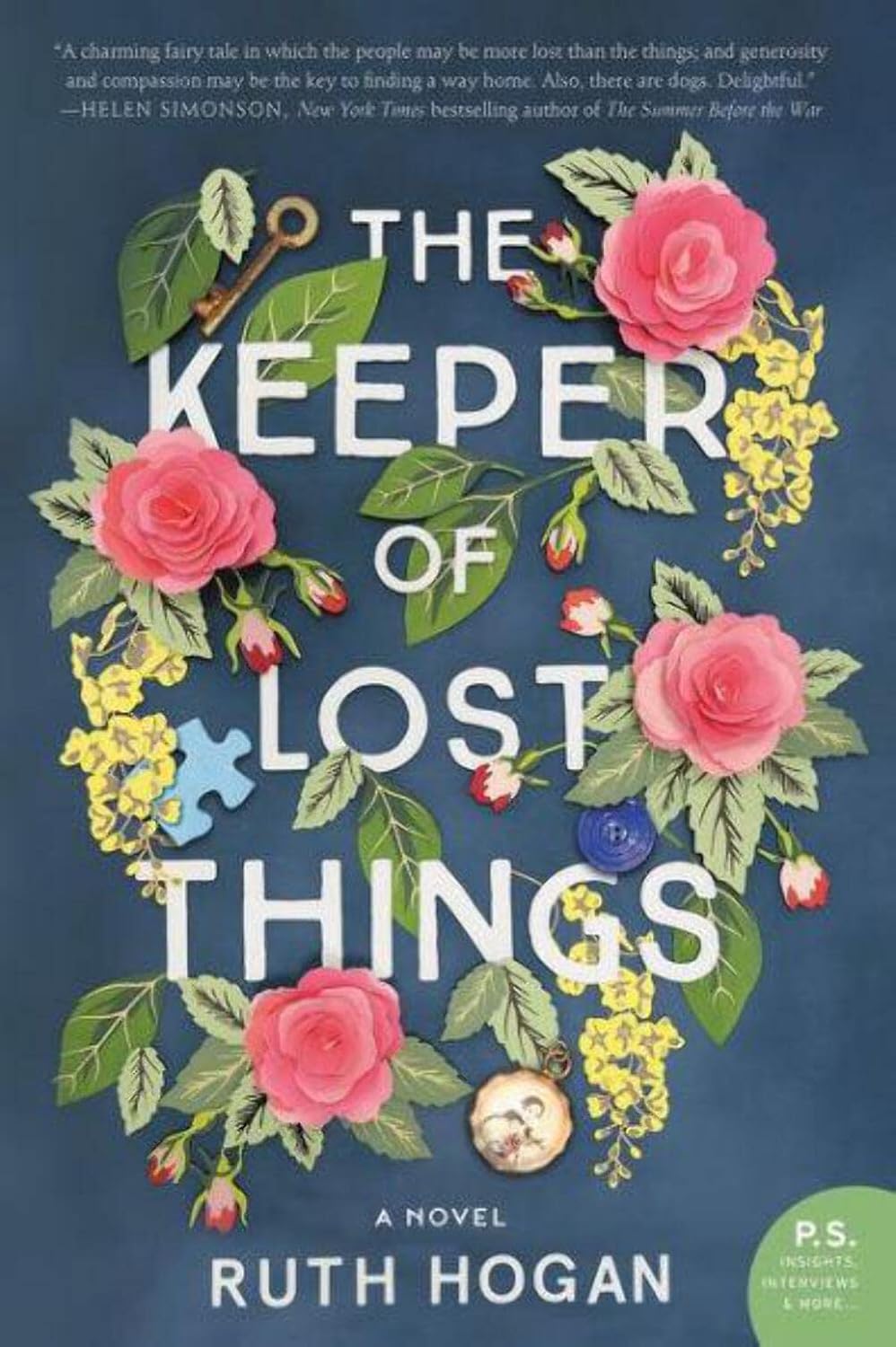
The Keeper of Lost Things by Ruth Hogan

The other week when I finished The Keeper of Stories , I thought – hmm there’s a book with a similar title somewhere on my shelves. Found it, The Keeper of Lost Things.

This novel came out in 2017 to high praise from many book bloggers and book tubers. Yet, somehow it got put on the shelf, as yet unread.

Anthony Peardew is a finder and keeper of lost things. Having lost something he once held dear, he knows all too well the pain of dispossession. In fact, his experience with loss in general runs deep. So he collects random objects—often meaningless to others—and imagines what they once meant to their owners. He gives these things a home in his cluttered but lovely London house – called Padua. He catalogs the exact place and moment he found each item in hopes to one day reunite them with their rightful owner.

Lime green plastic flower-shaped hair bobbles—Found, on the playing field, Derrywood Park, 2nd September.

Bone china cup and saucer—Found, on a bench in Riveria Public Gardens, 31st October.

Now, in the twilight of his life, Anthony worries that he has not fully discharged his duty to reconcile all the lost things with their owners. As the end nears, he bequeaths his secret life’s mission to his unsuspecting assistant, Laura, leaving her his house and and all its lost treasures, including an irritable ghost.

Recovering from an ugly divorce, Laura, in some ways, is one of Anthony’s lost things. But when she moves into his mansion, her life begins to change. She finds a new friend in the neighbor’s Downs Syndrome daughter, Sunshine (a sensitively developed character) and a welcome distraction in Freddy, the gardener. As Laura regains her footing and starts to recover from her own loss, she and her new companions, set out to realize Anthony’s last wish: reuniting his cherished lost objects with their owners.

There are two plot-timelines: 40 years earlier, Eunice found a trinket on the London pavement and kept it through the years. Now, with her own end drawing near, she has lost something precious—a twist of fate that forces her to break a promise she once made.

Both timelines were engaging, but scattered throughout the novel are Arthur’s stories about some of the found objects — a real treat.

Fair warning many found The Keeper of Lost Things trite and saccharine and yes, it is an old-fashioned novel, with manners and decorum — maybe it was my mood, but I found it enchanting and a lovely escape from reality.

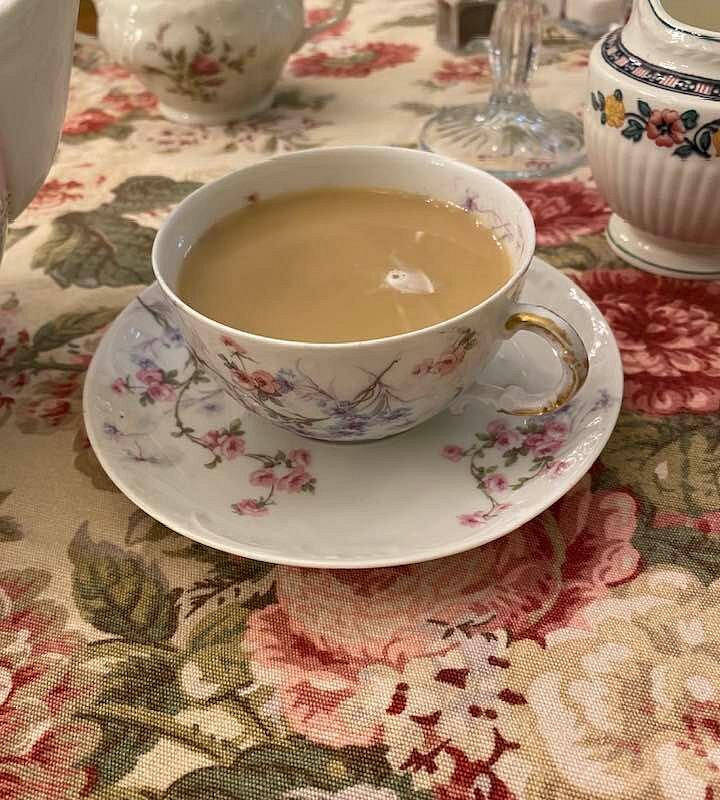
Anthony had made her tea at the interview. He had brought it into the garden room; teapot with cozy, milk jug, sugar bowl and tongs, cups and saucers, silver teaspoons, tea strainer and stand.
All set out on a tray with a tray cloth. Pure white, lace –edged linen. The tray cloth was definitive. Padua was clearly a house where all these things, including the tray cloth, were part of every day life.

The novel starts out slowly and it takes a few chapters before things start to get interesting, stick with it my friends – it’s a lovely read. And despite my current obsession with clearing out “stuff” and “things”, it did remind me of the significance of the objects we love and care for. I’ll cheat here and quote another reviewer which sums up this book nicely:

A charming, clever, and quietly moving novel of of endless possibilities and joyful discoveries that explores the promises we make and break, losing and finding ourselves, the objects that hold magic and meaning for our lives, and the surprising connections that bind us.

N.B. There is a great deal of tea drinking which Sunshine carefully makes and names “the lovely cup of tea” — a gentle hug throughout.

Yes, Please

I’m almost done “resting” my knee. One more week of elevating, icing, and taking it easy.

Perfect for Book Barmy right? Well not really…

Yes, I been doing tons of reading. I cleaned up the towering stack of New Yorker magazines my lovely friend gives me after she’s read them. I’m close to finishing three books and will report on them later.

But, I’ve also been watching television, and aside from The Gilded Age, I’ve been unimpressed. BritBox offers up lots of old British mysteries not to mention, all the Miss Marple’s so am enjoying those but otherwise ~ Blah.

Then, I read this, I said ~~ yes, yes please!

Perhaps, there is a bored junior TV producer out there who will read this and make it come true…I’m sure the audience is out there – at least all of us right?

Imagine hearing about people’s book collections, then watching them get sorted, organized, and made beautiful?

Sigh, oh well, until then, I just discovered I can stream BBC’s Bleak House, so maybe that will tide me over.

Damn, girl!

I damaged my new knee. It was going so well — PT, walking two to three miles a few times a week. Going everywhere I wanted with no pain ~~ then wham and Damn. Stepping off a city bus, not noticing the step was quite high from the curb — stepped down hard and twisted that poor knee.

After more X-rays and doctor’s appointments, the good news is that the knee is badly bruised (ouch) but no further surgery is required. Just rest the poor knee, ice, and elevate for two-three weeks. Then, it’s back to starting my PT exercises all over again (I know!). I’m back to using a cane, hobbling around in pretty intense pain, and being very – very grumpy. Don’t feel too sorry for me, poor Husband is staying way of out my range.

So what am I doing? I finished a book about a group of people who walk across England – talk about irony.

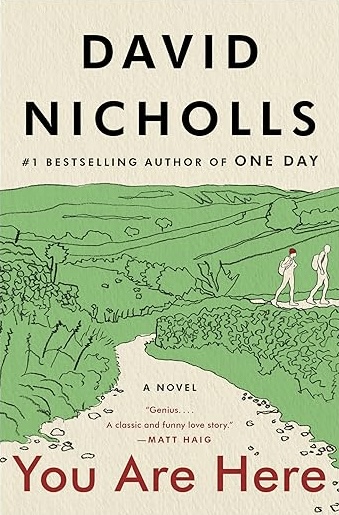
You are Here by David Nicholls

Us, by Mr. Nicholls was a favorite novel — completely unexpected – subtle, bittersweet, and unflinchingly honest. So When You are Here came up my library wish list…I grabbed it.

Geography teacher, Michael, had been planning a solo walking trip across northern England — an epic ten-day trek, all alone.

But when his fellow teacher, Cleo, turns it into a group event, he reluctantly agrees to lead the walking trip – yes, you read that right – across England. Michael is just separated from his wife and recovering from being mugged –and Cleo thought he could use some company.

She invites several other people including Marnie, a divorced copy editor who works from home and really doesn’t want to do any of this — she’d rather stay home with her manuscripts and predictable schedule. Marnie has no long distance walking experience, but in a fit of enthusiasm purchases all new equipment, boots, and walking clothes.

We follow this group as they walk each day and spend nights at various inns and pubs. Soon the weather turns foul, and one by one the others drop out and go home. We are left with just Michael and Marnie who are both not easy to be around and used to finding solace in their own isolated lives. Walking together through rain and wind — and neither of them can think of anything worse. Until, of course, they discover exactly what they’ve been looking for.

Now, now don’t leave me — this isn’t a sappy romance. It’s witty, clever, fun with lots of sarcasm and humor threaded in and the characters are truly authentic. The landscape and setting are beautifully described and, fair warning, Michael, being a geography teacher, does like to explain the landscape maybe a little too fully.

As the pair make their way through the hills and valleys, we discover Marnie is practically agoraphobic, so for her to be on this walk, is amazing.

—a book was something she could pull around and over herself, like a quilt.


While Michael, who didn’t want to be divorced, is having a hard time adjusting to his solitude and an empty house

Not an introvert, just an extrovert who had lost the knack.

Marnie and Michael felt like real people and people I wanted to spend time with. I could feel myself right there with them, tending blisters, getting drenched, cussing and lashing out, but also getting into deep conversations that never arise in their normal lives. We see how each stands in the way of a shared happy ending. Mr. Nicholls uses the walking as a device to deconstruct and then reconstruct the characters. They open up to each other and discover that maybe they don’t need to be alone.

You are Here is a distinctly British novel, it plunges the reader into the English countryside, the ancient walking paths, the damp pubs and, most of all, the fortitude of these British walkers who are accomplishing more than just a very long walk across England. I found this to be a beautiful novel, sensitive, witty, and with a kind and gentle viewpoint towards us endlessly messy and clueless humans.

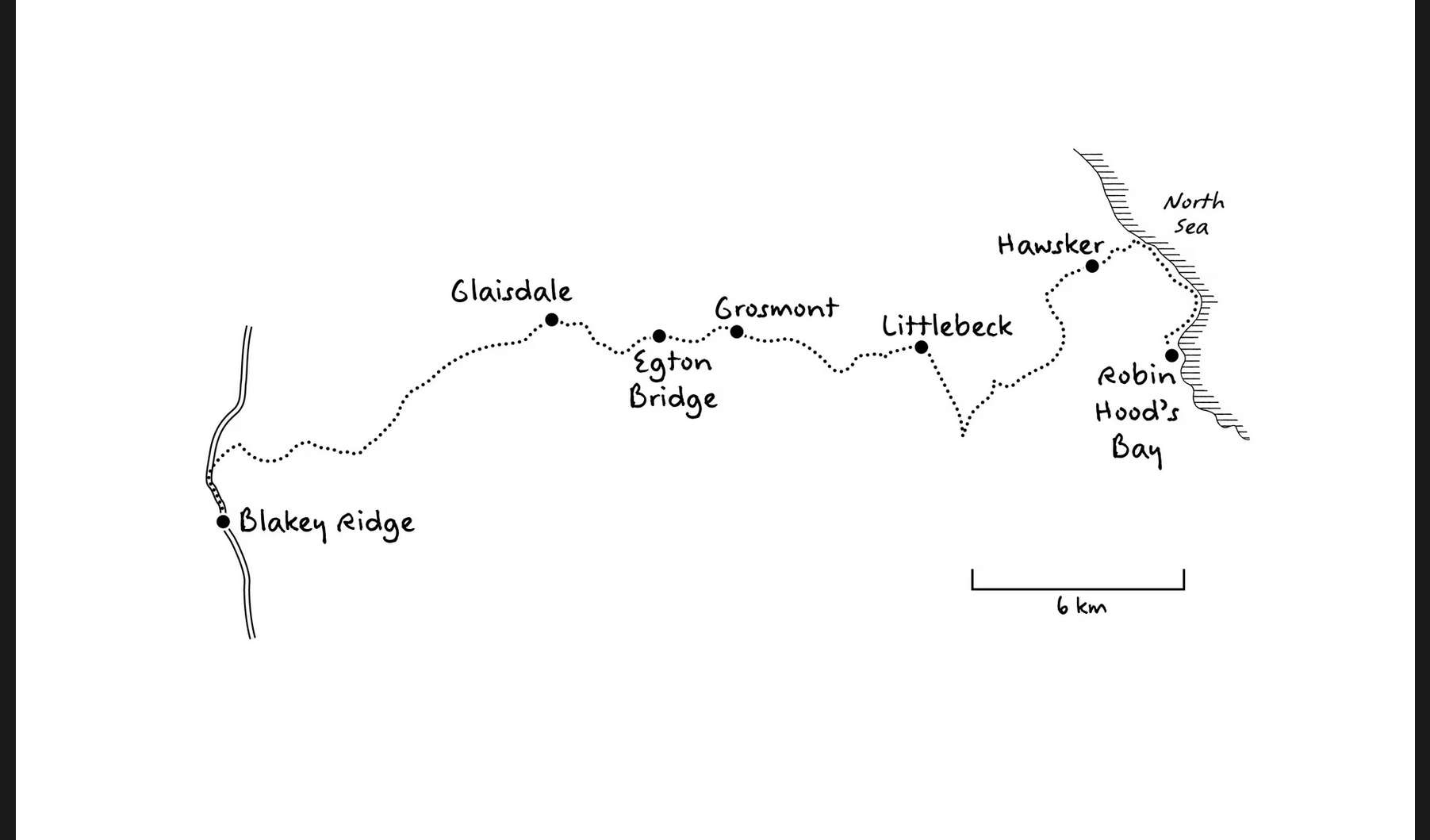
N.B. A great bonus in any book –maps of their journey.



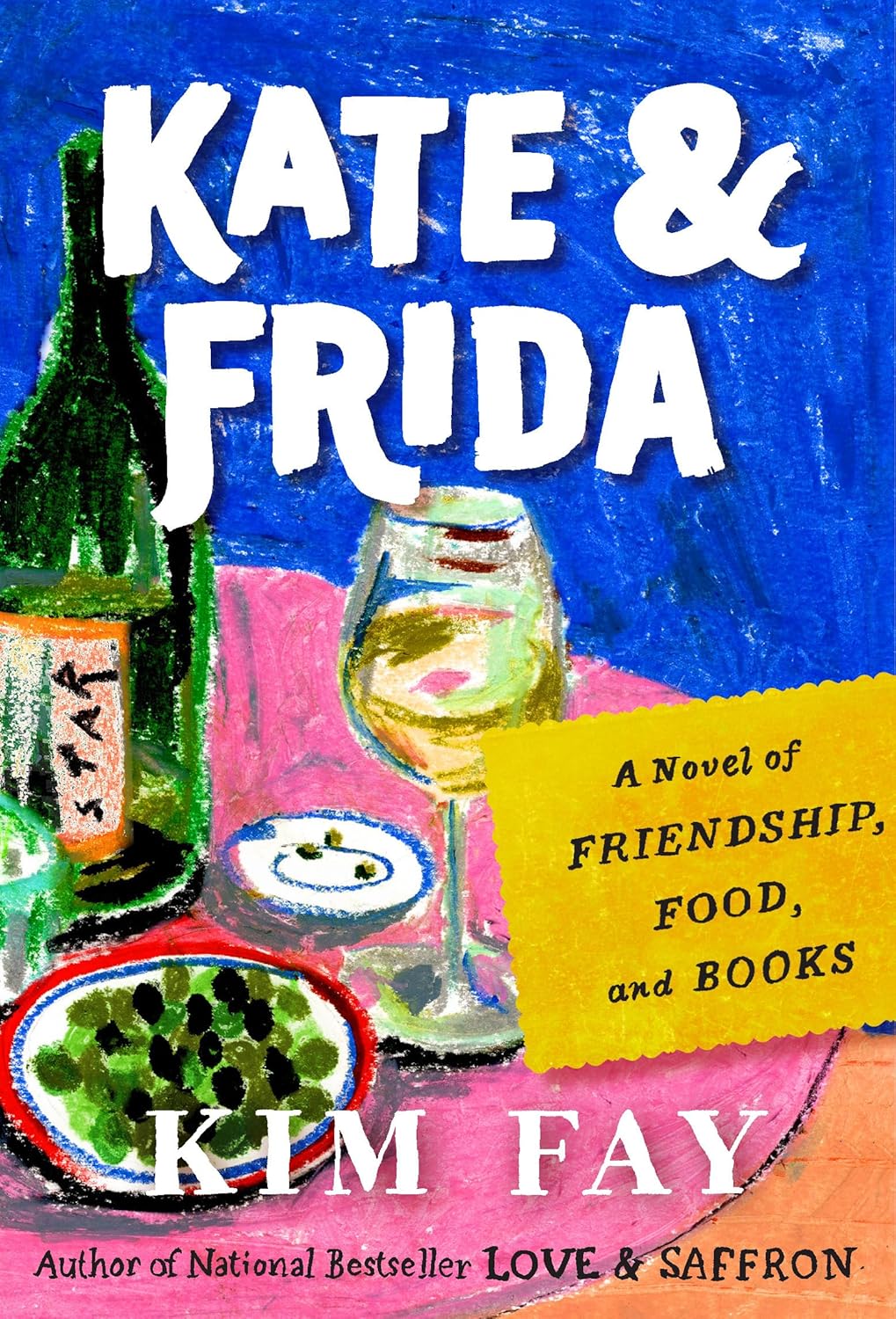
Kate and Frida by Kim Fay

When the publisher offered me an early reader’s copy of Kate & Frida, I jumped at the chance to read another book by Kim Fay. I totally enjoyed her previous epistolary novel, Love & Saffron.

This second epistolary novel begins with an inquiry from Paris to a bookshop in Seattle in the 90s. Twenty-something Frida Rodriguez is living in Paris, relishing the city’s cuisine and seeking her future as a war correspondent. She writes to a bookshop in Seattle (thinly disguised as the wonderful Elliot Bay Books where the author once worked) to inquire about a book, but receives more than just her requested book. She gets a nice letter from Kate who works at the bookstore and an aspiring author.

They begin to correspond and tell each other about their lives and things happening around them. Kate tells Frieda she seems to be experiencing terrible panic attacks. Frida tells Kate she desperately wants to become a war correspondent, but fears she won’t be good at it.

Kate is falling in love with a coworker who is a serious writer, continues to struggle with panic attacks, all while her dearly loved grandfather begins to have issues. Meanwhile Frida gets an assignment in Bosnia, where she sees and experiences the horrible atrocities firsthand, especially the destruction and civilian casualties – and is haunted by the impact on one little girl.

Frida writes up her experiences and sends them to Kate to see if they are any good. This part of the novel is the hardest to read and also to put down. Most memorable are the scenes where, even within the chaos of war, the citizens find joy in everyday life and food.

Kate and Frida give each other advice; they let each other vent. Through the most tumultuous years of their young lives—personally and globally—they sustain each other as they learn the necessity of embracing joy, especially through our darkest hours.

There are delicious descriptions of food and food writing, including one of my favorite authors — Laurie Colwin and M.F.K. Fisher’s writings – both worth looking up at your local library or bookstore.

I very much enjoyed Kate and Frida set in the 90’s, the last years before the internet changed everything. Their struggles and their growing friendship propel the story, which moves along at a nice pace.
True confession, it could must be my age, but the characters seemed very immature, and it lacked the wisdom and insights of the more mature voices from Love & Saffron.

I realized when I finished this novel, I had experienced the power and comfort of a true friendship which expanded the horizons of two young women– gave them confidence and helped them find solace, love, and, most importantly, themselves.

N.B. The author’s notes are a must read…as it gives background on the author’s own exposure with the Bosnian war, her love of food writing, and being a young bookseller.

I wrote this novel from my heart to my younger self. The self I was in my early twenties in the early 1990’s, working at the Elliott Bay Book Company in Seattle, living on my own for the very first time in a little brick-walled loft apartment, devouring books I’s never heard of before — discovering the world.