Less by Andrew Sean Greer

I’ve decided I need to venture out of my safety zone and read more widely acclaimed books. You know, those books getting media attention, the runners-up, and the actual prize winners.  Don’t get me wrong, I often read notable books and have reviewed them here – but the experiences are often checkered.

Less won the Pulitzer Prize for fiction in 2018
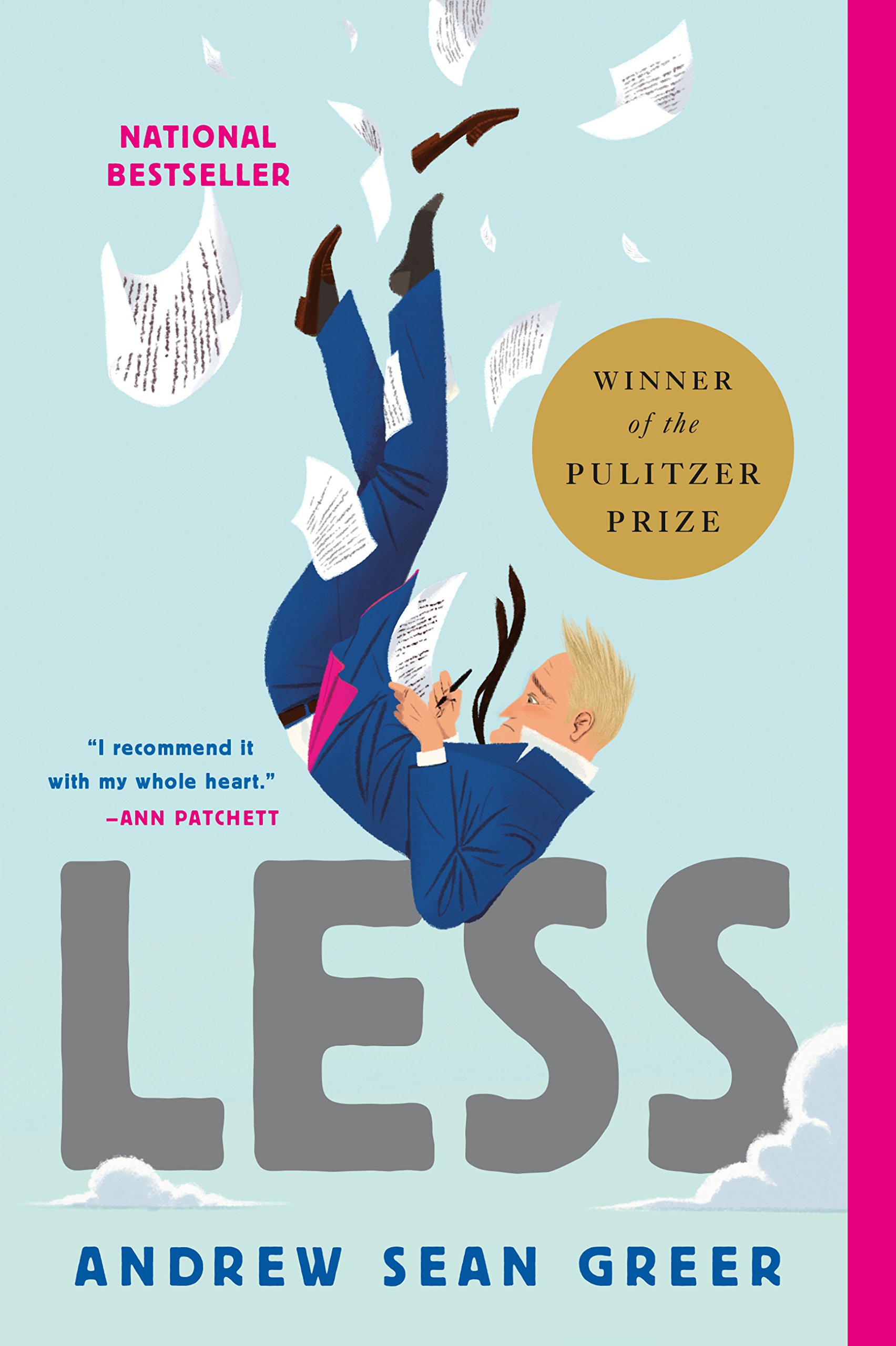
When we meet Arthur Less he is young, his writing talent is still embryonic, and he’s bumbling in the gay scene in San Francisco.  We follow him into early middle age, when he faces heartbreak moving from his one long-term relationship into a second one. In the beginning, it’s not clear the importance of these two relationships, but with time, it becomes clear they were everything.

As Less struggles with his relationships, he is also struggling as a writer.  He is published but largely unknown, his main claim to fame was his relationship with an older man — a Pulitzer Prize winning poet. 

Aptly named, Less is a man facing middle age who has not quite figured things out — life just seems to catch him off guard, he is often confused, and easily hurt. Going through life not quite paying attention.

Here, all this time, Less thought he was merely a bad writer. A bad lover, a bad friend, a bad son. Apparently the condition is worse; he is bad at being himself.

One day Less receives a wedding invitation — his younger lover from his latest long term relationship is getting married to an equally younger man. He can’t go, he just can’t, so he books himself on a trip around the world.  He goes through his stack of pleas for his attendance at various writers conferences, teaching assignments, interviews, publicity junkets and cobbles together an exotic itinerary.  These are not big name events, but those offered to middle tier authors — many are unpaid, some will pay only his expenses.  It matters not to Less, he can now legitimately reply to the wedding invitation saying he will be out of the country at the time of the dreaded wedding.

And so off we go with Less to Mexico, Morocco, Berlin, Japan, India – a sort of Eat Pray Love journey filled with typically uncomfortable ‘Lessian’ travails.   (Side-note:  Less believes he speaks fluent German and his translated conversations had me giggling out loud, knowing that’s how I must sound when I speak my long-studied-but-never-mastered French.)

There, I’ve told you about the basic plot of this slim novel, but wait — wait there’s so much more.

You may have to barrel through the first few chapters — this is where Mr. Greer’s writing feels a bit uneven and disconnected — I almost gave up, but happy I didn’t.  By the time you (and Less) are in Morocco — the writing meshes and starts to soar.

The prose goes from being sharp and insightful ~~

“Strange to be almost fifty, no? I feel like I just understood how to be young.” “Yes! It’s like the last day in a foreign country. You finally figure out where to get coffee, and drinks, and a good steak. And then you have to leave. And you won’t ever be back.”

His brain sits before its cash register again, charging him for old shames as if he has not paid before.

~~  to poignant

How can so many things become a bore by middle age — philosophy, radicalism, and other fast foods — but heartbreak keeps its sting?

…the time when any couple has found its balance, and passion has quieted from its early scream, but gratitude is still abundant; what no one realizes are the golden years.”

~~ and this gets my nomination for best sentence ever:

He kisses—how do I explain it? Like someone in love. Like he has nothing to lose. Like someone who has just learned a foreign language and can use only the present tense and only the second person. Only now, only you.

Not gay, you say, well neither am I– but no matter who you are, you’ll recognize a little (or a lot) of Less in yourself. As he travels he tries to write but instead muses back his life, his loves, his mistakes – all the regrets.   Mr. Greer, himself gay, has written a humorous yet gentle novel all about the all-too-human fear of aging, and discovering that middle-age can bring grace and even love.

I won’t give away the ending, but let it be said – I cried…

A digital review copy was kindly provided by Hachette Book Group via NetGalley

—————————————-

As much as I enjoyed Less, I wondered about this slim, comic novel’s qualifications to win the Pulitzer and did some research – turns out Pulitzer’s guidelines are amazingly loose.

The winning book, be it a novel or short-story collection, must have been written by an American, and should, ideally, be in some way about American life.

HERE’S a list of other Pulitzer prize winning fiction. Still not sure it ranks up there with some of the others I’ve read, but then again, no one asked me to be a judge.

And, as Less learns it’s pronounced PULL-it-sir, not PEW-lit-zer.

Rosamunde Pilcher

Rosamunde Pilcher, one of my favorite authors has died at 94.  Ms. Pilcher had been writing short stories and novels for years, first under a pen name and then under her own, when The Shell Seekers, published in 1987, elevated her to a new level of sales and fame.

Her books are a solace — especially made for those bruised and weary days.  Very British, her character driven stories of gentle love, flawed families and steadfast friends have pitch-perfect dialogue and beautifully rendered settings.

She worked for the foreign service during the war, married an officer, and wrote while raising her young children in Scotland.  In one interview Ms. Pilcher related an anecdote from her days as a fledgling novelist with young children.

“I always practice my dialogue out loud,” she said. “Once, when Fiona was small, she had a friend over, and I was hanging up the washing and running through my dialogue. Her friend said, ‘Look, your mummy’s lips are moving.’ And Fiona said: ‘Don’t be stupid. She’s writing.’ ”

More than 60 million copies of her books have been sold around the world and there are special tours run in Cornwall, taking busloads of tourists to the locations in her books.

Ms. Pilcher’s books live on a high shelf in my bedroom with my other favorite comfort reads.  She retired from writing with her final book, Winter’s Solstice.  It’s a cold, rainy and blustery day – I think I’ll go find my copy and snuggle in.

HERE’S  the list of all her books, readily available in any library.

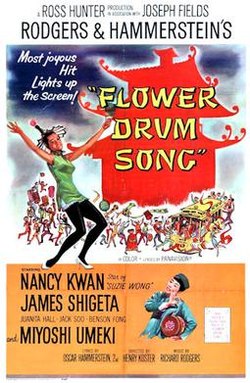
Flower Drum Song

Tuesday was Chinese New Year and while it may not be a major holiday where you are — it’s a full multi-week celebration here in San Francisco.  Our Chinese-American friends are feasting, enjoying family reunions, exchanging lucky money in traditional red envelopes, and oranges festoon every table.

Because of the holiday, our local television station aired Flower Drum Song late the other night, and I donned my PJ’s to stay up to watch the film.  This musical has a special place in my heart.  I was seven years old and it was one of the first films I saw in a real movie theater with my family.  I was totally smitten by its dancing, music, its depiction of Chinese-Americans and the scenes of San Francisco made a big impression upon me. It seemed a magical city and it’s no coincidence it became my home.

And while the current film Crazy Rich Asians is getting kudos for its Asian casting — 60 years ago, Rodgers and Hammerstein’s Flower Drum Song broke this ground by being one of the first films to ever feature a largely Asian cast.

Now that I’ve lived here in San Fransisco for more than 35 years, the grown up part of me cringed at the stereotypical portrayal of Chinese-Americans and the simplistic view of the immigrant experience. But, for many in 1961, this film was their first exposure to the Chinese-American culture.

But I soon let go of my adult hang-ups and by the second musical number I was once again delighted.  Flower Drum Song is not considered to be one of Rodgers and Hammerstein’s best, it actually lost money at the box office, but it’s one of my favorite musicals.  Dated yes  — but the colors, the dancing, the costumes, the scenery, and music still transport me back to my seven year old delight.

For its time, it had some breakthrough special effects — the I enjoy being a girl segment has a three way mirror segment that is pure fancy. Here’s where the 60’s ideals of femininity really shine with the beautiful Nancy Kwan in her absolute prime.

The musical dabbles in the avaunt guard dance techniques of the time, with some especially energetic dance segments by a very young Patrick Adiarte who you may recognize from MASH episodes.

The interior sets are pure 60’s fun and there are some pretty realistic (yet Hollywood-recreated) scenes of Chinatown and San Francisco.  Jack Soo is so endearing in his Don’t Marry Me segment.   Just look at that face and try not to laugh when he begs — if you want to have attractive children — don’t marry me!  It was great to see the interspersed film clips of our Chinese New Year’s parade —  largely unchanged to this day and still part of our city’s celebrations.

Flower Drum Song is a light and lively musical, with all the classic elements: an enchanting plot, a wonderful sound track, exotic sets, and a nostalgic glimpse into 1960’s San Francisco. A fun choice for an evening’s entertainment.

If you have Amazon prime, you can stream/watch it anytime – until then

Gong Hei Fat Choy

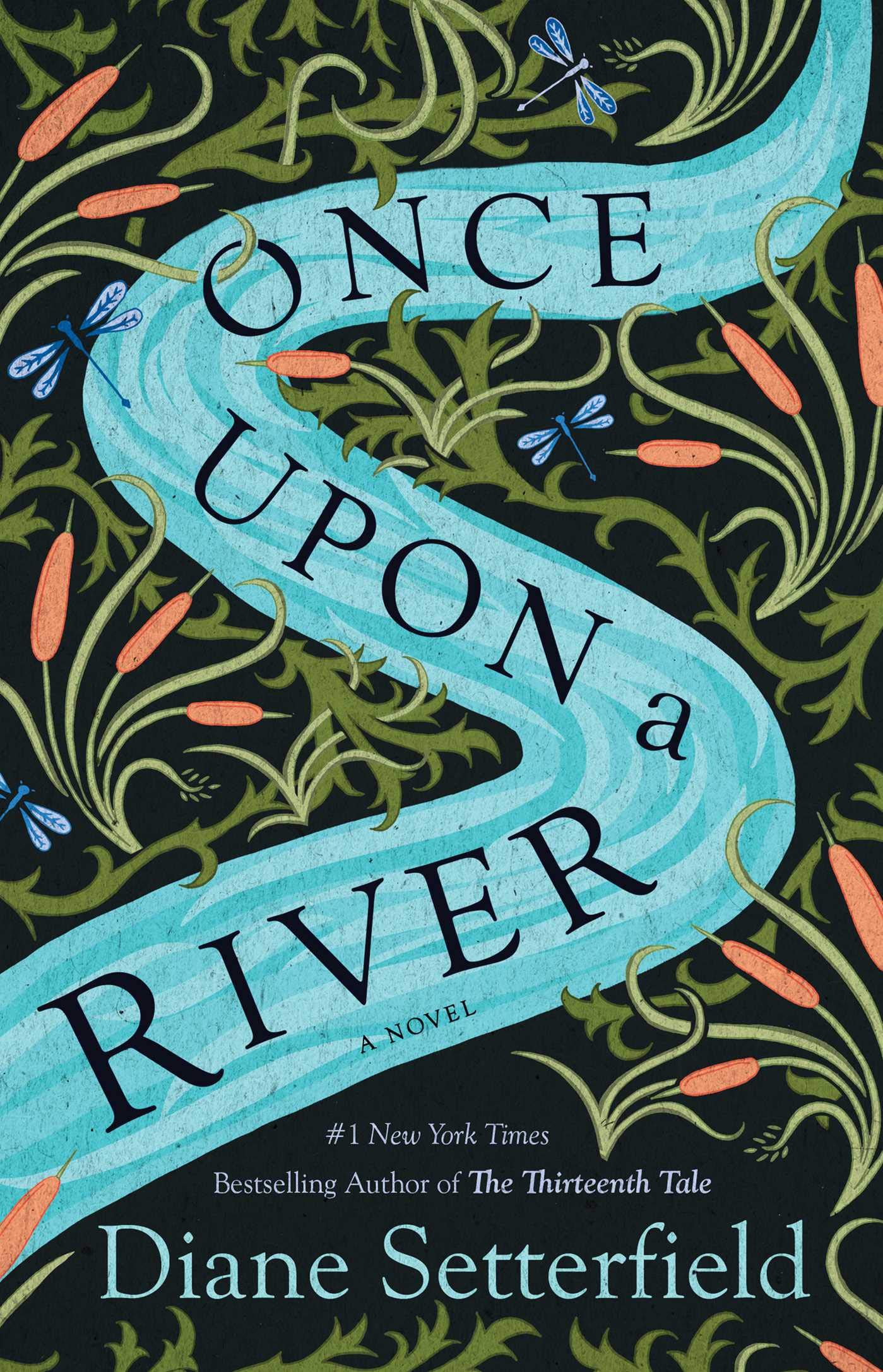
Once Upon a River by Diane Setterfield

Once Upon A River

by Diane Setterfield


Ms. Setterfield’s The Thirteenth Tale is one of my all-time favorite novels – it holds a place of honor on my shelf, so I was excited to receive an advance reading copy of her newest novel, Once Upon A River.  

What a journey I’ve been on, what a tale I’ve been told.  Pull up a chair here by the fire and let me tell you more


It was solstice night, the longest night of the year… And as the borders between night and day stretch to their thinnest, so too do the borders between worlds… Unexpected things can happen. Did the solstice have anything to do with the strange events at the Swan? You will have to judge for yourself.

The novel opens on the winter solstice of 1887 at The Swan, a pub on the Thames River in England.   The Swan is where drinking patrons gather to tell and hear stories. The stories are suddenly interrupted by the appearance of a badly injured stranger at the door, carrying a dead little girl.  When the child, who had no signs of life, hours later begins to breathe again, everyone wonders who or what she is. A miracle? A river sprite? A magic being? Who is the injured man, not the father, but carrying the little girl? Whatever she may be, once revived, three different people claim her as their own lost little girl.

But in describing the basic premise, I am short shifting Once Upon a River.  This is a rich and complex novel.  A lyrical fairy tale steeped in the art of story telling and painted with its river setting symbolism. I was completely enveloped in this fascinatingly entwined story of the little girl, the mysterious injured man, the families, and the various patrons who witnessed the miracle.  Like any good fairy tale, we’re never sure what’s myth or reality.    A woman with an patch over an eye that has the power to see deep into people’s souls and there’s Quietly – the river’s mythical guardian who watches over all who cross or boat upon it.

Don’t be put off by the size of this novel – it’s a chunkster – but Ms. Setterfield has carefully woven the stories together so that you’re eager to visit with each character to hear their side of the story — their version of the history. The stories swirl along the river and back and forth in time.   The river itself, the Thames, is not just a setting, it serves both as character and metaphor — the reader and the story follow its twists, ebbs and flows — straining to see what’s around the next bend…

It finds its way into wells and is drawn up to launder petticoats and be boiled for tea. It is sucked into root membranes, travels up cell by cell to the surface, is held in the leaves of watercress that find themselves in the soup bowls and on the cheeseboards of the county’s diners. From teapot or soup dish, it passes into mouths, irrigates complex internal biological networks that are worlds in themselves, before returning eventually to the earth via a chamber pot. Elsewhere the river water clings to the leaves of the willows that droop to touch its surface and then, when the sun comes up, a droplet appears to vanish into the air, where it travels invisibly and might join a cloud, a vast floating lake, until it falls again as rain. This is the unmappable journey of the Thames.

Admittedly, there are lots (and lots) of characters, but even this poor old brain was able to keep them straight – a testament to the writing.  Ahhh, the writing – Ms. Setterfield is the master chef of storytelling — mixing folklore into a mystery and sprinkling in some magical happenings. I found it impossible to rush this novel — and fair warning, some may find it tedious — but not I. I deliberately slowed down my usual rapid reading to savor many beautiful sentences…such as this:

They were collectors of words the same way so many of the gravel diggers were collectors of fossils. They kept an ear constantly alert for them, the rare, the unusual, the unique

and this:

There are stories that may be told aloud, and stories that must be told in whispers, and there are stories that are never told at all.

Once Upon a River had me spellbound for days (and nights).   Ms. Setterfield shows the import of stories to shape and define lives.  How stories change the past, hide secrets, form resentments, teach us how to love and be loved — and in the end, to flourish as humans.

I’ll leave you with this from the ending (and a recommendation to also read The Thirteenth Tale):

And now, dear reader, the story is over. It is time for you to cross the bridge once more and return to the world you came from. This river, which is and is not the Thames, must continue flowing without you. You have haunted here long enough, and besides, you surely have rivers of your own to attend to?


A digital advanced readers copy was kindly provided by Atria Books via Netgalley.

Escape From Winter

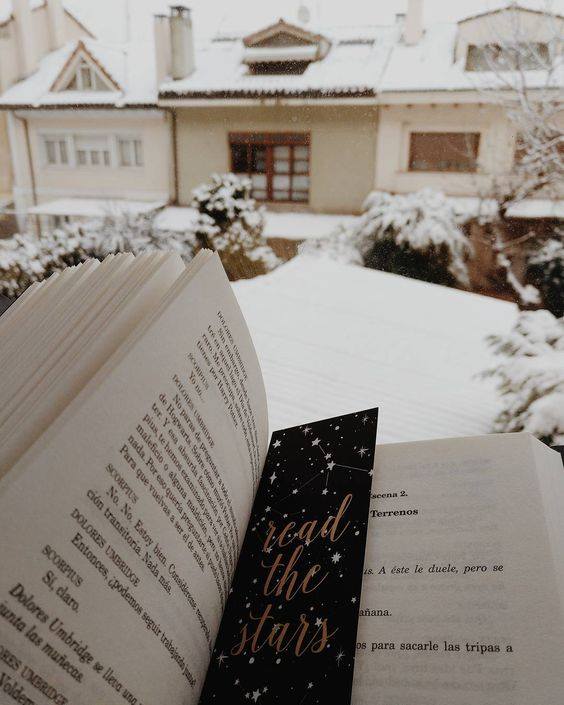
Look out your window…is this your view?

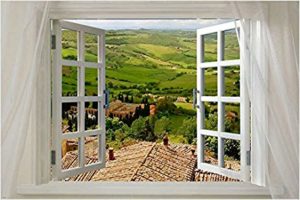
What if, instead, I could give you this view?   Or this?


Here are three books certain to whisk you away to warmer climes  ~~ perhaps not physically, but in your imagination.

So make yourself some cool lemonade and come with me, let’s escape  winter for a bit.


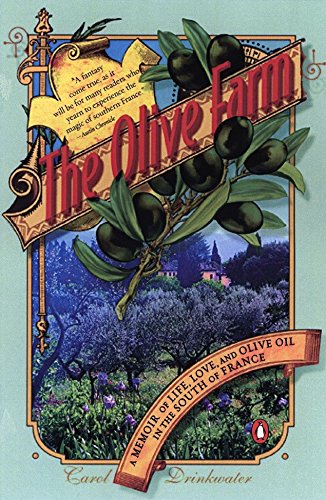
The Olive Farm

A Memoir of Life, Love and Olive Oil in the South of France

by Carol Drinkwater


Carol Drinkwater is the actress best known for her portrayal of Helen Herriot in the BBC television series All Creatures Great and Small.

When Ms. Drinkwater and her fiancé (later husband) Michel, are given the opportunity to purchase ten acres of an abandoned olive farm in the South of France, they find the region’s splendor impossible to resist. Using their entire savings as a down payment, the couple embark on an adventure that brings them in contact with the beautiful countryside of Provence, its neighbors personalities, petty bureaucracies, bug infestations and unexpected wildlife. This warm and funny memoir takes the reader from the glamour of Cannes to the sunny charm of  their small plot of land, which they back breakingly transform from overgrown weeds into a thriving olive farm producing some of the finest olive oil in Provence.  While at times pedantic when it comes to the history of the olive and olive oil production — The Olive Farm will make wipe your brow in sympathy as they work their land and guaranteed you want to upgrade whatever mediocre olive oil lurks in your cupboard.


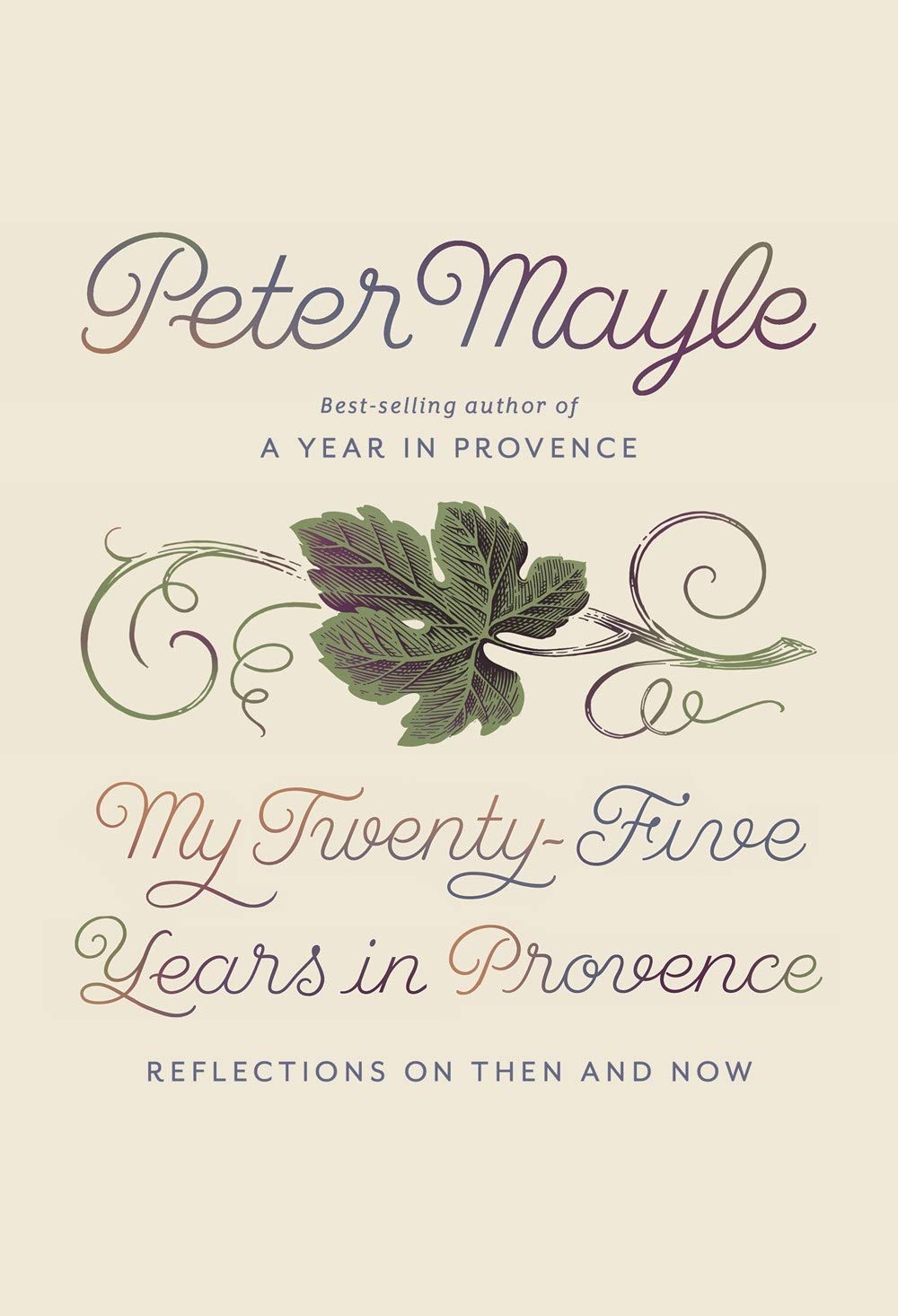
My Twenty-Five Years in Provence

Reflections on Then and Now

by Peter Mayle


You may remember my earlier post about Peter Mayle who died a year ago.  Here is his final volume of essays – containing all new pieces which offer his warm and vivid recollections from twenty-five years in the South of France–lessons learned, culinary delights enjoyed, and changes observed.

Twenty-five years ago, Peter Mayle and his wife, Jennie, were rained out of a planned two weeks on the Côte d’Azur. In search of sunlight, they set off for Aix-en-Provence; enchanted by the world and life they found there, they soon decided to uproot their lives in England and settle in Provence. They never looked back and when Mr. Mayle’s books became bestsellers, the inspired a whole lot of Brits to follow in their footsteps.

In this volume, his 25 years in Provence have made him wiser and a bit cynical, but no less in love with the area.  A cup of café might may now cost three euros–but that price still buys you a front-row seat to the charming and indelible parade of village life. After the coffee, you might drive to see a lavender field that has bloomed every year for centuries, or stroll through the ancient history that coexists alongside Marseille’s metropolitan bustle. Modern life may have seeped into sleepy Provence, but this volume reminds us that its magic remains.


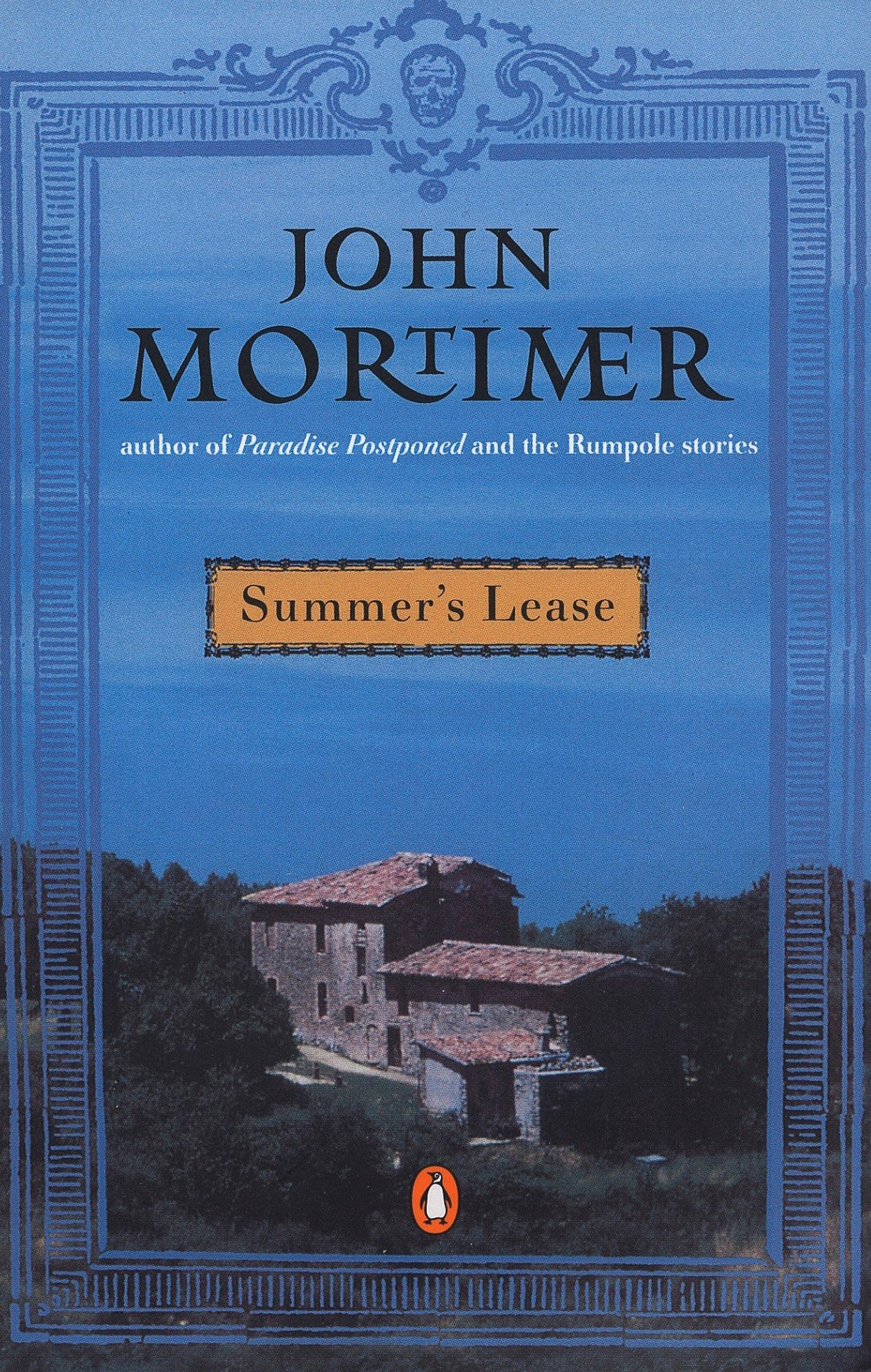
Summer’s Lease

by John Mortimer


And now a novel.  But not just any novel, a Book Barmy favorite  I have re-read Summer’s Lease several times — usually in the midst of cold and damp weather.

Just to refresh your memory John Mortimer is the author of the famous Rumpole series which was adapted into a very fine BBC series ages ago.

With Summer’s Lease, Mr. Mortimer veers away from the dusty London chambers into far different surroundings – namely a hot summer in the Tuscany region of Italy.

Molly Pargeter, the mother of three girls and the dissatisfied wife of a barrister uses her own inherited money to bring the family to a dream vacation rental house in Chianti.  Her father Haverford Downs — played by John Gielgud in the 1989 television adaptation —  joins the vacationing family and is loud, pompous and embarrassing and quite frankly one of the best things in this 1988 comic novel.

Molly strives to enjoy the lush Tuscan atmosphere of “La Felicita” (the Pargeters’ rental house) and immerse herself in the sun, people and the famous ‘Piero della Francesca’ paintings nearby.

Molly is also curious about the owner of the house they are  renting, having made the arrangements by mail – never meeting in person. She encounters a number of British expats whom seem to know and respect the owner of La Felicita, but give few details of the shadowy landlord. Molly soon finds herself involved in a greater mystery concerning the disappearance of water at rented villas, plus a suspicious death or two. She solves all the mysteries, but also learns the consequences of prying into the lives of others.

A mystery, a farce, a romance, and a tale of self discovery, Summers Lease is a warm (there’s that word again) vacation-like escape into the verdant and sunny climes of Italy.


So there you go some reading escape to take your mind off those endless layers of clothes, wet boots, and snow shoveling.

A Rainy Weekend – Book Barmy Style

I set aside a couple of books for a rainy day.  That rainy day turned into this past weekend of pouring rain ~~ and yes, as you can imagine, I had a very nice time.

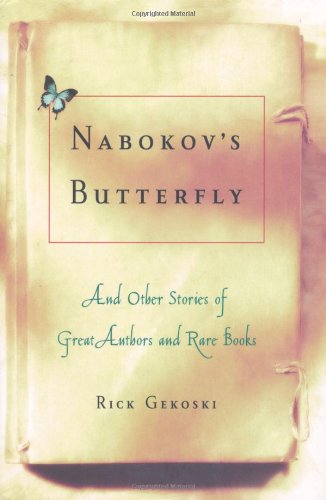
Nabokov’s Butterfly

By Rick Gekoski

A gift from my sister several years ago.  Nobokov’s Butterfly is a special book, only a true Bibliophile could appreciate.

Rick Gekoski abandoned his career in academia after only a few years of collecting and dealing in rare books.  Why?  He doubled his salary in the first year.

This little volume is packed with memorable stories about his life as a rare book dealer, and some of the rare books themselves. He covers twenty rare books.  Each chapter details the publishing history of a classic including, The Catcher in the Rye, Lord of the Flies, Harry Potter and the Philosopher’s Stone, On the Road and The Hobbit. 

The author delves into tales about each author, the writing of the book and the acclaim (or lack thereof) when first published.  He then dishes about the politics, frustrations, and joys in acquiring and eventually selling their rare editions.

Gekoski’s first meeting with Graham Greene was over the purchase of Greene’s rare first edition copy of Lolita which was inscribed by Nobokov to Greene and included an author sketch of a butterfly under the inscription.  (Nabokov was a keen butterfly collector.)  Greene and Mr. Gegoski become friends and bond over books and literature.  The author later sold this incredible find for a great deal more money to, none other than, Bernie Taupin — the famous lyricist for of Sir Elton John. See what I mean about dishing?

Mr. Gekoski tells of Ulysses and how James Joyce followed the advice of Ezra Pound who suggested Joyce send each  newly completed chapters to various magazines to earn money as he wrote. He also interviews a famous collector of rare editions of James Joyce who was unable to get through Ulysses:

[No] one has ever wished it longer than it is.  Ulysses is universally admired but rarely loved.

Mr. Gegoski is a skilled storyteller and each chapter of Nabokov’s Butterfly  is a delight for any book nerd lover.  And, just look at these wonderful flyleaves!


Don’t worry, in case you’re falling asleep, our next book has lots of pictures.

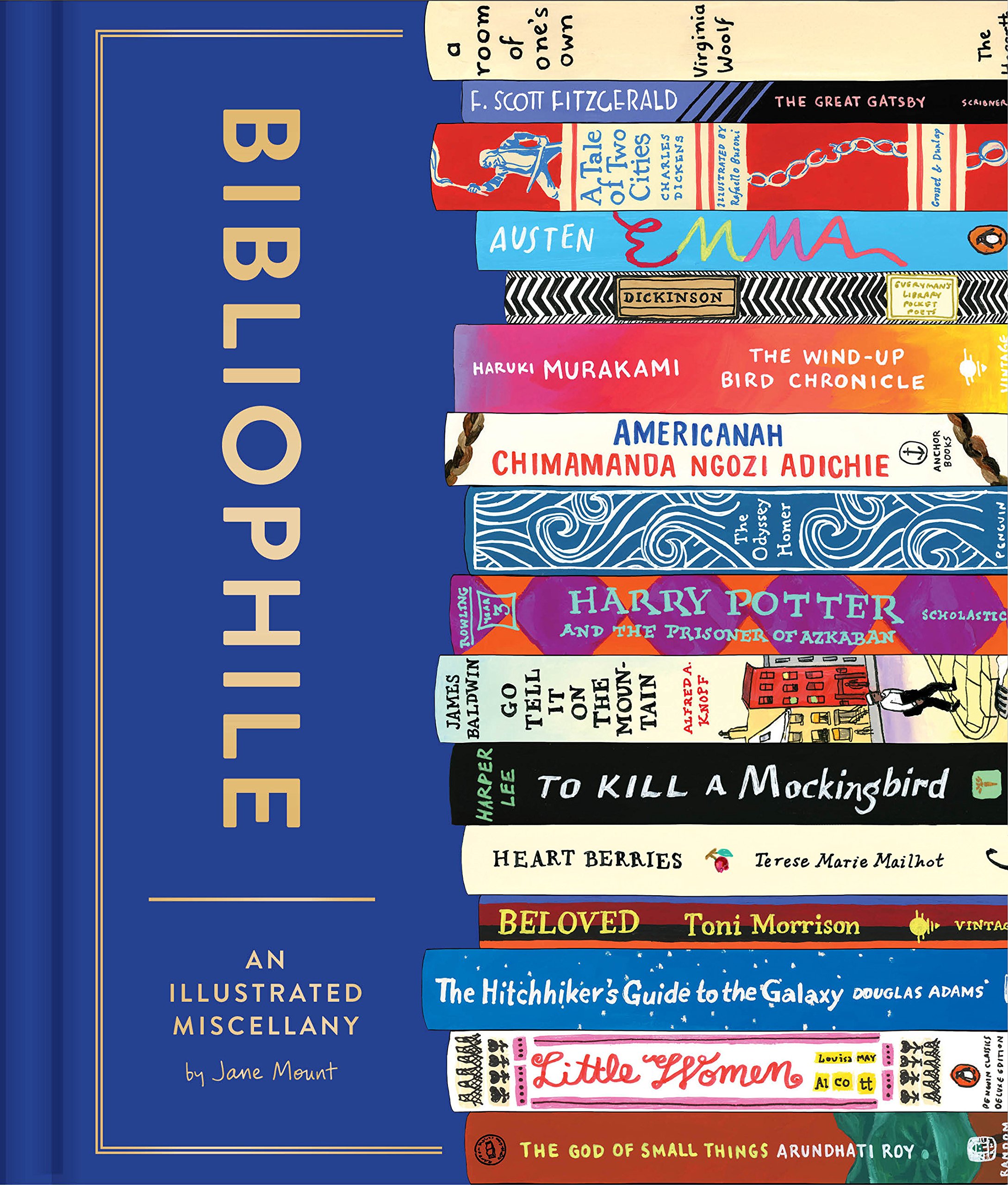
Bibliophile: An Illustrated Miscellany

Illustrated and written by Jane Mount


Someone gave me this book, and while it’s beautiful, expensive, and filled with colorful illustrations, I’ve avoided opening it.  I wasn’t sure I was on board with the concept of a hand illustrated picture book for book lovers – maybe it was this publicity blurb:

The perfect gift for book lovers, writers and your book club.  Book lovers rejoice! In this love letter to all things bookish, Jane Mount brings literary people, places, and things to life through her signature and vibrant illustrations.

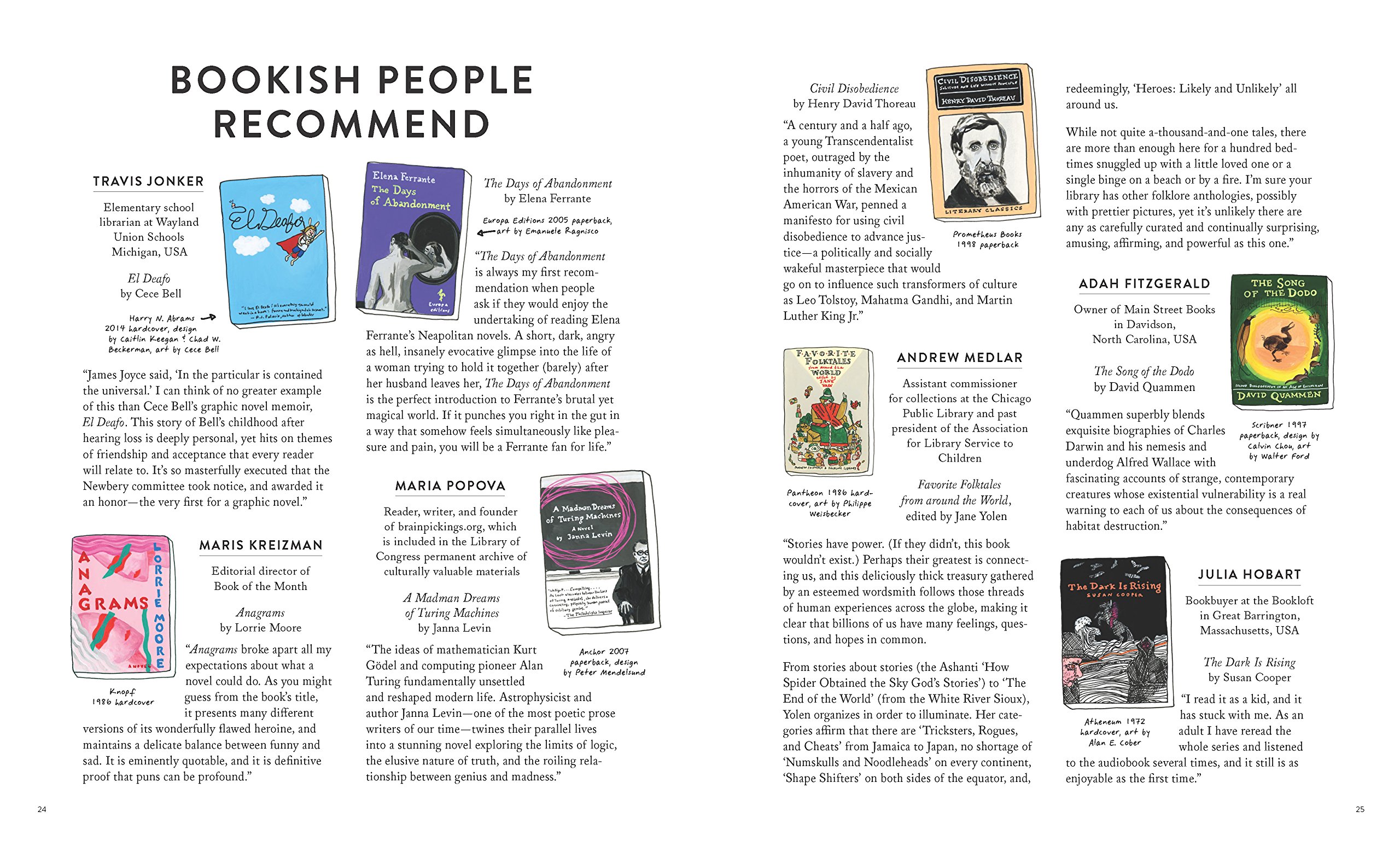
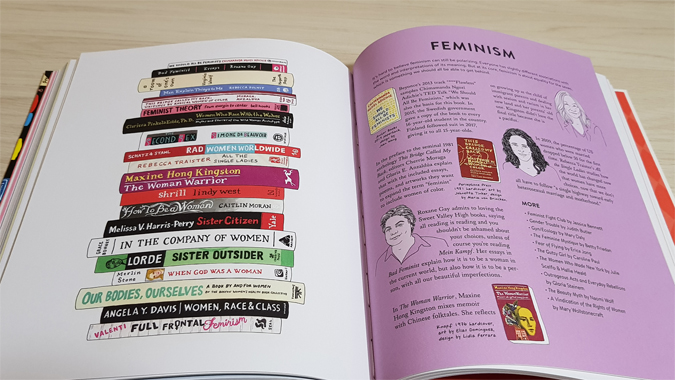
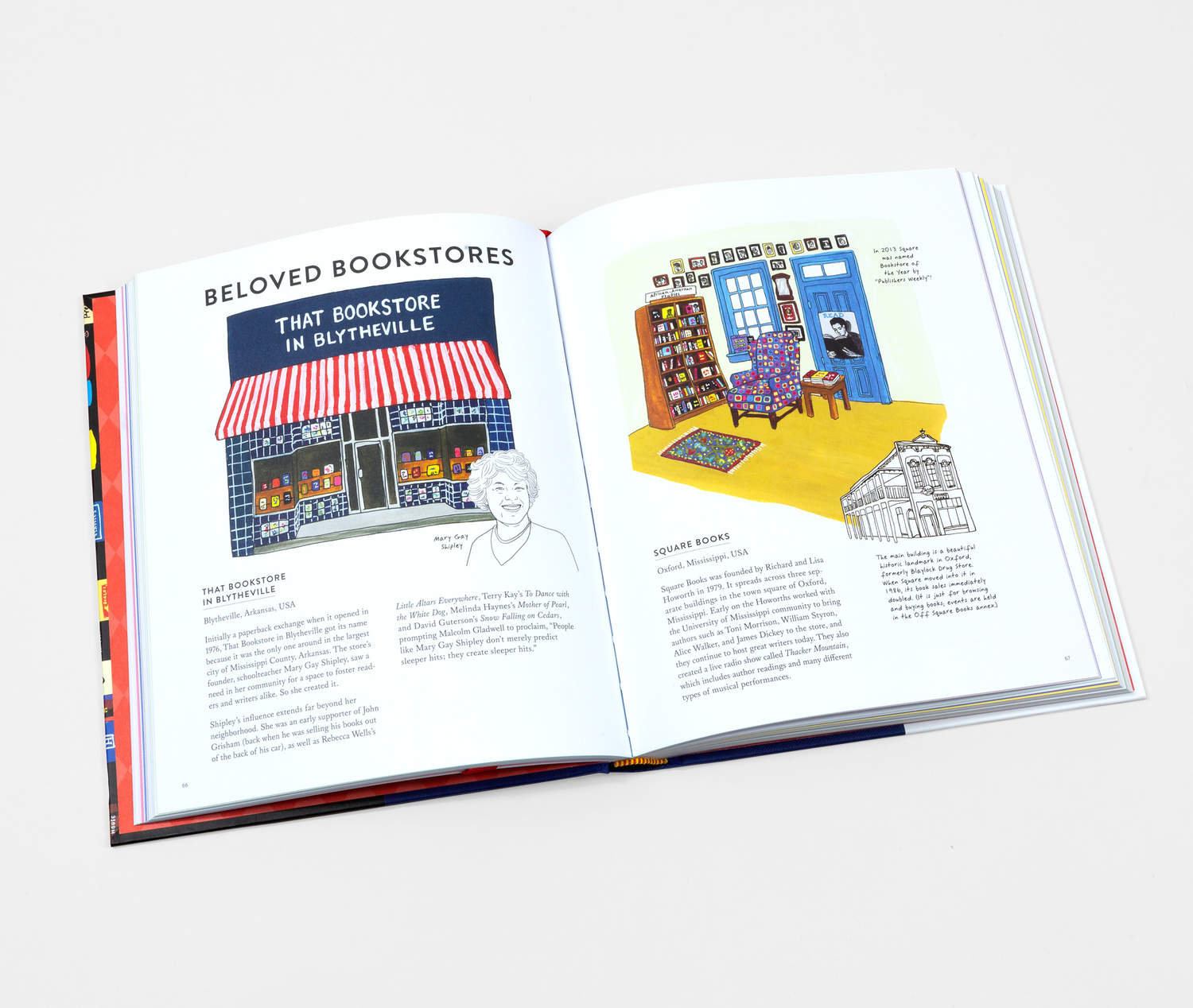
When I finally did open it this rainy weekend, I found myself entertained and was happily turning the pages for an hour or so.  There are plenty of illustrations, many truly charming, and some interesting tidbits.  (Just click on images to make larger.)


There are sections on beloved bookstores

Pages of recommended books

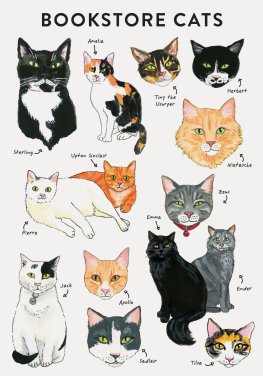
Bookstore cats are lovingly rendered.

Books made into television series

Some award-winning covers

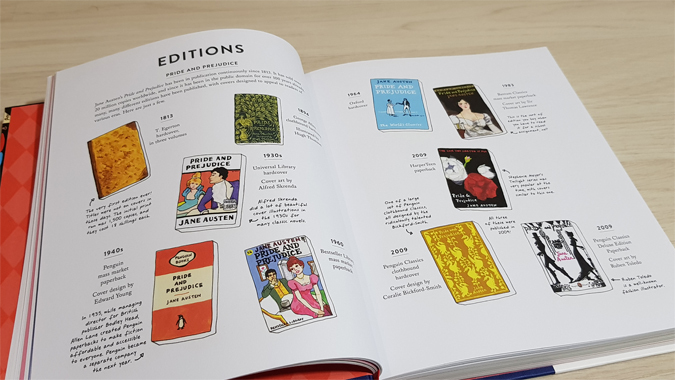
Special editions, collections by genre, and even more bookstores

In the end, I really enjoyed going through this illustrated devotional to books, learned some interesting things and naturally wrote down a few books I want to read.  I especially liked the section on Types of Fiction wherein Bildungsroman, Metafiction, and Magical Realism were defined in a most understandable manner (see decoding below)

And, as an added bonus, Bibliophile was perfect with tea on a rainy day.

The author, Jane Mount is an illustrator, designer, and founder of Ideal Bookshelf, a company that makes all sorts of bibliophile tchotchkes. She, of course, lives happily on Maui, in Hawaii.

——————————————————————————-

Bildungsroman:  A young person gets an education of some sort and comes of age. A Portrait of the Artist as  Young Man, by James Joyce; The Goldfinch by Donna Tartt

Metafiction:  These stories remind you with a nod and a wink that they are stories, not real life, often by nestling other stories within themselves. Slaughterhouse Five by Kurt Vonnegut; The Blind Assassin by Margaret Atwood

Magical Realism:  Originating in Latin America in the early 20th century, these are stories set in the real world but with a little magic thrown in without fanfare.  One Hundred Years of Solitude, by Gabriel Garcia Marquez; Midnight’s Children by Salman Rushdie

Holiday Reading

Despite a busy, happy, jam-packed holiday season, I was able to get in a few books. Nothing high brow, nothing earth shattering. A few lightweight holiday reads.    Just the right ending for what turned out to be a super couple of weeks.


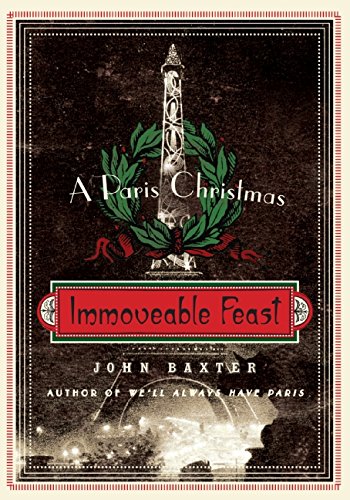
Immoveable Feast

A Paris Christmas

by John Baxter

In this novel, John Baxter writes of preparing his first Christmas feast in France.  Australian by birth, living in Los Angeles.  He falls in love with a French woman:

“Struck down by that helpless love which the French call un coup de foudre – a thunderclap — I’d abandoned a comfortable life in Los Angeles and, on the spur of the moment moved to Paris to be with this woman I loved.  I knew no more French than one can pick up from movie subtitles.”

It is now several years later and he has married Marie.  This year he has the dubious honor to host the annual Christmas meal for friends and family.  Each chapter takes the reader through his search for the perfect ingredients for his menu. There’s a whole chapter on sourcing fine French cheeses, and I swear you can smell and taste each cheese.

From traveling to India for spices, to discovering the perfect wine at a bargain price in a small village grocery — the pressure is on for our poor author.   Mr. Baxter is funnily self deprecating, in awe of French style, and intimidated by their insistence on food perfection.  As a frequent dinner host, I loved watching his meal plan come together and the last chapter, culminating in the meal itself, is guaranteed to make your mouth water.

I even cheered along with his guests as they erupted in very un-French-like applause over his flaming fruit dessert.


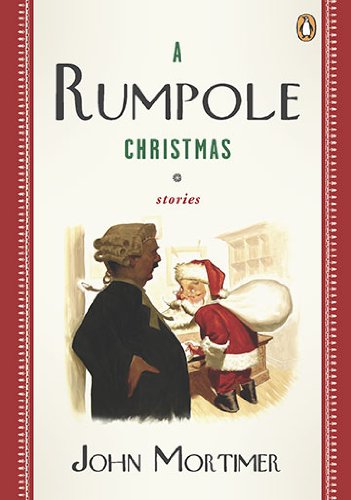
A Rumpole Christmas

by John Mortimer

One of my great pleasures of the holiday season is to bring out and cozy-up with my favorite Christmas books.   This collection of Rumpole stories is one such delight.

Back in the 1980’s Husband and I were fans of the BBC/PBS series Rumpole of the Bailey starring the inimitable Leo McKern.  The series was based on the books and stories written by John Mortimer.   (You can currently see many of the television episodes on YouTube.)

These stories feature cantankerous lawyer Horace Rumpole, his hapless colleagues at the Old Bailey and his formidable wife, Hilda (aka She Who Must Be Obeyed).  These pieces variously appeared between 1997 and 2006 in various British publications, and I’ve since learned, are the only ones with a Christmas setting.

In Rumpole and Father Christmas, our barrister meets an old friend (of sorts) playing Father Christmas at the office holiday party. Meets him, that is, as he’s returning things he stole during the party.

One of the best of these stories is  Rumpole’s Slimmed-Down Christmas. Rumpole’s wife, Hilda has booked them at a health farm during the holidays. Enduring yak-milk and a no alcohol policy, Rumpole finds distraction by defending the owner of the health farm against a charge of murder.

In the one story that always has me chuckling out loud, Hilda and Rumpole spend Christmas at Cherry Picker’s Hall. To Rumpole’s horror, Justice Graves (Rumpole calls him the old Gravestone) is also in attendance.  

“His usually lugubrious features wore the sort of smile only previously stimulated by a long succession of guilty verdicts”

The Old Gravestone appears to find Hilda all too charming. Rumpole must endure not only dancing with Hilda, but the Old Gravestone’s attempts at flirting.

But, above all we have Rumpole himself, smoking his cheroots, swilling his cheap red wine, and always standing up for the defense.  He quotes Worsdworth and Shakespeare — he is our favorite Curmudgeon Extraordinaire.

Mr Mortimer*, who died in 2009, made his career with the Rumpole series which are based on actual courtroom trials in England.  He writes with great wit and, most admirably, injects subtle sarcasm into his writings.  (Book Barmy note:   I think many authors have difficulty writing sarcasm without seeming cruel. Mr. Mortimer is a writer who deftly crafts this fine balance.)

Rumpole’s Christmas stories never fail to delight.

* John Mortimer was a playwright, novelist, and former practicing barrister who wrote film scripts as well as stage, radio, and the Rumpole television series for which he received the British Academy Writer of the Year Award, along with his adaptation of Evelyn Waugh’s Brideshead Revisited. He is the author of twelve collections of Rumpole stories and three acclaimed volumes of autobiography. John Mortimer also wrote one of my favorite novels Summer’s Lease


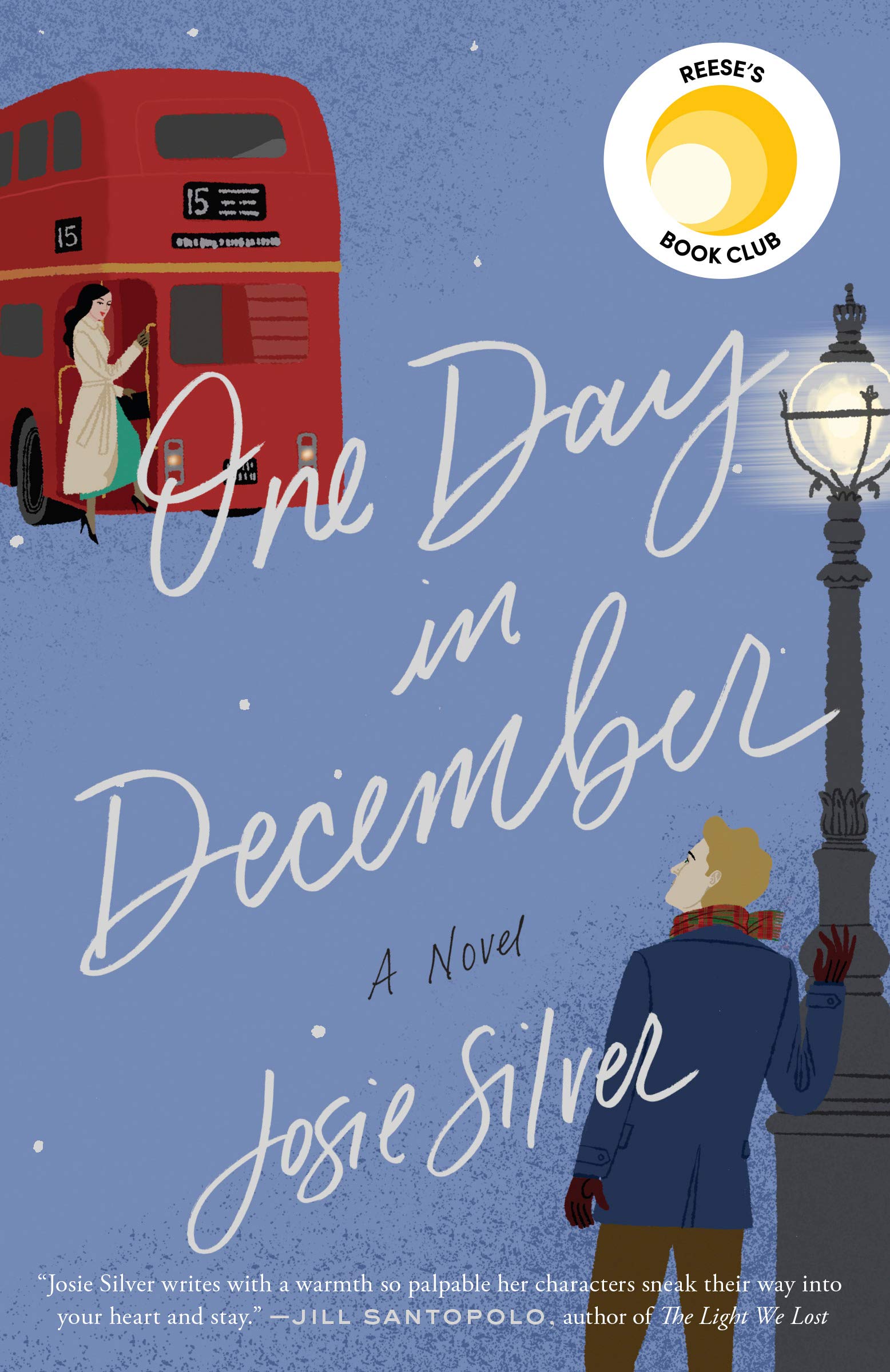
One Day in December

by Josie Silver

I was in the throes of a busy, yet fun, holiday and needed a lightweight read that didn’t require major brain cells.

One Day in December was a pure romantic Christmas delight.  I don’t often read what is coined as “Chick-Lit” or “Rom-Com” but I was taken in by the publisher’s letter in my advanced reading copy.  The letter claimed this new novel was a cross between Love Actually and When Harry Met Sally – and that it left a smile on her face for days after she finished.  Okay, perfect, I decided.

It’s December and Laurel is packed on the upper deck of a London city bus and musing on her fellow passengers coughing and sneezing~~

“It’s a wonder everyone who uses public transport in winter doesn’t keel over and die of germ overload.”

Then Laurel catches the eye of a man waiting at a bus stop and their eyes lock in tandem and the world seems to disappear around them.  Yes, corny, but seems it’s love at first sight.  Neither can move fast enough to either get off the bus (Laurel) or the guy to run to get on the bus…so life goes on.

Eventually, their paths cross, but he (Jack) is dating her room mate and best friend, Sarah…awkward.  Although Jack vividly remembers their bus sighting, and instantly feels the same connection — he decides not to acknowledge this to Laurel.  And so the years go by.

Ms. Silver has constructed her novel into chapters which delve into each character’s point of view and then into yearly sections –each year ending with a wrenching December holiday plot twist.  I can see a film adaptation in Ms. Silver’s future.

Far more complex and thankfully, not a typical romantic comedy, One Day in December was very nicely written and compelling.   The British characters are lovably flawed — the author has them stumble through friendships, breakups, dreams, jobs and finally love. They drink too much, love too much, mess up their relationships — and I found it all quite endearing.

Great literature? No.

A cheerful and heartwarming romantic comedy? Yes.

Me. Hopeless romantic?  Definitely.


Now I’ve got to go.  It’s New Years Day evening.  Husband has had enough football and has relinquished the television.  I’m off to watch Love Actually one last time. Back to real life tomorrow Okay?

Happy New Year. 


A digital advance readers copy of One Day in December was kindly provided by Broadway Books via NetGalley.

Everybody’s Doing It

Everybody’s doing it.

Doing what you say?

Buying Books!

There’s been an unprecedented surge in book sales.

And we’re talking full price, hardback, printed books.

Just before the holiday week, readers demand for some hardback bestsellers has caused printing shortages and titles to be unavailable.

You can read all about it HERE in an article from the New York Times.

Now that’s some good news!

Jólabókaflóð

It wouldn’t be Christmas Eve here at Book Barmy unless I posted this:

In Iceland, it is a Christmas Eve tradition to give a book as a gift.

This is called Jólabókaflóð, or the Christmas Book Flood.

This time of year the sun doesn’t rise until 11 AM & it’s dark by 3 PM.

So after a brisk (and chilly!) afternoon walk around town with the rest of their neighbors, familes snuggle into their homes with a hot drink and to read their new books.

Wishing all my fellow book lovers a traditional Jólabókaflóð

Merry Christmas and happy reading, from Book Barmy headquarters

This image from Deborah DeWitt – check out her book themed art HERE