Gift Idea for the Fashionista

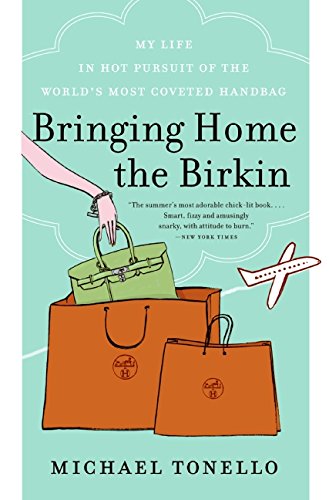
51rNhd2ClgLBringing Home the Birkin

by Michael Tonello

My Life in Hot Pursuit of the World’s Most Coveted Handbag


In the words of Monty Python …

and now for something completely different. 

If you could see me right now in ratty jeans and a favorite soft sweatshirt found at Goodwill, you’d seriously question why I would read, let alone recommend, this book.

And you’d be right, I could care less about designer clothing labels or bling from Tiffany’s — but I do have a weakness for a good bag.  (There was an incident at a Coach factory store in New Hampshire [no sales tax], where mid purchase, my credit card company shut me down thinking my card was in the hands of a thief on a spending spree — but the incident was all sorted out and we shall speak no further of it.)

75430039 Back it in the 90’s, Hermès was known for their coveted Birkin handbags – and the infamous five year waiting list to obtain one of the bags. This urban myth was perpetuated through the cultural icons of the time such as a Sex and the City episode and Victoria Beckham’s astonishing pink Birkin. They were (and still are – just checked eBay – yikes) the ultimate elite status symbol.

At a starting price of $8,000, a Birkin is well beyond my means or my conscious.  But still, a girl can dream right?

That’s why I stopped short when I came across Bringing Home the Birkin. I found myself turning the pages, warily thinking — this is not the book for me, I’ll just read a little bit…and before I knew it, I was enthralled by this frothy, engaging and funny tale.

Michael Tonello moves from Cape Cod to Barcelona, Spain, but once there the job he has lined up, falls through.  Having fallen for both Barcelona and a new man, Mr. Tonello turns in desperation to his favorite pastime — shopping, which leads him into Hermès stores where he buys scarves to resell (at a very good profit) on e-Bay. When one of his scarf buyers asks him to obtain a Birkin, (at any price) he takes on the challenge.

This proves to be a formidable task as Hermès made sure the Birkin bag remained ultra exclusive, by instituting a waiting list with high-profile customers, limiting the number of Birkins sold to each customer and  putting a “reserved” sign on display bags.

Mr. Tonello riffs on the likelihood of the “reserved” ploy with this passage:

I could only imagine the conversation:  “Oh yeah, the croc Birkin, right, great.  But I only have half the money now,  — repairs on the yacht this week you know how it is…don’t sell it, just put in the window, pop a reserved sign on it or something.  I’ll send the chauffeur by with the other half by next Sunday at the latest — Great great.  You guys are the best…”

Hermès‘ strategy worked and customers fell for it–blinded by the rarity and social status. Mr. Tonello knew this human failing only too well and he finds it fairly easily to obtain numerous bags, but only after he develops a buying formula, a special outfit (!) and profiles of typical Hermès sales personnel in order to befriend them (one of the funniest sections of the book are these employee “profiles” – and their accompanying illustrations).  He journeys to Luxembourg, Capri, Santiago, Paris –all in search of Birkins, which he sells at a tidy profit to his shamefully rich clients.

Just when this tale of over the top consumerism is almost getting to be too much, a family tragedy causes Mr. Tonello to examine his conscious.  He reflects on what is actually important in life and discovers he can no longer deal with “people who lacked for nothing, but who longed for more”. 

With that said, Bringing Home the Birkin is not high moral reading.  This is a guilty pleasure — a fun peek into the world of high fashion, high stakes shopping and the extraordinarily rich.  But it also shines with beautiful locations, great hotels, top restaurants — and most of all the fascinating, funny and outrageous Michael Tonnello.

+++++++++++++++++++++++++++++++++++++++++++

Why is it called a Birken?  Well the story goes that Jane Birkin was flying from London to Paris in 1981 when she reached into her bag for her datebook and everything fell out. “I’d love a bag with pockets,” the English singer/actress told her seatmate.  Her seatmate just happened to the chairman of Hermès. He was a good listener. He had his designers make not only a bag with pockets, but also a spill-proof closure. He sent one to Birkin and then he named it after her.
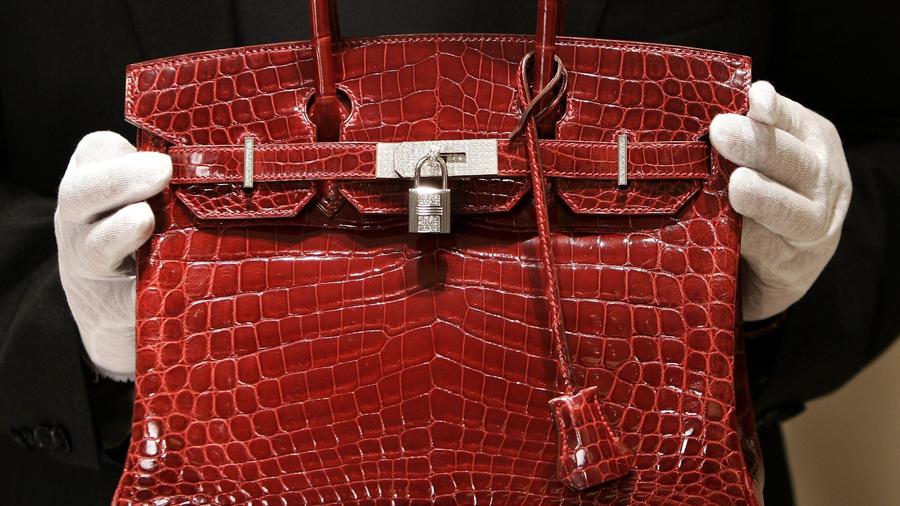

red croc birkin


Gift Idea for the Handyman

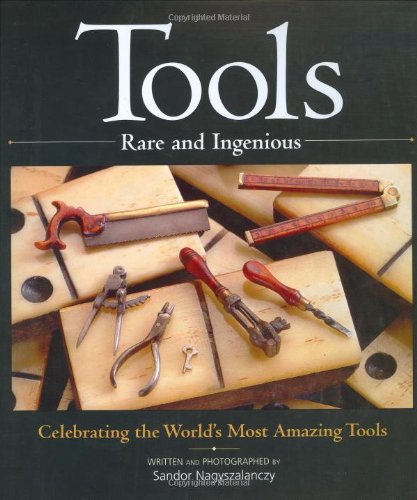
51jCM3etqiLThe Art of Fine Tools

by Sandor Nagyszalanczy


Everyone has a handyman (OK handy person) in their life.  You know, that someone you call when the faucet is dripping or to fix a cabinet door.  It may be a neighbor, a friend ( a very good friend) or if you’re like me, your partner.

Husband has a workroom chocked full of tools and his favorite destination is Home Depot or OSH — so getting him a tool for Christmas is always a bust – because, of course, he already has it.  So naturally, I give him books and several years ago,  The Art of Fine Tools was one of my best gift scores. When I asked him why he replied,

“well, it’s not a very practical book but I love it, it’s just — it’s just — well, okay it’s tool porn.”

Nagyszalanczy begins his book with this simple, declarative statement:

“A well made tool is a thing of beauty that’s as much a pleasure to look at as it is to use.”

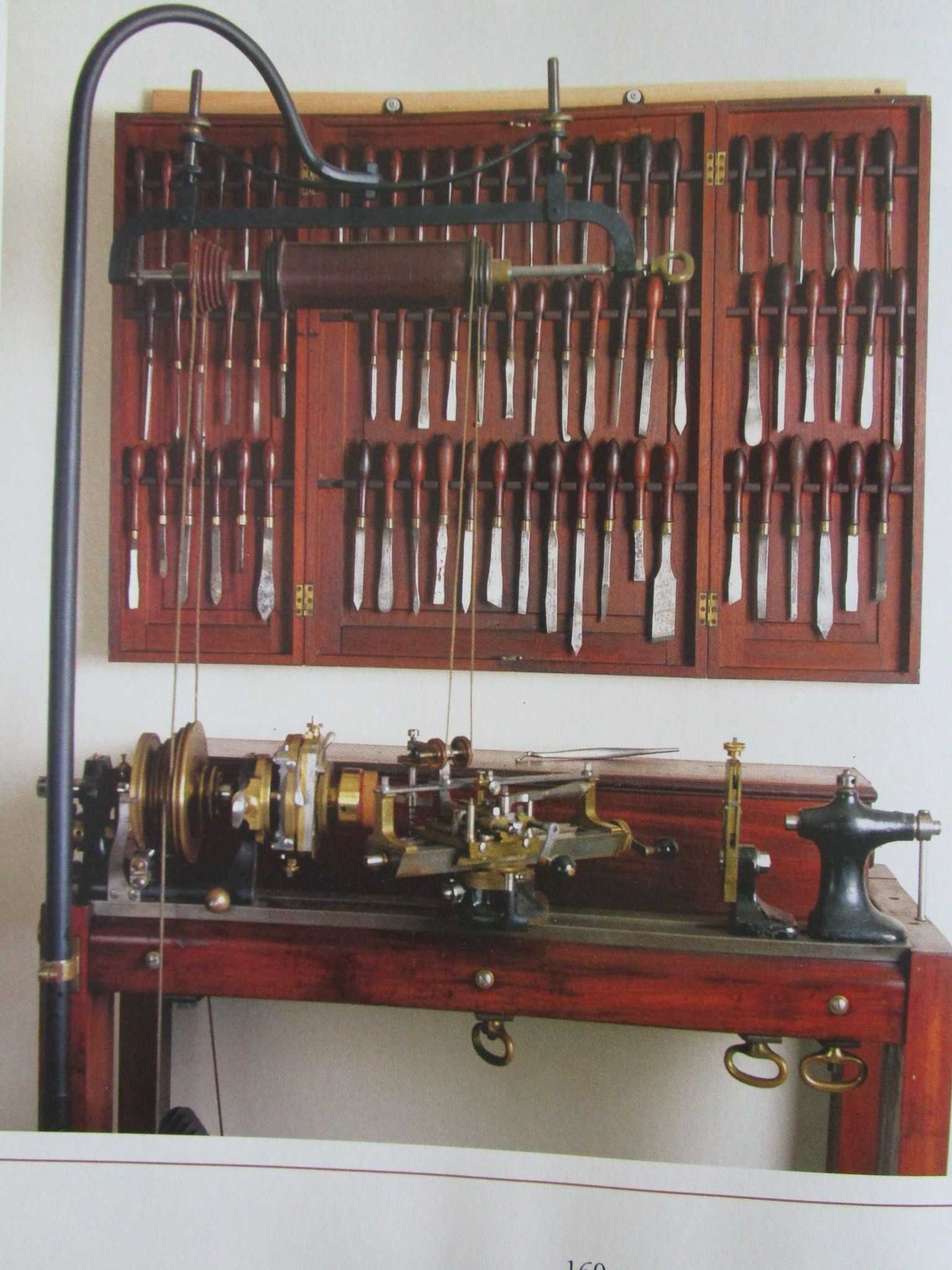
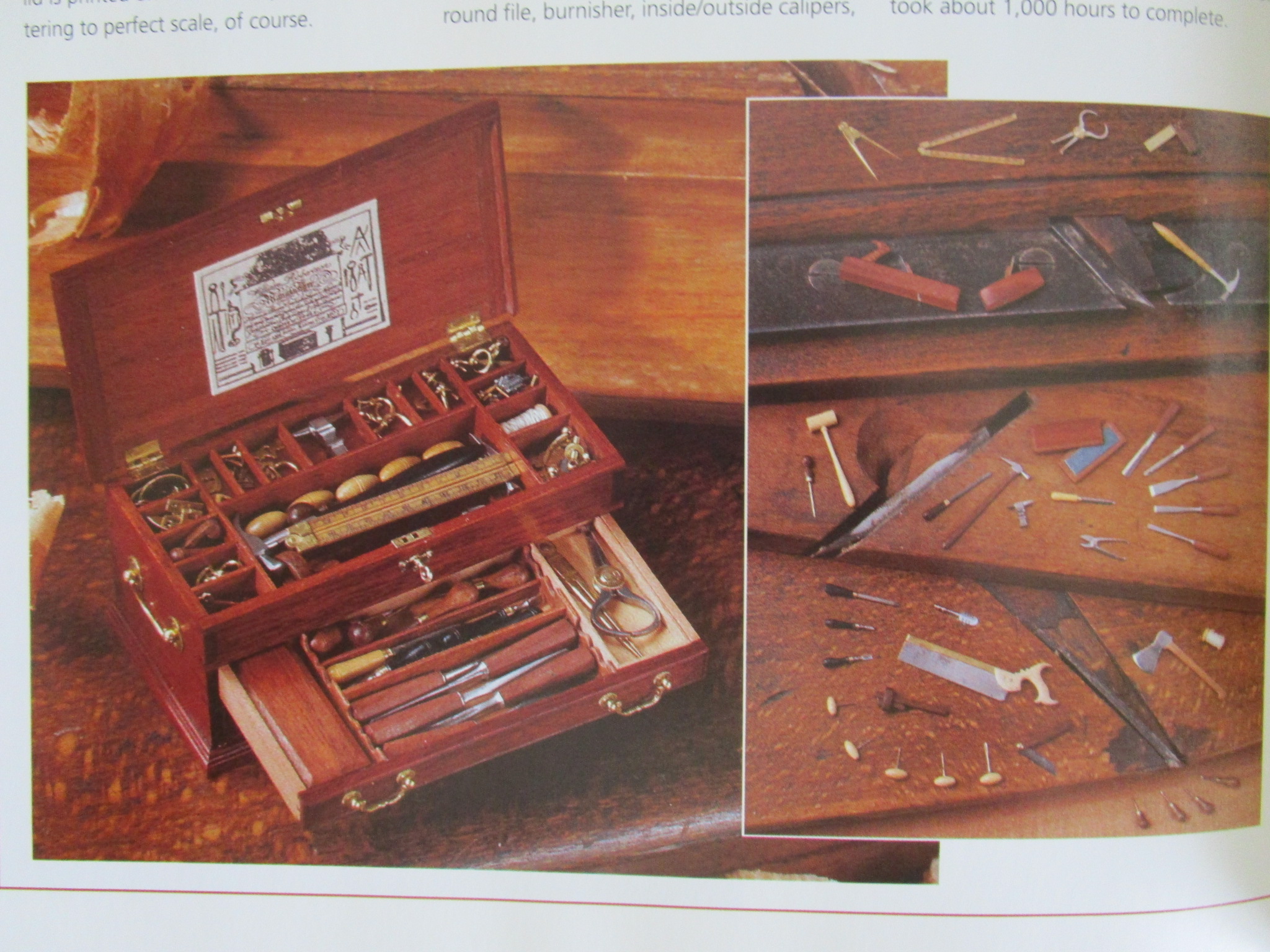
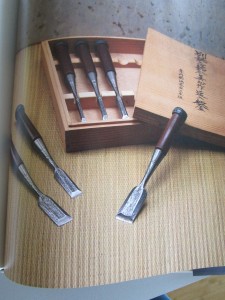
The quality of the images is indeed simply beautiful, even to me, who uses a screwdriver to pry nails.  These are rare and magnificent woodworking tools –including Japanese tools and Paul Hamler’s (?) collection of miniature tools. The text nicely explains the tools, their provenance, owners and usage.

You have to take a look inside…excuse my photos – they don’t do the book justice.

IMG_1553IMG_1552


As I leafed through the pages to prepare this post, I realized Husband was absolutely right – this is unadulterated tool porn. It seems wrong that innocent tools are exploited like this, but your handy person will love it.


Turns out Mr. Nagyszalanczy (don’t you love that name?) has crafted (crafted, ha-ha I just crack myself up) a second book, which Husband doesn’t have.  Luckily, Husband isn’t a Book Barmy follower, so I’ve got his present crossed off my list.

515ErdO5FYL


Gift Ideas for a Book Lover

Why, oh why, would I choose my first entry in the 12 Days of Book Barmy Gift Ideas for the Booklover in your life?

tgcomny2Because you need time and stealth.  First, you need to invite yourselves over to their home and while they make the tea (or margaritas, however you and your friends roll) covertly scan their bookcases for the titles below.

You see, the Booklover in you life has likely read most everything — they sneer at the quickly-found bestsellers, probably own most of the well-known classics, and in short, are the most difficult person on your gift list.  So with great thought, I am recommending two books that are somewhat lesser known…in the hope that you can surprise them.

These books may require some work, a trip to your local used bookstore or independent bookstore may result in actual copies on the shelf or an order will put them in your hands shortly.  The chains or big box stores will not stock these — don’t even try.  Even the big A has a really paltry selection of editions.

HERE is a link to find your local independent bookstore.  And in an shameless plug for local independents, get a gift receipt.  Then, if your book lover already owns these books, they will happily get something else they want.

++++++++++++++++++++++++++++++++++++++++++++++++

IMG_1547“When you sell a man a book,” says Roger Mifflin, protagonist of these classic book-selling novels, “you don’t sell him just twelve ounces of paper and ink and glue — you sell him a whole new life.”


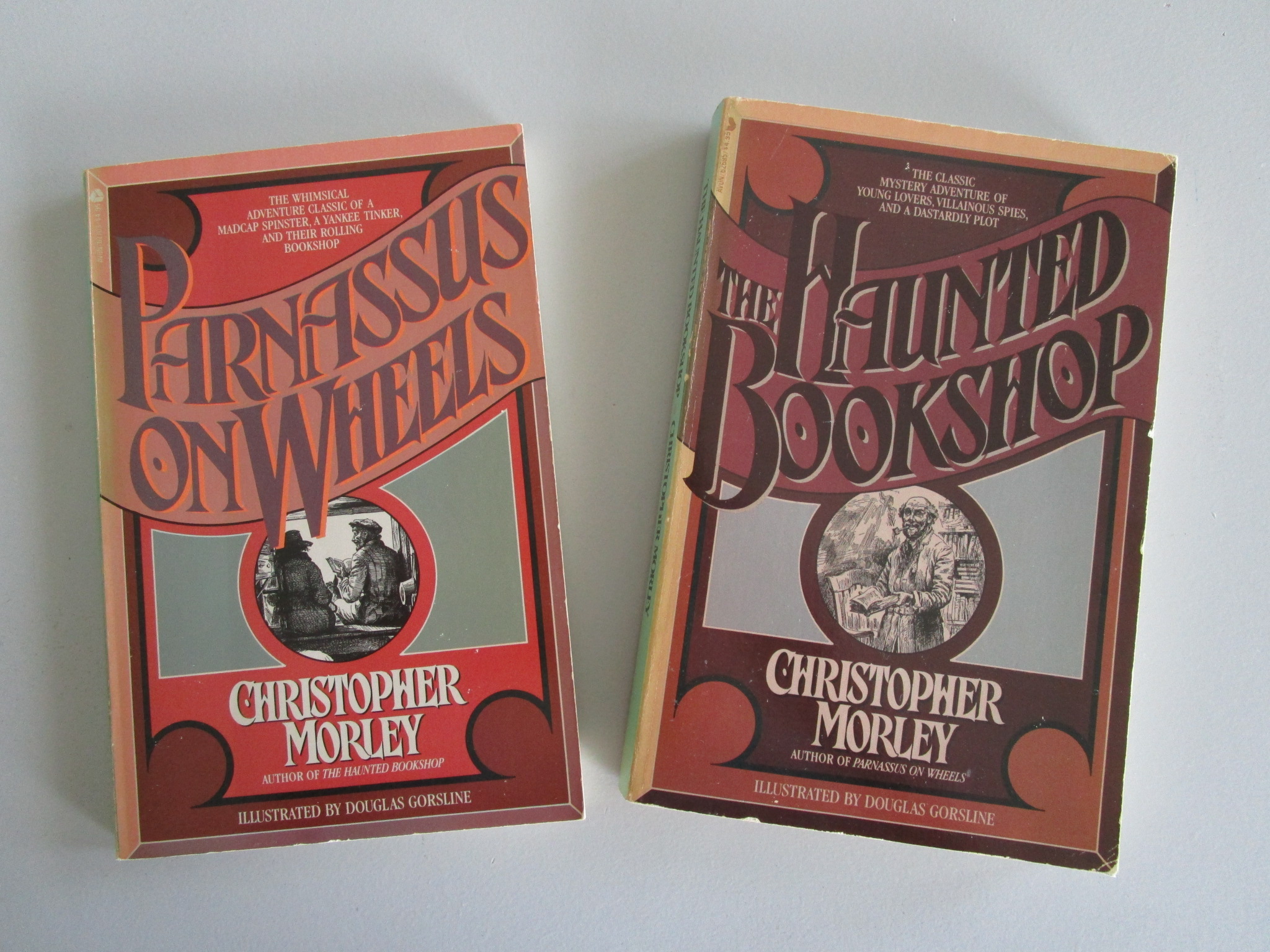
Parnassus on Wheels & The Haunted Bookshop

by Christopher Morley


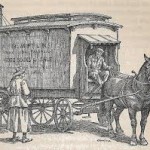
Published in 1917, Parnassus on Wheels tells the tale of Roger Mifflin, a traveling bookseller, who roams farmlands and backwoods with a horse-drawn bookshop, spreading the gospel of books. His faith in the power of the word is boundless. People need books, he insists, even if they don’t know they need them.   Along the way he meets Helen McGill, a good-hearted spinster, and they share adventures while slowly falling in love.

The plot sounds simple, and it is. But the story is written with easy grace and the characters are just plain adorable. But what makes the story so appealing, is that Morley wrote it for bibliophiles and his intense love of books and reading permeates every chapter. Reading Roger Mifflin wax lyrical about specific books makes us hunger to read those books ourselves. When I first read Parnassus in my late teens, I jotted down a reading list culled from the book (which I still keep in my copy). Some of the authors he mentions have sustained me ever since.

Your Booklover will intimately relate to this book-reverent tale, because it is as antiquated and quaint as the horse-drawn wagon from which Roger sells his treasures.  Today’s focus on instant messaging and publisher’s concern for profits over quality has perhaps made book-loving a relic of the past. But don’t worry, your Book lover, if they are anything like me, is happy to be a dinosaur.


The Haunted Bookshop is a sequel to Parnassus on Wheels. Roger Mifflin and Helen McGill, now wedded, have opened a bookstore in Brooklyn called Parnassus at Home (not The Haunted Bookshop, as the the title seems to hint).

The time is shortly after WWI, and President Woodrow Wilson is soon to sail for Europe to craft the settlement that will create the League of Nations. Into Parnassus at Home enters Aubry Gilbert, a young advertising man, Titania Chapman, a rich debutante sent to work there by her father to learn some life skills, and a disappearing and reappearing copy of Carlyle’s Oliver Cromwell. The book is a bit of a love story, a bit of a thriller, and mostly a paean to books and reading.  Roger himself is, once again, an adorable character, if sometimes long-winded on his favorite subject — books, of course.

Why the “Haunted Bookshop” – here’s a quote that will explain:

…that’s why I call this place the Haunted Bookshop. Haunted by the ghosts of books I haven’t read. Poor uneasy spirits, they walk and walk around me. There’s only one way to lay the ghost of a book, and that is to read it.

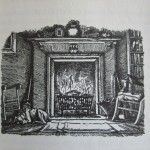
Booklovers will salivate over the descriptions of Roger’s cluttered but cozy secondhand bookstore and his fire-lit sitting room lined with his most cherished volumes.

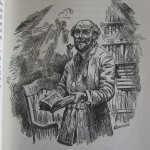
My copies have these lovely illustrations –

There are many wonderful editions out there – so start your search now.  I won’t judge if you obtain copies for yourself as well.  As Henry Ward Beecher said:

When is human nature so weak as in a bookstore?


My Gift for You

I know you’ve just finished off the last of the Thanksgiving leftovers and you’re still languishing in the post-feast euphoria..

de8


But guess what folks?

g4168


December begins tomorrow.


Perhaps  you’re stuck for gift ideas — but never fear, Book Barmy is here!

I’ve decided my gift to you – my faithful readers  — will be …._S4E11


Twelve Days of Book Barmy Gift Ideas

Beginning tomorrow I will post ideas for books, bookish things and literary swag to delight every type of reader on your list – from the Romantic to the Cook – and all those in between.  I know your gift list is chock full of friends and family who are just as barmy about books as we are.

So stay tuned.  And relax … I’ve got your back.


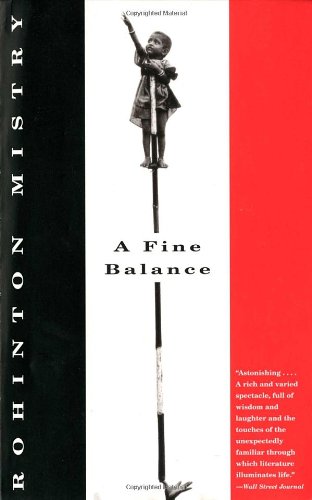
A Fine Balance by Rohinton Mistry

WLUpon opening A Fine Balance, this Balzac epigraph accuses the reader:

“…after you have read this story of great misfortunes, you will no doubt dine well”.

As we head off to share Thanksgiving meals with loved ones – I can’t help but think of those who are not safe, warm or well-fed at this holiday —  (yes, I’m just that much fun, be sure to invite me to you next dinner party).  Wisely, I keep these thoughts to myself and quietly plot my charity giving for the holidays.

Actually, Thanksgiving is one of my favorite holidays because it’s all about the food, friends and loved ones.  But my point (and I do have one, I promise) is that when approaching the abundances of  the holidays, I always remember this book, which has stuck with me since I read it almost 10 years ago.

A Fine Balance is one of the finest novels I’ve ever read.  Overstatement?  Not at all.  Simply superb, the beauty and humor of this book is matched only by the awfulness and arbitrariness of life — a “fine balance”.   This is a novel that instantly absorbs the reader.  Preoccupied with the characters — Ishvar, Om, and Dina, — I cried for them, cheered them and still remember them to this day.

The novel takes place in India during the mid-1970s under Indian Prime Minister Indira Gandhi’s  “State of Emergency”.  (Obviously, this is before her assassination and after reading this book, perhaps we know why.)  The book tells the story of a group of Indian citizens- two tailors, a student and a widow, as they struggle through their lives, how their fates entwined, how their initial distrust for each other blossoms into family of friendship.

Through their encounters, Mr. Mistry shows us the political arena of the time– how bribery and graft prevailed throughout the economy, how political propaganda was staged and how commoners suffered under the “City Beautification Program”.

Mr. Mistry makes no allowances for the western reader and forces us to view India without the rose-colored tint of British teas and painted elephants.

You’ll shake your head at the social issues that plagued India and some which are still evident today, the hopelessness of a caste system, begging as a “profession”, the pavement dwellers, the huge gulf between the rich and poor, how population control programs cruelly spun out of control and how shantytown people lived under the mercy of local rulers. One particular trade that struck me was hair-collecting…you just have to read the book.

OK, I can see you saying this book is not for me, a depressing read if there ever was one.  But trust me fellow readers, A Fine Balance is not that. There is much pain and yet much joy in this novel.  It shows us there is inherent beauty in just being alive and how our bonds with those we love deliver riches beyond compare.  Read this book – you will be changed.

Happy Thanksgiving everyone, hug your loved ones and appreciate the bounty of our lives – we are the lucky ones.


Comfort Reads

In times of trouble I turn to comfort reading.  You know what I mean — books where the problems are understandable, humans are mostly kind to one another and much is resolved over a nice cup of tea.

First, a few requirements, these comfort books must be well written, the stories well developed and the characters multidimensional.  No insipid chick-lit or light romance for me (not that there’s anything wrong with that…).

In case you too, are feeling a bit down during these sad days, here are some suggestions.  These are my favorite comfortable read authors… many of whom I keep on my shelves to re-read when I’m gloomy.


41D0WtAIadL._UX250_Joanna Trollope writes sparklingly readable novels often centered around the nuances and dilemmas of life in present-day England. She is witty, with a truly acute ear for dialogue. Her novels are never long enough for me. I have read most all her novels — some more than once, because she makes me laugh, think and also sometimes groan, at the complexities of modern life.  Her novels take modern life head on; divorce, errant children, flawed friendships and fallen expectations – but all woven with great human resilience.  Recommended: A Village Affair

wp777aa1ae_05_06Marcia Willett is a veddy veddy English author.  Her settings are a major pleasure in reading her books — cottages or large manor homes in the English countryside.  Her plots revolve around the emotional pull of families and friends.  Her characters are always interesting.  The families are complicated, but loved. Friends are irritating, but cherished.   Secrets are revealed in aga-heated kitchens with a pot of tea and fresh baked crumpets. Recommended:  A Week in Winter

31qdr9tRCML._UX250_I’ve mentioned Bill Bryson before here at Book Barmy, but I turn to him to cheer me up as I snicker, snort and laugh out loud at his writing.  My favorite are his wonderfully descriptive travel books – from hiking the Appalachian Trail to traveling in middle American.  Mr. Bryson is a smart writer who has a knack of seeing the wry humor in just about everything. He is also a traveler’s travel writer — not content to follow well-worn tourist locations, but instead visits the obscure and calls out the wacky with often hysterical results.  Recommended:  Neither Here Nor There


5172WNNfVVL._UX250_Elizabeth Berg.  A recent author discovery for me.  I found a book of hers in one of those little free libraries up in Lake Tahoe.  Opened the book that evening and fell in headfirst, finishing it the next evening.  When I came home, I discovered I had several of her books languishing on my shelves, given to me by friends and my sister.  I had shied away, categorizing her as “woman’s lit”, which I often find trying.  But based on my good experience, I read through another one (sending it on to you Connie)  and am almost through a third.  I wholly agree with Andre Dubus who said  “Berg writes with humor and a big heart about resilience, loneliness, love, and hope. And the transcendence that redeems.”   Woman’s lit, certainly, but with intelligence, depth and heavenly writing.  Recommended:  The Year of Pleasures.

+++++++++++++++++++++++++++++++++++

So, maybe it’s time to turn off the news, pull the curtains, light a fire in the fireplace, grab your favorite afghan and cuddle in with one of these comfort reads.  Shut the world away for a bit.

339_n

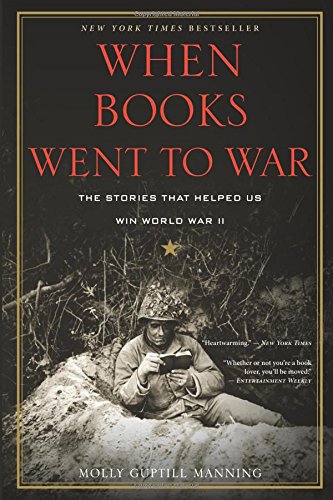
When Books Went to War by Molly Guptill Manning

51bzkRFKoOLUnlike my previous post, where I talked about books that didn’t meet my expectations, this book totally surprised me.

I picked up When Books Went to War as a gift for my mother (sorry Mom, now you know…) and thought I’d have no interest in reading it.   Mom reads more history than I do, especially WWII which she experienced as a young girl on the home front.

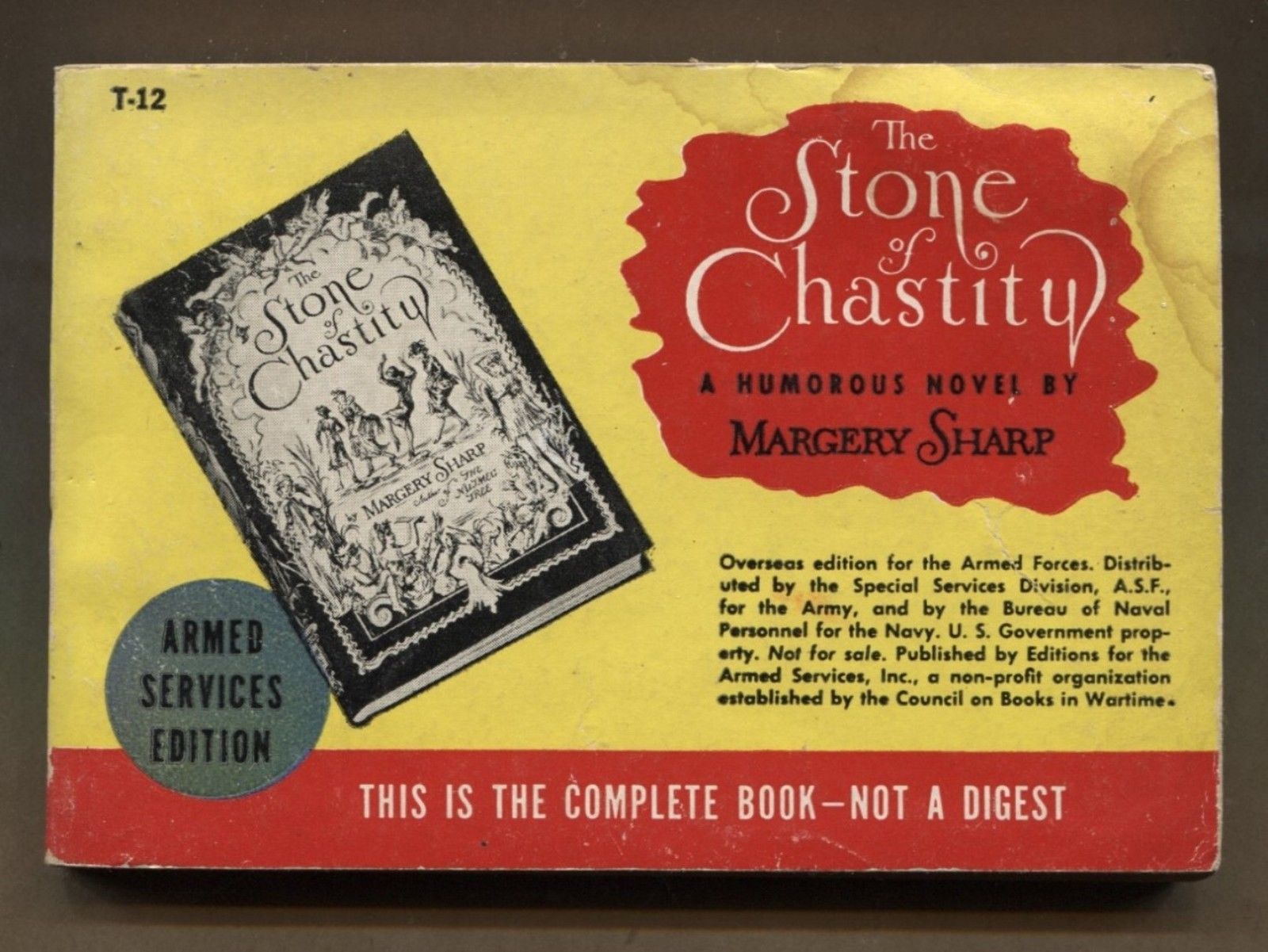
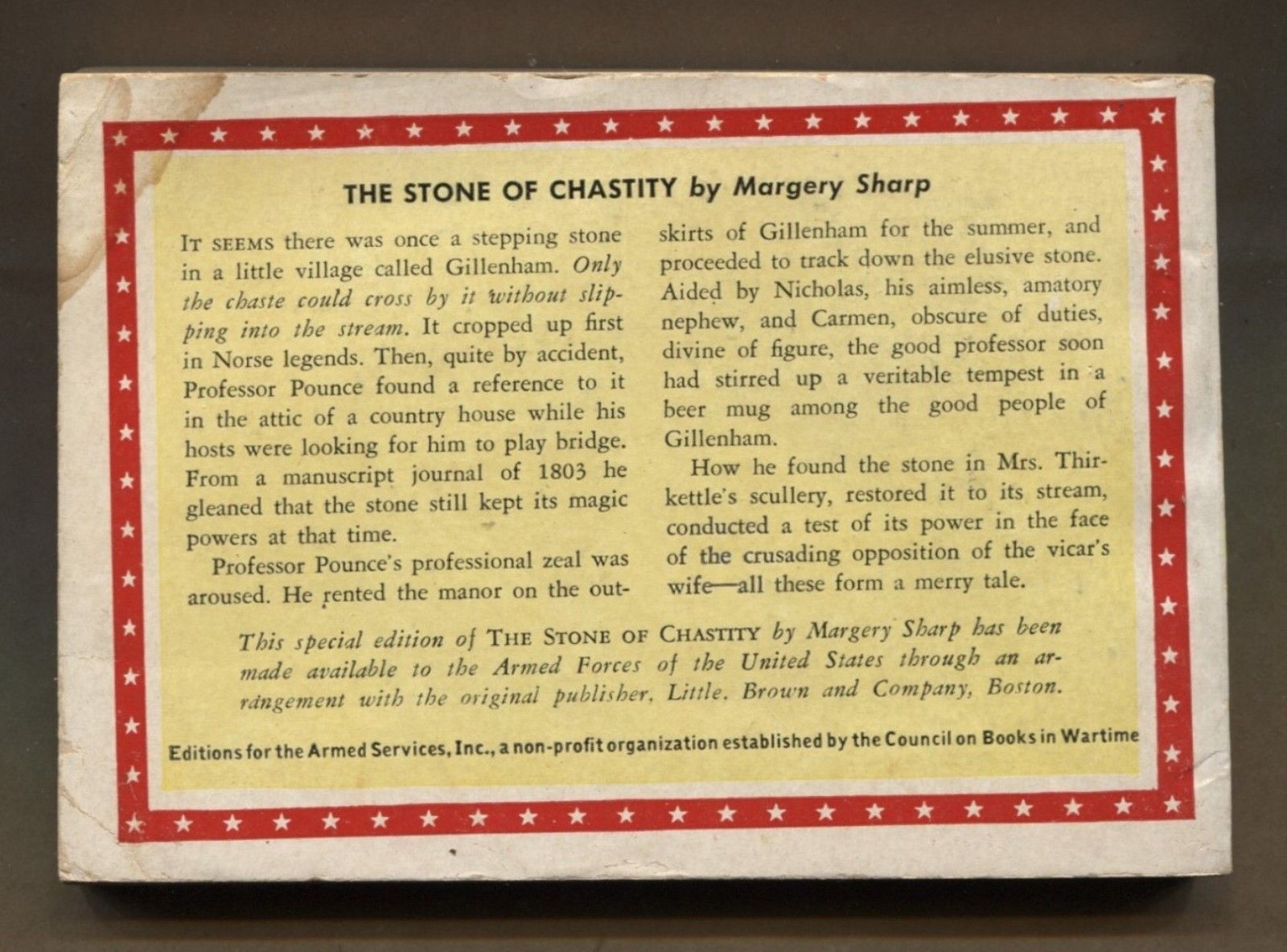
One evening, cuddled into my reading nook, I idly picked it up and started skimming – still thinking it wouldn’t appeal.  But before I knew it, I was several chapters in, fascinated by the idea, creation, distribution and importance of Armed Services Editions (ASEs) paperback books.

The idea was conceived by a wartime government entity- delightfully named The Council on Books in Wartime.  Their slogan was “Books are weapons in the war of ideas”. Prior to this, private citizens were asked to donate books for the troops, but the effort proved disastrous as citizens unloaded books they didn’t want.  Additionally, this was before paperbacks had been fully embraced by either the publishers or the reading public.  The many donated hard backs proved unwieldy for use other than in military hospital libraries or training facilities.  No one had figured out how to print small, lightweight books that could be carried by infantry soldiers into the battle trenches.

When Books Went to War tells the fascinating story of how a few publishers employed the Reader Digest magazine printers to produce these small and invaluable volumes.  I learned how they used the two-up method — where two books were printed on one page.  Because of this, printers staff had the tedious job of counting pages, words and characters in order to match similarly sized books.  Given paper rationing, every page was used and an initial run had the typeface so small, they were impossible to read.  But after these few initial failures – the ASEs were born.

The book is interspersed with letters from the soldiers at the front – there’s a brilliant description of the daily rigors of an infantryman to letters of thanks from soldiers who eagerly awaited the ASEs.

I want to say thanks a million for one of the best deals in the Army – your Armed Services Editions.  Whenever we get them they are as welcome as a letter from home.  They are as popular as pin-up girls – especially over here where we just couldn’t get books so easily, if it weren’t for your edition.

Private W.R.W and the Gang

The best chapter in the book is called Grab a Book, Joe and Keep Goin’.  The chapter title refers to the rule that when the books arrived, and the soldiers lined up the pick out a book, they had to just pick one and quickly move on.  They would trade them around later. This was to facilitate the very long ASE lines — much longer than the line for cigarettes.  These books filled many long lonely hours for soldiers.

There are many delightful tidbits – who would guess that A Tree Grows in Brooklyn was the most popular ASE?  And that hundreds of tough soldiers in foxholes wrote thank you letters to author Betty Smith (she answered every one).  Like me, you may choke up to learn that when men had to jettison items from their packs to save weight, they never discarded their books.

Towards the end of the war and after, the US continued to distribute these books to both to servicemen and, later, to European civilians who were starved for reading material.  The appendix lists just a fraction of the banned authors who books were banned and burned in Germany and German-occupied countries during the war.

The other appendix of this book is so fascinating I may have to keep this book (only kidding, Mom) as it lists every ASE published in date order, by series (A-B-C etc.) and issued number.  Classics, short stories, humor, essays, now-forgotten popular authors, many sports books and even a few science and mathematics books show up. Nothing dumbed-down here.   Would it be the same today, if there were a similar program?  To read through this listing of titles is a wonderful glimpse into the reading and publishing tastes of the time.  Not to mention, some of the ASE authors are the same as those on the banned book list.

When Books Went to War is an important cultural history; but it is also vastly readable, interesting and well researched.

If you love books, are interested in World War II and want to remember a time when Americans (and government) worked together for a common goal, read this book.

I wanted to see what an ASE looked like – here’s what I found for sale on Ebay. Click to see full-size.

s-l1600


s600


Save

Save

Abandoned Books…

abandoned-bookAbandoned books? I know, appalling for someone who’s barmy about books.  But I admit it, I sometimes don’t finish books – even those well-reviewed best sellers thrust upon me by bookish friends or praised by other book bloggers.  And it’s happening more and more often as I get older — you know the so little time, so many books theory.    The 50 page rule prevails — I’ll give any book at least 50 pages before I put it down…sometimes more.  This cold rejection of an author’s herculean effort always tears me apart a little bit.  But, I’ve been told I’m too sensitive.  So I’ll just pull up my big girl panties and give you a rundown of the books I’ve abandoned recently.

+++++++++++++++++++++++++++++++++++++++++

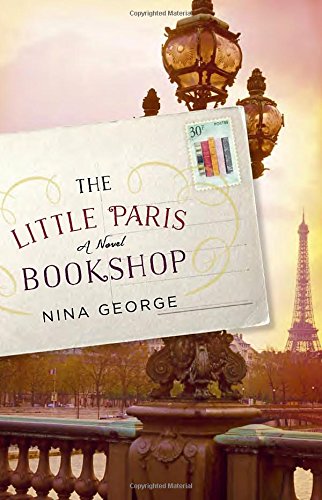
51Vu-F8bxOLThe Little Paris Bookshop:  This just seemed the perfect book for me.  What’s not to embrace?  A bookshop on a boat — in Paris — and just look at that cover.  But I found it just too whimsical and sticky-sweet.  I struggled on, actually reaching chapter 28 – as the bookshop owner pilots his boat away from its long-time berth in Paris.   But, just as the bookshop/boat meanders down the Seine, so too the plot – to the point where I practically fell into a sugar-laced coma.


+++++++++++++++++++++++++++++++++++++++++++++

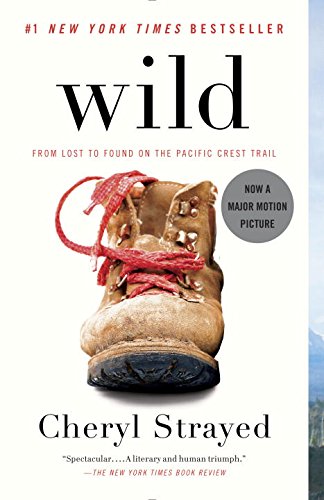
51IyLG-dL5LI eagerly opened Wild wanting the adventure it advertised, a broken hearted woman sets off, totally unprepared, to hike the Pacific Coast Trail.  I read ten chapters into this one, but I found her grief unbelievably extreme, so raw she seemed broken beyond what a hike (or sex along the way) could solve.  Her lack of emotional maturity, simply put — bored me.   N.B. The author has written the complete opposite of a book, Dear Sugar which I am dipping into and so far, I’m very moved by it, so stay tuned.

+++++++++++++++++++++++++++++++++++++++++++

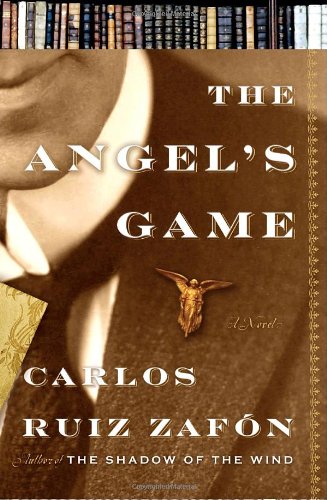
J5LI place Carlos Ruiz Zafon’s first book The Shadow of the Wind  on my list of all time favorite books.  Set in a Barcelona bookstore with many secrets, I lost myself in that novel for many days. So, I had expectations that the second book in this series – The Angel’s Game – would carry on the magic.  But this book is dark and very different with weird supernatural elements. I read through pages of violence and disturbing psychological ugliness. It seemed the author was angry with this writing – as he punches the reader with unresolved hard truths and unflinching observations.  In the end, what made me quit reading, was the many, many characters (and some with multiple personae)  — I just got plain confused. I was never sure what was going on in the convoluted story line and kept having to flip back and forth to see if I could figure out which character was which.  So with a slight headache, I took an aspirin and went to bed without a backward glance.

+++++++++++++++++++++++++++++++++++++++++++

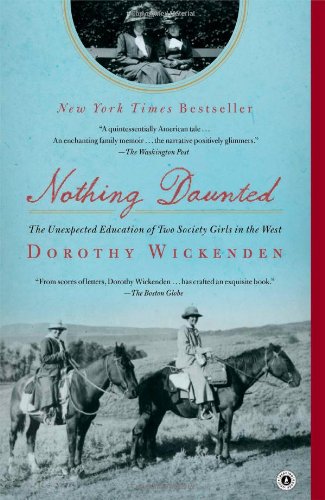
513BtSEHi7LI’ve had Nothing Daunted for several years now and keep doggedly trying to get through it. Just read this blurb:

The acclaimed and captivating true story of two restless society girls who left their affluent lives to “rough it” as teachers in the wilds of Colorado in 1916.

The reviews were wonderful, I was hearing about this book everywhere. And you got to  love the cover, with before and after photos of the actual subjects?  The introduction is just as enticing, as the author describes coming across a folder of her mother’s forgotten letters from this adventurous time in Colorado. The author has penned an historical work, which is comprehensive, but not compelling enough to keep this reader enthralled.   The landscape of the area and time period are well written.  But there is no emotion written into this account and the characters are one-dimensional.  The author had to obviously imagine parts of the story, why not insert some emotions as well?   Sadly, as exciting as these two women’s personal experiences must have been – their story suffers from a dull and dry telling.  Like ordering a beautifully described, but disappointing meal in a restaurant, I finally gave up and put it aside unfinished.

++++++++++++++++++++++++++++++++++++++++

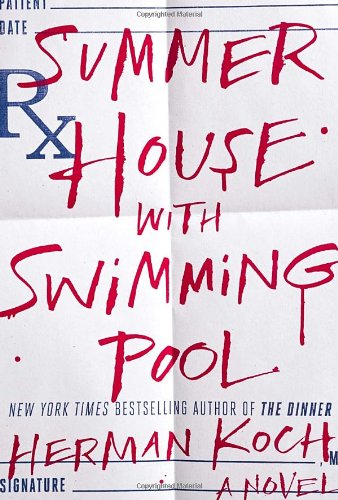
51T46MvBZQLI read The Dinner by Dutch writer Herman Koch, when it was a bestseller.  It’s a masterfully crafted psychological novel with the evil incident revealing itself largely by dialogue around a restaurant dinner. (Read it – it will grab you and not let you go.)  So, once again I had expectations of a similar read with his second book Summer House with Swimming Pool.  What happened to Mr. Koch’s writing?  Where is his craft?  This book, written entirely in the third person, lacked any plot as of five chapters in and the main character, whose revolting thoughts and dreary ramblings we must endure, is entirely unlikable. With The Dinner, the reader could relate and even empathize with the protective parents.  This follow-up has none of that soul or depth.  It is almost as if Mr. Koch dusted off one of his earlier writing attempts and the publisher ran with it.

++++++++++++++++++++++++++++++++++++++++++++

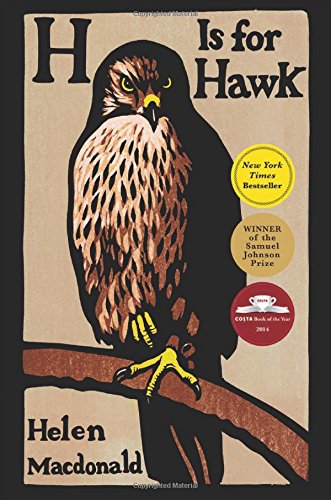
mLI had great hope for this glowingly reviewed memoir wherein a woman adopts and trains a Goshawk for falconry.  (I had my own, albeit limited, experience helping injured hawks back to the wild — but that’s another post).  Mabel, the hawk and her training is said to be a remedy for the death of her father, but that connection is never fully developed or understood. Why a mean-spirited hawk – why not a kitten or a dog?   Ms. MacDonald started to loose me as she details her poor raptor’s “training” in a tiny apartment with some less than humane activities.  H is for Hawk has some beautiful writing, especially when Mable’s training moves out into the open British countryside.  But, I set the book aside and let it gather dust when Ms. MacDonald’s writing became tedious over her obsession with the deceased author (and even more heartless falconer) T.H. White.

++++++++++++++++++++++++++++++++++++++++++++++

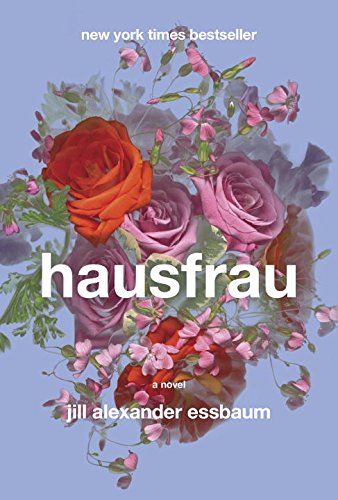
51Loetvs5xLI loaded  Hausfrau onto my Kindle for our trip to Switzerland, as it takes place in and around Zurich. So I settled in to read about a bored ex-pat housewife coping with a new culture as I traveled through the same country.  Anna is privileged, bored and frustrated.  She takes no interest in her husband or his work.  Her mother-in-law cares for her house and children.  Anna (even after 9 years) hasn’t bothered to learn the language or tried to assimilate. She can find no redeeming qualities in the Swiss culture or people.   So naturally, she turns to meaningless sex with a series of English-speaking men. (Even the sex scenes were boring).  An Anna Karenina character, but without class.  That’s when I closed the book  — but only after I’d mentally slapped her.
+++++++++++++++++++++++++++++++++++++++++

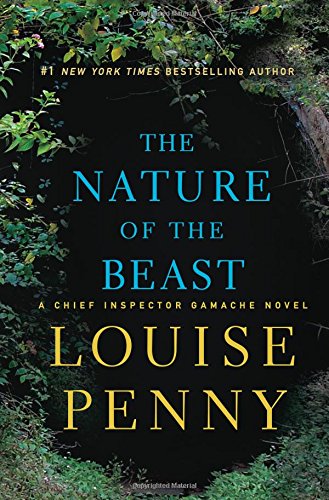
There you go, my pile of abandoned books, most of which were gladly donated to the library. Let them find a reader who will appreciate them and give them rave reviews.

Not to worry, I’m into some great reading with nothing abandoned for now.

What books could you not finish?


The People in the Photo by Hélène Gestern


22My branch library is only a few blocks away, which makes it a key destination whether I’ve gone walking on the beach or biked over to the produce market. Did I mention that my branch is newly renovated with a view of the ocean and huge windows that let the sun stream through?

Like a good bookstore, I can’t seem to pass by without popping in see what’s on the new arrivals shelf.  I have a miniature library card on my key ring in preparation for any serendipitous book finds.

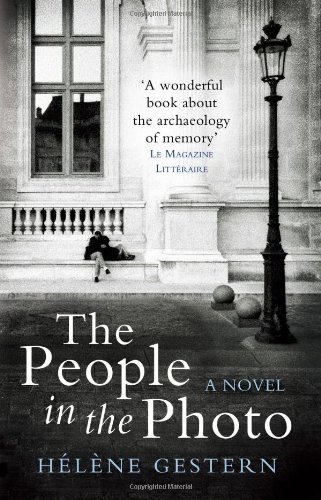
51ekGqdF98LThe People in the Photo was just such a find.  The cover drew me in and the book was on it’s way home with me after this blurb:

The chance discovery of a newspaper image from 1971 sets two people on the path to learning the disturbing truth about their parents’ pasts.

Parisian archivist Hélène takes out a newspaper advert calling for information about her mother, who died when she was three, and the two men pictured with her in a photograph taken at a tennis tournament at Interlaken in 1971. Stéphane, a Swiss biologist living in Kent, responds: his father is one of the people in the photo. Letters and more photos pass between them as they embark on a journey to uncover the truth their parents kept from them.

Epistolary novels are one of my favorite literary genres, but it’s a difficult writing style to pull off.  Often it can be gimmicky, but when done well — riveting.   Hélène Gestern has achieved the latter, all the more impressive as a translated French novel.

The story unfolds in a mixture of letters, emails and texts between Hélène and Stéphane as they uncover and exchange  photos and revelations about their respective parents.

The characters evolve, as does their relationship, through their correspondence.  At first they are reserved and cautious which we discover is due in large part to the secrets and unresolved feelings of their childhoods.  But as they uncover new family histories, they also begin to share their feelings and soon develop a relationship they both believe will save them.  But, perhaps, these discoveries are revealing a truth they don’t want to accept…

This is a quick read – not only because of its page-turning story line, but many pages contain only a short email or text.  When I turned the last page of The People in the Photo, I turned back to the beginning to re-read parts of it again.  I wanted to revel in the craft of the author – how carefully the characters are developed, the teasing bits of secrets revealed and the import of each piece of correspondence.  In the end, I reluctantly returned this engaging novel to the library —  but its impression remains.


Nature of the Beast by Louise Penny

51r0ee5foBLYou may remember my previous post when I went to see Louise Penny at a local author appearance…and came away with a big author crush and her newest book, signed.

She gave a wonderful talk, answered questions (Myrna and her bookstore actually exist in Ms. Penny’s own village) and charmed everyone in attendance.

The next evening I made myself some bedtime tea and tore right in.  Two nights later I closed the book and pondered these last two books —Long Way Home and this latest one.

Ms. Penny is clearly taking Gamache into a new direction. His life, after all, has changed.  He is retired from the Sûreté and settled with his wife in the bucolic village of Three Pines.  Gamache is content with retirement on the outside, but little by little we are learning his internal struggle with his new purpose in life.  For Gamache, evil seems somehow – well all the more evil – when it invades his cozy existence in Three Pines.  And it does just that in Nature of the Beast.

Evil doesn’t just invade, it gallops into his sanctuary of Three Pines with the murder of a village boy with a vivid imagination, a menacing missile launcher is discovered abandoned in the woods down a country lane — even the local drama group is putting on a play authored by a now-jailed serial killer  — one of Gamache’s most horrifying past cases.

The dark threat prevails as Gamache and his former Sûreté colleagues work  to untangle the secrets in this intertwined case. A villager with a hidden identity may have been involved in a My Lai type Vietnam massacre, Ruth is revealed to have a dark past, and the Whore of Babylon is an on-going theme, adding yet another layer of apocalyptic tension to the story line.

Most importantly, a nemesis is introduced — John Fleming – – the serial killer playwright, now in jail who taunts Gamache with penetrating insights.  I suspect John Fleming will be back…

“I’m not the only prisoner in this room, am I?”,  Fleming asks (Gamache), “You’re trapped in that village, you’re a middle aged man waiting out his days”

Then, there is the darkness of grief and Ms. Penny’s elegant writing brought tears to my eyes.

“..all my bones will dissolve and one day I’ll just dissolve.  But it won’t matter, because there’s nowhere to go and nothing to do, no need of bones…”

I was fascinated by the depiction of Gamache’s new civilian role and the insightful writing depicts his internal conflict.

…(she) called Gamache ‘Monsieur’ rather than ‘Chief Inspector’.  It was natural, healthy, true — but to Gamache it felt like having a tattoo scraped off.

Ms. Penny breathes humanity as fresh air into the tension — a long running Canadian miseries glues everyone to their TV sets and provides valuable alibis, gardening gives respite from grief, there is frustration with the village’s lack of cell or Wi-fi services and the bistro scenes made this reader raid the cupboard for that tin of hot chocolate mix.

I’m pleased with the development of  Gamache’s wife, Reine-Marie and seeing her come to life as she moves beyond a supporting role to a key influence in Gamache’s thinking and actions.  

I read Nature of the Beast with some incredulity, wondering how a huge “super gun” could be hidden in the woods so near the center of Three Pines and none of the long-time villagers remembers it being built or anything about it?  Ten years ago the gun was strategically placed in Three Pines  (close to the Vermont border) so that the Iraqis could bomb the U.S.? Really?  After I finished the book, in the afterword, Ms. Penny reveals that the hidden missile launcher was based on true Canadian events — there really was such a gun and such a plan. Could have fooled me.

The story strained credibility even further when the final chapters depict a melodramatic race against time to save …whoops no spoiler here.

I kept thinking of the Murder She Wrote television series wherein Cabot Cove, Maine had a long running parade of far-fetched characters, seen-better-days actors and improbable story lines.

But just as I watched Jessica Fletcher to the bitter end (don’t judge), I won’t stop reading Ms. Penny’s books – ever.

The Gamache series is clearly going in a new direction and the last two books’ plots may often strain credibility — but her series still gift her readers with the some of the best writing, most elegant insights into art and humanity, and (not forgetting) the most idiosyncratic, loveable and interesting cast of characters in mystery fiction today.

True confessions,  I have decided to re-read the series in order from the beginning. As Nature of The Beast refers back to Still Life – the first in this wonderful series.

I’m yours Ms. Penny, where ever you take me (see author crush above).