Comme le vent (Like the wind)…

I read like the wind — two books over the weekend.  Admittedly, they were quite short books, but I seem to have reclaimed my reading mojo.

Both current French fiction with wry Gallic style and observations. (Sorry to admit, I read them translated to English – my French is nowhere near “reading novels” proficient)

 The President’s Hat by Antoine Laurain
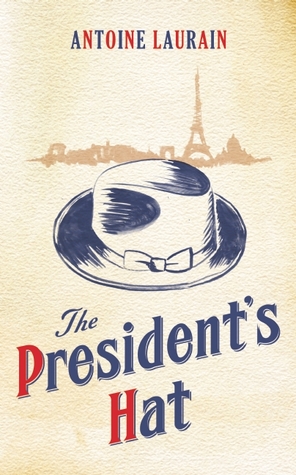
17594390Dining alone in an elegant Parisian brasserie, accountant Daniel Mercier can hardly believe his eyes when President François Mitterrand sits down to eat at the table next to him.

Daniel’s thrill at being in such close proximity to the most powerful man in the land persists even after the presidential party has gone, which is when he discovers that Mitterrand’s black felt hat has been left behind.

After a few moments’ soul-searching, Daniel decides to keep the hat as a souvenir of an extraordinary evening. It’s a perfect fit, and as he leaves the restaurant Daniel begins to feel somehow … different.

A french fairy tale of sorts, set during the Mitterrand years (1980s) tells of a hat lost, found and lost again and its magical powers of transformation.  This is a fast-paced and whimsical story chock full of French perspective.

Voila – here is President Mitterrand’s hat accidentally left behind for a hapless accountant to snitch and wear out of the restaurant.  The hat brings the new wearer confidence and recognition and when he leaves it behind on a train, it is found and worn by a woman needing courage and hope.   The hat brings each new finder just what they need to change their lives. Somewhat improbably, all the characters connect in the latter half of the book, and the epilogue cunningly ties everything together and back to the President.

Layered over and under this simple tale is Monsieur Laurain’s fully observed French society of the 1980’s.  You are there — when France was still Starbucks free and regular workers could afford a lunch of oysters and crisp white wine.  Decades-old class distinctions were just starting to crumble and new political views were taking hold.  Neighborhood bistros have not yet evolved into swanky restaurants and an answering machine is new technology.

There are inside observations that will be obvious to the native French but have to be teased out if you’re like me, an unaware American.  Who knew that the pronunciation of Mitterrand’s name was code for a French person’s political views?  Or that such serious consideration is given to a choice of perfume for both French women and men?

This novel reminded me of an O’Henry or Evelyn Waugh story but with a delightful French twist.  At only 200 pages this book goes quickly – and perfect for that picky Francophile on your gift list.

#####################################################

My Wish List by Gregoire Delacourt
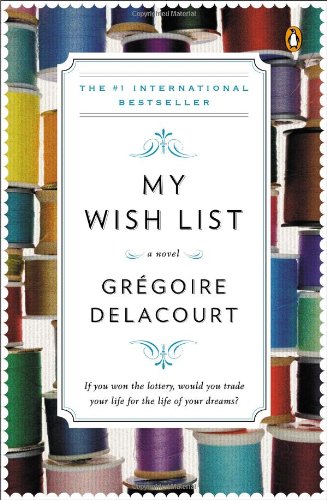
51dEJIV3jILIf you won the lottery, would you trade your life for the life of your dreams?

Jocelyne lives in a small town in France where she runs a fabric shop, has been married to the same man for twenty-one years, and has raised two children. She is beginning to wonder what happened to all those dreams she had when she was seventeen. Could her life have been different?

Then she wins the lottery—and suddenly finds the world at her fingertips. But she chooses not to tell anyone, not even her husband—not just yet. Without cashing the check, she begins to make a list of all the things she could do with the money. But does Jocelyne really want her life to change?

This is a sad but thoughtful novella and the author writes with cynicism and sentimentality.  A study of contrasts all wrapped up in a winning-the-lottery dream.

Jocelyne is ordinary – really ordinary, but she has hopes, wishes and desires.  She is married to a materialistic man, her grown children are a disappointment and her closest friends are silly twins who, unlike Jocelyne, are young, thin and desired.  Out of character one day, Jocelyne buys a lottery ticket and somehow predicts to herself that she will win.  Thus begin the lists – her lists of things she needs.

When she does actually win the lottery, she hides the win from everyone, doesn’t tell a soul, except her father who is in a nursing home and has a six minute memory span.  Her conversations with her father about the money and what she should do, are alternately hysterical and heartbreaking.

Jocelyne fears the change and impact of such riches (18.5 million Euros).  She knows her husband wants a flat screen TV, a sports car, and a fancy watch, while Jocelyne’s list includes a new shower curtain and a better reading lamp.  As the novel progresses, her lists evolve to include going to a spa and a Chanel bag.  She kindly starts to include things her husband would want such as every James Bond Film on DVD.

Jocelyne carries on with her life, she works in a fabric shop and has a very successful crafting blog, but her hidden lottery check is never far from her mind. Soon her lists start to include such sad items as To be told I’m beautiful…and To be envied, at last.

OK, so you think you get it – the lottery win is a metaphor for life and how things of value can’t be bought.  But here’s where Monsieur Delacourt doesn’t take the easy road, he lets Jocelyne want her things as badly as her desires.  Such as this passage:

“Because our needs are our little daily dreams.  The little things to be done that project us into tomorrow, the day after tomorrow, the future;  trivial things that we plan to buy next week allowing us to think that next week we’ll still be alive.  It’s the need for a nonslip bath mat that keeps us going.”

Jocelyne is the only fully developed character, I couldn’t warm to any of the others, but she is enough to pull the novel along.  The novel is told entirely in the present tense, which is a typical for modern-day French novels, and I’m happy the translator didn’t try to adapt the style for English-readers. Here’s a quote from the book that is insight into this  author’s unusual writing style:

“I love words.  I love long sentences, sighs that go on forever.  I love it when words sometimes hide what they’re saying, or say it in a new way.”

I think M. Delacourt gets a few things wrong.  Jocelyne’s husband is named Jocelyn which the author introduces slyly, (and it’s important later in the book) but I found it distracting. This male author has Jocelyne (the wife — see, confusing!) viewing her naked overweight body in the mirror and thinking it beautiful.  I doubt any overweight woman would do that – maybe French women, but not this American women – perhaps I lack such evolved confidence, but it felt female-false. There is a betrayal and an strangely abrupt bittersweet ending, which I won’t spoil here.

At only 163 pages, this novella packs the import of a much longer novel, I find myself thinking about it still.

Note:  The original French title was List of My Desires – which I think would have been a better English title as well.

My Wish List was provided by Penguin via NetGalley
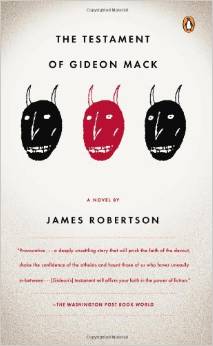


Testament of Gideon Mack by James Robertson

mackx For this Throwback Thursday, I revisit a most memorable book from 2007.

From the back cover:  A critical success on both sides of the Atlantic, this darkly imaginative novel from Scottish author James Robertson takes a tantalizing trip into the spiritual by way of a haunting paranormal mystery. When Reverend Gideon Mack, a good minister despite his atheism, tumbles into a deep ravine called the Black Jaws, he is presumed dead. Three days later, however, he emerges bruised but alive-and insistent that his rescuer was Satan himself. Against the background of an incredulous world, Mack’s disturbing odyssey and the tortuous life that led to it create a mesmerizing meditation on faith, mortality, and the power of the unknown.

Reverend Gideon Mack, a Scottish minister who doesn’t believe in God, ends up meeting and being saved by the devil.  The sudden appearance of a standing stone in the woods, visible only to him, is a chilling precursor of his encounter with the horned one.
Yet, in telling his tale, his sanity is questioned and his place in the church is threatened.   Is Gideon Mack crazy or suffering from a nervous breakdown?  Did what happened to him actually happen?

This is a strange, yet fascinating tale and Mr. Robertson is a masterful writer to be able to pull off such an unusual premise.

Gideon’s written account (his testament) tells the tale and is delivered into the hands of a publisher after Gideon’s sudden disappearance followed by the discovery of his body. The publisher launches an investigation into claims from Gideon’s story. The results leave the reader mystified and, in the end, left to make their own decision as to what really happened.

The novel is many layered, there is the manuscript and the narration told through a number of differing Scottish accents.  Then there is the tale itself with questionable validity.  And finally, there is the rich undercurrent which questions the nature of our beliefs and held truths.  It leaves the reader with more questions than answers.   There is even a website dedicated to the novel and its many unresolved answers and interpretations.  Here.

This would be an excellent book group selection, as there are bound to be as many explanations as members of the group.  The Penguin edition has a very good readers guide.

While I often skip prologues (sshh don’t tell anyone) do not skip the prologue or the epilogue in this novel – they are Mr. Robertson’s best work and vital to the storyline in The Testament of Gideon Mack. 


A brief intermission

07notables-1-master675

It’s raining here, perfect reading with a cup of tea weather. But, despite bookshelf full of books and a Kindle 3/4 full of books I haven’t read, I can’t seem to land on a book to read right now.  I pick one up, read a few chapters, put it down uninterested…try another and so on. I know from experience this will pass but it is quite unsettling not to be reading anything right now.  So during this lull  – HERE  is the New York Times Book Review’s 100 Notable Books of 2014 for inspiration…hmmmm, maybe a trip to my favorite independent  bookstore later …don’t judge.

P. D. James 1920-2014


“When I first heard that Humpty Dumpty fell off the wall, I immediately wondered: Did he fall–or was he pushed?”

P. D. James,  the beloved mystery author and creator of Commander Adam Dalgliesh and Cordelia Gray, series. Here’s where you can see all her books in order.

She also wrote two books in the Cordelia Grey series which I totally enjoyed.

died Thursday at age 94.  I was fortunate to hear her speak in person (at City Arts and Lectures here in San Francisco) and she spoke with quiet intelligence and was remarkably down to earth and unassuming — and I imagined that she would happily welcome you to sit down in her kitchen to share a cup of tea.

Robert B. Parker

home-robert

Just returned from a week in Palm Springs (more on that in a later post). I pulled out several unread Robert B. Parker mystery novels for the trip.  Does anyone else pick out their books for a trip even before thinking about packing other essentials like clothes and shoes?

If you don’t know about Robert B. Parker, you are missing some great entertainment.  He wrote over 70 novels and his most popular was the Spenser series.  I’ve been a cult follower since the 1980’s, went to multiple readings and have several of his books personally autographed

(I know, I’m a NERD).

Mr. Parker’s novels crackle with wit and the best dialogue ever written. 

(If you are an aspiring author, read Parker and learn how dialogue can and should deliver.)

These are quick reads (I once read one of his mysteries cover-to-cover during a 2 hour flight) but all are engaging and tightly written.  The chapters zoom along as you rapidly turn pages to chuckle at another slyly written escapade.  Spenser is a wonderful character — a hard boiled private eye who is evolved.  Spenser cooks, adores baseball and his long-time psychiatrist  girlfriend – Susan who is based on his wife Joan.  Go to the Robert B. Parker website to see pictures of Joan and you’ll see the muse and model.  Spenser is funny, yet serious but not anguished. Most of the scenes with his sidekick Hawk are laugh out loud fun.

Jessie Stone, star of his other well-known series, is a burned out, heavy drinking LA cop who rediscovers himself and a new life as a chief of police in a Massachusetts seaside village.  (Watch for the made-for-TV movies with Tom Selleck as Jessie Stone – they’re spot on and well-worth watching!)

No need to read Mr. Parker’s books in order but, in my opinion, the first five in the Spenser series are extraordinary.

Sadly, Mr. Parker (at 77) passed away in 2010 – a sudden heart attack while at his desk writing his next novel.

The Parker estate has recently hired a new writer to take over the series, but I can’t bring myself to read those.

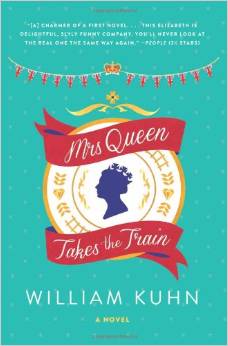
Mrs. Queen Takes the Train by William Kuhn

qu2x

What is it about the “new arrival” shelves at the library? My enormous hoard  small collection of books to be read is mocking waiting for me at home and still I bring home yet another book.  It’s a disease.

Turned out Mrs. Queen Takes the Train was just the cozy ticket (pun intended!) for a rainy afternoon (yes finally a little rain here in the Bay Area).

From the back cover:

After decades of service and years of watching her family’s troubles splashed across the tabloids, Britain’s Queen is beginning to feel her age. She needs some proper cheering up. An unexpected opportunity offers her relief: an impromptu visit to a place that holds happy memories—the former royal yacht, Britannia, now moored near Edinburgh. Hidden beneath a skull-emblazoned hoodie, the limber Elizabeth (thank goodness for yoga) walks out of Buckingham Palace into the freedom of a rainy London day and heads for King’s Cross to catch a train to Scotland.

But a characterful cast of royal attendants has discovered her missing. In uneasy alliance a lady-in-waiting, a butler, an equerry, a girl from the stables, a dresser, and a clerk from the shop that supplies Her Majesty’s cheese set out to find her and bring her back before her absence becomes a national scandal.

See, now how could I resist this?  Brewed myself a cup of tea, put on my favorite comfy sweater and set to it.

This is a modern view of the Queen and her past travails including the Diana years and the ebbing of her subject’s support.   We get a view into the inside workings of the palace, the many roles required to handle the Queen, palace protocols and the many obligations of royal duty.  As an Anglophile, I found this aspect of the story fascinating.

Despite escaping the palace, the Queen has difficulty shaking her royal attitudes and boundaries.  Her lack of understanding how the world works without attendants is amusing as she waits for others on the train attend to her needs and address her correctly – but she prevails and finds herself relaxing with the commoners.   I found myself empathizing with the Queen as she heads to the Britannia and memories of happier times.  After all, who would want that job thrust upon them while still just a young girl?

The motley crew of attendants that follow the Queen to Scotland have their own compelling stories to tell – enemies become friends, lovers come out of the closet, and the grieving find some solace.

The novel has been compared to another fictional tale of the Queen,  The Uncommon Reader, by Alan Bennett.

Mr. Kuhn slyly refers to this other book in this novel:

“‘Did you read the one about The Queen becoming a reader?’ said the woman in spectacles to the young man at her side.`I did enjoy that one. So funny. And of course, being a reader myself, I liked that side of it.'”

The film The Queen is also referred to in this up-to-date take on British royalty.

Mrs. Queen Takes the Train abounds with dry, British humor and social commentary.  Mr. Kuhn tackles the homeless, terrorism, race relations,  and mental illness.   What I found fascinating was how the author gave the Queen a human side (she does yoga and attempts a computer) but still maintains the respectful dignity due a British monarch.

In the end the Queen must once again return to the palace and assume the duties of her crown- but with a fresh perspective and the reader is left to imagine she will find them less burdensome.

Note:  Read Mr. Bennett’s book, wherein the Queen discovers a bookmobile outside the palace gates and revels in the delights of reading for pleasure

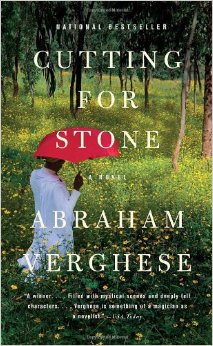
Cutting for Stone by Abraham Verghese

cutting

Throwback Thursday or Past Reads

Before I started this blog, I kept notebooks of the books I’d read.  I began years ago in order record my thoughts as a book group member and then later just so I wouldn’t purchase or (yikes) re-read the same books.  Don’t smirk, you’ve done it too!  I thought I would share some of my top good reads on random Thursdays.

Today it’s Cutting for Stone, by Abraham Verghese.

From the publicity blurb:

Marion and Shiva Stone are twin brothers born of a secret union between a beautiful Indian nun and a brash British surgeon. Orphaned by their mother’s death and their father’s disappearance, bound together by a preternatural connection and a shared fascination with medicine, the twins come of age as Ethiopia hovers on the brink of revolution.
 
Moving from Addis Ababa to New York City and back again, Cutting for Stone is an unforgettable story of love and betrayal, medicine and ordinary miracles–and two brothers whose fates are forever intertwined.

Most of my reader friends disliked this novel, could not get into it, or found it dull and overwritten.  As a member of the minority I was swept away into this brilliant and powerful saga.

Yes, it’s a Saga with a capital S – an epic tale that follows twisty, messy lives   The tale takes the orphan twins from their birth in a medical clinic–through the frightening coups in Ethiopia — to New York City where they become successful surgeons in their own rights.

The twins come of age at the Ethiopian medical clinic where they were abandoned at birth and they suffer the consequences of their youthful carelessness and their unreliable makeshift family. The twins’ (twin’s?) lives are complicated yet enriched by these fascinating and crooked characters — a misguided, often drunk, but good-hearted doctor, a female OB who is overly sentimental, yet cruel and unforgiving not to mention the various thugs and manipulators who draw the boys in and out of trouble

The author is a surgeon and his professional insight is throughout the book.  The medical scenes are extremely graphic and eyeopening – there are plenty of mishaps, botched surgeries and the genital mutilation scenes are not for the queasy.  But Mr. Verghese also did some fine research.  The history and culture of Ethiopia is one of the highlights of the story — both fascinating and horrifying.   The author writes with both beauty and harshness and I guarantee you will stop in the middle of reading to marvel at his remarkable prose.

Yes, this book is sometimes slow going and there are many side tracks. Other readers found the detail overwritten – whereas, I found that the many-layered descriptions enriched the remarkable story.

You’re on notice – Cutting for Stone is messy, appalling and sometimes confusing.  This is not a light novel and, at 670 pages, this is a demanding read.  Nonetheless, I found it, like life itself, full of love and cruelty — joy and sadness.   A Saga with a capital S.


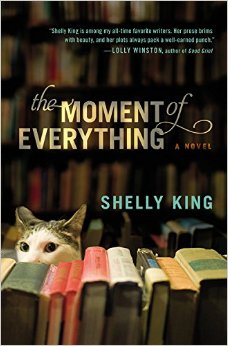
The Moment of Everything by Shelly King

moment

I really must expand my repertoire, but, like the Halloween candy lurking in my cupboard (Reese’s PB cups if you must know), I just can’t resist yet another book about books and bookstores. Better yet, The Moment of Everything is set in Silicon Valley (check), takes place in the present (check) and, yes — centers around a used bookstore (check check).

From the publicity blurb:

Maggie Duprès, recently “involuntarily separated from payroll” at a Silicon Valley start-up, is whiling away her days in The Dragonfly’s Used Books, a Mountain View institution, waiting for the Next Big Thing to come along.

When the opportunity arises for her to network at a Bay Area book club, she jumps at the chance — even if it means having to read Lady Chatterley’s Lover, a book she hasn’t encountered since college, in an evening. But the edition she finds at the bookstore is no Penguin Classics Chatterley — it’s an ancient hardcover with notes in the margins between two besotted lovers of long ago. What Maggie finds in her search for the lovers and their fate, and what she learns about herself in the process, will surprise and move readers.

I found much to enjoy in this novel. The Dragonfly bookstore is wonderfully formed — its haphazard used book selection, an OPEN sign where the letters slide to read NOPE when closed, a mean tempered cat, and its fair share of quirky customers.

Ms. King beautifully captures Silicon Valley and, having been in high-tech for many years, I kneel to her bulls eye observational skills – she perfectly captures high tech geeks seeking obscure science fiction paperbacks, gaming parties and especially the snooty meeting of the “Silicon Valley Women’s Executive Book Club” in a pristine home with its state-of-the-art kitchen.

The mystery of the love notes written in the margins of a battered old copy of Lady Chatterley’s Lover is enchanting.

The plot is multi-layered and fast paced — there’s lots going on.  Maggie only half-attempts to find another job and spends her days reading romance novels.  She tries to fend off her narcissistic mother and is having a torrid love affair (or is it?).  To try and stay sane, she starts to volunteer at the Dragonfly – attempting to bring it into the 21st century and the red in order to compete with big book store across the street.   On top of all this, she is obsessed with mystery of the love notes in the book.  Sometimes Ms. King loses control of these story lines and they become disjointed — but keep reading by the next chapter you’ll be back on course…and I’ll caution you, the ending is a tad predictable.

But in the end, I found the best part of The Moment of Everything was Ms. King’s engaging and witty voice.  I found myself both grinning, and at times giggling throughout this book.  Given the realm of grim novels out there (Dystopia anyone?) a novel that makes you smile is perhaps the best recommendation.

My favorite quote

“The kind of people who come to the Dragonfly don’t just own books, they need them, crave them, find it impossible to breathe without them. They come because they are in love with the store itself, with its handled wares and their untold takes. They come because they are wondering about about the people who owned all these books before. The come because the people whose paths they cross are like the books they find, a bit worn around the edges, waiting for the right person to open them up and take them home.”

Review copy provided by Grand Central Publishing via NetGalley.

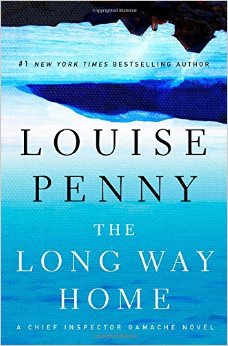
The Long Way Home by Louise Penny

louise penny

Here I am again, recommending another intelligent and well-written mystery series.  This time by a Canadian writer.   These (as with Deborah Crombie) shall and should be read in sequence (Still Life is the first).

Louise Penny is a former CBC journalist and her well-honed story telling craft makes each of her novels a gem.  The series largely focuses in and around the picturesque Canadian village of Three Pines, filled with idiosyncratic inhabitants — but these are no typical “cozy” mysteries.  The characters have  depth, humor and pathos and the plots are often intricately complex and psychological.  I eagerly await each and every one of her novels.  So I blissfully delved into The Long Way Home, the 10th in her series.

The Long Way Home finds Chief Inspector Gamache now retired in Three Pines hoping to relax and recover from the horrors he experienced (yes you must read the earlier novels to truly understand the context).  He and his wife, Reine-Marie, are enjoying village life – breakfasts at the bistro, browsing at the bookstore, dinners with friends – when one of their friends, Clara, asks Gamache to help locate her estranged and now missing husband.  Clara and Gamache are joined by Reine-Marie, Myrna, the bookstore owner, his ex-Sargent De Beauvior, and the ever-cranky poet Ruth.

This unlikely crew of investigators find themselves in the Canadian region of  Charlevoix, a place of harsh beauty along the St. Lawrence river, which has attracted artists for centuries.  The mystery orbits around paintings of the beautiful landscape and Canadian artists.  You can see some of the artwork here.   This novel is fairly steeped in art – even the cover of the book feels and looks like a canvas. Part of the mystery also refers to a place in Scotland dubiously named “The Garden of Cosmic Speculation”, it really does exist and looks fascinating – check it out here.  As always, with Ms. Penny’s novels, I find myself making a list of things to Google.

Back to the story —  this is a markedly more philosophical and somber novel which deliberately mirrors Gamache’s introspection since his retirement from the force. Much of the book is psychologically driven and I grew tired of Clara’s tormented artist self pity. The artistic process and angst is discussed ad nauseum and is used as motive where it really doesn’t make sense.  There is some repetition and reiteration  — OK-OK we get the Balm of Gilead reference already! Basically, I longed for the plot to step more lively, if you please.

There were moments of the old charm and humor (nearly not enough for this reader):

“Ergo, he painted them on his return to Canada,” said Clara.

“Ergo?” asked Myrna.

“Don’t tell me you’ve never wanted to use it,” said Clara.

“Not now that I hear how it really sounds.”

Don’t get me wrong, I enjoyed this book and it retains Ms. Penny’s gorgeous writing.  I was happy to revisit the Three Pines, its characters (including one foul-mouthed duck), glimpse into Gamache’s new life (he reads each morning on a bench overlooking the village) and share in the non-stop cozy tea breaks and good meals – does that Bistro ever close?

The Long Way Home is still an excellent read, just not on par with Ms. Penny’s previous novels. I remain a steadfast  fan and will eagerly await Ms. Penny’s next installment in this smart, original series.

One big rant: Come on Ms. Penny you’re better than this book’s melodramatic ending!

(I am hoping Ms. Penny doesn’t fall into a series black hole ala Elizabeth George —  whose mysteries, in my opinion, lost their way after she killed off Helen.)

To Dwell in Darkness by Deborah Crombie

61Lh-8TuLeL

I have followed this series from the first installment, A Share of Death in 1995, and have eagerly awaited each new installment in Ms. Crombie’s intelligent, well-crafted British mystery series.

Now if you are unfamiliar with Deborah Crombie  – you will enjoy this latest mystery in her series, but I urge you to go right now to your library and check out a Share of Death. Then read each of her series in order… I’ll wait right here until you do so.

OK now you’re with me on the series and her latest, To Dwell in Darkness, does not disappoint.

From the Back Cover:

Recently transferred to the London borough of Camden from Scotland Yard headquarters, detective superintendent Duncan Kincaid and his new murder investigation team are called to a deadly bombing at historic St. Pancras International Station. By fortunate coincidence, detective sergeant Melody Talbot, Gemma’s trusted colleague, witnesses the explosion. The victim was taking part in an organized protest, yet the other group members swear the young man only meant to set off a smoke bomb. As Kincaid begins to gather the facts, he finds that every piece of the puzzle yields an unexpected pattern, including the disappearance of a mysterious bystander.

The bombing isn’t the only mystery troubling Kincaid. He’s still questioning the reasons behind his transfer, and when his former boss continues to avoid him, those suspicions deepen.

—————————————

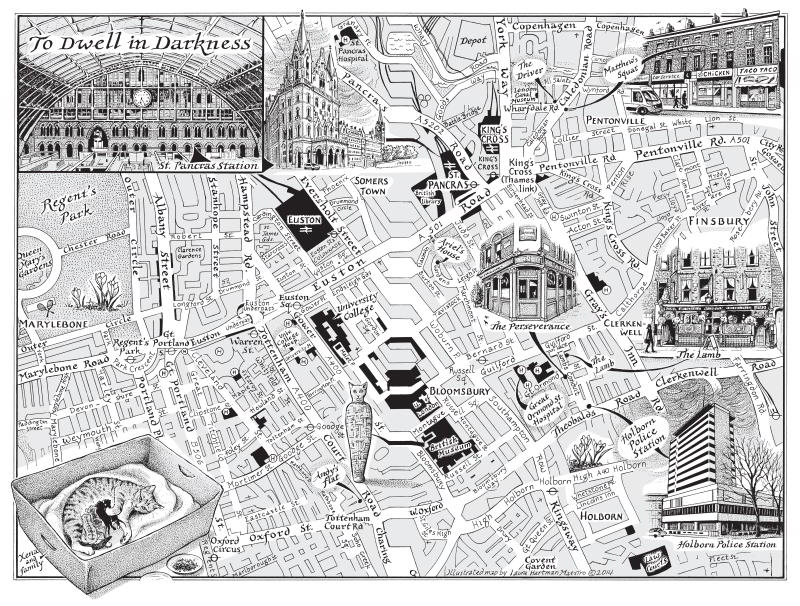
Ms. Crombie does her research and always chooses a lesser-known London area site to center her mysteries – in this case, St. Pancras train station.  As a special treat, the hard copy books include hand-illustrated maps of said location.  Here’s a sample – click to view larger.

map_dwell

St. Pancras is the setting for a very current and news-worthy event – a public bombing…and the perpetrators aren’t who they seem.  Duncan Kincaid has been demoted from his high-powered post with Scotland Yard and transferred to Holburn.  D.I. Gemma Jones is investigating the kidnapping, rape and murder of a 12 year old girl.   Melody Talbot plays a key role in this case, while jugging  a new relationship,  and there are kittens!

Sounds like a mess, but as in all Ms. Crombie’s novels the pacing is superb, while she builds tension yet gives us breaks with glimpses into the loving family of Duncan and Gemma.  Their relationship continues to delight and I just adore the descriptions of their home life  – so chaotic (did I mention a litter of abandoned  kittens?) yet warm.

In the previous installment(Sound of Broken Glass) we were left hanging on why Duncan was demoted and transferred  —  this installment does not resolve that or even shed any light on that question.  That’s twice now, where I’ve turned the last page/last chapter only to face the “about the author” blurb…totally surprised there wasn’t more .

I fear Ms. Crombie may be using the television series trick – stringing us along to her next new book — but that’s alright with me. I’ll go anywhere she wants to take me.