
The Novel Cure by Ella Berthoud & Susan Elderkin

Novel Cure

From Abandonment to Zestlessness – 751 Books to Cure What Ails You

This is a  fun and wacky reading guide.   It’s a browsing book and, if like me, you’ll keep it next to your reading chair and dip in for short 3-5 page reads.  It categorizes books for us bibliophiles — but not in a way I’ve ever seen before.

The book gives book recommendations by ailment categories such as Constipation – (Shantaram by Gregory David Roberts) to Road Rage – they recommend audio books to dissipate a driver’s fury  – to the best books to read in a hammock .  This book surprises, delights and slightly irritates.

While some of the categories/recommendations are expected – under Racism is Invisible Man, Being Short lists The Hobbit, the book surprises with titles placed in unlikely categories — to offset Loneliness they recommend Tales of the City by Maupin so you can feel a part of a gang of neighbors.  Under Hating your Nose is Perfume by Patrick Suskind.   Sometimes the book irritates with many cross-references, over-zealous use of parenthesis, and some shallowness.  Also, the proof copy lacked page numbers for the much-needed indexes at the back.  The actual book will be much improved with that feature.

For wackiness  – investigate the the section labeled Diarrhea which recommends books for the bathroom.  And some categories are contrived – as in Hemorrhoids – nothing more to be said there.

The book synopsis vary widely – ranging from well-written and poignant to flippant and shallow.  This is not the Guide to English Literature, nor is it a great literary work – but I don’t think authors meant it to be.

I found the “Reading Ailment” sections inspiring as they focus on the reading life, book collecting  and advice —  – “Depletion of Your  Library Through Lending”, “Being Seduced by New Books” (my weakness) and “Reading to live more Deeply”.

One of my favorite of the reading ailments was Finishing, fear of:

You have been delighted by the books, befriended the characters in the books, wolfed down the book, dreamed about the book, missed the book, cried with the book, made love to the book, thrown the book across the room, been dead to the world outside the book – and now you are about to finish the book. We’ve all been there: it is a terrible gutting moment.

But do not despair.  You do not have to leave the world of the book behind.  As soon as you’ve finished the book, read around the book — reviews, literary criticism, blogs, whatever you can find.  Talk to other people who have read the book.  Watch the film of the book. Read the book in another language.  And then, finally, re-read the book.  The best books, by the greatest authors, will stand up to being reread many times in a life and indeed give back more each time. In this way you will never finish the book.  You will become the book, and it will become a part of you.  You have not reached the end.  You are, in fact, just beginning.

Finally, in the Reading Ailment section labeled “Overwhelmed by the Number of Books in the World” I discovered  I’ve missed my calling – becoming a bibliotherapist – is there a course for this? Sign me up!:

Consider booking a consultation with a bibliotherapist who will analyze you reading tastes, habits and years, as well as where you’re at in your personal and professional life, then create a reading list tailored especially for you.

Advance Review Copy was kindly provided by Penguin Press
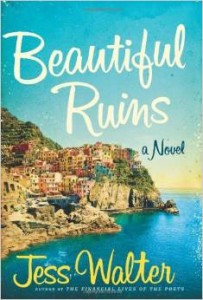
 

Beautiful Ruins, by Jess Walter

Beau. Ruins

I admit, I bought this book because of its beautiful cover, which is brilliant — designed to look like a 1930’s novel complete with water stains and rubbed edges on the cover.

I was delighted to fall into this novel and not come up for air until I turned the last page.  It spans from 1962 Italy to present-day Hollywood and the characters and their stories intertwine and evolve so that I was transfixed.  The novel explores the impact of greed, lust, love and unfulfilled dreams on people and their lives.   Mr. Walter is a master at storytelling, which he tells through complex and enchanting characters.

A young, beautiful actress named Dee Moray arrives to stay at The Hotel Adequate View and everything changes for the inhabitants of the small coastal Italian village.   The novel moves back and forth in time via alternating chapters introducing a cast of quirky and amusing characters – including Elizabeth Taylor and Richard Burton all connected and impacted by the beautiful actress. 

The stories span continents and cultures – the simple lives in the Italian village and the intricacies of Hollywood business

Beautiful Ruins is one of the most bittersweet, yet joyful, books I have ever read   This book is a must-read!!

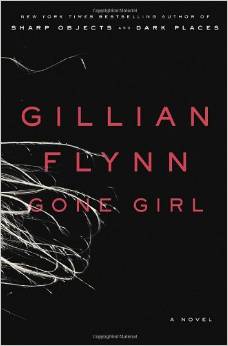
Gone Girl, by Gillian Flynn

Gone Girl

There’s been a great deal of buzz regarding this novel, so I approached  it with a little chip on my shoulder.  I read Gone Girl with every intention of not falling for the “best seller” hype. But, all I can say is WOW.   Ms. Flynn is indeed masterful.  I finished the book saying “how did she do that?”.

Within a few pages, I was engrossed in the twists and turns of the plot – even gasping aloud at some points and eagerly turning the pages to find out what is happening here?  Nick and Amy are totally unlikeable – their marriage is disturbing and dysfunctional.  The author surrounds them with money issues, in-law problems and mutual nastiness —   and yet I found myself holding my breath in terror for them – thinking, “how did things get this bad?”

The second half of the book turned me on my ear –  no spoilers here, just be warned huge surprises await.  And, if you’re like me, you’ll binge-read this novel to its sick and evil conclusion.

Warning, the novel contains foul language and some sordid sex  – accenting the twisted and  creepy atmosphere.  Now I want to read her other books;  Sharp Objects and Dark Places.  And I want to re-read Gone Girl – just to relish in Ms. Flynn’s extremely crafty twist and her structure of this novel.

Review copy provided by Crown Publishing.

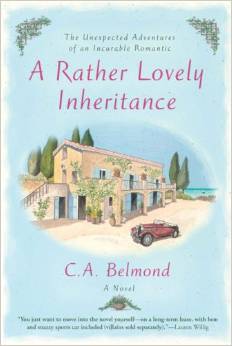
A Rather Lovely Inheritance, by C. A. Belmond

ilovely inheritance 2

Grab this book, cozy up under an afghan and brew a pot of tea.   Just what I wanted,  in front of the fire with holiday music on the radio.   This is the first in a series and although predictable,  it is, nonetheless, well written and simply delightful.

Penny Nichols (great name ha!) comes into an inheritance from a distant aunt – an antique car and a huge flat in London  — but that’s just the beginning.   There’s a fun romp across England, France, and Italy (all my favorite places). It has an amusing cast of family members, co-workers, and friends.  There’s a little mystery, a little romance, a little danger and some mad capers on the coast of France.  There are two more installments that I plan to read.

Probably falls into the genre of  “chick-lit” but with a redeeming Anglophile/European slant.

The Buddha in the Attic, by Julie Otsuka

Buddha in the Attic

Oh, how I wanted to like this small and elegant novel —  finalist for the National Book Award and highly recommended by my friend Reiko (herself a Nisei and held in entournment camp).

The novel uses the collective voice and sadly I found it distanced me from the women, their stories and their plights.   I know the author got accolades and awards for this daring style but using the group to tell the individual stories left me wanting more — more connection with these nameless characters, more understanding of these woman as real people and more empathy with their heartbreak and struggles.

Sadly this was a book I did not finish and am quite sad about that, but it just wasn’t my cup of tea.

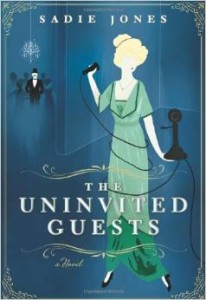
The Uninvited Guests, by Sadie Jones

uninvited guests

I thought I knew what I was getting into with what appeared to be a cozy, gothic novel – however, the author employs a devious “switch and bait” to spoof the traditional genre.

The Uninvited Guests starts out as a typical English manor house mystery – complete with an isolated dilapidated English estate, an elegant dinner party, and a dark and stormy night.

The characters are, on the surface, typically English Gothic novel stereotypes with spoilt children, a disinterested mother, and a father worried about money to keep up their manor, and the usual upstairs/downstairs “tempest in a teapot” crises.

Suddenly, as the house is preparing for a dinner party they get word of a nearby train crash and the house is put into service to host the survivors until the storm passes.   One of the survivors is a strange and menacing man who has a connection with the mother and puts the rest of the family under his spell.

So far so good right?

The bewildered and confused passengers are cruelly locked into the drawing room where they become restless, mysteriously grow in number and become increasingly creepy.

There, I’ll stop – not to give away too much.

I must admit I enjoyed the first three-quarters of this novel – as it has good writing with a delightful setting, quirky characters, and unexpected plot twists. I especially enjoyed a scene involving the youngest daughter sketching a horse outline on her attic bedroom wall – again won’t reveal the full scene – laugh out loud, miraculous writing.

Up until the end, most was believable — albeit bizarre.

However, the ending left me shaking my head in horror and disbelief – as if Stephen King came in and high-jacked the last chapters. Read this book with that caution.


The Unlikely Pilgrimage of Harold Fry, by Rachel Joyce

The Unlikely Pilgrimage of Harold Fry  Book Review by Deborah Fischer-Brown

This charming novel starts with a small premise; recently retired, very ordinary Harold steps out his front door to mail a condolence note to a dying ex-coworker, only to turn away from the post box and decide to walk from his home in Northern England, 600 miles to her hospice.

Why? Because, he believes, as long as he walks, Queenie Hennessey will live.

As the walk progresses, his story emerges –a dull life, a lost son, a wife who finds him extremely irritating and the co-worker Queenie who, alone, stuck up for him during a difficult work situation. Harold reflects on the waste and failure of his life. Sounds depressing – but read on – this is actually a bright, uplifting tale.

Harold has no appropriate walking gear, cell phone, or money which adds a very real (ouch – his poor feet) story line to his musings. As any hiker knows, it’s all about the feet. So we sympathize with his pain but also revel in his courage to carry on and on – just walking.

Harold meets quirky people along the way – the story shines with a cast of sympathetic characters. Moved on by their kindness he starts to look at his life differently, which resolves in a bitter-sweet but charming ending.


Favorite Quote: “Maybe it’s what the world needs. A little less sense, and a little more faith.”