The Lost Garden, by Katharine Swartz

513jiR9ad9L You may be surprised (nay, perhaps shocked) at how little I read when traveling.  All those flights, train trips, early evenings – one would think I’d be in book heaven…but afraid not.  I gaze out at the scenery during train journeys holding my book (or kindle) unopened. I find myself catching up on missed movies during long flights and, as a typically tired tourist (all that walking, exploring, eating, navigating and translating) I fall asleep as soon as my head hits the pillow.  So my reading falls by the wayside.

I wanted an easy-going book for this most recent trip.  Nothing too complicated with multiplying characters or, even worse, a family tree to keep straight.   I knew while in Switzerland, I would be happily distracted and pleasantly tired.  I would only be reading in short bits and pieces.

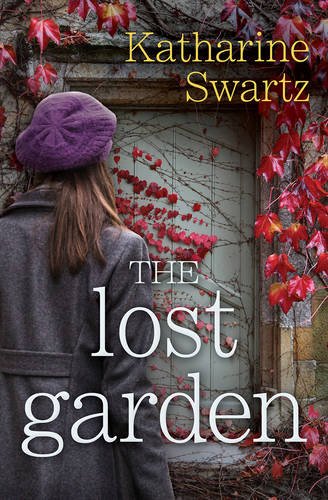
I’d been saving the The Lost Garden just for this trip.  I eagerly awaited this historical novel of a hidden garden with secrets, a dual time-line (present day and just after WWII) and set in rural England.  (I know, I’m  boringly quite predictable.)

It also held charm because it brought to mind The Secret Garden one of my all-time favorite and cherished children’s books.

The Lost Garden is both a mystery and family saga set at Bower House, on the edge of a village church property with a hidden walled garden. In 1919, nineteen-year-old Eleanor Sanderson is grieving the death of her brother so her father hires a young gardener, Jack to restore the walled garden to comfort her.  Eleanor falls for Jack especially once he reveals the garden to her.  (I won’t give away the special garden he created – just know it’s magical.)  Problems arise, secrets are kept and the garden is at the center of it all.

In the present day, Marin Ellis has taken on the custody of her sulky 15 year old half-sister, Rebecca.  They move to Bower house to try and start a new life for themselves.  They, too, are grieving the sudden accidental death of their parents.  When Rebecca shows a spark of interest in the now decrepit walled garden, Marin hires Joss, a local gardener to help them restore the garden.  Together, they uncover the garden’s past and its secrets – and again friendships and romance evolve around the lost garden.

I found the characters authentic and the setting just so darn dreamy (I want my own secret garden…).  For those readers who want a fast moving plot and high drama – this is not a book for you, as The Lost Garden moves gently and slowly along.  I found myself living with its characters, breathing in the rooms of the house and seeing the garden transformed in both time periods.

A purely pleasant read for total escape to a magical secret garden  — some times that’s all you need.

Digital review copy provided by Lion Fiction via NetGalley.


The Signature of All Things by Elizabeth Gilbert

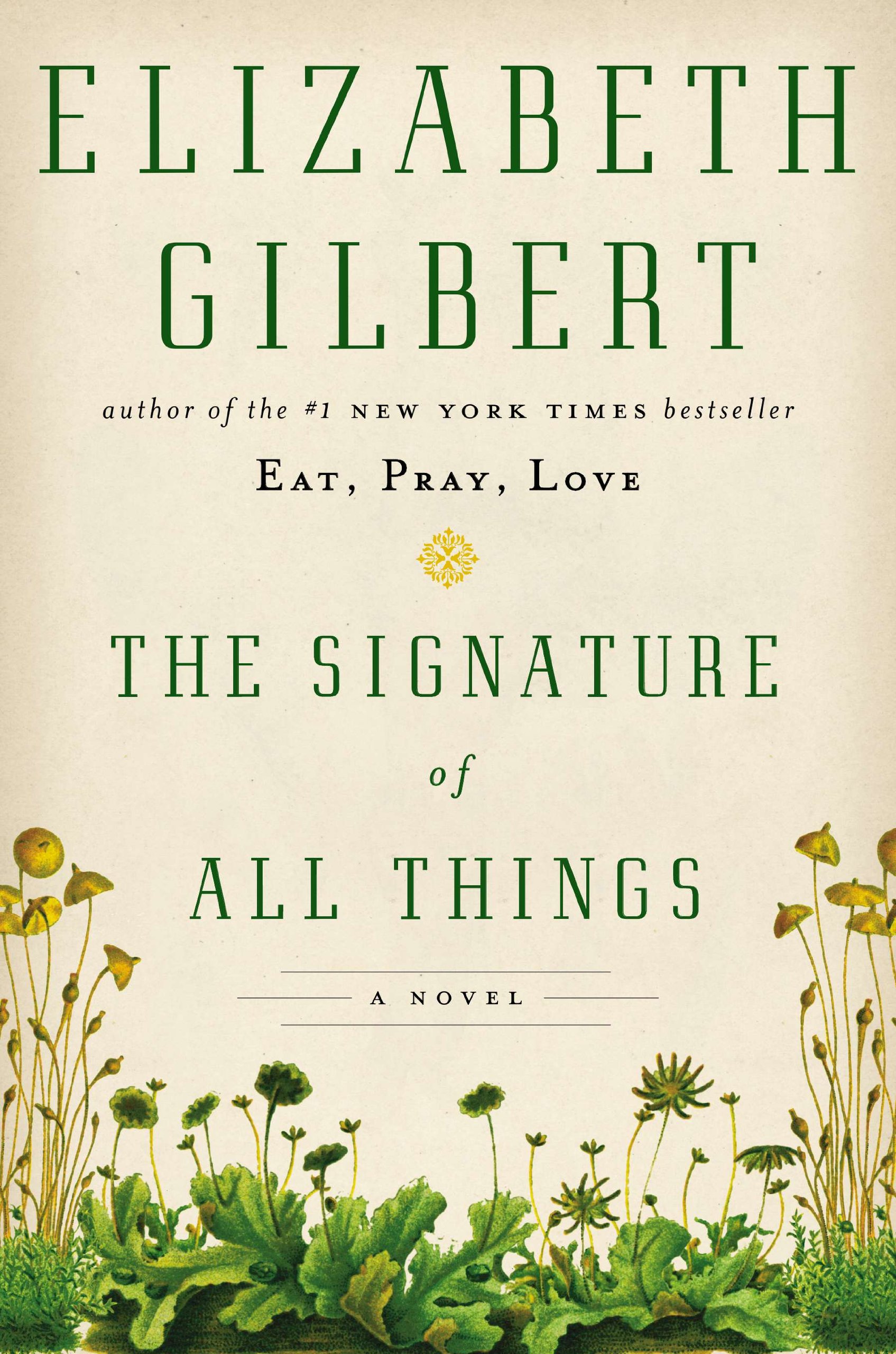
913MaEC1LvLI was entranced by this book — just holding the beautiful hardback edition, with its botanical illustrations on the front and back flyleaves, gave me a little thrill.  I was especially hooked by the storyline which follows a  19th century female botanist.  I’ve long been fascinated with the early botanical illustrators who ventured into harsh climes to painstakingly draw and record plant specimens before the advent of photography.  Add to this that I savored Ms. Gilbert’s Eat, Pray, Love — both the book and the film.  So I was set – that magical feeling of embarking into a book that holds great promise.

The Signature of All Things starts with the turn of the century birth of Alma Whittaker in January of 1800 to unorthodox and wealthy Philadelphia parents.  On the first page we are lead back into Alma’s father’s beginnings  — with this wonderful line:

How her father came to be in possession of such great wealth is a story worth telling here, while we wait for the girl to grow up and catch our interest again. 

And so we learn of the world-spanning exploits of Henry Whittaker, thief turned botanist, in the late 1700s, where money follows Alma’s father around like a small, excited dog.

When we do meet Alma Whittaker some 50 pages in, she is being tutored by her parents in languages, acute observation and critical thought  — they expect her, from a young age, to actively participate in their glittering intellectual dinner parties. She is cocooned within their estate — White Acres and the plant world — so beloved by her father.  There is even a large indoor botanical garden patterned after George III’s own design.

Alma learned to tell time by the opening and closing of flowers. At five o’clock in the morning, she noticed, the goatsbeard petals always unfolded. At six o’clock, the daisies and globeflowers opened. When the clock struck seven, the dandelions would bloom. At eight o’clock, it was the scarlet pimpernel’s turn…

But, before long, Alma has descended into a prematurely sad, old woman. She is someone whose intellectual life is more important than any emotional one — she had too much to accomplish.

Whenever a beam of light shone through one of the tall, wavy-glassed windows, Alma would turn her face up toward it, like a tropical vine in one of her father’s botanical forcing houses, wishing to climb her way out.

Alma becomes an expert on mosses – her own botanical choice – as no one had ever studied their miniature ecosystems in depth.  Alma publishes several highly-regarded botanical volumes on mosses during her years.

Moss grows where nothing else can grow.  It grows on bricks.  It grows on tree bark and roofing slate.  It grows in the Arctic Circle and in the balmiest topics …moss is the first sign of botanic life to reappear on land that has been burned or otherwise stripped down to barrenness.  The only thing moss needs is time, and it was beginning to appear to Alma that the world had plenty of time of offer. 

Eventually Ambrose, an androgynous orchid illustrator,  captivates her with his words and his art – and so she marries him  — but alas, no romance for Alma.

For many years (even before Ambrose) Alma has found her sexual pleasure in a closet by herself – and we are given great detail of  her “self-pleasuring” exploits.  (Just as with the one and only porn film I watched, it quickly becomes painfully absurd.)

Alma lives well into her 9th decade, and her adventures, and those of her father, weave together the development of evolutionary thought during the mid-1800s.  We learn how Captain Cook influenced Charles Darwin and we even get to meet  A.R. Wallace who posited a theory of biodiversity concurrent with Darwin’s.  Alma, too, comes upon her own theory of evolution via her moss studies, but Darwin beats everyone to the punch and garners all the fame.  Ms. Gilbert fascinates in telling of these historical scientific discoveries, exploits and follies.

In an interview, Ms. Gilbert tells of  years doing research and a 70-page outline.   This exhaustive research and hard writing work clearly shines through in The Signature of All Things.

Where the novel falters is in the secondary characters who are introduced, one per chapter, as if even Ms. Gilbert was getting bored with her story and wanted new players.   Alma’s adopted sister Prudence and their friend, Retta are meant to contrast with Alma’s cerebral character —  but I found them unbelievable.  The novel becomes a little un-tethered (as does Alma) once she leaves White Acres for Tahiti and Amsterdam where the complicated and dramatic relationships feel a bit contrived.

I found the novel at times strikingly beautiful  —  there is some jeweled writing — but also at time, tedious.  Even though I merely scanned more than a few pages, I had to keep reading through to the end– as Alma’s story is ultimately fascinating and heartrending.


N.B.  The title of the book refers to the theory that all life contains a divine code which was put forth by 16th century botanist, Jacob Boehme in his book De Signatura Rerum (The Signature of All Things).


The Bookstore Mouse by Peggy Christian

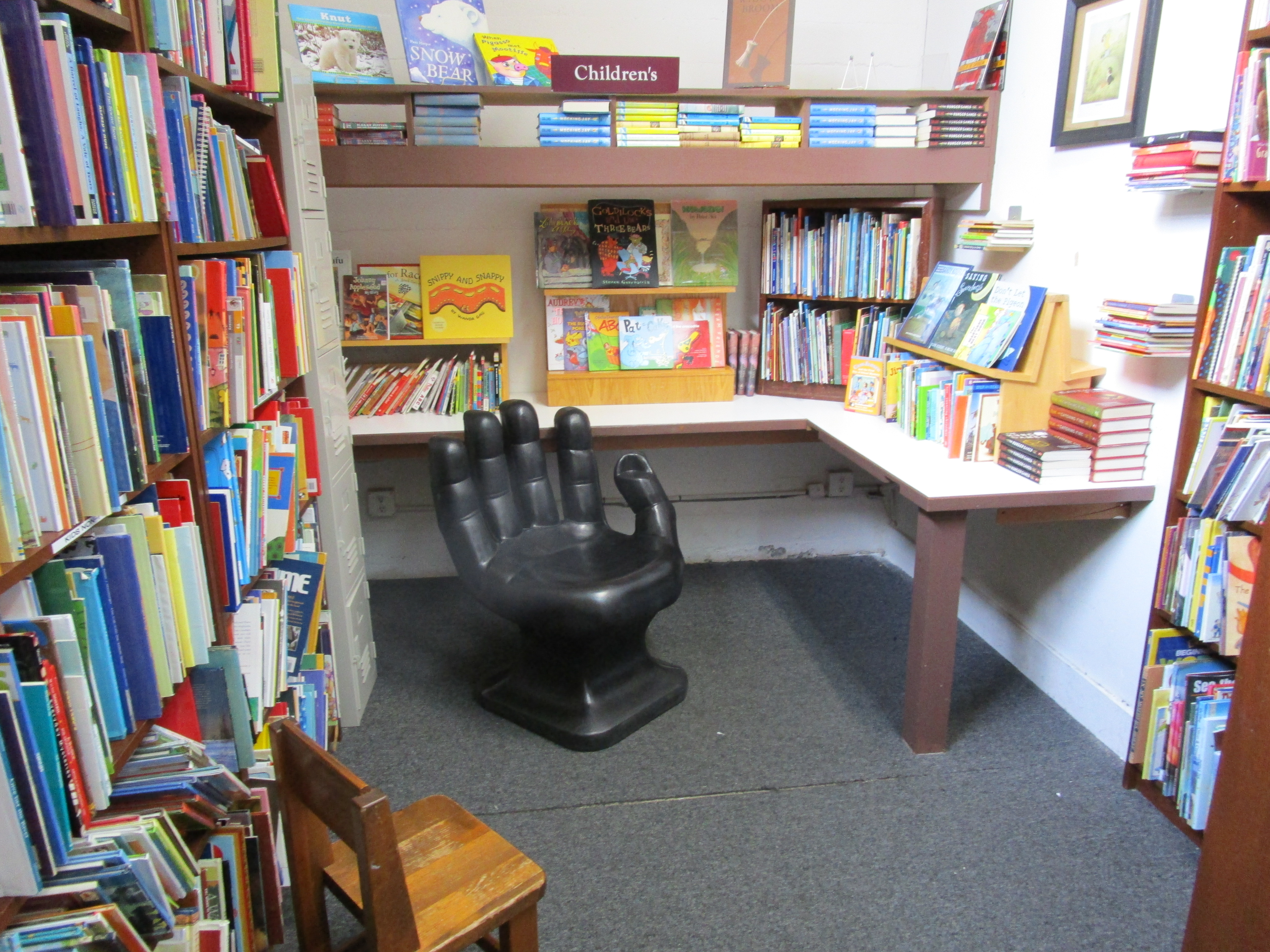
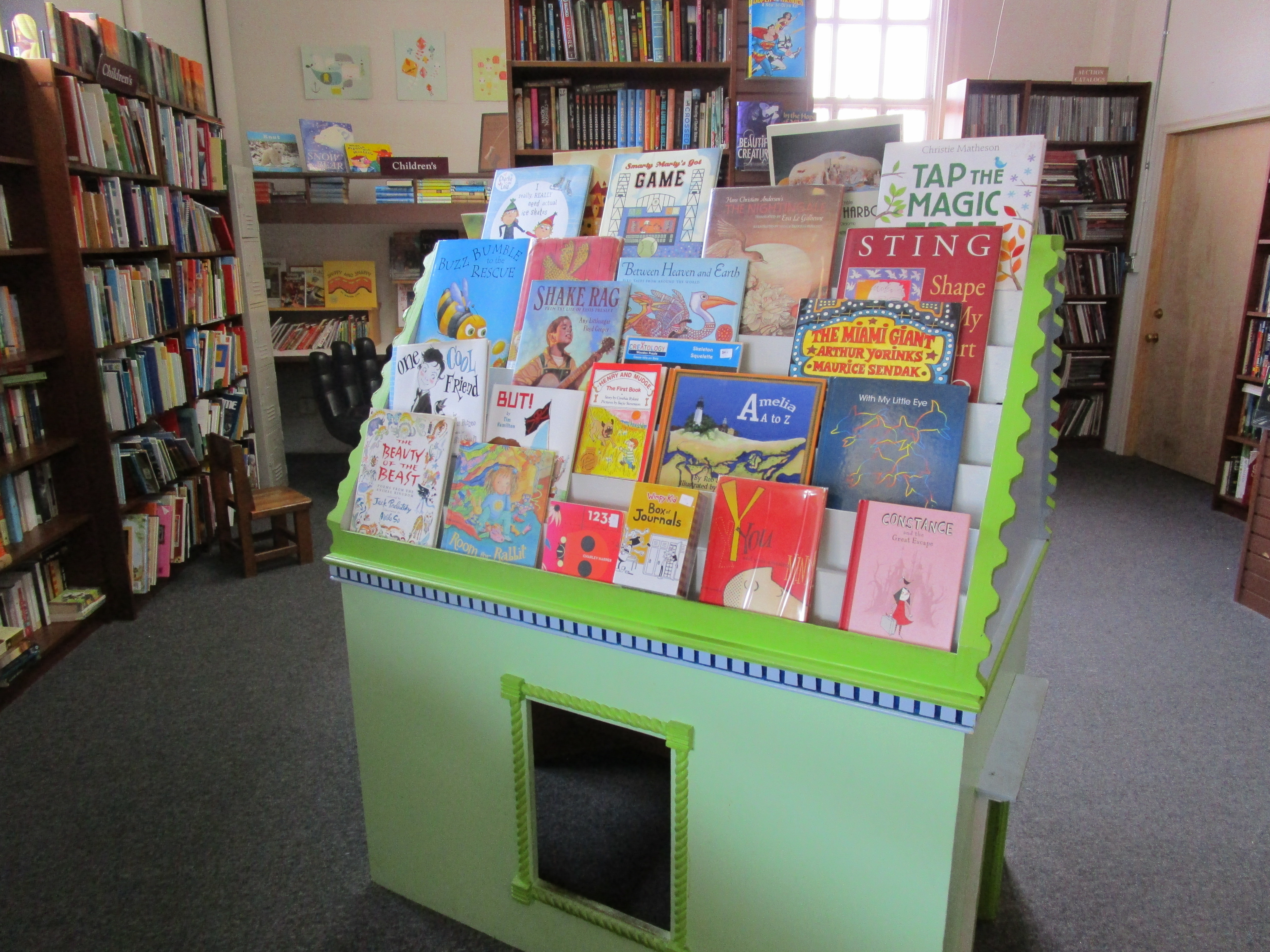
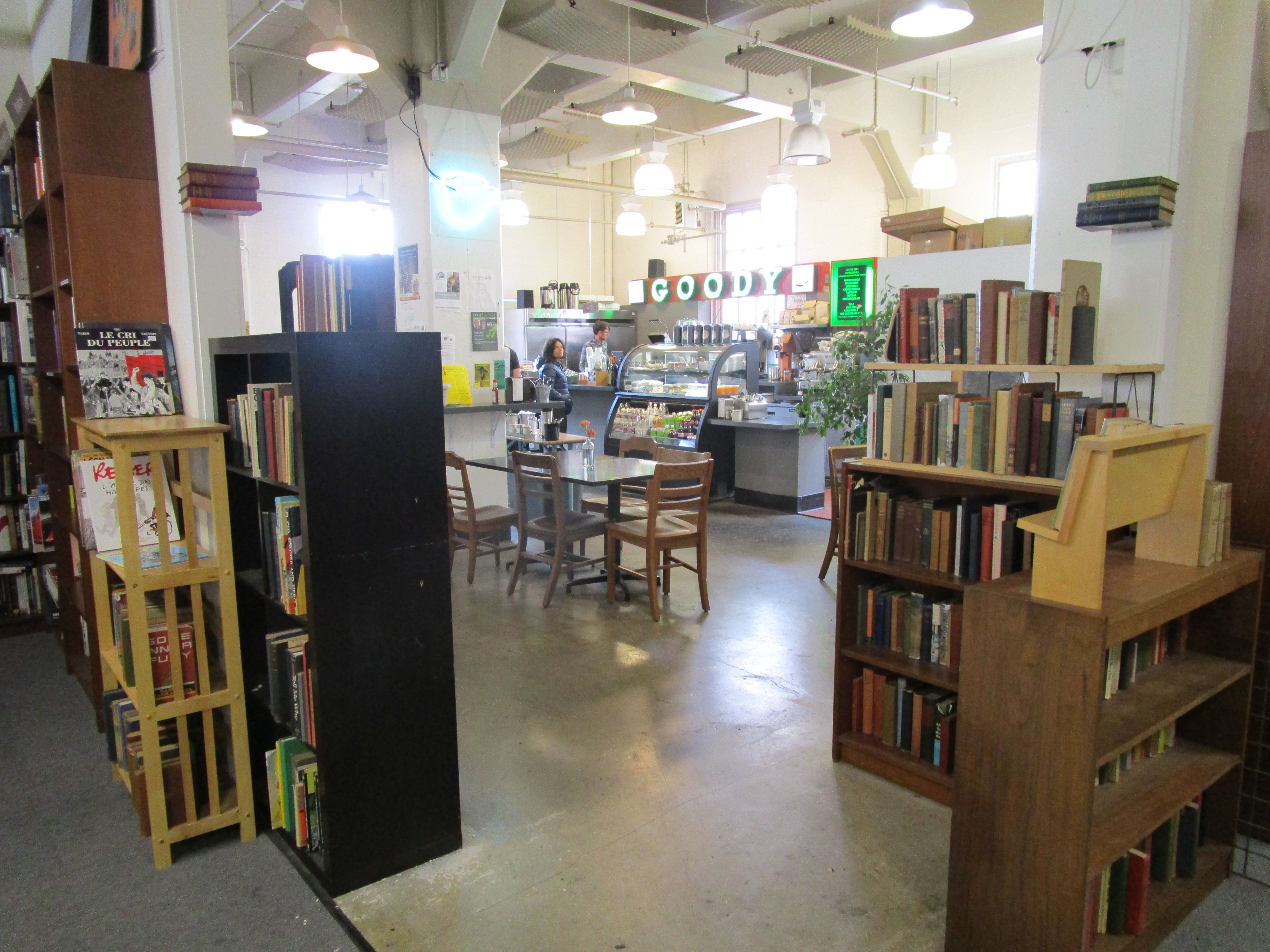
Just next door to the bookstore where I work/volunteer, there’s a children’s arts center with afternoon classes.  When class is over the children often run (with parents trailing behind) into the store and quickly gravitate to our special children’s room/play area (click to see full size).

IMG_0435


IMG_0437


The parents can then, while keeping an eye on the little ones, slip over to the cafe and grab a coffee (they also sell wine and beer but I’ve never seen any parental indulgence  –strong folks these parents).

IMG_0439


Over the months, I’ve formed a friendship with one little girl who comes in every week after art class and her mom lets her buy a book or two.  I’ll call her Penny because she is just as bright as a penny (no real names or photo for obvious reasons).  Penny is a sturdy little girl, cowboy boots, a big wide grin, bangs I suspect she chops at herself, and an eclectic sense of colorful mismatched clothes. One can tell she must be a handful for parents and teachers alike — that combustive combination of open intelligence, imagination, impatience and enviable self-confidence  – I liked her instantly.

Almost every week, she’ll find me in the store, just to say hello and to talk about things – what she did in art class (she once made me an origami bird), the books she’s reading, the books I’m shelving — Penny just loves to talk.  But no idle chatter for Penny, she wants to know things — her conversations are real and her questions intense.  Mostly we talk about books while her poor mother grabs a to-go coffee from the cafe.  One week I pressed Blueberries for Sal into her hands promising her she would love it – she did.  She can’t wait to read Harry Potter, but bemoans that she is still to young to read “such big books”.

++++++++++++++++++++++

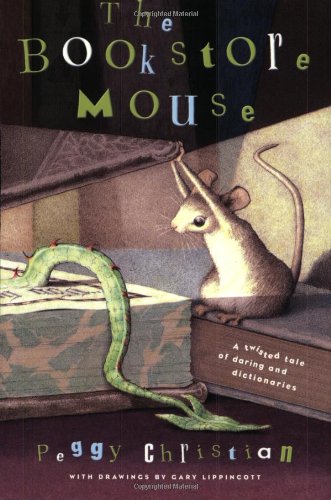
51SDv+bVrZLOne day she brought this little book up to the register to purchase. Penny and I agreed it was a great find (the children’s books are not organized in any way, so the search is half the fun) and that it looked to be a very good book.  I asked her to tell me about it once she’d read it because, of course, I love stories about bookstores and books.

A couple weeks later Penny brought her book back and handed it me…saying “You can borrow this to read yourself.  My Dad helped me, we had to look up lots of the words, but I think you will really like it  – it’s soooooooo good, but I want it back, please, when you’re done.”

I know, I know, let’s have a collective moment of awwwww.  I especially like that she was quite firm  — SHE WANTS HER BOOK BACK – a fellow book hoarder in the making.

So during this week I read The Bookstore Mouse.

It’s the story of a mouse named Cervantes who lives in a bookstore and actually survives physically and emotionally on words – by eating them out of cookbooks, history books, novels. This little mouse has an impressive knowledge of words because the dictionary is his favorite book.

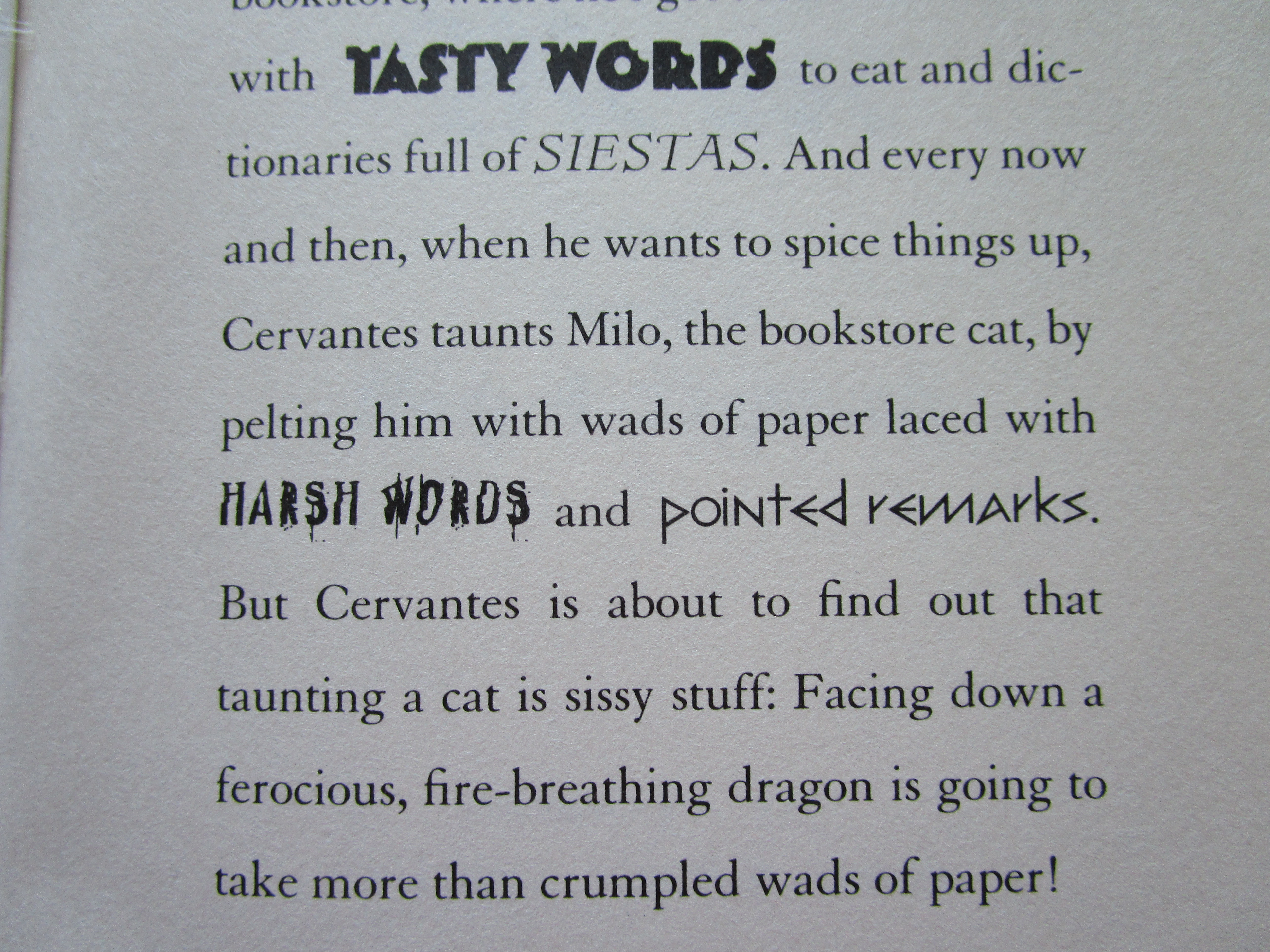
The words are typeset in differing fonts to show their meanings — anger, hunger, fright – as so…IMG_0442

One day Cervantes, trying to escape the bookstore cat, jumps into a book and  gets pulled into a story about a scribe who has to save a village from a dragon. The scribe has trouble finding the right words and Cervantes (and the child reading the story) tries to fill in just the right word.   During the story they meet a giant who makes up very big words that mean nothing and we learn that big words can get in the way — smaller words often have more meaning.

I can see why Penny (and her Dad) had to look up words – here’s a sample of some of vocabulary I had to look up:  prodigious, infandous, cacography —  and then there are the made up words like nigmenog, whosits.

There is wordplay meant for very clever readers or adults.  For example, the dragon is appropriately named Censor. Then there are underline worthy quotes such as this:

A page of print is like a secret passage that leads you to worlds so far away, you cannot imagine them until the magic of reading carries you there.

This is a tale where the words are the main character and these words need untangling and then become weapons, power and protection.  This book will not only improve a young vocabulary, but deserves to be read aloud (while stopping to look up words together) with a bright young person in your life

Thank you Penny.


Save

The Summer Guest by Justin Cronin

6LA question for my fellow book lovers:  When you’ve just finished a truly moving book do you — like me, close the book, gaze lovingly at its cover, then exhale and hug it to your chest for a few moments?  No?  Really?  OK it must be my own little book barmy quackery.

The Summer Guest was just such a hug-worthy book.  An exceptionally beautiful novel which moved me to tears, laughter, and pure delight.  The characters and setting were so real  — so authentic, that when I’d lay the book aside — I had to take a moment to clear my head in order to resume my real life.

I’ve had this lovely book on my shelves for years (this is the 2005 paperback edition) and during a recent grey and foggy weekend I roamed my shelves looking for something “summery” to read…and chose this.

(Side note:  This is how I justify my not-yet-read book hoarding collection — it is a true pleasure to wake up in my favorite PJ’s and with tea cup in hand, browse through my very own bookshelves and pick out just the perfect book for my mood and the San Francisco weather.)

However, The Summer Guest is not a lightweight summer beach book. This is a complex story of a family over time, children and their parents, love and loss — all told simply and beautifully .

In Mr. Cronin’s spare but expansive novel we begin in 1947, aboard a train chugging through a snowy Maine night and end up in 1997 on a tranquil late-summer evening lake, aboard an old wooden rowboat. Included in between  —  the living, loving and loss of a family united by a remote Maine fishing camp with an expansive fish-rich lake – “lovely in its pure beauty of having been forgotten”. 

“the camp held a ninety-year lease from Maine Paper for two hundred acres rimming the lake to the north and west … I didn’t know exactly where the lines fell, but I didn’t have to.  It was so much land it didn’t matter.”

There are the obligatory rutted roads through the deep Maine woods to get to the camp, the idyllic rustic cabins, with fireplaces and creaky porches.  The days are filled with early morning coffee with the loons, the intricate symphony of fly fishing and home cooked evening meals in the communal dining room.  You can smell the pine trees, baked beans and wood smoke.

The title and the main story line refers to Harry  — a guest who has been coming to the camp for many years and is now an old and dying man.  Different characters narrate each chapter and tell the past and present story from their individual viewpoints.  So there’s also Jordan, a local loner who has become fishing guide and winter caretaker of the camp.  Then there are the long-time owners of the camp, Joe and Lucy who have an enviable inner strength and warmth.

Mr. Cronin knows the area and has rendered the voice of his story through dry and acerbic Maine eyes:

“He gave me a curt nod from the chin, the North Woods equivalent of a full body hug.”    and then this,

“this was an inbred town in northwest Maine where, as we said, half the people spoke French and the other half yelled.”

When Jordan, the local fishing guide takes out a group of big city lawyers, the author deftly captures the inevitable situation.

“By this point Bill had actually managed to get his fish under control and was thrashing around in the shallows, his rod hand held high over his head to keep the line tight while, with the other, he made unsuccessful, scooping lunges with his net. Done properly, this can be one of the most satisfyingly graceful moments in the sport, but in Bill’s case it was like watching a man trying to hail a taxi while simultaneously chasing a piece of blowing litter down the street.”

 Mr. Cronin has precisely penned the words to express emotions we have all felt — from mournful sections which wrap the reader into the characters’ brave sadness and loss – to the exquisite joy of first love…

“…the thought of Kate was suddenly woven like a thread through everything, all that had ever happened to me, the clean smell of the pines and the lake and the memory of my lonely winters, the very turning world we stood on.  They say that the moment your life appears before your eyes will be your last, but I’m here to say that it’s not so very different when you kiss a woman like Kate, whoever your Kate may be.”

The scene where the summer guests are dancing on the dock to Ella Fitzgerald is so beautifully told it will bring tears to your eyes. 

Justin Cronin paints a beautiful picture of this remote Maine camp where the summers of deep woods and deep lakes come alive on the pages — “enough silence to let you hear the planet spin or make you mad if you thought too long about it.”

The Philadelphia Inquirer called The Summer Guest — “A work of art, Justin Cronin has written a great American novel.” 

That captures it perfectly.  I can only add it’s a must read (and a must keep on my shelves) novel.  I highly recommend it.


The novels of Nicole Mones

Overheard in the bookstore the other day:

 “Have you read this?  It’s wonderful.”

“I don’t read novels, when I read I want to learn and educate myself.”

I’ve heard variations on this opinion before from smart and respectable non-fiction-only readers and I always nod and smile.  In truth, however, I have to quell the urge to grab them by the arm, march them into a comfortable chair, give them a cup of coffee and demand they read an author such as Nicole Mones.

A newly launched textile business took Nicole Mones to China for the first time in 1977, after the end of the Cultural Revolution. She traded textiles with China for eighteen years before she turned to writing.  Ms. Mones’ extensive knowledge of China’s culture, history and politics is woven throughout her books.  Her novels are enthralling, but each one is an education as well.  Ms. Mones is an author who obviously understands that there are readers who want to think and be entertained at the same time.

++++++++++++++++++

51BR3GNNBCLLost In Translation, Ms. Mones’ debut novel takes the reader into the world of Alice, an unlikeable American woman living in contemporary China.  Alienated from her Congressman father because of his overt racism, Alice seeks to leave America behind and become Chinese. She works as a translator by day and secretly haunts bars at night often having one night stands with Chinese men – trying to understand and connect with the xenophobic culture.

But things change for Alice when she accepts a translator position with an archeological team tracking the remains of the ancient and important Chinese treasure  — “the Peking Man”.  Alice becomes close to Lin a member of the team, while they navigate mysterious secret meetings and the threat of arrest. Working with Lin, she forms a close connection and better understanding of Chinese culture and history

The novel not only mesmerizes with the fictional characters and storyline, but goes further to weave in the historical significance of Peking Man as the first ancestor of China and the important writings of the French Jesuit priest-philosopher, Tielhard de Chardin, from whom the archeological team gains clues as to the whereabouts of the bones.  This novel has it all – an engrossing mystery combined with Chinese cultural history and a dash of sex and romance.

The title* captures the gist of the novel, namely the difficulties of trying to move between cultures, language, history and current society — never being sure what has been lost in translation.  (*No relation to the Bill Murray film of the same name.)

+++++++++++++++++++++++

41AovIJZowLA Cup of Light transports us into the rarefied world of Chinese porcelain “pots” long treasured by emperors and collectors alike.

Lia Frank is an American appraiser of fine Chinese porcelain and is sent to Beijing to authenticate a collection of rare pots going up for international sale.  As she unpacks the crates, holding each delicate piece and “feeling” the refined porcelain, she discovers there are many more pots than originally estimated and that some of them are “fakes”.   But these are no ordinary fakes –these are forgeries so exquisite, so precise that she has to find the forger.  In Chinese culture when the copy is as beautiful as the piece it imitates then the forgery and the forger are greatly admired. 

Again an education here — with A Cup of Light you’ll discover the infamous Chenghua Chinese cups, visit the town of Jingdezhen where the truly priceless pots were manufactured for the emperors and learn how these pots were hidden and smuggled out (with some lost) during the 1931 Japanese invasion.  Also, if you’re like me you’ll cringe in embarrassment  as you learn that J.P. Morgan (yes that J.P. Morgan) tried to buy the entire contents of the Forbidden City in 1913 for twenty million dollars – so many of the priceless and culturally important pots were buried and hidden.  Luckily, old J.P. died and the deal was abandoned. 

Lia wears hearing aids and takes them out to achieve complete silence to exercise her memories.  Lia is a mnemonist and has memorized not only every pot she has ever examined, but also every catalog and history.  She uses the Greek/Roman mnemonic system to memorize and at first I found it unbelievable, but with a little research I found it was actually a real thing.  Ms. Mones also based this on the real missionary Matteo Ricci who taught young Chinese scholars tricks to increase their memory skills–an important advantage in a nation with countless laws and rituals which had to be learned by heart.  But I digress, when Lia goes into her memory files to help her determine which pot is real or fake, we get some fascinating Chinese porcelain history.  Also fascinating is the current day political intrigue intruding into Lia’s world of beautiful pots contrasted with her researching (remembering) similar shadiness throughout the history of Chinese porcelain.  

Ms. Mones was a textile trader in China for many years and her knowledge of the underworld of art smuggling and forgeries shines through. In each of her novels, the lead female characters have many flaws, but Ms. Mones always portrays them as competent, professional women with real work to accomplish.

+++++++++++++++++++++++

81csh0iWd9L._SL1500_The Last Chinese Chef is probably my favorite of her novels.  This time, Ms. Mones, a contributor to the now sadly defunct Gourmet magazine, takes us into the luscious world of Chinese cuisine.

When Maggie McElroy, a widowed American food writer, learns of a Chinese paternity claim against her late husband’s estate, she has to go immediately to Beijing. She asks her magazine for time off, but her editor counters with an assignment:  to profile the rising culinary star, Sam Liang, who is about to open an imperial-style restaurant in Beijing.  When the restaurant opening is delayed Sam, who is half Chinese, half American, acts as Maggie’s translator and helps her track down the child and unravel the mystery of the parentage.

But readers – it’s the backdrop of the FOOD that is the heart and soul of this novel.

We understand the intricacies of Chinese cuisine. The concepts of texture and appearance are as important as flavor on the Chinese table. We learn about “guanxi” — the Chinese concept of relationships. We see that food is at the heart of Chinese relationships, one reason why all meals are shared in China and never individually plated. Chinese cuisine is very much about presentation  including  symbols and references which are understood instantly and connect its people not only to one another but to their culture and history.

This is not to say that the characters or the plot of The Last Chinese Chef aren’t compelling — oh they are.    Sam, the heir to the family’s cooking expertise, is sexy yet gentle – helping Maggie comprehend the often mystifying Chinese culture and re-awakens her interest in food by preparing her luscious dishes  (I know… sigh).  Sam decides to enter a Chinese cooking competition and we watch, smell and taste the tapestry of the food he prepares to practice.  Sam’s grandfather, Liang Wei, had been one of the last generation of chefs in the Forbidden City and the author of a highly regarded tome on the art of Chinese cuisine. Each chapter of the book starts with quotes of wisdom from this fictional but very realistic Chinese cook book.  Eventually, Maggie and Sam unravel the truth behind the child’s parentage, but by then Maggie doesn’t care so much, re-awakened from her grief and happily eating.

+++++++++++++++++++++++

913OEytaN8L._SL1500_ Night in Shanghai is Ms. Mone’s most recent novel.  I haven’t read it, but it’s next on my list.

It’s about the little-known story of black musicians in the Chinese jazz age.  You can watch the book’s trailer HERE.

(Who knew that one day book publishing/marketing includes film-style trailers.)


Her by Harriet Lane

41KzvDb9htL You may remember my review of Harriet Lane’s previous novel Alys Always.

I greatly admire Ms. Lane’s spare and visual writing style –she’s a writer who can paint so much in so few words.

Her is her second novel and like Alys Always it’s creepy minimalist writing at its best.

Told in the first-person narrative from two women’s perspectives, the novel teases you along  in alternating chapters. 

Nina spots Emma in North London — a woman she knows from her childhood and contrives a way to connect with Emma — we know not why.

Emma is a harried, scattered mother of two kids.  She is also vulnerable and clueless – she doesn’t remember Nina and takes her to be a new friend. You cringe as Nina (obviously a psychopath) begins to orchestrate a series of devious and manipulative events to successfully insinuate herself into Emma’s life.

Emma’s messy, but ordinary domestic life is the perfect stage for Nina to play out her menacing plan.  True friends – maybe not.  Nina purposely messes with Emma — household items go missing, babysitting plans go awry, a child seems to get temporarily lost — these haphazard domestic incidents provide a ominous backdrop.  The reader knows this is a household about to unravel in a most disturbing way.

And so we are intrigued…what’s going to happen?  Why is Nina so intent on connecting with Emma?  What was the past incident that is causing this evil charade?

As in her previous novel, Ms. Lane is very good at painting the seemingly normal, but creepy stalker.  Slightly “off” people who seamlessly infiltrate themselves into innocent lives.  You read along, nervously aware that something terrible is going to come of all this, but unsure what, how or why.  That is the mark of an intelligently constructed thriller. 

This book has been compared to the currently popular thrillers  Gone Girl and Girl on a Train.  I’ve read both books and Her is far superior writing and I think more thrilling and creepy.  Again, it’s the minimalist writing – an around-the-campfire ghost story teller who pauses for utmost effect to let your imagination fill in around the silence.

My only quibble is with the reiteration of the same event from each woman’s point of view — there isn’t enough difference in the two voices to make the re-telling fresh and so at times the narrative seems to slow down – but perhaps this is Ms. Lane’s intention –  maybe it’s supposed to be a slow burn.

Stick with it my friends, the author kicks up the tension and the last chapters are evil and frightening.  To some, the ending may feel unfinished and you may be wondering WHY? —  but that is the chilling nightmare.


A Paris Apartment by Michelle Gable

51sCy5vmxmL Remember THIS POST?  Well readers I finally finished A Paris Apartment, a novel based on the life of Marthe de Florian and her forgotten apartment crammed with antiques and a famous portrait.

I admire any first time author who has the courage and fortitude to keep writing and get a novel (any novel) published, so it is with mixed feelings that I must tell you I tried to look at this debut from several different viewpoints, but there is no getting around my disappointment.

Perhaps I had unrealistically high expectations – what a great story could be told — the unopened apartment, the story behind the painting, Marthe and the time of the Belle Epoque*.  Then contrast that with the modern-day story of the antiques experts who must have been agog at the opportunity to research the priceless antiques and delve into Marthe’s journals.

The actual Marthe started out as a bartender at the famous Les Folies Bergères, became an elegant courtesan known for having famous lovers, including a few prime ministers, a French president and the artist Boldini.  Marthe left the apartment to her granddaughter, Madame de Florian, who shuttered the apartment and fled Paris at the start of WWII.

So, as you know from the previous post, I was seriously excited to open this book and settle in for a good read.

The chapters alternate between Marthe de Florian’s story told through fictionalized diary entries and April Vogt, a current-day American furniture expert from Sotheby’s who is called to Paris to help prepare the contents of the apartment for auction.

Marthe’s storyline was at times fascinating and the author (thankfully) took much from her actual life — how she created her name, her elegant persona and how she dug herself out of a brothel into high class society during the Bell Epoque.  In contrast, the modern day story of April Vogt reads like poorly written chic-lit. I found my self slogging through April’s chapters and only somewhat enjoying Marthe’s.

There is some magical writing – the description of the famous chandelier at Les Folies Bergères is wonderful.  The Paris setting(s) are beautifully and deliciously described.  However, Ms. Gable stumbles in re-telling Marthe’s story, her diary entries seemed staged and she lets modern day language creep in.  Sadly April is completely one-dimensional, so much so that this reader ended up disliking her character and her storyline was so predictable that I found myself imagining other outcomes.  The novel borders on the raunchy and is written with such tactlessness that I cringed for the real Marthe de Florian.  I found the ending almost ridiculous and in need of major editing – or perhaps, even completely deleted

Sigh — The Paris Apartment gets many 4 and 5 star reviews on both Goodreads and Amazon, so I am in the minority here.  (Perhaps you’ll like this novel – go and seek it out if it interests you.)

Unfortunately, I wanted more — more richness, more depth, better writing – not this breezy and shallow version of what in reality must have been a fascinating story. The discovery of the forgotten apartment and its contents, the true life story of Marthe de Florian  — they deserve a more intelligent telling


*Belle Epoque (Beautiful Era) was a period in the European history that is conventionally dated as starting in 1871 and ending when WWI began in 1914.


Address Unknown by Kressmann Taylor

71WZ8P67VHLWhile I’m hunkered down reading THIS, I’ll quickly take a break to tell you about a very important little book.  Address Unknown was thrust upon me by one of my favorite bookstore customers – an older Jewish man — insisting it was a vastly important classic.  I looked down at the slim volume in my hands and wondered at his statement – how could this be a classic?  That night not only did I devour it, I immediately turned back to the beginning and read it again.  In the years since, it has a honored place on my bookshelf (right next to 84, Charing Cross Road) and I often pull it down to read it yet again and marvel at the author’s achievement within.

You may think I’ve lost it over here at Book Barmy, as this book is merely 54 pages long (eight of them blank), made up entirely of letters, and it comes with a New York Times hyperbolic blurb “This modern story is perfection itself.  It is the most effective indictment of Nazism to appear in fiction.”

Address Unknown was first published in 1938 in Story magazine as a warning for Americans of the true nature of the Nazi menace, Reader’s Digest later reprinted the story and it went into its first world-wide book printing in 1939 — but was banned in Germany.

The book’s afterword, written by Taylor’s son, reveals that the idea for the story came from a small news article:  American students visiting Germany wrote home about the Nazi atrocities.  Fraternity brothers back in the U.S. thought it would be funny to send them letters making fun of Hitler, and the visiting students wrote back, “Stop it. We’re in danger. These people don’t fool around. You could murder [someone] by writing letters like this”.  Thus emerged the idea of  the “letter as a weapon”.  Kressmann Taylor wanted to write about the truth of what was happening in Nazi Germany — a truth most Americans, including Charles Lindbergh, would not accept, mired in American isolationism.

The letters in Address Unknown span only 16 months and begin in 1932 as a fairly routine correspondence between art gallery owners – one having returned to Germany with his family — the other still in San Francisco holding down the gallery business.  They are close friends, their families grew up together and there is much warmth in their early letters.  But then the letters turn chilling and then downright menacing.  What is most impressive about the construction of this storyline (other than its epistolary structure) is the weight of the time passing between the letters. These long silences say as much as the letters.  The ending still makes me sit back and wonder whether what I am feeling is valid or disgusting. How often does that happen? This is the writing craft at its finest.

When Katherine Kressmann Taylor first submitted the story to her editor, he deemed it “too strong to appear under the name of a woman,” and published the work under the name Kressmann Taylor, dropping her first name. She used this name professionally for the rest of her life.  Address Unknown was largely forgotten until 1995, when the book was republished to commemorate the 50th anniversary of the liberation of the concentration camps.  At that time Kressmann was 91 and she happily spent her remaining years signing copies and giving interviews until her death at 93.

Address Unknown is readily available at your library or local independent bookstore.


The All Of It by Jeannette Haien

41oyLauCHcL Lately I’ve been reading nothing but Kindle books and needed to feel a real book in my hands.  I searched my shelves and found this little volume tucked behind another row of other books.  (Oh come on, you do it too, double shelve your books for maximum space.)  Anyway, I’d forgotten I had this book, had never read it and apparently purchased it back in 1988 when it was first published in paperback. “Well what ya know?” I muttered to myself.

You see, Ann Patchett single-handedly brought The All Of It back from obscurity and into a new 2011 reprinting.  She hand sells this title to customers at her bookstore, Parnassus Books and she raved about it during a NPR interview several years ago. I also remembered a writer friend, who doesn’t read much contemporary fiction had sung the praises of this small novella.

So I sat down to read, two hours later I closed the book and gazed about in a daze.  I had been gone, transported  by Ms. Haien’s magical writing.  And, oh what writing — long sentences that flow flawlessly and dialogue so realistic you actually seem to hear the characters conversations.

Set in Ireland during early 1900’s, Father DeClan is at the bedside of a dying parishioner who is only able to make a partial confession before he dies.  So it is left to his widow Enda to tell him “the all of it”.

“I appreciate, Enda, that it’ll be no easier for you to tell than for me to hear”, replies Father DeClan.

“You’ll need to be patient Father,” she qualified.

“I will of course, Enda”

And so it begins — and it’s a complex and beautiful story as Father DeClan’s religious beliefs face off with the hard realities of Enda’s tale of survival.  At times both subtle and harsh, The All of It lays bare the complexity of choices made and the consequences of chances taken.

Enda’s tale of hardship and struggle is juxtaposed with Father DeClan salmon fishing on an Irish river bank during a cold and drenching rainstorm.  These fishing scenes add another layer of nuance – is it meant to be a metaphor?  You will have to decide for yourself, but I found the fishing descriptions allegorical as the Father struggles to fish in an unkind river while trying to understand Enda’s sin.

The characters are complex in this largely dialogue-driven narrative — even the dead husband comes alive during his full life.  The Father’s struggles to re-arrange his beliefs, Enda’s lack of shame in her actions — all revealed through dialogue.

The ending is somewhat unresolved, which left me creating possibilities for an ending…mulling it over long after I finished reading. I urge you to find this book at your local bookstore or library and settle down with this short novella, revel in Ms. Haien’s writing and make up your own ending.


Small Blessings by Martha Woodroof

811Y-p4EyoL

Small Blessings follows the intertwined lives of academics and their family members in a small Southern college town. 

The above synopsis almost made me pass on this novel – sounded slightly mundane and I’m not a fan of academia novels.

Then, one Saturday morning,  I heard Ms. Woodroof interviewed on NPR (she is a staff writer for NPR) and I warmed to her voice, attitude and that she’s a debut novelist at 67 years of age.  (Approaching said decade myself, I seek any and all such bright, uplifting statistics, if you please)

I remembered I had Small Blessings on my Kindle and turned the first pages that evening — still convinced it would be a predictable read.

Yes, at first this is your average story:  In a small, sleepy college town Tom Putnam, an English professor with a mentally troubled wife, is flatly going about his life when suddenly there is Rose, a lovely new employee of the campus bookstore. Tom and his wife are charmed by Rose and make plans for dinner.

Still thinking oh yes, a Lifetime movie plot is about to unwind, I carried on and wham! The story suddenly twists and turns.  The characters become wholly unpredictable…and I found myself turning the pages and falling headlong into Ms. Woodroof’s atmospheric story.

Without giving away too much, Tom’s poor wife dies in an auto accident during the first few chapters, his mother-in-law, Agnes (my favorite character) becomes his ally.  Tom falls a little bit more in love with Rose each day.  At the same time, a past affair brings him Henry, a 10-year old boy, who may (or may not) be his son.  Stir all this up with oddball (often drunk) supporting characters, a Southern town that knows everyone’s secrets, some melodrama and you’re in for a journey.

The campus atmosphere is beautifully rendered in an insulated Southern setting, but Ms. Woodroof also slyly lampoons the institution’s pretenses.  The front lawns of the faculty housing are beautifully maintained for showing off to prospective students and parents, while the back yards grow weedy dependent on the faculty to tend – which they don’t.

I had my quibbles with Small Blessings. I found Tom Putnam to be almost catatonic in his passiveness, perhaps as an academic, he lives in his head – but at times I found it very irritating – especially in his marriage to Marjory:    “Conscience was such a delicate balancing act.  There was what he knew was right, what he ought to think was right, and what he wanted to do, all to be considered.  It was the ultimate moral chess match, and it was the only game that mismatched married people got to play.”

The mental illness and death of Tom’s wife, Marjory are treated with a light, almost cavalier hand – as in this from Agnes, her mother:   “Marjory is, I really do think, better off dead.  I don’t know what dead is, of course, but it’s got to be more fun than my daughter’s life was.”  and this later quote  “the best thing she ever did in life was to give up on it.  And that’s a bleak as a life can get.”

In the end, I found this an unpredictably candid and real storyline.  Small Blessings teeters on the edge of soap-opera stereotype, but then surprises the reader with realism. The characters are flawed but ultimately loved.  This is a story full of tragic events but it overflows with optimism.  One of my favorite quotes:  When the going gets tough, the tough suck it up,” Agnes said. “The rest get run over.”

The outline of this novel screams “make me a TV movie!”, but if it is optioned, I hope they capture the story’s quirks and messiness.

Review copy provided by St. Martin’s Press via NetGalley.