Reading in Place My Favorite Books: Part 1

This last week (and whew, what a week, heh?) friends and readers have asked for book recommendations. That’s a tricky endeavor as everyone has unique reading tastes. As a substitute, I thought I’d tackle something I’ve been contemplating a long time — a list of my own favorite books. Before Book Barmy, I kept notebooks of all the books I’d read with my thoughts – so pulling together my Favorite Books list presented quite a job. But seeing as I’m not going anywhere – I’ll give it a shot. Perhaps you’ll want to pick and choose from these Book Barmy favorites for books to read while sheltering in place.

I know the libraries are closed in many areas, so if you want to buy any of these books — Please contact your local independent bookstore. They will happily take your order, personally ship your book(s), and will surely appreciate your distancing business right now. Find your local bookseller HERE

So, in no particular order and surely missing some – here we go. I will use a combination of my own notes and the book blurbs to give you the briefest but most complete synopsis of each book. Many of these books have a permanent place on my shelves, while others are long gone – happily given away to others who will enjoy them.

My Favorite Books – Part 1

Stones for Ibara, by Harriet Doerr

An excellent novel of cultural understanding and misunderstanding — stereotypes, adapting, and the power of grace. Richard and Sara Everton who have come to the small Mexican village of Ibarra to reopen a copper mine abandoned by Richard’s grandfather fifty years before. They have mortgaged, sold, borrowed, left friends and country, to settle in this remote spot; their plan is to live out their lives here, connected to the place and to each other. The two Americans, the only foreigners in Ibarra, live among people who both respect and misunderstand them. And gradually the villagers–at first enigmas to the Evertons–come to teach them much about life and fate.

Memoirs of a Geisha by Arthur Golden

This novel will absolutely transport you into the world of a Geisha. Nitta Sayuri tells the story of her life as a geisha. It begins in a poor fishing village in 1929, when, as a nine-year-old girl with unusual blue-gray eyes, she is taken from her home and sold into slavery to a renowned geisha house. We witness her transformation as she learns the rigorous arts of the geisha: dance and music; wearing a kimono; elaborate makeup and hair; pouring sake to reveal just a touch of inner wrist; competing with other geisha for men’s solicitude and the money that goes with it. We enter a world where appearances are paramount; where a girl’s virginity is auctioned to the highest bidder; where women are trained to beguile the most powerful men; and where love is scorned as illusion. It is a unique and absorbing novel —romantic, erotic, suspenseful—and, for me, completely unforgettable.

The Amazing Adventures of Kavalier & Clay by Michael Chabon

I never thought I would be interested in, let alone be besotted, by a book about two book artists in golden age of comic books — but this Pulitzer Prize winning novel just blew me away. A young escape artist and budding magician named Joe Kavalier arrives on the doorstep of his cousin, Sammy Clay. While the long shadow of Hitler falls across Europe, America is happily in thrall to the Golden Age of comic books, and Sammy is looking for a way to cash in on the craze. He finds the ideal partner in the aloof, artistically gifted Joe, and together they embark on an adventure that takes them deep into the heart of Manhattan, and the heart of old-fashioned American ambition. From the shared fears, dreams, and desires of two teenage boys, they spin comic book tales of the heroic, fascist-fighting Escapist and the beautiful, mysterious Luna Moth, the otherworldly mistress of the night. The writing is magic as they bring their comic book characters and stories to life — while also carving out their own vivid lives and amazing adventures of their own.

The Griffin and Sabine Series by Nick Bantock

These were hugely popular back in the 90’s and according to many critics,  somewhat of a gimmick – but I adored this series of books and have hung onto them all these years later.  Every so often, I’ll take them down and fall into what is the equivalent of adult pop-up books.

Griffin and Sabine are located on opposite ends of the earth — Griffin is a lonely artist in damp England, while Sabine is a native living on the sun-drenched island of Sicmon in the South Pacific.  We meet them as they have just become pen pals and it is their correspondence back and forth which comprises the Griffin and Sabine books.  Soul mates, they decide to meet, face to face. Their quest (and failures) to meet one another forms the backbone of these books. There are letters to open, postcards to read, handwriting to decipher, maps to study, all, for this reader — pure delight.  You’re given the sensation of having stumbled upon a romantic mystery to which only you are privy – a private secret kept locked between the covers.  The story is nothing much, but the discovery of it is exquisite. The art of these books is in their meticulous printing. There are actual envelopes glued into the text which you open to unfold an actual letter, postcards and beautiful illustrations– a true work of love on the part of Mr. Bantock and the publisher. 

We Took to The Woods by Louise Dickinson Rich
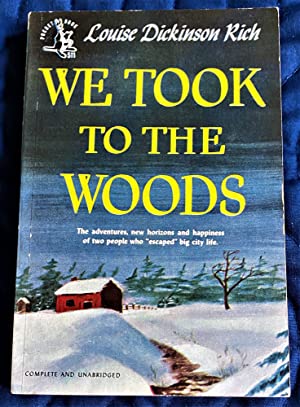
Back as a teen in New Hampshire, we’d experience snow day school closures (much like today’s shelter in place). During one snow day, attracted by the jacket cover inviting me down a snowy path to a snug home in the pines, I picked up my mother’s copy of We Took to The Woods and happily wiled away the afternoon. Louise Dickinson Rich took to the woods of Maine with her husband. There they found their livelihood and raised a family in the remote backcountry of the Rangeley area of Maine. Ms. Rich made time after morning chores to write about their lives. This is not a biography, not even a memoir. Instead, in a very informal, conversational style, Rich answers key questions people have asked her about her life as a writer, a wife, and a mother deep in the north woods of Maine. One question per chapter: “Aren’t You Afraid? Don’t You Get Bored? How Do You Make A Living?” Her answers are candid, funny, detailed, and enlightening. We Took to the Woods is an adventure story, written with humor, but it also portrays a cherished dream realized in a full life. First published in 1942. I have since found my own copy in a used bookstore — but sadly, without my beloved original dust jacket.

The Magicians Assistant by Anne Patchett

Anne Patchett is one of my go-to authors but this has to be my favorite of her novels so far. When Parsifal, a handsome and charming magician, dies suddenly, his widow Sabine–who was also his faithful assistant for twenty years–learns that the family he claimed to have lost in a tragic accident is very much alive and well. She is left to unravel his secrets, and the adventure she embarks upon, from sunny Los Angeles to the bitter windswept plains of Nebraska, will work its own magic on her. A deliciously original story about love — in all its many forms.

My Life In France by Julia Child

This is THE book to read if you want to know about Julia Child. It’s fun, insightful, and delightfully ‘Julia’. Previously on Book Barmy HERE

84 Charing Cross Road by Helene Hanff

My list would be definitely incomplete without this treasure. I have purchased and given away many copies of this book — one of my top top favorites. Read more HERE

Okay, that’s enough for today. Don’t worry there’s plenty more — see Part 1 above.
I have to get back to a new book which I just started last night. It’s auditioning for this same list…


My Sister, the Serial Killer by Oyinkan Braithwaite

Today is my younger sister’s birthday. I bought her this book as a joke gift, never intending to read it.

But, then I read good reviews and learned that it was up for both the Booker and the Woman’s Prize. So, with the deadline of my sister’s birthday approaching, I opened it up the other week and dove in.

Korede’s sister Ayoola has the inconvenient habit of killing her boyfriends, the latest named Femi:

“Femi makes three, you know. Three and they label you a serial killer.”

My Sister the Serial Killer is written by a Nigerian novelist, and is set in Lagos, Nigeria. Korede’s younger sister Ayoola is many things: beautiful, self-involved, vain, everyone’s darling, and yes, a serial killer. Korede works as a nurse and lives at home with her mother and Ayoola. She is fastidious in her job, but doesn’t really have any friends due to keeping her sister’s secrets and cleaning up her messes, literally.

We begin in the middle of the action: Ayoola calls Korede in the middle of the night for help — she has stabbed her newest boyfriend. Out of necessity, Korede has become an expert at crime scene cleaning and evidence concealment. (Bleach is the best way to remove blood if you’re wondering or know your own serial killer.) Her life has become move the body, dispose of the body, clean up after the body, and hardest of all — stop her sister from carrying on with her social media posting as if nothing happened – and advising Ayoola to at least act sad about her latest ‘missing’ boyfriend.

But, everything changes when Ayoola sets her sites on a doctor Korede’s secretly in love with. Forced to sit back and watch in utter fear as Ayoola successfully flirts with him, Korede is faced with an inner battle to save the man she loves or to protect her sister.

Driven by her passion, and the fear she and her sister might get caught ~~ because, oops, Korede confessed everything to a patient who was in a coma but is now awake—Korede makes choices she never even imagined were possible.

The sisters’ story goes back and forth from their troubled childhood, to the present, to the near past, and onward. The story becomes deeper and more nuanced than one would first assume — as more history is revealed.

Nigerian culture is sprinkled throughout. There’s the heat, the food, and the traffic. The police are portrayed as corrupt and easily bribed. Even though their dead father was cruel and abusive, the mother and daughters are expected to host the annual lavish party to remember him.

My Sister, The Serial Killer isn’t a crime novel as such – there’s no mystery and no detection. It’s really the story of sisters and their relationship — the loyalty and the rivalry. It’s often darkly funny, but also tense, and unexpectedly poignant. There’s a scene where Ayoola is happily lapping ice cream while her (murdered) boyfriend’s sister is sobbing in grief — which stopped me cold.

This is a short little novel which you could read in one sitting, but you’ll want to linger, as it’s a very artfully written book. And, as an added bonus, you’ll learn how to clean a crime scene – just in case a family member goes rogue.

Happy Birthday to my wonderful sister, who, as far as I know, is not a serial killer.

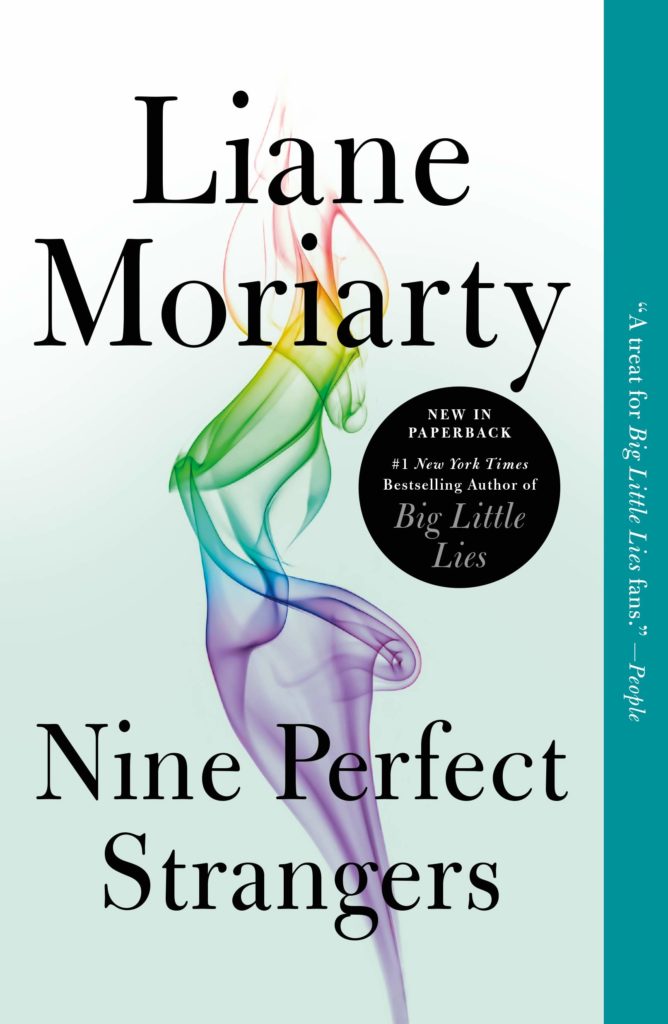
Nine Perfect Strangers by Liane Moriarty

I didn’t intend to read this book — it wasn’t on my TBR list or even on my radar, but read inhale it, I did.

It was a really slow day at the bookstore and I was shelving fiction when I recognized Ms. Moriarty’s name from one of my favorite TV series Big Little Lies. This popular Australian author is known for writing a book a year, and I would categorize her novels as Chic-Lit Thriller (I just made that up).

I decided to randomly pick one of her titles to browse through it – just browse, mind you – there’s a ton of books at home to read, I told myself.

Seventy two hours later, I closed Nine Perfect Strangers and looked around blurry eyed, as if emerging from a cave.

The setting is Tranquillum House, a remote health resort in Australia and nine people have gathered to revive their lives — some to loose weight, some to gain mindfulness, and others just to get a fresh start. Frances Welty, a middle-aged, romance writer whose novel sales have been dwindling, arrives at the health resort with a bad back and a broken heart. She quickly realizes that most of her fellow guests don’t look to be in need of a health resort at all. The owner/director of the resort is odd, but charismatic, and Frances wonders if she should leave or stick it out. But stay she does and as she participates in the meditation, Tai Chi, and drinks the daily smoothies – Frances begins to feel a great deal better.

Several chapters go into the psyche and problems of each of the guests. We learn about their problems; marriage issues, a family recovering from the loss of a child, a has-been soccer player – all of them seeking health and bliss. But, the main focus is on Frances and Masha, the spa director. I laughed out loud at Frances and nodded in agreement at her attitude towards wellness and dieting. I had empathy for some of the characters and frustration with others, but overall I had anxiety on behalf of all of them — Tranquillum House is not all it appears to be. To paraphrase Bette Davis – fasten your seat belts, it’s going to be total nutter of a ride.

As the plot unspools, the transformative spa treatments start to take a dark turn. Masha gets weirder and the guests start to have strange interludes. I’ll stop there and won’t divulge any more. Just know there are lots of plot twists and some Agatha Christie-type scenes — all of which kept me turning the pages and turning the pages…

Nine Perfect Strangers is not high literary fiction, instead it has a ridiculous plot with some cliché characters, but it is also quirky, fun, and entertaining. The ending is a bit over the top, but the final chapters nicely tie up each characters’ story. I was on the edge of my seat throughout the book — Ms. Moriarty certainly can write a page turner and I now understand why she is a best selling author.

But now, afterwards, I think the experience was akin to eating cotton candy. Lots of fun — but why?

____________________________________________________________________________

I’ve read that Nicole Kidman bought the rights to Nine Perfect Strangers and is planning a series. Come to think of it, she would make the perfect Masha.

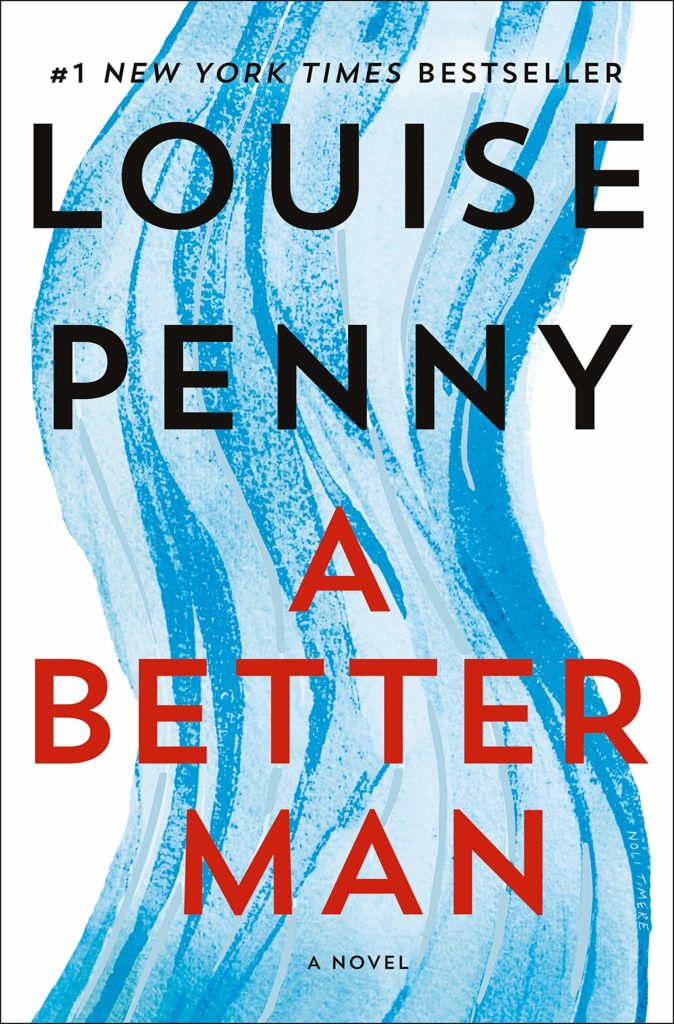
A Better Man by Louise Penny

A Better Man is the latest installment in Ms. Penny’s bestselling mystery series. If by chance, you’ve been banished in Siberia and aren’t aware of this series, please drop everything and start with her first Still Life – you should read them in order.

Don’t start with this one as you’ll just get confused. A Better Man, uses many references from her previous novels.

It’s Gamache’s first day back as head of the Surete’s homicide department, a job he temporarily shares with his second-in-command, and son-in-law, Jean-Guy Beauvoir. There’s massive flooding in Quebec and the mystery begins when a father reports his daughter missing. Sadly, the daughter is found dead in the flood waters and it becomes clear that she had been abused by her husband and was also pregnant. So, of course the main suspect is this abusive husband…but perhaps not.

Ms. Penny takes us through plot twists and sub plots, scattering suspects as we go along. There are surprising dynamics that lead to the crime(s) committed here — from the psychology of spousal abuse — to the Surete’s highly questionable manipulation of a suspect’s social media account.

I always look forward to the cozy time back in the village of Three Pines, where the characters (and the reader) can gather sustenance from the community. But we only get short respites in the village and its characters. Clara deals with harsh critique of her latest art — all brutally served up via social media. Ruth meddles where she shouldn’t and Myrna has a sweetheart.

I will take a short break here to quote the New York Times on this book:

“a constantly surprising series that deepens and darkens as it evolves”

And there it is – A Better Man (like her previous two installments) is deeper and darker and for this reader that takes some getting used to. 

 Ms. Penny’s still writes beautifully and deftly takes the story in multiple directions, always building the tension.  But it is darker world for Three Pines and our beloved characters. 

Spousal abuse is only part of the dark story — Gamache’s past still haunts him and his career. Social media is used to hurt and maim. Global warming is causing unprecedented flooding. And is Gamache or Jean Guy the better man?

Yes, the series is turning darker, more brooding, but perhaps just more reflective of today’s societal influences. I still maintain that Ms. Penny delivers some of the best mystery writing out there.

And, true to form I found myself furiously caught up in A Better Man with much late night page turning.

Ms. Penny, I’m your biggest fan.

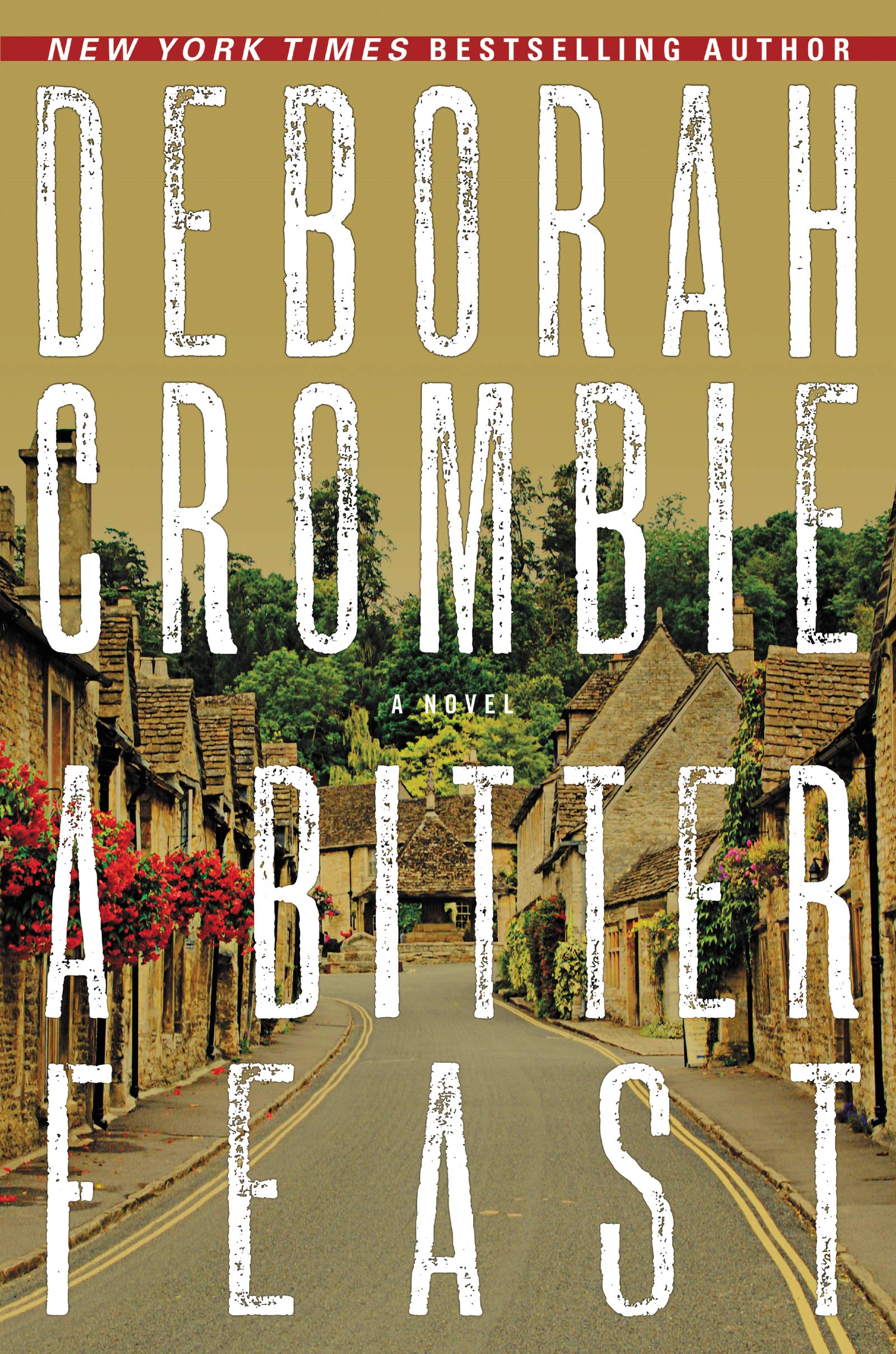
A Bitter Feast by Deborah Crombie

It’s a well known Book Barmy fact that Deborah Crombie writes one of my favorite mystery series.  My gushing affection for her novels is documented in past posts HERE.

This rainy morning with a nice cup of tea, I finished the latest, just released series installment — A Bitter Feast.

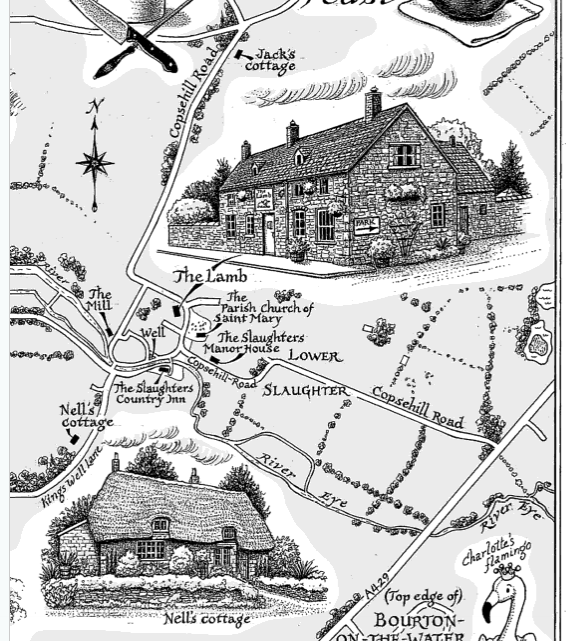
As the book opens, Ms. Crombie takes the London-based police team of Duncan Kincaid and Gemma James on an idyllic escape to the English Cotswolds.  With their children and fellow police detective, Doug, all are invited to spend a restful weekend in the village of Lower Slaughter. 

A village called Slaughter? Well played Ms. Crombie — what could possibly go wrong?   Actually it’s a double entendre — Slaughter comes from the Old English word ‘slothre’ meaning muddy place.  Just part of the wonderfully sly writing style Ms. Crombie brings to all her books.

A Bitter Feast starts off slowly with all the elements of a cozy mystery –  a picturesque village, a warm English pub, and the lovely manor house to which Melody has invited her fellow police crowd to stay for the weekend.  The manor house has a spectacular garden, the pub boasts a wonderful chef, and there’s a sense of tranquility around Duncan and Gemma’s getaway to the Cotswolds.

But, as to be expected when there’s an assembly of police officers — their restful holiday soon goes awry with car wrecks, murders, poisonings, and illicit village affairs.

But, here’s what separates A Bitter Feast (and all Ms. Crombie’s novels) from traditional cozy mysteries — her sly (there’s that word again) introduction of simple details that become vital later in the story.  Only later does the reader realize that clues were being scattered while the characters stroll in the garden or are enjoying a delicious meal. 

As always, Ms. Crombie’s characters are well-developed, as they have been over the course of the series. All my favorite characters are here, I know them well.  But interestingly, Ms. Crombie puts both Duncan and Gemma somewhat in the background (after all they’re on holiday remember?) and lets others to take the lead in the investigations of the crimes befalling Lower Slaughter.  Melody’s upper class background comes into full spotlight as we are introduced to her titled parents and manor house.  Especially interesting was to see Duncan’s 15 year old Kit acting well beyond his years and stepping into adulthood.

After the somewhat bleak tone of her previous novel, A Bitter Feast has a more cheerful atmosphere — the murders and poisonings notwithstanding.  No seriously, it was lovely to join everyone at cozy pub in the evenings, to partake in a charity luncheon on the magnificent grounds of the manor house, and to look on as children played with dogs on the lawns.

But don’t be seduced by the lovely setting with its quaint cottages and gardens.  There is always a overshadowing — a quaint and cheerful cottage during the daylight becomes creepy and sinister at night. A meticulously maintained showstopper garden could be the source for a poisonous substance.  Nothing is as is a idyllic as it seems.

The food — oh did I mention the food?  The food dishes are described in luscious detail and the inside of the house restaurant scenes are fascinating.  Ms. Crombie has long said she chose England as her setting, so she could go every year to do research for her series.  In A Bitter Feast, she obviously took much pleasure in exploring food and the restaurant scene.  The descriptions of how a Michelin star restaurant menu is created, one painstaking dish at a time, is some of her best writing ever.

So entranced by the setting, I Googled Lower Slaughter and here’s a video of its beauty HERE.

A Bitter Feast is a purely wonderful, chunky book and well worth buying in hardcover right now.  As is custom, Ms. Crombie and her publishers include a hand drawn map of the setting on the flyleaf (hardcover only – worth the price alone).  Here’s just a sample:


As you can tell, I highly recommend any of Ms. Crombie’s series, but A Bitter Feast has to be one of my favorites so far.

Now comes the hard part – waiting for the next one. 

Many thanks to Harper Collins for providing an advanced readers copy.


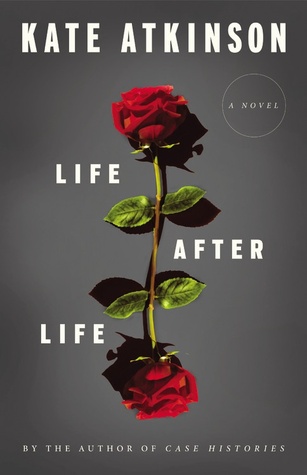
Life After Life by Kate Atkinson

My other corking* good vacation book was Life After Life by Kate Atkinson.

Ursula Todd is born on a stormy winter night in 1911. Because of the snow storm the midwife doesn’t make it on time to deliver the baby, so the baby dies. End of story.

Not quite.

Life After Life, as the title implies, is all about  ‘do overs’.  Ursula is born again and this time she survives. But only for a few days. So the ‘do over’ button is pressed again. And again, and again, and again. And in a real twist, these lives aren’t at all  linear.  In one life Ursula may live into her twenties, the next life, she only lives until her teens. Then, we’re moved forward to another life when she’s in her thirties. Then, we go back to when she’s still a schoolgirl. 

Each time Ursula retains something from her prior life, a forewarning, something that could change the future outcome of events, perhaps even history.  We are introduced to characters who go unexplained until later.  Little images and scenes come back later with greater meaning and you nod your head as you recognize the significance after all.

Crazy and confusing right? 

Trust me it’s actually not. 

Yes, Life After Life is an unusual book, and if you’re like me it will take a few chapters to get into the perplexing style — but once once you settle in — it’s an amazing read.   You have to be willing to recalibrate and I often had to flip back to see when and where I was (For that reason alone, I recommend reading this in physical book form, it would be hard to navigate in e-book format).  Once the pace of the book becomes familiar, you won’t be able to put it down. 

Ms. Atkinson is a sophisticated writer with an impressive vocabulary and uses bits of Latin, French phrases, and entire paragraphs written in German (sometimes loosely translated, sometimes not at all).  She also references obscure books and quotes philosophers such as Nietzsche and Camus.  But please don’t let this dissuade you — Life After Life is not overly intellectual — trust me I got most of it and I don’t have a PhD — just a good dictionary.  Here’s an example (I’ve provided the definition):

Time isn’t circular,’ she said to Dr. Kellet.  ‘It’s like a … palimpsest.
‘Oh dear,’ he said. ‘That sounds vexing.’
‘And memories are sometimes in the future.’

 Ahh, I can hear you saying that’s the oldest premise ever (thinking Groundhog Day aren’t you?), but trust me dear Barmy readers, Ms. Atkinson’s imagination and creativity takes Life After Life to a whole new level.  She goes an unusual route to show that our character and choices don’t matter much either way. At times, Ursula gets killed in the exact same place and in the same way whether she’s a coward or a hero; a British secretary or high level civil servant; or even a German hausfrau. 

There is an impending feeling of dread as we wait to see what happens next to poor Ursula, but this is interspersed with humor and tenderness — mixing poignancy with a wry insights.  What I found most fascinating was this book took me everywhere from country village life, to 1960’s London, the Blitz and even (and somewhat unbelievably) Hitler’s Berchtesgaden.

There is literary genius in the manipulated narrative, but at its heart, Life After Life is simply a wonderful story, with many, many layers, tipped upside down and strewn about.  This book still has me thinking about possibilities and the role both choice and chance play in our lives.

In true appreciation, this goes on the keeper shelf for a second read.

—————————————————————————————————————————-

*Corking:  A British term:  extremely fine —often used as an intensive, especially before good — I had a corking good time.

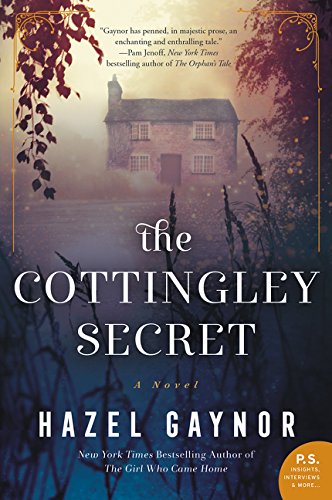
The Cottingley Secret by Hazel Gaynor

Hello all.

I read two corking vacation books – both were long, involved, and wonderful.

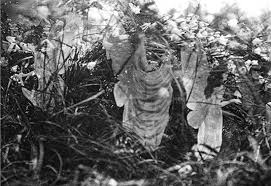
The first, The Cottingley Secret is a rather clever fictional take on the famous true story of the Cottingley fairies. Back in 1917, when photography was still fairly basic and people were less cynical, two young girls took photos of fairies they claimed played at the bottom of their garden.  The public was fascinated and divided on whether the photos were real or a hoax.

The novel opens in  2017 with Olivia who works as a bookbinder in London and is engaged to a man she knows is not right for her. After her mother died when Olivia was young, she was raised by her grandparents in Ireland where her grandfather owned a secondhand bookshop.  Now her beloved grandfather has died, leaving her the family cottage and his beloved shop.  She heads back to Ireland to see to the bookshop and check on her grandmother, who’s living in an assisted living home, suffering from Alzheimer’s.

Just before her grandfather died, he sent her a manuscript — ‘Notes On a Fairy Tale’  by Frances Griffiths — a family heirloom that’s been handed down to the women in her family over the years.  Olivia pulls it out to take with her to Ireland and begins reading.

Via the manuscript, we go back in time and learn about nine-year-old Frances Griffiths and her mother—both newly arrived in the UK from South Africa in 1917.  They are staying with Frances’ aunt and 16 year old cousin Elise in the village of Cottingley in West Yorkshire, while Frances’ father is fighting in WWI.

The cousins played together beside the beck (stream) at the bottom of the garden, much to both mother’s annoyance, because they often came back with muddy feet and wet clothes. Frances and Elsie said they only went to the beck to see the fairies:

I know that the best time to see them is in that perfect hour before sunset when the sun sinks low on the horizon like a ripe peach and sends shafts of gold bursting through the trees. The ‘in between.’ I call it. No longer day, not yet night; some other place and time when magic hangs in the air and the light plays tricks on the eye. You might easily miss the flash of violet and emerald, but I see their misty forms among the flowers and leaves. I know my patience will be rewarded if I watch and listen. If I believe.

To try an prove their story, Elsie borrows her father’s camera.  The resulting photographs allegedly captured images of fairies and the girls think the matter settled within the family.  But a few years later, the photos come to the attention of author, Sir Arthur Conan Doyle, who featured the story in a 1920 issue of  ‘The Strand Magazine’.  Because the renowned Arthur Conan Doyle was convinced that the photographs were proof that fairies existed, the story gained wide coverage and interest.   The girls are thrust into the limelight and the photos are scrutinized and tested  — experts hoping to prove a hoax.

Meanwhile we follow Olivia as she starts to appreciate the slower pace of the seaside village and begins to feel at home. The bookshop has brought back wonderful memories and she is rediscovers her love of reading books, not just binding them.  The manuscript has given her a magical piece of history that connects the Cottingley fairy photographs to the mother she lost when she was young – possibly with a hint of fairy magic.  She begins to reassess her life and decides to stay and manage the bookstore, unable to bring herself to sell it — also she has made friends with a widow and his young daughter — who happily believes in fairies.   Olivia herself is experiencing some strange occurrences with fairies appearing in her dreams and unexplained flowers being left by her bed.

I won’t give away any more of the plot but I have since done a few Google searches on the Cottingley fairies. It’s an amazing story that captured the public’s imagination for decades.  After years of Frances and Elsie sticking to their story of the fairy photographs being real, they finally revealed in the 1970’s that the photos were faked — they used cut out paintings of fairies drawn by Elsie and used hat pins to pin them to the ground.  All except for the last photo which they’ve claimed was the only real photograph out of all of the pictures they took over the years.

Here are the original photographs from 1917:


And the one photo claimed to be of real fairies.


With today’s photo-shopped images it is hard to believe that once people saw photos as truth.. But then again, this was a time right after WWI when people wanted desperately to believe in the possibility of fairies and spirits

The Cottingley Secret is a book of imagination and make-believe made even more fascinating because it’s based on the true tale behind two young girls and their fairy friends.  At the end of the book, Ms. Gaynor shows us the actual photos with her own author narrative and there’s even a letter from Frances Griffiths’ daughter – delightful.

I finished this book with a smile on my face.

I’ll close with my favorite quote from the book:

“There is more to every photograph than what we see-more to the story than the one the camera captures on the plate. You have to look behind the picture to discover the truth.”


Advanced readers copy provided by Harper Collins via LibraryThing.

Thank you

A trip to Maine

We had quite the heatwave here a couple of weeks ago.  I escaped the heat by taking a short trip to Maine.  Not really.  I dragged out our only fan, lounged in the cooler downstairs, and read two books set in Maine. 


One takes place during a blizzard and the other in a small fictional village. Both were page turners and both helped me forget the heat.


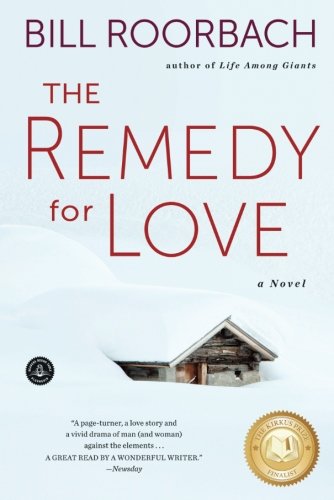
The Remedy for Love

by Bill Roorbach

This book has been on my shelves forever and with the snowbound cover and this little blurb on the back, I was ready to dive in and cool off:

Snowbound in Maine, two strangers struggle to survive — fighting, flirting, baring secrets.  Their sexy, snappy dialogue will keep you racing through. (People)

The state of Maine is predicted to be hit with “the storm of the century.” Small-town attorney Eric stops by the grocery store to stock up on some high-end provisions (fancy cheese, good wine, etc.) in preparation for a visit from his estranged wife. He finds himself in line behind Danielle, an unkempt woman he assumes to be homeless, who is having trouble coming up with all of the money she needs to buy her groceries. Rather than cause a scene, he pays the difference, then offers her a ride.

When they arrive at the fishing cabin where Danielle has been staying, Eric becomes increasingly concerned. This cabin is not winterized, Danielle needs water and firewood, not to mention more food than she had bought at the store.  And while she’s willing to accept a bit of his help, she’s more than ready to be left alone. But when Eric hikes back out to the road, he finds his car towed and himself stranded.  Without a car or a cell phone, the only place he can go is back to Danielle’s cabin—and she’s not a bit happy to see him again.

The two forge a prickly agreement to ride it out together. But, as the storm unleashes its fury, Danielle and Eric aren’t sure if sticking together is the best idea.  These are intimate strangers having intimate conversations to pass the time.   Lies are told, truths are revealed, and emotional wounds are opened.  The storm both outside and inside the cabin continues —  they banter, eat Eric’s fine cooking, share Danielle’s favorite Pop tarts, and try to stay warm, clean, and dry.  But questions arise  — is Danielle unstable and possibly dangerous? Is Eric the victim he has painted himself out to be?  It’s not clear which of these awkward misfits needs rescuing.

Some parts dragged for me — especially when we are presented with the details of Eric’s failed marriage and his soon-to-be ex-wife.  There are also some parts that strain believably, but on the whole I found Remedy for Love gripping.

This is no “two people caught in a blizzard” novel, this is a story of self-discovery, coping with the past, and perhaps even finding a future.  The author’s note at the end of the novel tells how three actual events were the genesis for this novel.


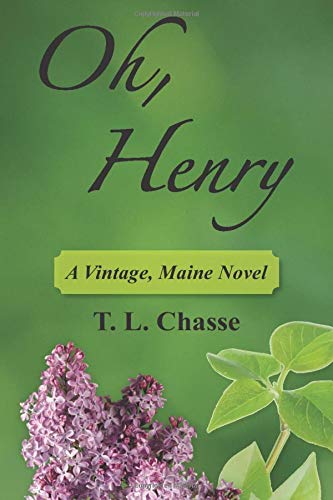
Oh, Henry

A Vintage Maine Novel

by T. L. Chasse


You may remember THIS POST where I discovered Ms. Chasse, a self-published writer who is happily crafting a series set in the fictional village of Vintage, Maine. The author kindly granted me a copy of her newest in the series.  So, for the second day of the heatwave, I opened the book to visit this verdant and more temperate village in Northern Maine.

Henry Titan is a young man who has Achondroplasia (dwarfism) and is living with his parents and sister.  He doesn’t let his disability get in his way, he’s happy, has a good job, enjoys watching baseball and playing video games.  But then one evening, after he’s been laid off from his job, he accidentally discovers he was adopted.  He learns he was left as a newborn outside the hospital in in small town of Vintage, Maine.   Angry with his mother for hiding the truth, Henry decides to go to Vintage to locate his birth mother.

He finds an apartment, secures a job as a janitor at the hospital, and while working at the hospital tries to find out if anyone knows about a baby left there 21 years ago.  He starts to adapt to this small town, its scandals, gossip and microscopic view of residents.  Henry makes friends, falls for a girl, eats a great deal of pizza, and gets involved in a very surprising love triangle.

He finds, despite the fact that his dwarfism makes him noticeable (and talked about), Vintage accepts him into their community. Henry is dealt with a curveball as he learns about his birth and there’s an surprise twist which I hadn’t figured out but had me chuckling. But in the end, Henry gets his answers – some very unexpected.

Just as in her previous installment, Ms. Chasse delights with her setting and characters.  And while there is a bit of over writing and excess detail,  which slows the pacing — she has a bullseye lens on small towns and their inhabitants’  kindness and idiosyncrasies.  Oh, Henry transported me to Vintage, Maine and it was just the escape I needed.

Oh, Henry is very much worth seeking out.  You can purchase it here on Amazon.  Author interview HERE

Get it?  Oh, Henry not to be confused with this GUY

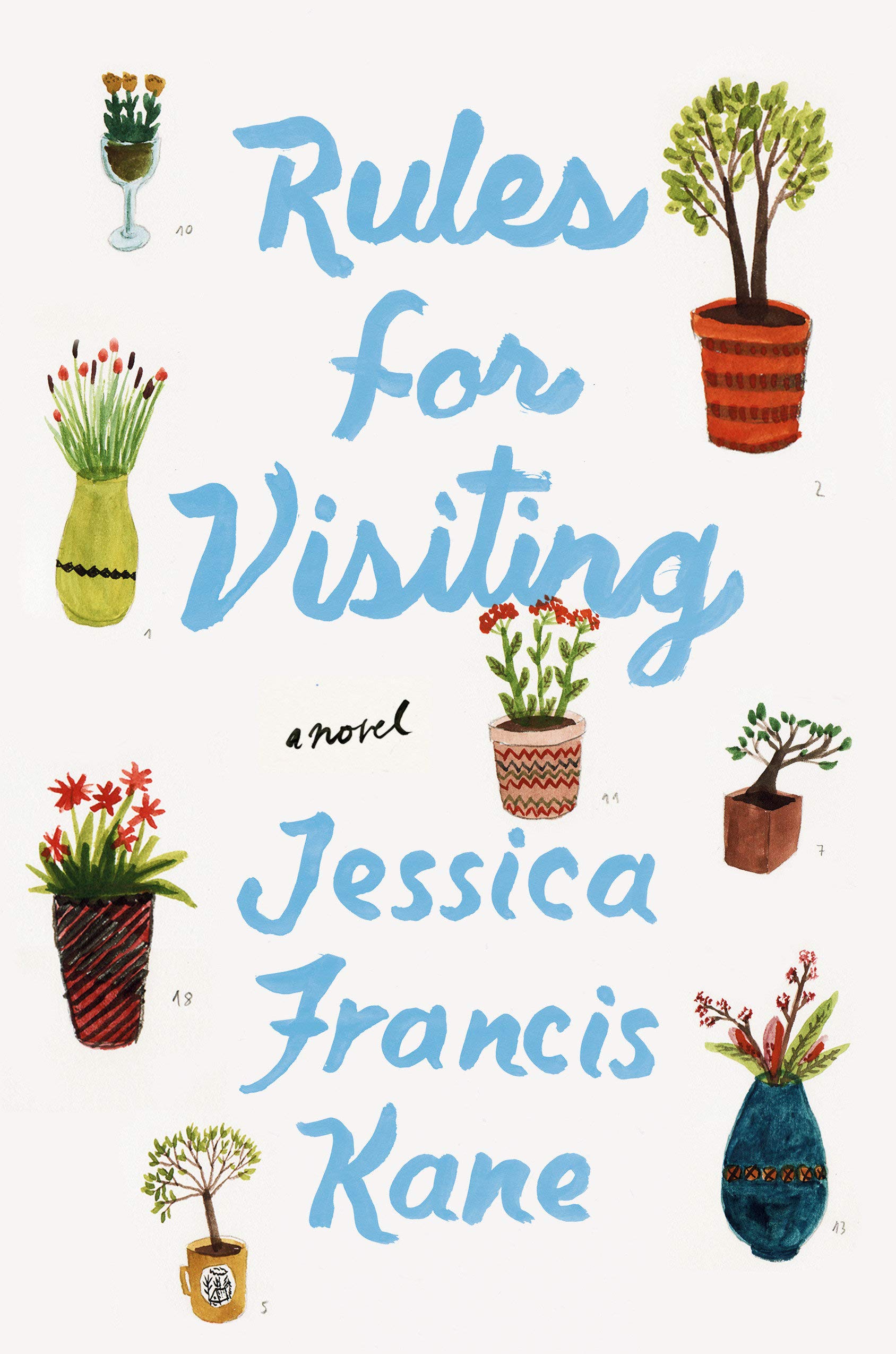
Rules for Visiting by Jessica Francis Kane

I cherish my friends and firmly believe that friendship is one of the best things about living. But, I also recognize that friendship takes work.  It requires one to stay in touch, to be proactive, to plan that lunch date, and to go out when you’d rather stay home and read a book.  I’m not perfect, some friends have drifted away — others, I don’t see enough and I sometimes wonder if I prefer the concept of friendship to the actual participation.

With that preamble, you’ll see why I found Rules for Visiting immediately intriguing.

Here is May Attaway, a middle-aged landscape gardener who is introverted, socially awkward, and living with her father and a cat. She and her father live in a small town and have their routines.  May and her father are equally unconventional and often cranky, but try not to be:

My father and I aren’t great at doing things at the same time as other people:  planting on the last frost date, reading the latest bestseller, eating turkey [at holidays].  I don’t know if it’s chronic procrastination or a dislike of team sports.

May planted a Yew tree on the university grounds where she is employed as a landscape gardener.  She carefully started this Yew tree with a cutting from a famous 3,000 year old specimen in Scotland and has carefully tended it for years.   The beautiful tree inspired one of the university’s professors to write an award-winning poem which has brought the university many accolades. To reward May for her part in cultivating the tree, the university grants her a month of paid vacation.

May takes her time and many pages to figure out what she wants to do with this gift of unscheduled time.  She reads an article about the death of an author, who sadly died while on tour promoting her first novel.  The outpouring of grief from her friends was overwhelming and shared on a webpage which May obsessively pours through.  People shared beautiful stories about Amber and it wasn’t her book or her writing, so much as her ability make people feel good being around her — to be a good friend:

What was obvious in post after post was that Amber had a talent for friendship, which, I suddenly understood, was something that one could be good at, like cooking or singing.  You could be good at being a friend, and no sooner had I had the thought, than I knew I was not.

Inspired to learn to be a friend, May decides to visit four friends from her past.  While she has uncertainties about these friends and her friendships with them — armed with hostess gifts, Emily Post’s guide to etiquette, and her rolling suitcase named Grendel — she sets off.

Her journey is filled with contemplation and mental journeys into the past.  Her mother was a recluse and, as May herself is venturing into this uncomfortable territory, she ponders the plight (and perhaps the advantages) of being sequestered:

People feel sorry for the housebound, but it can be a position of strength, a refusal to meet the world on its terms… The recluse decides when and to whom she will speak, access is limited.

After perusing Emily Post, May makes some rules for her visits, and shares some delightful musings about visiting.  She recounts that Hans Christian Anderson ruined his friendship with Charles Dickens by staying with him three weeks longer than planned.  And these great quotes:

It was a delightful visit — perfect, in being much too short (Jane Austen)

Fish and visitors stink in three days. (Benjamin Franklin)

I won’t go into the details of her visits, except to say that she meets with perfectly appointed guest rooms with matching guest towels and planned itineraries, often including tours of local gardens — afterwards followed by the host’s Facebook posts about her visit.  May muses on this:

…one of the questions I most wanted to ask my friends was: Can I see an average day in your life right now? A real day, not one curated for social media or filled with the best activities to entertain a visitor. On the one hand, it’s a simple question. On the other, it’s almost too intimate. And it might be impossible, because the presence of a visitor changes a day, no matter how close the friends are.

But May also gets to see her friends’ troubles — she wipes some tears, deals with precocious children, and receives unexpected affection.  Her friends aren’t perfect and can’t possibly meet May’s expectations.  But, she soon realizes one of the most important facets of friendship – overlooking the annoyances, the sharp edges, the unintended hurts — and learns to enjoy these friends just as they are — themselves.

This novel is not only about friendship and families — but also plants. Ms. Kane uses botanical interludes throughout the book. Delightful sketches of trees introduce each section with Latin names given in parentheses. These plant narratives provide cogent analogies between human and plant behavior.  These were entertaining for me, but may not be interesting for non-plant people.

I thoroughly enjoyed Rules for Visiting — it’s a quiet gem of a novel about a complex, wry, yet insecure woman in pursuit of friendship and human connection.  And this reader came away with a renewed sense of the importance of friendships — and gently reminded they require attention, forgiveness, risk, vulnerability —  but mostly love.

In the last chapter we are given May’s Rules for Visiting:

1. Do not arrive telling stories about the difficulties of your trip.
2. Bring a gift.
3. Make your bed and open the curtains.
4. Help in the kitchen, if you’re wanted.
5. Unless you are very good with children, wait until you hear at least one adult moving around before getting up in the morning.
6. Don’t feed the pets.
7. Don’t sit in your host’s place.
8. If you break something, admit it.
9. Say goodnight before bed.
10. Always send a thank-you note.

An advanced readers copy was provided by Penguin/Random House.

A little romance

I don’t often read romance novels — at least not intentionally, but this spring I happened to dive into a couple of romantic tales which turned out to be praise-worthy, so here we go

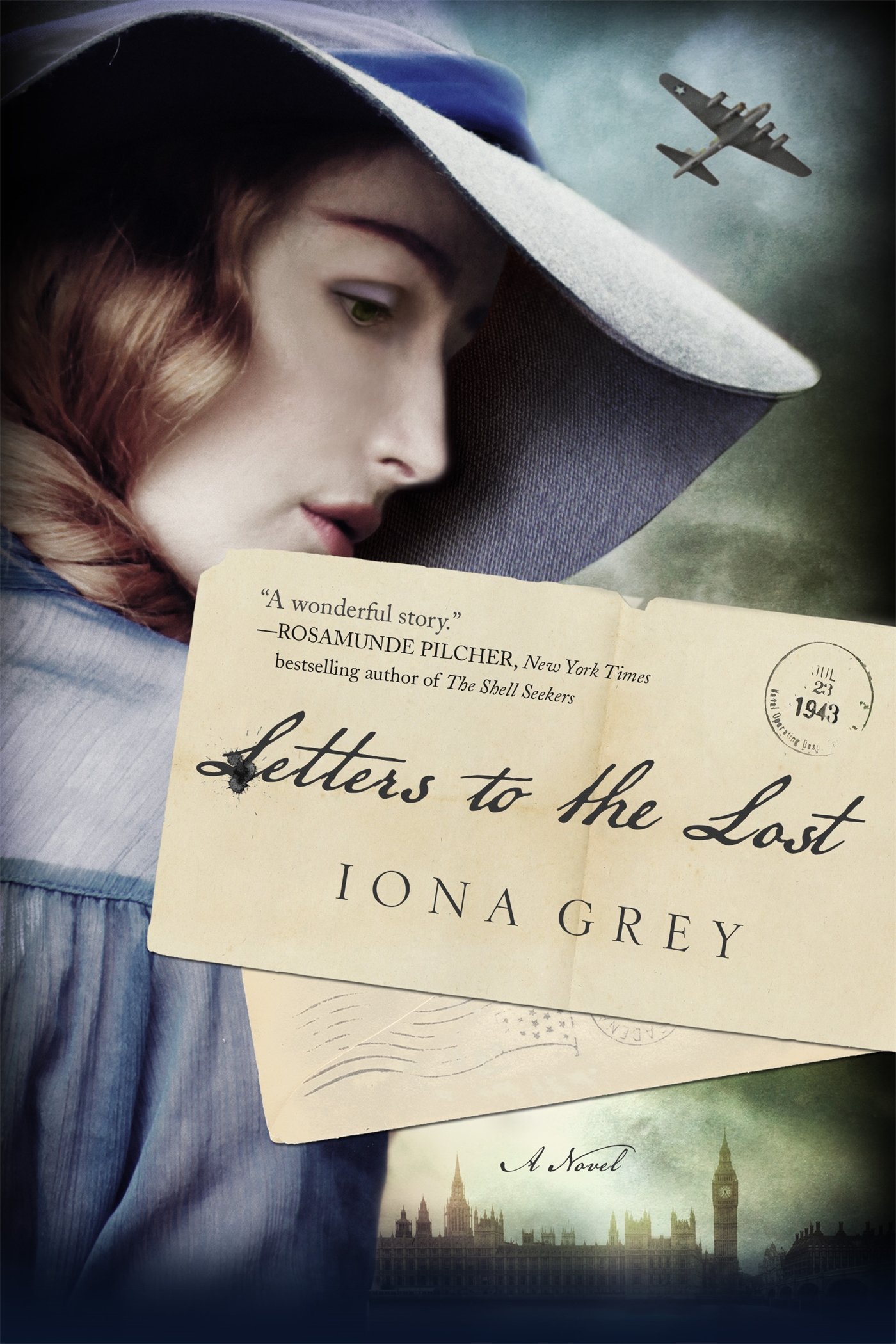
Letters to the Lost by Iona Grey

Here at Book Barmy, I’m often asked to review debut novels.  This always presents a quandary, as many established, award winning authors and their books await me.  But I admire any first time author who has the talent and perseverance to complete a novel – not to mention, weathering the gauntlet to publication.  So I’ll give these first novels a good 50 pages to determine if I’ll carry on.  Sorry to say, many don’t pass the 50 page test and I sadly put them aside.

Not only did Letters to the Lost pass my test, I was instantly sucked into the story from the first page and, in the end, was quite bowled over.

Normally, I try not to appropriate a book’s publicity blurb,  but will make an exception — just read this:

Late on a frozen February evening, a young woman is running through the streets of London. Having fled from her abusive boyfriend and with nowhere to go, Jess stumbles onto a forgotten lane where a small, clearly vacant old house offers her best chance of shelter for the night. The next morning, a mysterious letter arrives and when she can’t help but open it, she finds herself drawn inexorably into the story of two lovers from another time.

In London 1943, Stella meets Dan, a US airman, quite by accident, but there is no denying the impossible, unstoppable attraction that draws them together. Dan is a B-17 pilot flying his bomber into Europe from a British airbase; his odds of survival are one in five. In the midst of such uncertainty, the one thing they hold onto is the letters they write to each other. Fate is unkind and they are separated by decades and continents.

In the present, Jess becomes determined to find out what happened to them. Her hope – inspired by a love so powerful it spans a lifetime – will lead her to find a startling redemption in her own life in this powerfully moving novel.

Not another dual-timeline story I thought, but Letters to the Lost is nicely constructed.  The story seamlessly alternates between the homeless, frightened Jess trying to re-build her life, while hiding (squatting?) in her borrowed house and the romance of Dan and Stella during WWII — and is mostly told through their letters  (I love me a book told through letters.)

During WWII, Stella’s marriage has proven to be loveless and she falls hard for Dan, an American pilot.  Their affair and secret rendezvous take place in the abandoned house where Jess is hiding in present day.  Jess opens a letter that arrives in the mail slot from Dan, now elderly and dying in America.  He is writing to the last address he had for Stella in hopes of finding her again.  This discovery leads to Jess finding the letters Dan wrote to Stella.  Thus starts the journey that grabbed me, spanning sixty years and over 500 pages.

Stella’s story was the more fascinating for me, ranging from the frightening blackouts and bombs falling on London.  But there are also church fetes, arguments over scones, the effects of rationing, and the luxury of canned peaches.

Jess modern story is bit more contrived.  Will, working for a company that finds lost heirs, uses the company’s keys to enter the house in order to find any inheritance papers.  He discovers Jess hiding in the house and after a few strange conversations agrees to let her continue to hide in the house.  Together Jess and Will try to solve the mystery of what happened to Stella and grow closer and closer.  As Jess reads the letters we read them with her, the gaps are filled by our visits to Stella’s world, and the story unfolds for both worlds.

Letters to the Lost is not a perfect novel, but its shortcomings are overshadowed by its many strengths. The ending left me both choked up and melancholy.  The characters stayed with me long after I finished.  I must admit it took me a while to recover from this engrossing read.

An digital advanced readers copy was kindly provided by St. Martin’s Press/Griffin via Netgalley


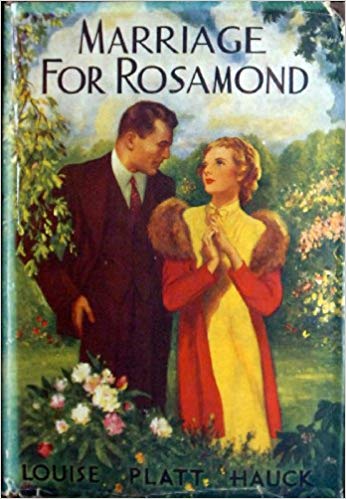
Marriage for Rosamond by Louise Platt Hauck

As Book Barmy fans already know, I volunteer at the Friends of the Library Bookstore…and every so often we get vintage books with delightful covers. Like Marriage for Rosamond – just look at the cover.  Can you blame me for wanting it?  For five dollars I took this home. (Volunteering yet still buying books — this is why Husband has gray hair.)

Marriage for Rosamond was written in 1937 and published by Madison Square Books which sports the following marketing blurb on the back with a listing of their titles:

Books for every taste and mood — outstanding novels, delightful romances, thrilling mysteries, two-gun Westerns.

I closed my eyes and pictured these books on musty bookshelves in knotty pine lake homes, with comfortably shabby furniture, porch swings, and long afternoons reading these novels in the shade. 


Turns out this was one of their romances — the chick-lit of the 1930’s.

The plot revolves around the innocent but privileged Rosamond who falls in love with Jim.  But in this period piece they don’t just fall in love they ‘woo’, for pages and pages.  I almost gave up but when they get married and Rosamond moves to Jim’s grand home in Kansas City the plot actually got more interesting and there were some simple, but unforeseen developments.  Turns out Jim has a sickly brother Rich, who Jim dotes upon.  Rich moves into their house and while he doesn’t seem that ill, he has trouble recovering from small health setbacks.  Rosamond has mixed feelings, recognizing that Jim is being manipulated — but she decides to stick with her role as a loving and devoted wife:

The young wife learned hard lessons during these weeks.  She learned to sit quietly by while Jim talked of Rich; his accident, the possible weakening of his reserve strength, his childhood illnesses.  She learn to eat her meals with Jim sunk into depressed silence or starting up when one of the nurses came downstairs.  She learned — and this was the bitterest lesson of all! — that she did not count at all with Jim, at least while Rich was so ill.

When Rosamond is called upon to be Rich’s full time caregiver — the situation becomes intolerable.  Rosamond leaves, fleeing back to her devoted grandfather and their vast family home.  All seems over with the marriage — but in the end the story revolves around to a satisfying ending.

What I found most interesting about Marriage for Rosamond was the author’s writing style — typical of the period.  The literate vocabulary was a joy with proper usage of words such as ~~ benighted, quiddity, indubitably and vivant.  And the often sentimental passages, which I found lovely, old-fashioned and somehow touching:

She dropped a velvet cheek against his hand…

Jim was too close to the weaving to see the pattern…

For me, this romantic novel was a master-class in 1930’s American domestic drama and while it was sometimes over-dramatic, it was never overwrought.  I had a grand time reading Marriage for Rosamond.