-
Rose Barmy
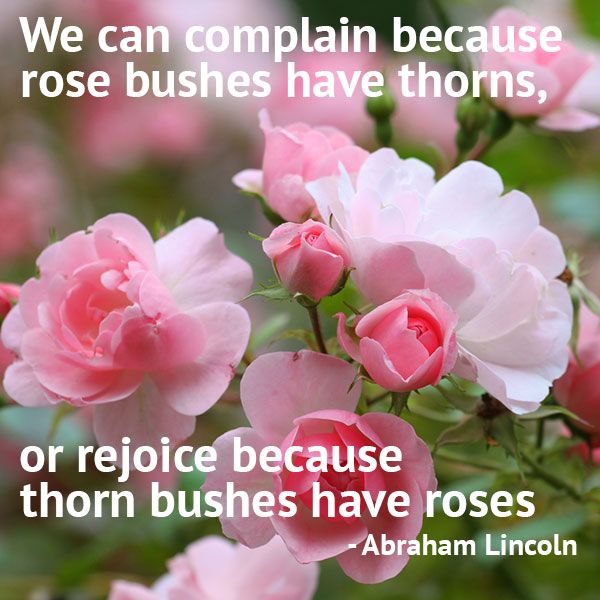
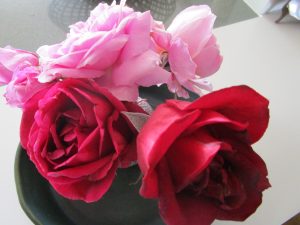
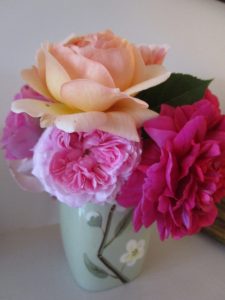
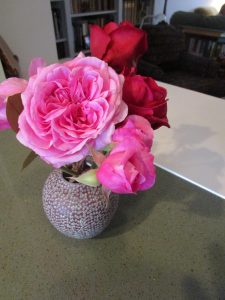
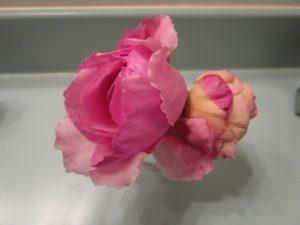
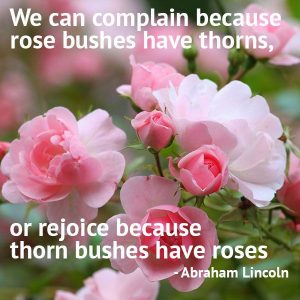
I’ve abandoned my books, my roses have beckoned me out to the garden most every day.
Because of our winter and spring rains – my roses are at their absolute finest.
So, I’ll take this opportunity to show you (and document for myself) their splendor ~~ the best blooming in years.
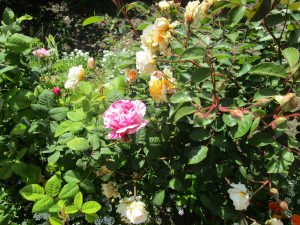

(Note: the back garden is quite steep so the second photo is as you walk down the stone path.)
Then I spend much happy time arranging bouquets all over the house…even the bathroom ~~
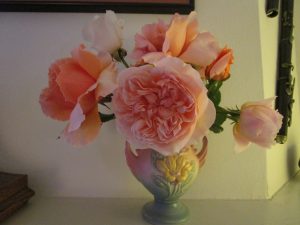
Then, as the petals fall, I collect them for drying and ultimately, potpourri.



The house smells wonderful.
-
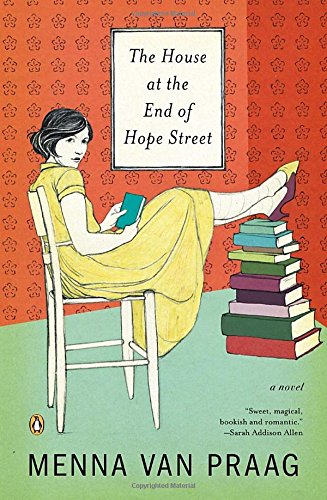
The House at the End of Hope Street by Menna Van Praag
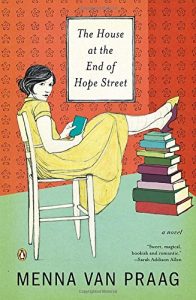 I was recently surprised to enjoy THIS book about reincarnation. Well, as if on a mission from another universe, another unusual book entered my orbit.
Really liking the cover, I opened this book on my Kindle, and before I knew it, I had read two chapters.
Magic, fantasy – not usually my cup of tea (true confession time, I only made through the first Harry Potter book), but I kept reading well into the night and finished The House at the End of Hope Street the very next evening.
When Alba, an extraordinarily smart woman experiences what she believes is a career-ending event, she wanders the streets with no idea what should happen next. That’s when a large Victorian house pops up out of nowhere, covered in fragrant wisteria and with a sense calm that emanates from within.
Peggy, the caretaker of the house, appears to expect Alba. And oh how the house welcomes her. In this house, the floors are soft under foot, the walls breathe and hug you, and one sees colors when words are spoken. Important notes flutter down from the ceilings for the intended recipient, and the framed portraits of past residents of the house, such as Agatha Christie, George Eliot, and Virginia Woolf chat away, giving advice and counsel.
Turns out this magical house has been rescuing extraordinary women, for 200 years. And each woman, including Alba, have 99 nights to stay in the house and turn their lives around.
“If you stay I can promise you this. This house may not give you what you want, but it will give you what you need. And the event that brought you here, the thing you think is the worst thing that’s ever happened? When you leave, you’ll realize it was the very best thing of all.”
Peggy, the 80+ caretaker of this magical house, is my favorite character. She lives in her own private tower of the house, entertains a mysterious lover every Sunday, eats cake for breakfast, and has an invisible cat named Mog.
We also learn the stories of Carmen and Greer, the other residents of the house, who also arrived heartbroken, hopeless, not knowing what to do:
“[each woman] must be allowed to feel her grief, must dive headlong into despair, before she can emerge again, her spirit richer and deeper than before”
One would think that Ms. Van Praag would have trouble creating believable characters in and among all this hocus pocus magic but each character is rendered with realistic layers of character flaws and redeeming talents.
But my favorite part of this book was the rooms that magically fill with objects to suit the occupant. Greer loves clothes so her room is filled with an amazing wardrobe. Alba loves books so her room is filled with the books the house thinks she should read. What’s not to like about that fantasy?
I felt quite buoyed upon finishing this book, believing the magic — that problems can be surmounted, that heartbreak can be lessened, and troubles put in their proper place.
Magic sure, but it’s Magically Delicious
A digital advanced readers copy was provided by Penguin Books via Netgalley.
-
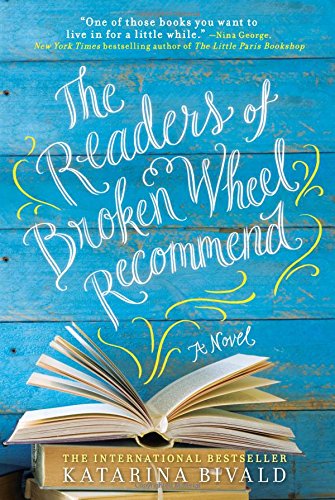
The Readers of Broken Wheel Recommend by Katrina Bivald
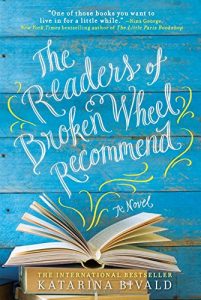
I have enjoyed many books about reading, bookshops and book lovers. So when The Readers of Broken Wheel Recommend was compared to The Guernsey Literary & Potato Peel Pie Society and The Storied Life of A.J. Fikry — I had high hopes.
In this novel Sara, a Swedish woman, comes to Broken Wheel, Iowa to visit her pen pal and fellow book lover, Amy. But when she arrives in this rundown small town she finds that her elderly friend recently died and left instructions for Sara to stay in her house as long as she wants. Sara, a devoted bookworm tries to hide herself in the books from Amy’s library but soon gets drawn into the town and the lives of its local inhabitants — a motley crew of misfits. These normally insular Iowans gradually warm up to Sara and make her a part of their town. She opens a bookshop and recommends the perfect reads for her new friends and neighbors. Much of the story is about the effect Sara and her reading recommendations have on the inhabitants of Broken Wheel.
The book is interspersed with the past correspondence between Amy and Sara and I really wanted these letters to tell more about their relationship and shared love of reading. But, sadly the letters are stilted and reveal little about either Amy or Sara.
The small saving grace in The Readers of Broken Wheel Recommend is Sara’s love for books — I had to smile, as Sara explains the difference between the smell of a paperback and that of a hardback — a true book lover.
I also nodded in recognition at this description of Sara’s school experience:
“Others might have found themselves stuck in a tired, old high school in Haninge, but she had been a geisha in Japan, walked along with China’s last empress through the claustrophobic, closed off rooms of the Forbidden City, grown up with Anne and the others in Green Gables, gone through her fair share of murder, and loved and lost over and over again.”
This is a sweet but predictable (and often trite) story of friendship, small-town America, and the love of reading and books. It tries to be life affirming, but instead, wanders into the clichéd.
Reading The Readers of Broken Wheel Recommend was an enjoyable, if bland, experience.
I just wished it could have been better.
A digital advanced readers copy was provided by Sourcebooks Landmark via Netgalley.
-
The good life
Husband and I aren’t very materialistic, we live modestly, don’t drive a fancy car, have but one television, and are known (and teased) for being quite frugal. “No, we didn’t get your text, we don’t have smart phones…really.”
But we do succumb to a few indulgences – books (natch), good food, wine ~~ and especially travel.
On a whim, and with a Groupon deal in hand (see, thrifty), last week we took off for a few days on the Russian River.
Our room overlooked the river, full and swift moving after all our winter/spring rains.


We went for a long hike in the redwoods




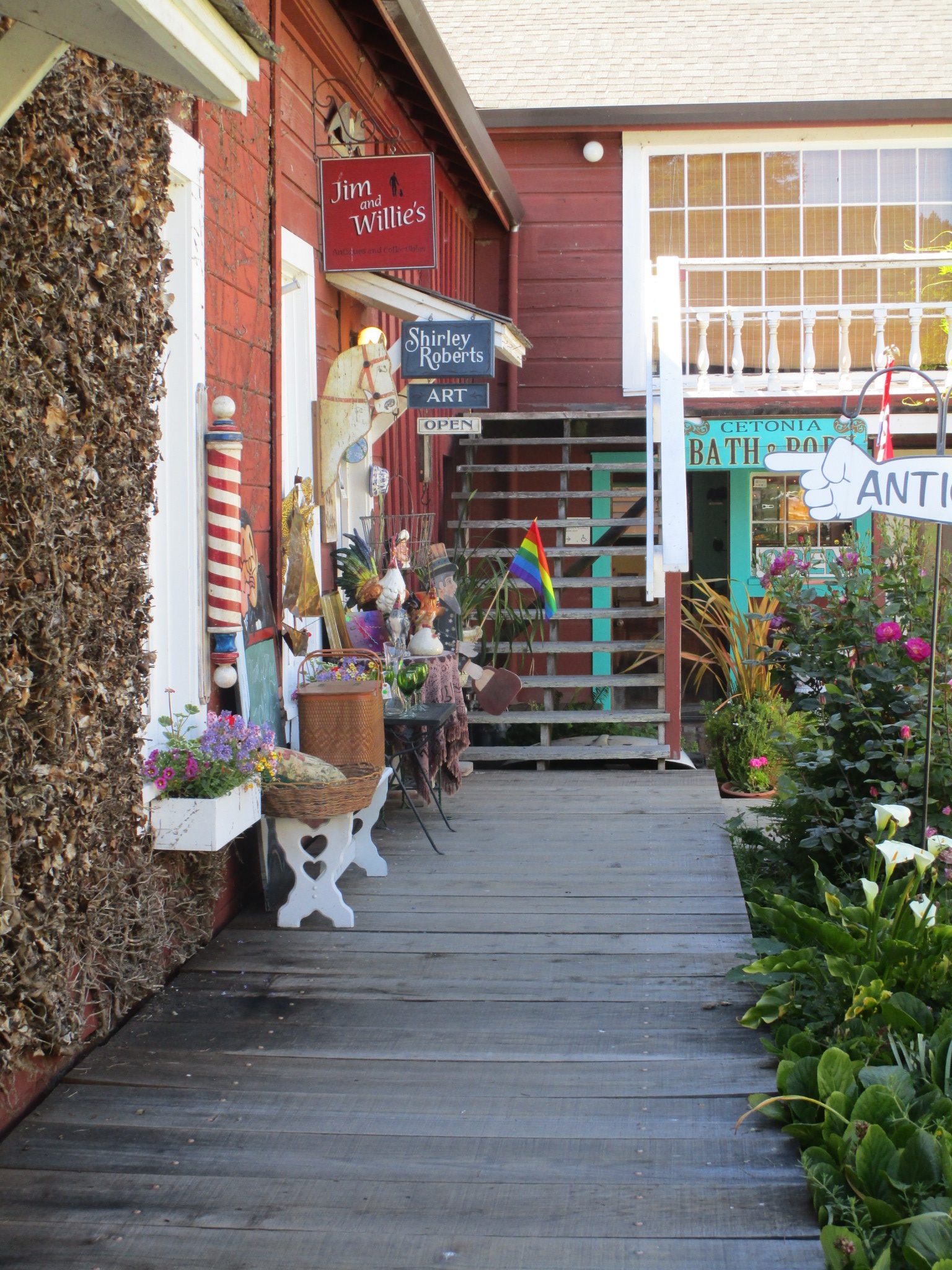
Did a bit of antique looking – just looking…

Visited a rose nursery and garden – again just looking (no more roses, someone kept muttering…)



And watched a drop dead beautiful sunset on the coast, where the river meets the ocean.



It’s not a large life – but for us, it’s a good life.
-
Blind Date
I just had a blind date with a book.
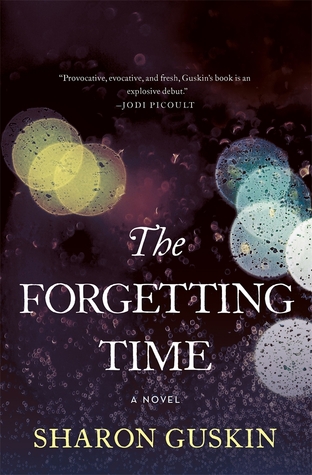
 Plucked at random from my stack of unread advanced readers copies, I opened The Forgetting Time, by Sharon Guskin knowing very little, apart from this pre-publication blurb:
What happens to us after we die? What happens before we are born? At once a riveting mystery and a testament to the profound connection between a child and parent, The Forgetting Time will lead you to reevaluate everything you believe…
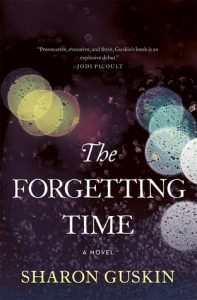 The plot centers around the theory that some people have lived previous lives which they remember as small children but start to forget as they get older.
Four-year-old Noah has fear of water and refuses to take a bath or even wash his hands, he also suffers from nightmares and constantly asks his mom to take him ‘home’ and to see his ‘other mom’.
“Not now Noah? I see. It happened in another time.”
“Yes, when I was big.”
Janie, Noah’s mom, is shaken and confounded by her son’s behavior. This is his home and she is his mom. Noah knows about things he has never been exposed to – the Harry Potter books, lizards, and how to score a baseball game. Is Noah the reincarnation of another boy who died? Janie is skeptical but enlists the help of a Dr. Anderson, who has researched and documented this phenomenon. Together they begin a journey that rattles not only their beliefs about Noah’s situation, but also their own lives.
Really Book Barmy? Reincarnation? No, not for me, you’re thinking. I thought the very same thing, but I must tell you, by the end of the second chapter, I was immediately smitten with The Forgetting Time.
This book has multiple layers. It’s a thought-provoking look into reincarnation. But it’s also a murder mystery. There is much about hurt, fear, aging, and death. But mostly, The Forgetting Time is about the connections humans have with each other. It shouldn’t all work together — but it does – and does so very well.
With her beautiful prose, Ms. Guskin chases away any doubts about reincarnation, and creates a world where we believe in the real possibility that there is life beyond the one, singular one we all have before us.
“You only live once. But was it true? That was the problem, wasn’t it? She had never thought about it in any deep way. She hadn’t had the time or inclination to speculate about other lives: this one was hard enough to manage.”
Interspersed throughout the book are fascinating case studies of other children with inexplicable memories of previous lives. And so the author steadily draws the reader into reality of what is happening to Noah and the possibility of a life reborn.
There is much to think about when reading this novel, lives well (or not so well) lived, death, loss, hope — and the constantly changing human experience.
“…[Dr. Anderson] thought of Heraclitus: a man cannot step in the same river twice, for it is not the same river, and he is not the same man.”
When evaluating this blind date, I have never read anything quite like The Forgetting Time – I found it both thought provoking and unforgettable. And while I still don’t know how much I believe in reincarnation — this book left me wanting to believe.
An advanced readers copy was provided by Flatiron Books
-
Agatha Raisin
Remember THIS post?

Well it’s here. Agatha Raisin has come to American PBS (check your local listings). The other evening, nursing a hurt back, and with a mild pain reliever, I tuned into the first two in this series.
As always, when transferring my brain from book to the screen — there are adjustments to be made. The story lines have been condensed to fit into 60 minute segments, so you can’t be too tied to the books. But, I’m happy to report that, all in all, this is a very good adaptation.
Just like Jessica Fletcher in the Murder, She Wrote series, death and disaster follow Agatha into the small Cotswold village where she has chosen to retire from her public relations business. And, what a village — the cottages are postcard pretty and while Agatha has moved into the perfect cottage she’s decorated it with ultra modern London furnishings.
Agatha doesn’t fare well in her new fictional village of Carsley. She wears heels and tight skirts around the village, she steals her neighbor’s cleaning woman, tries to wheedle tips on the perfect quiche from the baking competition judge, who then propositions her when his wife steps away. Agatha’s perfect cottage is robbed, she enters a quiche purchased in London for the village baking competition, and while her quiche doesn’t win — it does kill someone…(no spoilers here).
As her friend and former employee Roy sums it up for her, “Look at it positively, Aggie, you’ve already cheated, been burgled, killed someone, and you’ve been wanted by the police. It’s plain sailing from here.”
The casting of the series is excellent, especially Agatha and DC Bill Wong. The village residents are, as in the books, completely taken aback by Agatha and her bumbling attempts to fit into village life. “You could give me a few hints on how to do the things that people do when they do things around here,” she pleads with a fellow village resident.
Just as the written series, the TV adaption is light, funny, and serious mental powers are not required — in fact it actually helps to be in a silly mood (or, as in my case, on pain meds).
So pop some popcorn and take a lovely break from day-to-day reality — go visit the Cotswolds with the delightful Agatha Raisin.
-
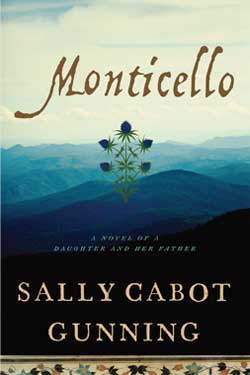
Monticello by Sally Cabot Gunning
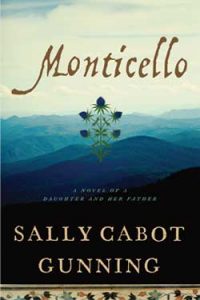 I hope you will forgive me, but I will quote a professional review which captures perfectly, the book I just finished — Monticello by Sally Cabot Gunning.
“A brilliant exploration of what it meant to be a slave owner in antebellum Virginia where farming depended on slaves, and their presence in the household gave them an intimacy with family members that could be both comforting and threatening. This story of Thomas Jefferson’s devoted daughter, the indomitable Martha Jefferson Randolph, helps us understand all the complexities and contradictions endured by Martha and her family as they struggle with their consciences and responsibilities toward their families, their plantations, and the people who work for them. Highly recommended as an engrossing tale of a strong woman in tumultuous times, with deftly interwoven historical details that make her trials all the more authentic.”
— Library JournalHistorical fiction fascinates me, but only when the author doesn’t stray too far from actual events. Ms. Gunning based this historical novel on actual correspondence between Thomas Jefferson and his eldest daughter Martha. The author says:
As soon as I came across a letter the fourteen year-old Martha Jefferson wrote: “I wish with all my soul that the poor Negroes were all freed . . .” I was hooked. I read all of Martha’s letters to her father and his to her.
The book follows Martha Jefferson Reynolds, her revered father Thomas Jefferson, and their families as they live their lives and make history at Monticello during the late 1700’s to early 1800’s.
Martha adores her father and wishes nothing more than to work with him to build and manage the Monticello plantation. But her relationship with her father is complicated not only by the entire issue of slaves, but the intimacy between her father the coddled slave, Sally Hemings.
While this strained relationship with her father is crucial to her life, the majority of the book is devoted to her difficult marriage. Martha marries Tom Randolph and over the years, gives birth to 12 (yes 12!) children. Martha and Tom struggle. Tom is often depressed and their financial failures and dependence on Thomas Jefferson further threatens their marriage.
(One reviewer pointed out that Thomas Mann Randolph is portrayed unfairly as a weak, paranoid alcoholic who lived as a parasite on the goodwill of Thomas Jefferson. Despite the fact he served in both houses of the Virginia Assembly, became a Congressman and then Governor of Virginia.)
Monticello plays a wonderful backdrop in this novel. Nestled in the beautiful Blue Ridge Mountains, we see how the gardens were treasured. How Jefferson experimented with crops and imported plant seeds. Descriptions of the clothing, home furnishings, and architectural details of Monticello allows the reader to see it as a true home where Jefferson escaped his political worries and thrived.
But we can’t escape the fact that Monticello was a working plantation with slaves. And, even though Thomas Jefferson spoke out against the institution of slavery, at the same time he owned slaves of his own – and fathered numerous children with one of the them (Sally Hemings).
Monticello (the book) gives insight into this Jeffersonian paradox, and what is today, totally incomprehensible. We see plantation life in all its light and darkness, not to mention the usually caring, but sometimes cruel human interaction of slave and master.
Through Martha’s eyes we see Thomas Jefferson as a beloved father, an architect of our constitution, a renaissance man, and an intellectual. But most importantly, we also see him as just a man, like any other man in any other time period — struggling with the political tsunamis and conflicting morals of his time.
I was thoroughly lost in the pages of Monticello and had trouble putting it down. When I did have to stop reading, (you know meals, sleep, showering, those pesky interruptions) it took me a bit to clear my mind and return to current day life.
Monticello is one of my favorite historic sights and you must visit, but in the meantime you can see Jefferson’s library HERE. (It’s swoon-worthy)
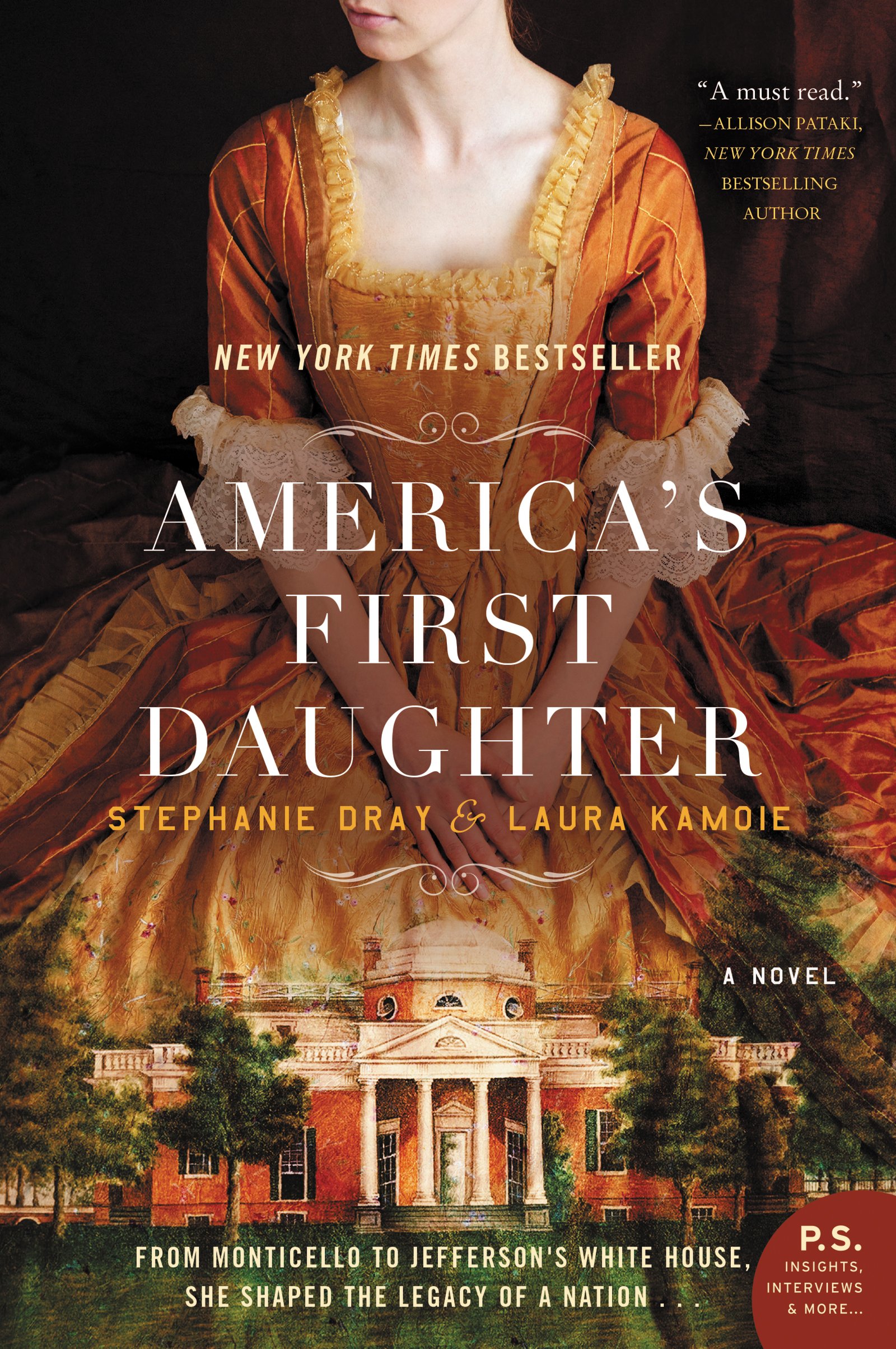
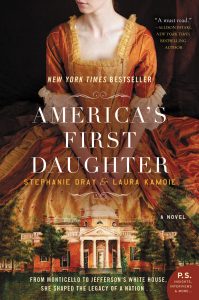
N.B. The day after I finished this book, I purchased this other novel about Martha Jefferson. It was my birthday, I’d hurt my back and I didn’t need any more excuses — and so it goes. Another Jefferson read awaits me.
-
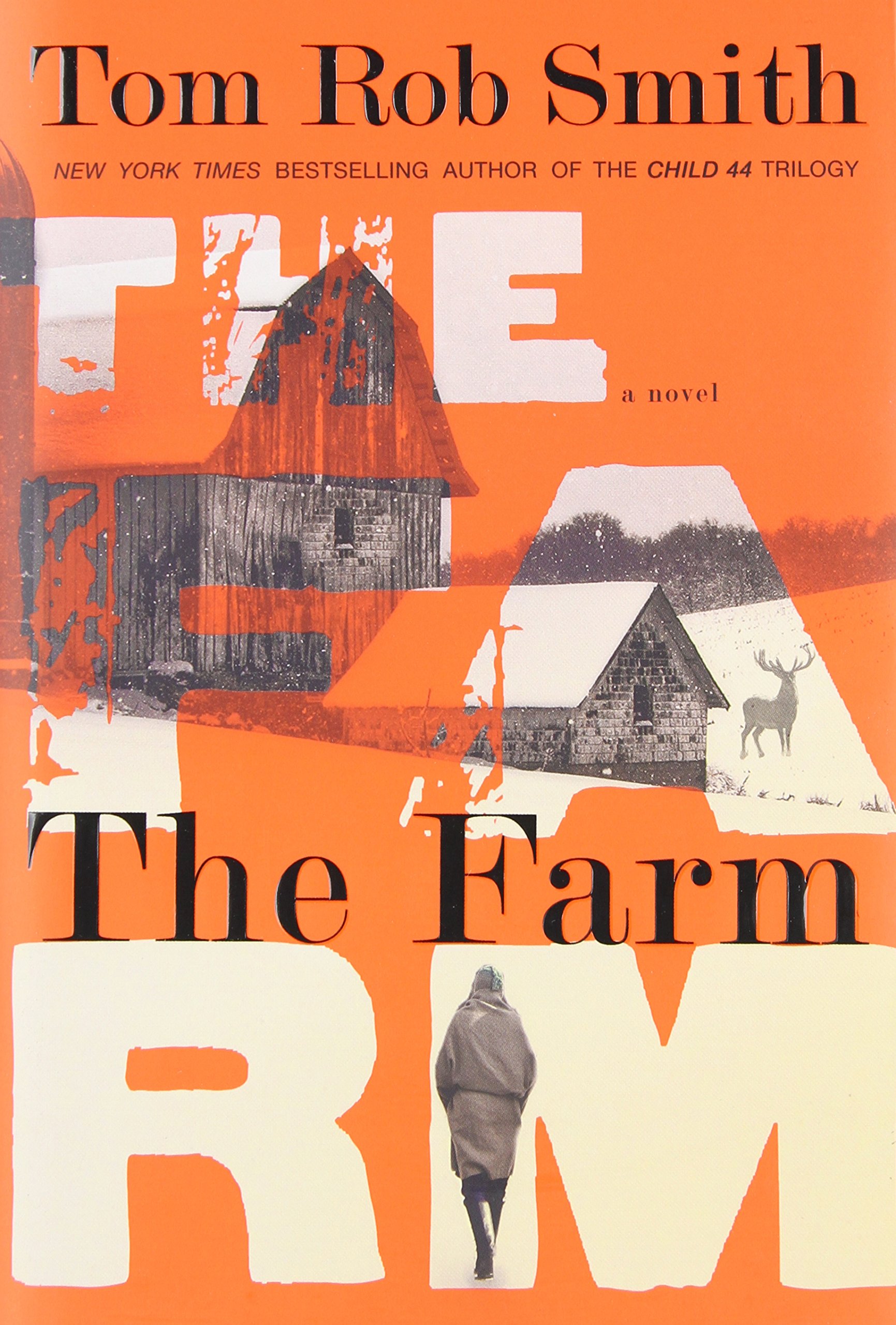
The Farm by Tom Rob Smith
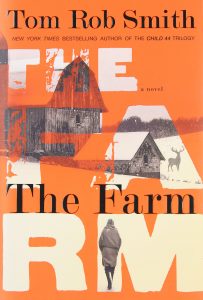 For some reason, I’ve been on a dark(ish) thriller reading binge and remembered I had this best seller waiting for me on my Kindle.
A couple of years ago, Mr. Smith was interviewed on NPR where he described his family’s real life crisis which was the genesis for The Farm.
From the interview introduction: In the spring of 2009, British author Tom Rob Smith received a disturbing phone call from his father. “And he was crying,” Smith tells NPR’s David Greene. “He never cries. And he said to me, ‘You’ve got to come to Sweden. Your mom has suffered a psychotic episode, and she’s in an asylum.’ ” Then, Smith’s mother called. She had just been released from the psychiatric hospital in Sweden, and she said everything his father had told him was a lie.
The Farm is about a couple who, like Mr. Smith’s actual parents, retire to the idyllic Swedish countryside. As the novel unfolds, Tilde the mother, has just recently been released from a mental ward and she is carefully and methodically telling her story to her son Daniel. She reveals puzzling circumstances — how she, and his father Chris, moved to the farm, not to fulfill their dreams, but because they had gone bankrupt, losing all their investments in a real estate scheme. Tilde’s story gets darker and more irrational, the crimes she’s witnessed, the conspiracies around her, and how she has been deemed a madwoman.
Tilde’s story is filled with fear and paranoia– sprinkled with some Scandinavian evil (including some shiver-worthy Nordic troll fairy stories). Tilde is a true unreliable narrator –or is she? How much is true and how much is imagined? Why was she admitted for psychiatric observation, and was it justified?
“Paranoia might be a mental illness–or a means of survival.”
All these questions and more will whisper in the back of your head as you read The Farm. At first, I didn’t know what to make of the odd structure of this book, but it gradually caught me up in its web.
The plot does not unfold in real time and there are stories within stories, but Mr. Smith does not let this get confusing. It’s fast paced, suspenseful, and often smart.
“The people you think you have known all your life can be completely different, for different reasons that you have never known anything about.”
But I had some problems with The Farm. The first was Tilde’s voice. She is supposedly “telling” the story throughout the book, but Mr. Smith gives her sometimes unrealistic dialogue. No one speaks like this: “He was trying to soothe me as if I were a startled horse.” or “As he emerged from the gloom of his underground lair.” In the same vein, I just grew tired of the singularity of Tilde’s voice — it goes on for over 200 pages. Mr. Smith breaks it up with Daniel’s point of view, but not nearly enough to prevent the story line from occasionally becoming snooze-worthy.
I hoped that finding the truth to this story was going to be tricky and astonishing, but sadly, I found the ending abrupt and obtuse. As if the author couldn’t figure out how to work out the truth and so just closed the novel with a final incomprehensible chapter. But then again, maybe life isn’t meant to be so neatly packaged.
The Farm is a suspenseful thriller, but with an unsettling ending – perhaps this is the author’s intent.
I think I’ll take a break from these dark thrillers for a bit.
A digital advanced readers copy was provided by Grand Central Publishing via Netgalley.
-
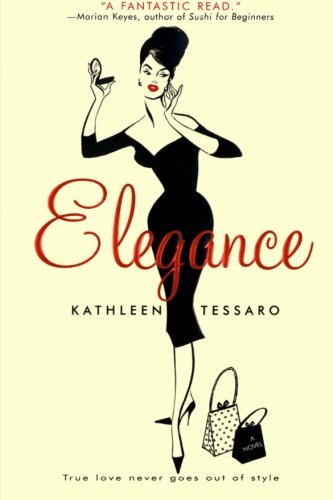
Elegance by Kathleen Tessaro
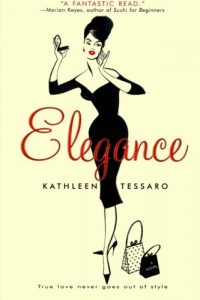 I have always admired Audrey-Hepburn-like-elegance, but alas, my body and temperament opt for comfort. Once, on a daily basis, I achieved tailored and professional — but never elegant.
This appreciation for long necks and sleek evening dresses must have caused me to acquire this book. I found it during my January book clean out and stacked it on my bedside table, unsure, but vowing to give it my 50 page audition.
The other night I picked up Elegance, and was surprised to find myself chuckling at this cute concoction. I’m not a fan of chic lit, but the premise is clever.
The author actually found a book in a second-hand store called “Elegance: A Complete Guide for Every Woman Who wants to Be Well and Properly Dressed on All Occasions” written by Genevieve Antoine Dariaux in 1964. Ms. Tassaro, with permission from Dariaux, wrote this novel based on her find. See? Clever right?
The novel uses the advice from Dariaux at the start of each chapter, such as this from the opening:
What is elegance? It is a sort of harmony that rather resembles beauty with the difference that the latter is more often a gift of nature and the former a result of art. If I may be permitted to use a high sounding word for such a minor art. I would say that to transform a plain woman in to an elegant one is my mission in life.
Our protagonist, Louise, either heeds or disregards this out-dated (and often derivative) advice as she contemplates her own disastrous life.
Louise is an imperfectly real character. Her past is filled with eating issues, difficult parents, failed relationships, and a lackluster career.
Her marriage is over:
It’s been months now – months of conversations, arguments, silences, tears. We have ‘given it one more week’ again and again and again. It’s like trying to amputate a limb with spoon.
Louise is not getting anything from her therapy sessions:
[Therapists] always want to know why; there’s not a lot of difference between a therapist and a four-year old.
She doesn’t have any close girlfriends to talk to, she’s lost, and can’t pinpoint what she really wants.
Then one day Louise finds Dariaux‘s slim volume in a London used bookshop. I just have to share this lovely passage ~~ hail comrade!:
My husband claims I have an unhealthy obsession with secondhand bookshops. That I spend too much time daydreaming altogether. But either you intrinsically understand the attraction of searching for hidden treasure amongst rows of dusty shelves or you don’t; it’s a passion, bordering on a spiritual illness, which cannot be explained to the unaffected.
With Dariaux’s self help book, Louise begins to change herself and her life — much goes well, some does not. She applies a self-tanning cream which turns her orange just before a job interview. Louise unwittingly invests a small fortune at a department store makeup counter and discovers fine lingerie.
Louise not only adapts to high heels, she starts opening up to those around her, breaking out of her shell. She dumps her soul-sucking therapist. She leaves her husband. Friendships are formed and she even lands a new job. In one of my favorite chapters, Louse is invited to a typical English country house weekend, which is described in delicious detail – from the village names to the parlor room games in the evening.
Louise comes into herself and her life — but it is not a fairy tale ending. It’s as imperfect and real as she is. Turns out yes, elegance has it’s rewards but also a price.
Elegance makes for a fun evening, like sharing ice cream straight from the carton with a good friend. A light and fluffy break from those dark thrillers (I’ve had enough of those for a bit) or the nightly news.
Genevieve Antoine Dariaux’s 1964 original advice volume is still in print and available – see more HERE
Elegance is Ms. Tassaro‘s first novel, published in 2003 and she has since had several best sellers in the same realm. See her books HERE.
-
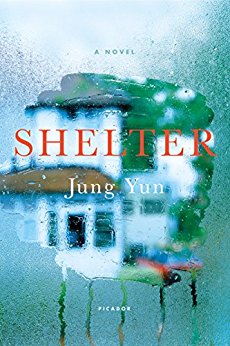
Shelter by Jung Yun

This debut novel opens with a suburban family struggling with debt. Kyung and his wife, with their young son, are financially underwater – they owe more on their house than it is worth, their credit cards are maxed out, and the bills have been pilling up for months.
Their sense of want was always more powerful than their sense of reason.
Kyung and his parents came to the United States from Korea when he was small. But as an adult, Kyung has been estranged from his family for years, and is unwilling to ask them for help, despite the fact they are wealthy and live in an ultra-exclusive neighborhood just up the hill.
As the book opens, Kyung and his Irish-American wife, Gillian are showing their home to a realtor, who is less than enthusiastic about the probability of a good sale.
It is here, right in the first chapter, that Ms. Yun rips this typical-seen-it-before plot open and twists it into a completely unexpected direction.
As the realtor is explaining the less than ideal prospects for their home sale, they suddenly see Kyung’s mother wandering, naked and beaten, in their back yard — crying and babbling in her native Korean.
Whoa — didn’t see that coming.
I don’t want to give too much away about this compelling, but unsettling story line. There are many layers and deep issues within Shelter that must be read in context and first-hand. So, very carefully I will tell you a bit more, just to entice you to read this well crafted, but brooding novel.
The estranged family is thrust together in the wake of a violent attack on Kyung’s parents. They must live together – in Kyung’s tiny, over-mortgaged home.
Tensions quickly surface, there are old resentments, generational mistrust, and the guilt of wanting, but not being able to –forgive. Ms. Yun stirs this together with cultural dynamics, family secrets and the pressure of immigrants wanting to be American at any cost.
Ms. Yun has delivered not only a driving, suspenseful plot but also an exploration of the complexities of family, the immigrant experience, domestic violence, and the grace of forgiveness.
I warn you, Shelter is not a lighthearted read, but at the same time, I found it utterly compelling and finished it in two days.
Shelter is well worth your time. Upon finishing, you’ll be sad, but this complex and beautifully rendered novel will stick with you, as there is much to contemplate and consider.
And isn’t that why we read? For these occasional gems that stay with us long after we’ve closed the last page.
A digital advanced readers copy was provided by Picador Publishing via Netgalley in 2016.