-
Memoirs as Salvation
~~First an apology for the radio silence. I’ve been neglecting Book Barmy lately. Last minute travel preparations dominate right now, as we prepare to leave on a grand trip next week. As a result, my reading has dwindled to a few pages at night- (sometimes the same pages from the night before) until I can’t keep my eyes open. Stay tuned for more on our travel excitement in an upcoming post. ~~
What is it about memoirs? I gravitate toward them in anxious times and decided it was because I’m a bit of a guilty voyeur combined with a dash of schadenfreude. I seem to gain solace from dipping into the disastrous lives of others. So when I came across this wonderful Mary Karr essay HERE , I knew I had a chum — another memoir lover out there.
Her entire essay is worth reading, but here’s my favorite bit:Out of great suffering come great truths—not just intellectual concepts, but ideas informed by feeling. The word passion comes from the Latin passio, which refers to Jesus’s suffering on the cross. Anytime you take a stranger’s agony into your body, you’re changed by it, refined into a vessel better able to give and receive love, which is the sole purpose of being alive. The best memoirs I’ve ever read deliver such salvation.I prefer Ms. Karr’s rationale to mine – memoirs as salvation – and yes, in experiencing the agony of another –one may be better able to give and receive love.
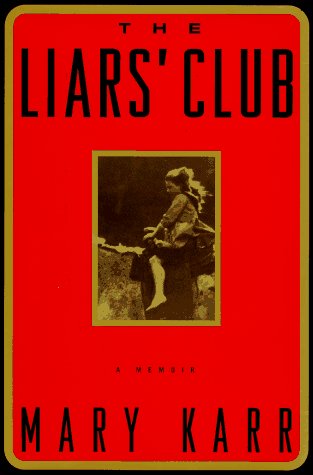
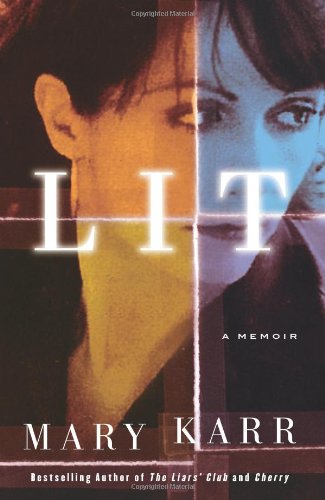
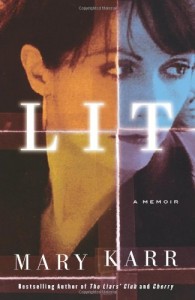
In case you’re in need of some salvation or just want to indulge in a bit of guilty schadenfreude –here’s some of my all time favorite memoirs.++++++++++++++++++++++++++++++++++++++++++++++Mary Karr, herself has written two excellent memoirs – Liar’s Club an account of her harrowing yet thrilling childhood and in Lit she tells of her battles with alcohol and depression as a young mother.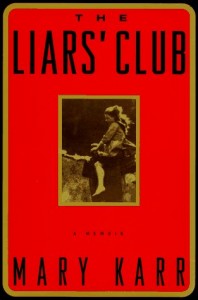
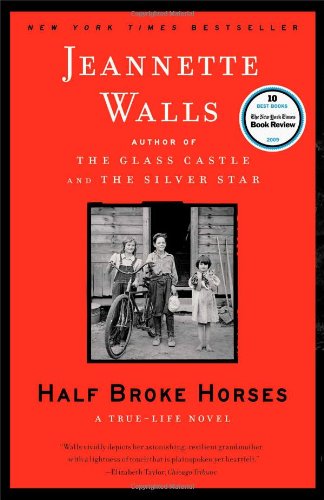
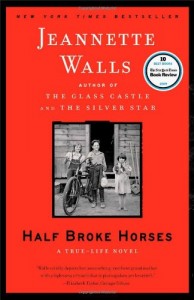
 ++++++++++++++++++++++++++++++++++++++++++++++++++++Which brings us to the exceptional Jeannette Wells – The Glass Castle is a Book Barmy must read with Half Broke Horses close behind.What is so astonishing about these two memoirs is that Jeannette Walls not only had the courage to survive a horrific upbringing by an alcoholic father and mentally ill mother but that she portrays her experiences with such deep affection and generosity. This is a story of guts and unconditional love in a profoundly flawed family.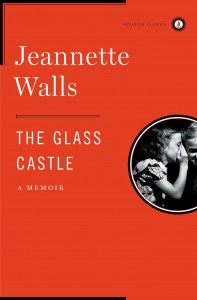
+++++++++++++++++++++++++++++++++++++++++++++++++++++
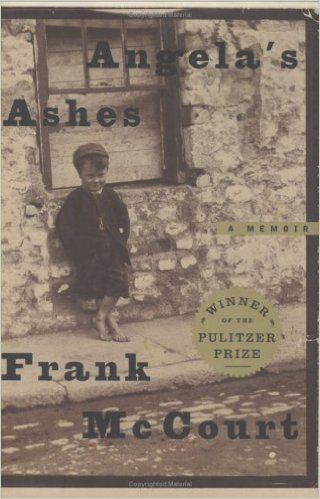
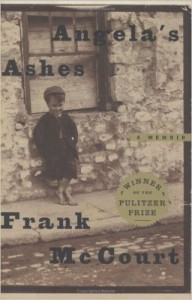
Then there’s the infamous Angela’s Ashes by Frank McCourt. I have a fond memory of finding this book in a little bookshop in Dublin and reading it cover to cover on the flight home. During the flight, as I was hunkered into this book, the attendant brought me my meal and commented on what I was reading — I confessed I felt guilty eating because poor Frank and his family hadn’t had enough food for days.
From the opening of Mr. McCourt’s autobiography:
When I look back on my childhood I wonder how I managed to survive at all. It was, of course, a miserable childhood: the happy childhood is hardly worth your while. Worse than the ordinary miserable childhood is the miserable Irish childhood, and worse yet is the miserable Irish Catholic childhood.
++++++++++++++++++++++++++++++++++++++++++++++++
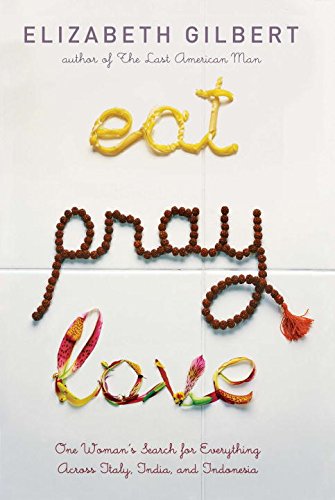
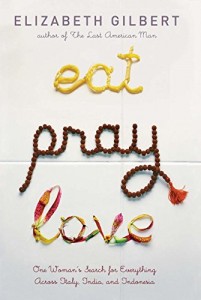
One of my all time favorites is Eat Pray Love, by Elizabeth Gilbert. Read this memoir for it’s depiction of a trip of a lifetime and Ms. Gilbert’s personal journey. Rediscovering joy, peace and love while gaining friends, insights and few extra pounds along the way. It’s really not as sappy as I just made it sound – honestly.
+++++++++++++++++++++++++++++++++++++++++++++++
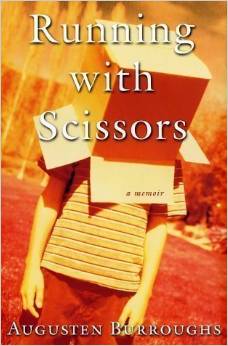
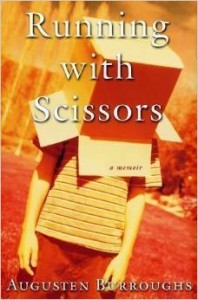
And now for something similar yet completely different … Running with Scissors by Augusten Burroughs. Once again we witness a nightmarish youth and the reparations, but in this case Mr. Burroughs tells his tale in such a way that it is both entertaining and outrageous. So entertaining, in fact that some studio attempted to make a film based on the book. Just terrible, give it a miss – the film that is – not the book.
+++++++++++++++++++++++++++++++++++++++++++++++
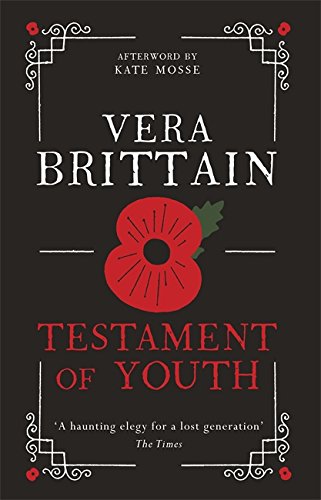
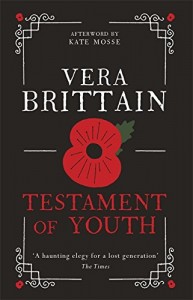
I was recently reminded of the classic Testament of Youth – an autobiography of a independent woman who volunteers as a nurse during WWI. I missed many a wild club scene evening buried in its pages back in the 80’s. It’s been adapted into what looks to be a promising film (trailer HERE).
++++++++++++++++++++++++++++++++++++++++++++++++
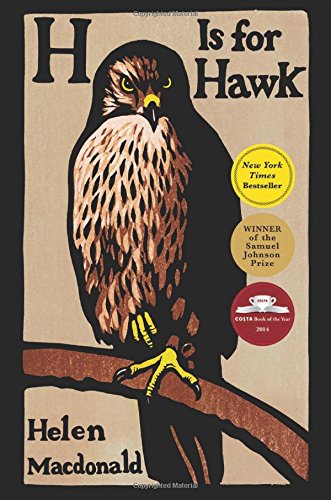
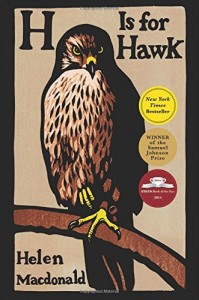
The other evening I started this unique memoir. Grieving over the unexpected death of her father, Helen MacDonald rediscovers her love of falconry with a prickly and murderous goshawk — named Mabel. I’m only a few chapters in and it’s riveting (at least for as long as I’m able to stay awake these recent nights).
Not forgetting the other memoirs here on Book Barmy –THIS or THIS
What are your favorite memoirs or autobiographies?
-
When life gives you zucchini & leftovers
Here at Book Barmy -husband puts together breakfast and I make dinner..we’re on our own for lunches (remember the saying? for better or worse but not for lunch – so true).
I cook most every night and usually relish the time in the kitchen, the soothing chopping, dicing and listening to NPR while I cook. But sometimes I loose my mojo and stare dejectedly at what faces me in the fridge.
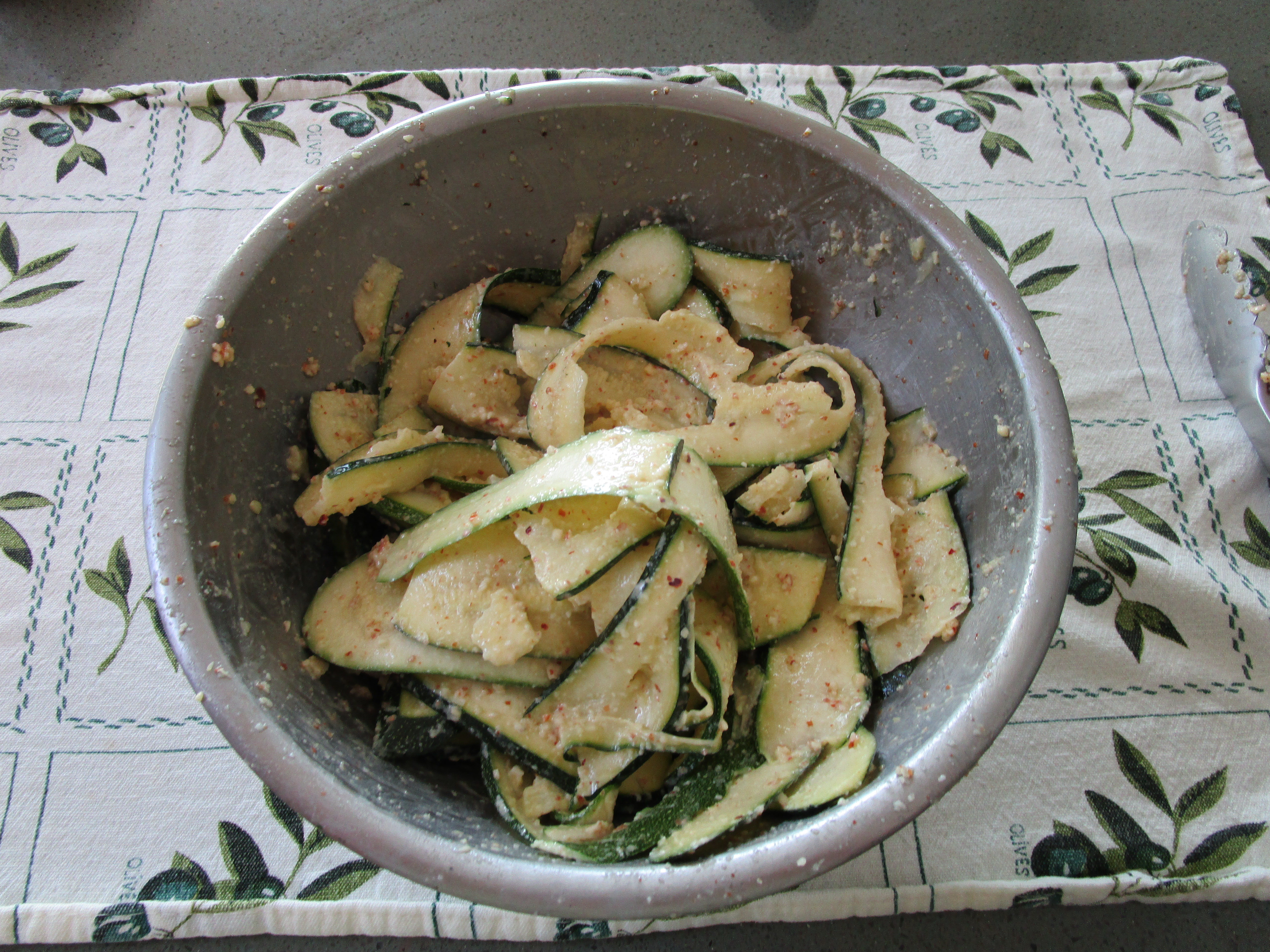
Yesterday it was zucchini and one leftover lamb chop. Who doesn’t have zucchini this time of year especially my friends with gardens? There’s the old joke that the only time New Englanders lock their houses (or cars) is during summer- otherwise neighbors surreptitiously leave bags of zucchini from their gardens
So I consulted my cookbook shelves – yes I still collect cookbooks – despite the wealth of recipes online -opened The Smitten Kitchen Cookbook and found
Zucchini Ribbons with Almond Pesto
Ingredients (Note: Makes too much pesto cut back by 1/4 to 1/2)
1/2 cup almonds, toasted and cooled1/4 cup grated Parmesan cheese1 small garlic clove, peeled and crushedPinch of red pepper flakes2 tablespoons lemon juice (I used more – 4 T)1/4 teaspoon salt1/3 cup olive oil (I used less – scant 1/4 cup)2 pounds medium zucchini, trimmed (about 4 medium, thin and longer if you can find them)DirectionsGrind almonds, Parmesan, garlic and red pepper flakes in a food processor until they are finely chopped. Add the lemon juice, salt and olive oil and pulse a few times until incorporated. Pour the dressing into a large salad bowl and let it roll up and around the sides.Peel the zucchini with a vegetable peeler or mandolin and place zucchini ribbons in the dressing-coated bowl. Toss the ribbons gently (your hands work best) attempting to coat the zucchini as evenly as possible. Serve at room temperature.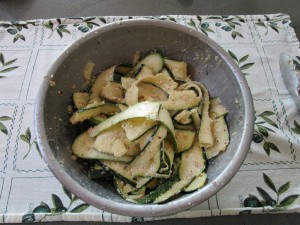 Then I thinly sliced the warmed up lamb and voila – a photo-worthy dinner from the measly makings in the refrigerator – when it came dangerously close to let’s order something in tonight.
Can you blame a gal for boasting?
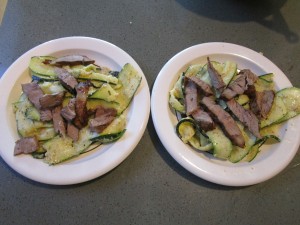 Really very good – a fresh take on zucchini and a success all around. My only complaint was there was too much pesto to zucchini – so recommend you either make less pesto or use more zucchini.To keep it a bit more healthy, I cut back on the called-for amount of oil and increased the lemon juice but with the almonds it was still nicely “pesto-like”.
Don’t worry we’ll get back to books very soon.
-
When life gives you gophers & peaches…
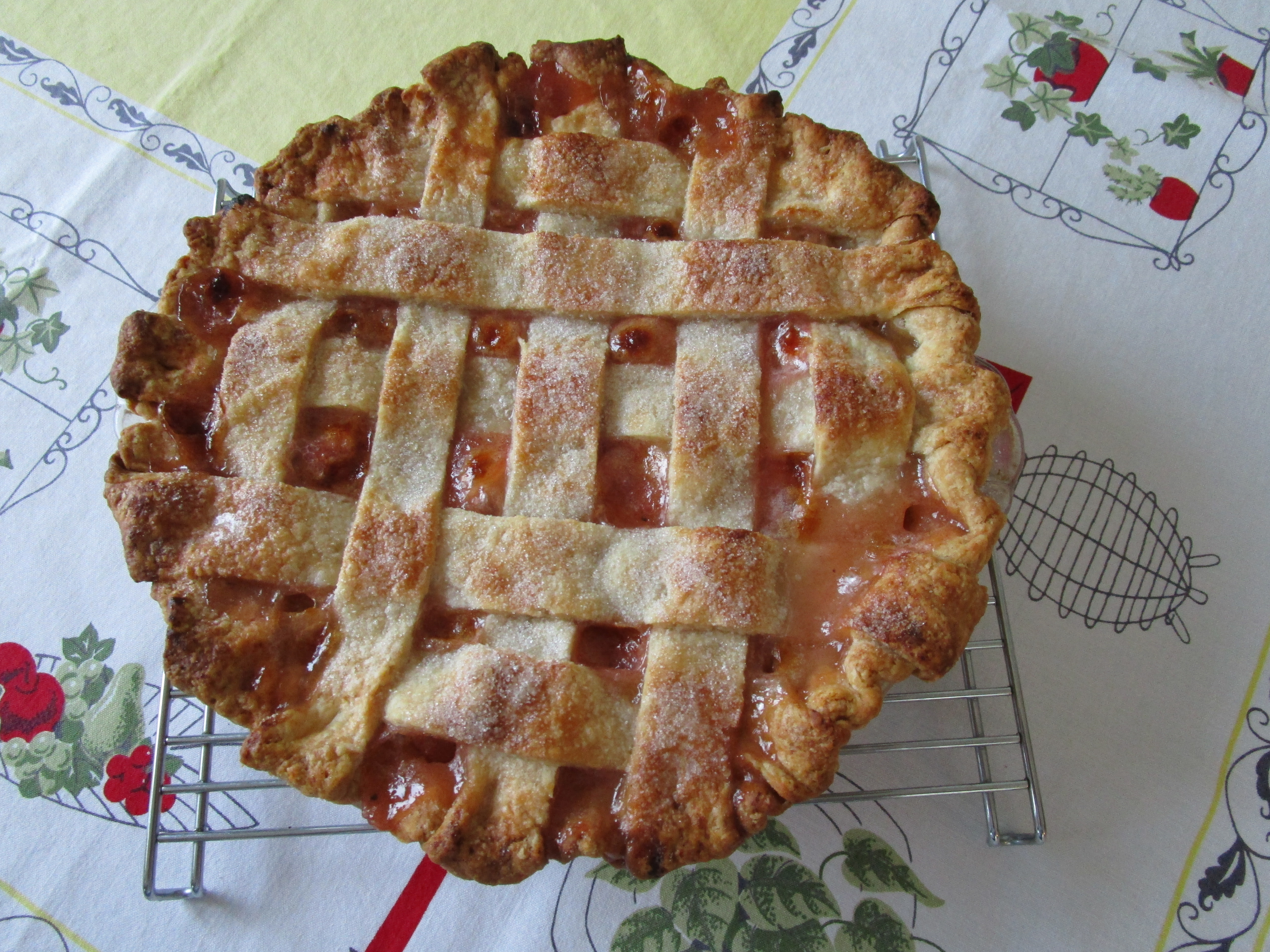
Upon his retirement, my husband has taken up baking (to the determent of my thighs and hips). He has also become our neighborhood gopher hunter –helping neighbors remove* errant gophers from their gardens.
As a thank you, a neighbor brought us a bag of peaches from the farmer’s market…resulting in this Martha Stewart, photo-worthy pie.
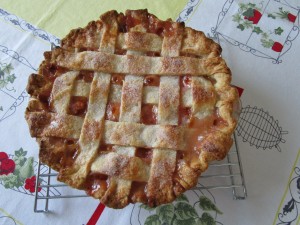
* trust me, you don’t want to know
-
In praise of bookshops…
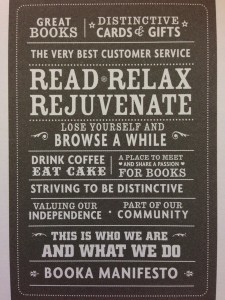 Here’s a reminder why bookshops are so prized by many of us.
From The Bookshop Book by Jen Campbell.
-
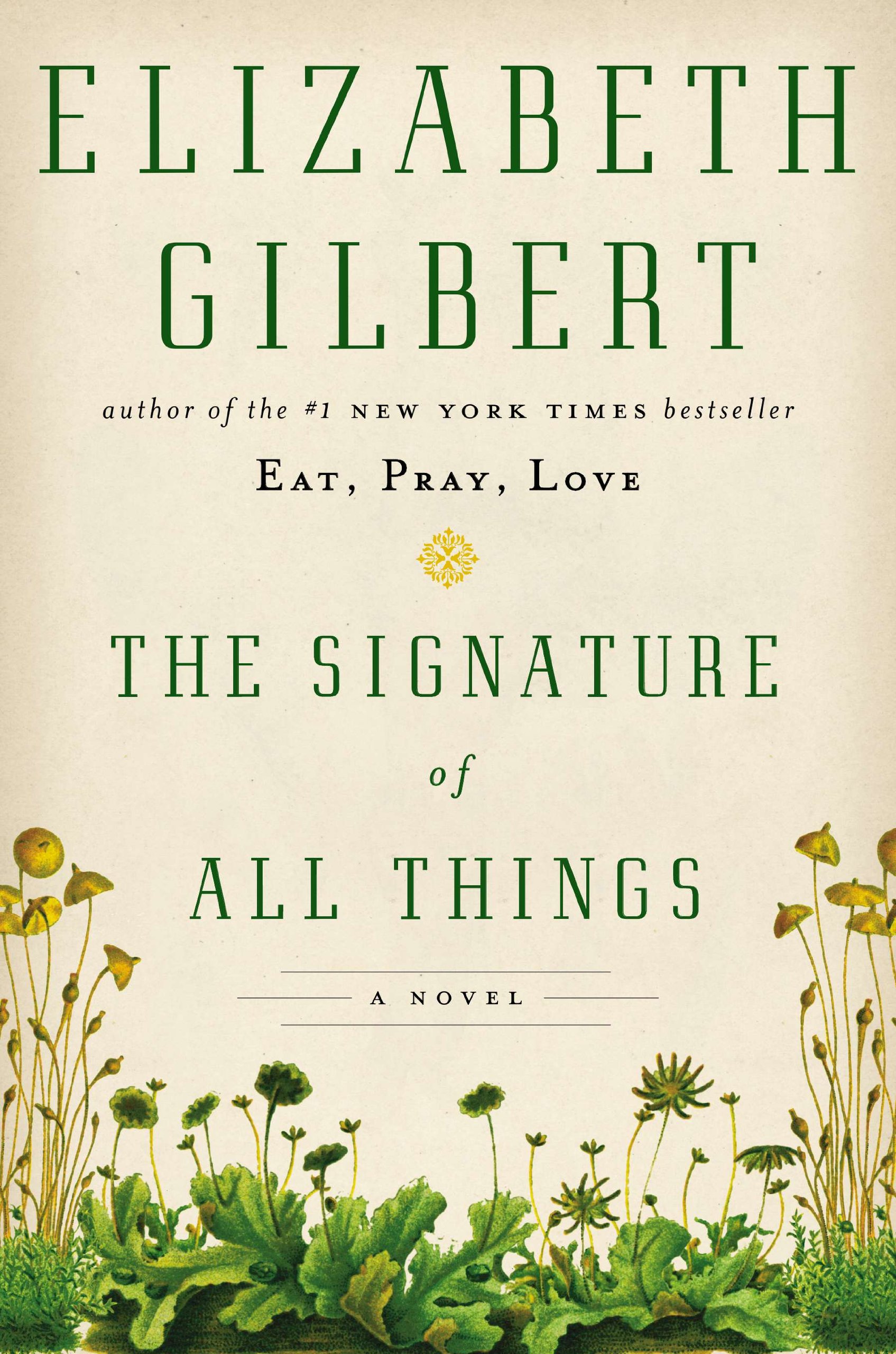
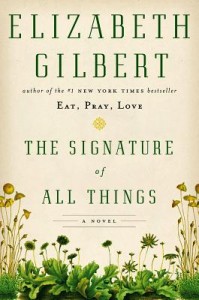
The Signature of All Things by Elizabeth Gilbert
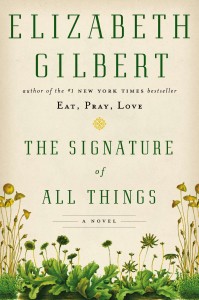 I was entranced by this book — just holding the beautiful hardback edition, with its botanical illustrations on the front and back flyleaves, gave me a little thrill. I was especially hooked by the storyline which follows a 19th century female botanist. I’ve long been fascinated with the early botanical illustrators who ventured into harsh climes to painstakingly draw and record plant specimens before the advent of photography. Add to this that I savored Ms. Gilbert’s Eat, Pray, Love — both the book and the film. So I was set – that magical feeling of embarking into a book that holds great promise.
The Signature of All Things starts with the turn of the century birth of Alma Whittaker in January of 1800 to unorthodox and wealthy Philadelphia parents. On the first page we are lead back into Alma’s father’s beginnings — with this wonderful line:
How her father came to be in possession of such great wealth is a story worth telling here, while we wait for the girl to grow up and catch our interest again.
And so we learn of the world-spanning exploits of Henry Whittaker, thief turned botanist, in the late 1700s, where money follows Alma’s father around like a small, excited dog.
When we do meet Alma Whittaker some 50 pages in, she is being tutored by her parents in languages, acute observation and critical thought — they expect her, from a young age, to actively participate in their glittering intellectual dinner parties. She is cocooned within their estate — White Acres and the plant world — so beloved by her father. There is even a large indoor botanical garden patterned after George III’s own design.
Alma learned to tell time by the opening and closing of flowers. At five o’clock in the morning, she noticed, the goatsbeard petals always unfolded. At six o’clock, the daisies and globeflowers opened. When the clock struck seven, the dandelions would bloom. At eight o’clock, it was the scarlet pimpernel’s turn…
But, before long, Alma has descended into a prematurely sad, old woman. She is someone whose intellectual life is more important than any emotional one — she had too much to accomplish.
Whenever a beam of light shone through one of the tall, wavy-glassed windows, Alma would turn her face up toward it, like a tropical vine in one of her father’s botanical forcing houses, wishing to climb her way out.
Alma becomes an expert on mosses – her own botanical choice – as no one had ever studied their miniature ecosystems in depth. Alma publishes several highly-regarded botanical volumes on mosses during her years.
Moss grows where nothing else can grow. It grows on bricks. It grows on tree bark and roofing slate. It grows in the Arctic Circle and in the balmiest topics …moss is the first sign of botanic life to reappear on land that has been burned or otherwise stripped down to barrenness. The only thing moss needs is time, and it was beginning to appear to Alma that the world had plenty of time of offer.
Eventually Ambrose, an androgynous orchid illustrator, captivates her with his words and his art – and so she marries him — but alas, no romance for Alma.
For many years (even before Ambrose) Alma has found her sexual pleasure in a closet by herself – and we are given great detail of her “self-pleasuring” exploits. (Just as with the one and only porn film I watched, it quickly becomes painfully absurd.)
Alma lives well into her 9th decade, and her adventures, and those of her father, weave together the development of evolutionary thought during the mid-1800s. We learn how Captain Cook influenced Charles Darwin and we even get to meet A.R. Wallace who posited a theory of biodiversity concurrent with Darwin’s. Alma, too, comes upon her own theory of evolution via her moss studies, but Darwin beats everyone to the punch and garners all the fame. Ms. Gilbert fascinates in telling of these historical scientific discoveries, exploits and follies.
In an interview, Ms. Gilbert tells of years doing research and a 70-page outline. This exhaustive research and hard writing work clearly shines through in The Signature of All Things.
Where the novel falters is in the secondary characters who are introduced, one per chapter, as if even Ms. Gilbert was getting bored with her story and wanted new players. Alma’s adopted sister Prudence and their friend, Retta are meant to contrast with Alma’s cerebral character — but I found them unbelievable. The novel becomes a little un-tethered (as does Alma) once she leaves White Acres for Tahiti and Amsterdam where the complicated and dramatic relationships feel a bit contrived.
I found the novel at times strikingly beautiful — there is some jeweled writing — but also at time, tedious. Even though I merely scanned more than a few pages, I had to keep reading through to the end– as Alma’s story is ultimately fascinating and heartrending.
N.B. The title of the book refers to the theory that all life contains a divine code which was put forth by 16th century botanist, Jacob Boehme in his book De Signatura Rerum (The Signature of All Things).
-
Can Reading Make You Happier?
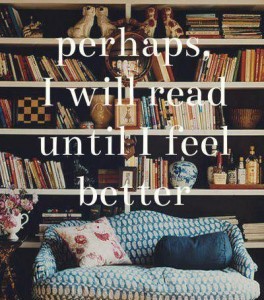 You may remember that I read and reviewed The Novel Cure, wherein I discovered my perfect second-half-of-life career choice – Bibliotherapist.
Here’s a wonderful New Yorker article that delves further into this concept.
From the article:
Bibliotherapy is a very broad term for the ancient practice of encouraging reading for therapeutic effect. The first use of the term is usually dated to a jaunty 1916 article in The Atlantic Monthly, “A Literary Clinic.” In it, the author describes stumbling upon a “bibliopathic institute” run by an acquaintance, Bagster, in the basement of his church, from where he dispenses reading recommendations with healing value. “Bibliotherapy is…a new science,” Bagster explains. “A book may be a stimulant or a sedative or an irritant or a soporific. The point is that it must do something to you, and you ought to know what it is. A book may be of the nature of a soothing syrup or it may be of the nature of a mustard plaster.”
And then there’s this:
For all avid readers who have been self-medicating with great books their entire lives, it comes as no surprise that reading books can be good for your mental health and your relationships with others, but exactly why and how is now becoming clearer, thanks to new research on reading’s effects on the brain.
I haven’t secretly fist-pumped such information since they proved the scientific health benefits of a glass of red wine.
Turns out the authors of The Novel Cure (Berthoud and Elderkin) practice their Bibliotherapy through The School of Life, founded by one of my favorite authors, Alain de Bottom. His book The Art of Travel is a beautiful volume of essays to be carefully savored one delicious essay at a time.
So the Book Barmy Bibliotheraphy Practice doors are officially open.
Be my guinea pigs, send me your problem or issue either via comments or email — and I’ll recommend a book or two to help you get through it.
No charge.
Meanwhile, I’m in the middle of this – stay tuned…
-
The Bookstore Mouse by Peggy Christian
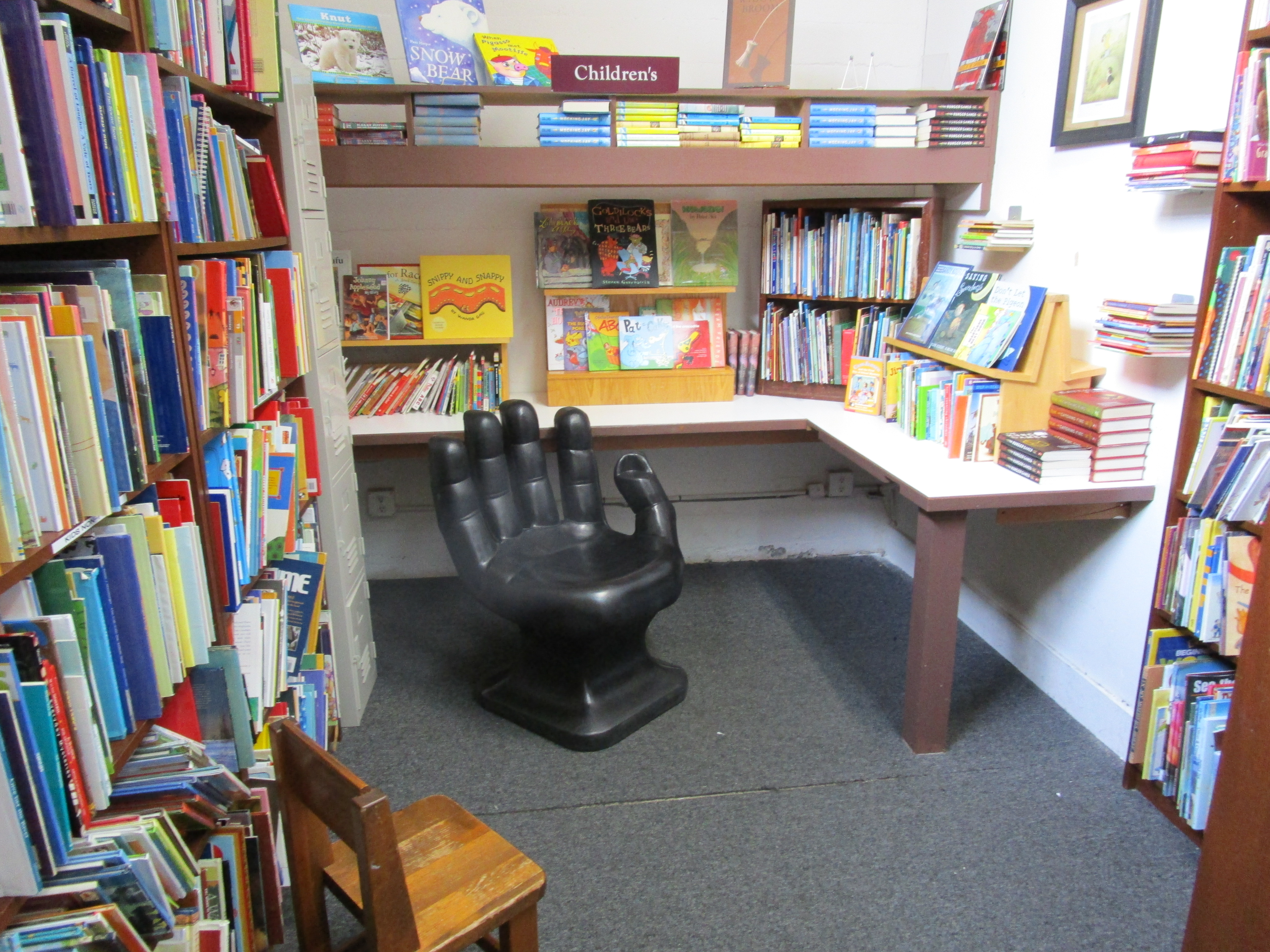
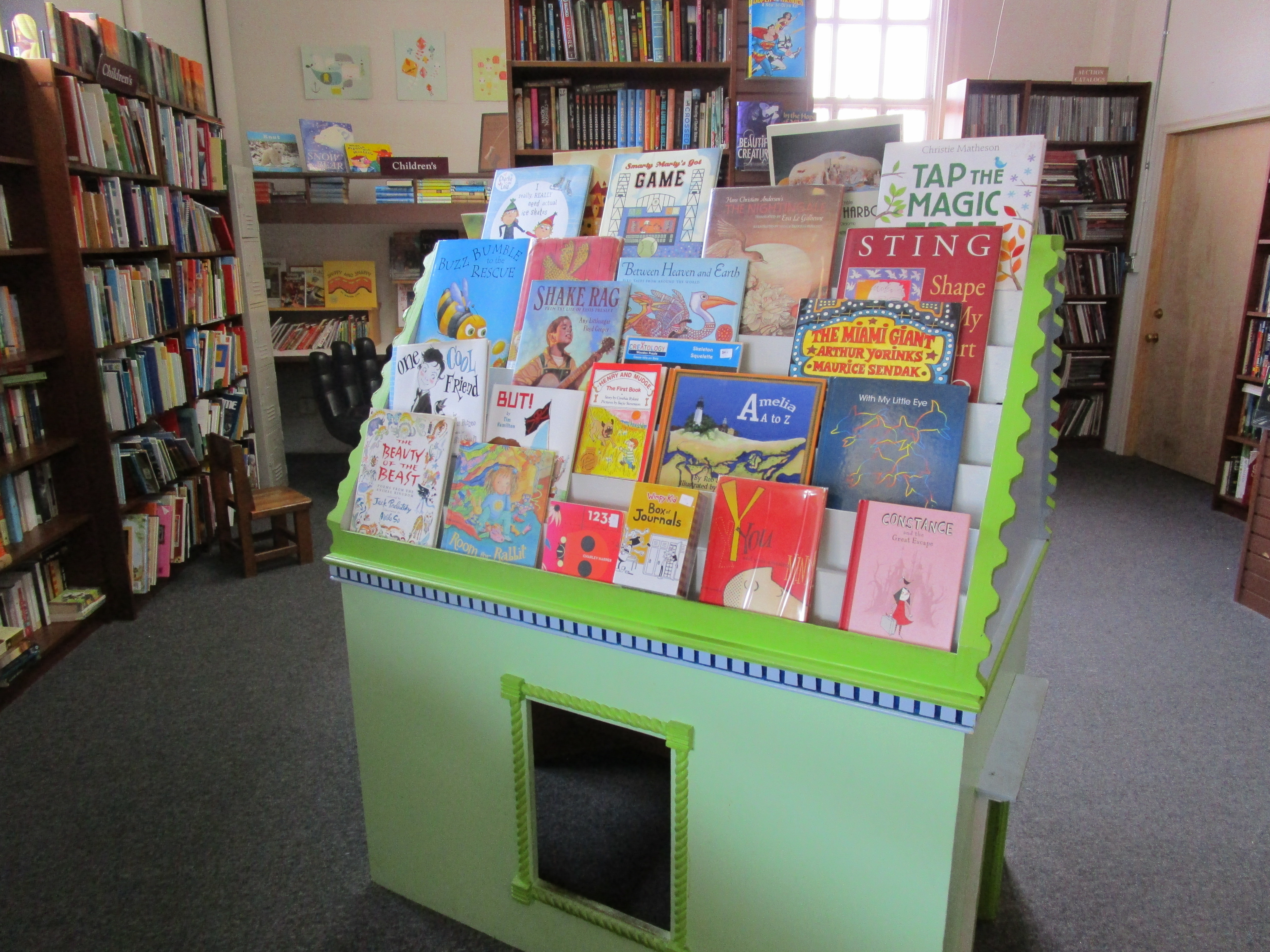
Just next door to the bookstore where I work/volunteer, there’s a children’s arts center with afternoon classes. When class is over the children often run (with parents trailing behind) into the store and quickly gravitate to our special children’s room/play area (click to see full size).
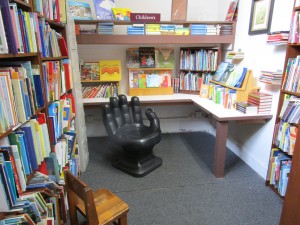
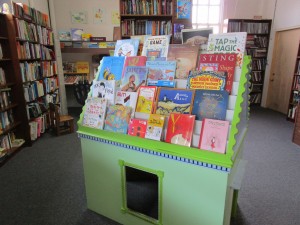
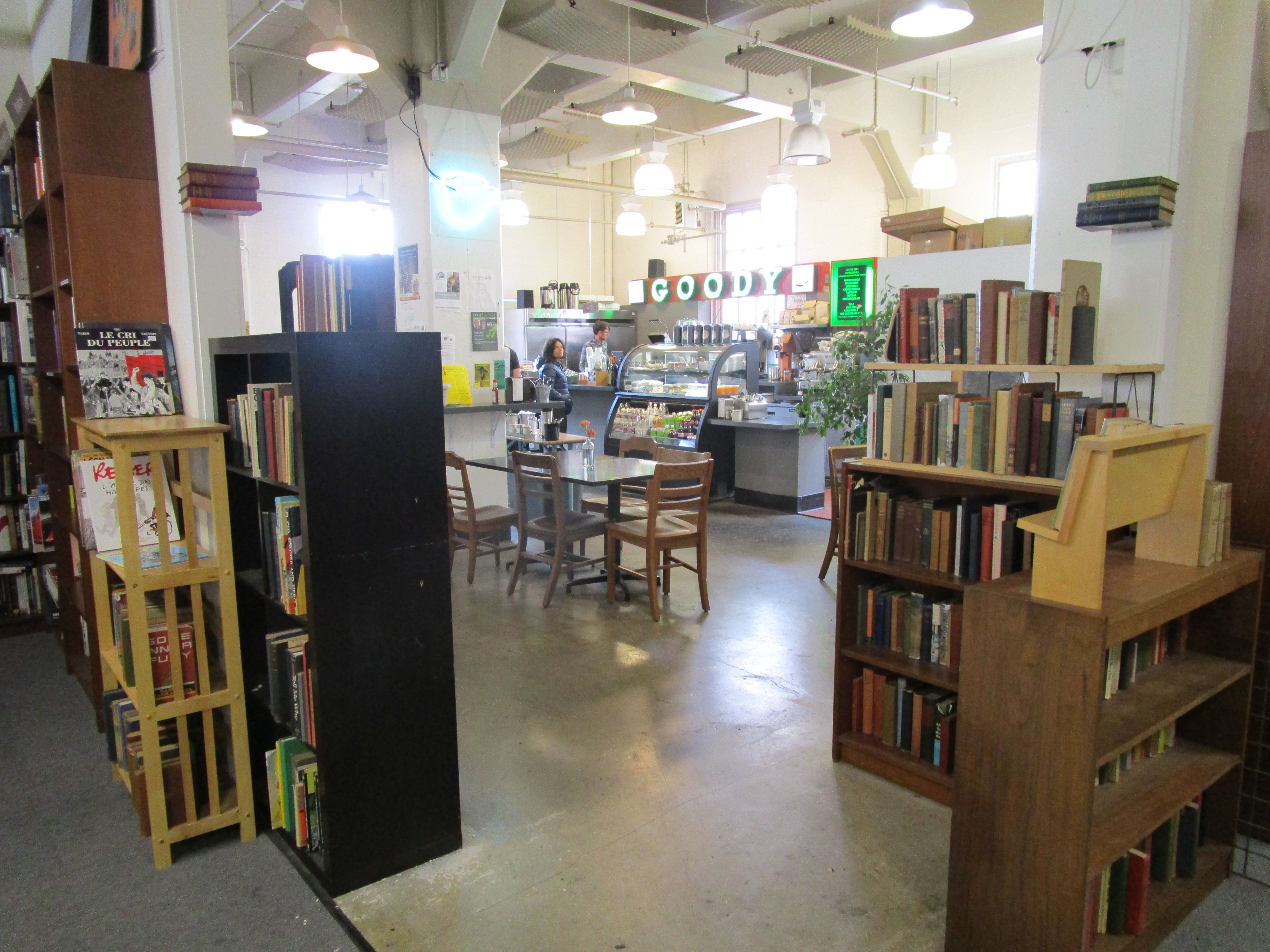
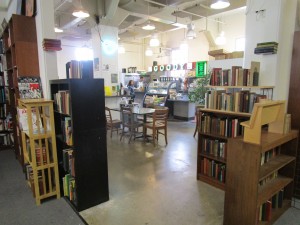
The parents can then, while keeping an eye on the little ones, slip over to the cafe and grab a coffee (they also sell wine and beer but I’ve never seen any parental indulgence –strong folks these parents).
Over the months, I’ve formed a friendship with one little girl who comes in every week after art class and her mom lets her buy a book or two. I’ll call her Penny because she is just as bright as a penny (no real names or photo for obvious reasons). Penny is a sturdy little girl, cowboy boots, a big wide grin, bangs I suspect she chops at herself, and an eclectic sense of colorful mismatched clothes. One can tell she must be a handful for parents and teachers alike — that combustive combination of open intelligence, imagination, impatience and enviable self-confidence – I liked her instantly.
Almost every week, she’ll find me in the store, just to say hello and to talk about things – what she did in art class (she once made me an origami bird), the books she’s reading, the books I’m shelving — Penny just loves to talk. But no idle chatter for Penny, she wants to know things — her conversations are real and her questions intense. Mostly we talk about books while her poor mother grabs a to-go coffee from the cafe. One week I pressed Blueberries for Sal into her hands promising her she would love it – she did. She can’t wait to read Harry Potter, but bemoans that she is still to young to read “such big books”.
++++++++++++++++++++++
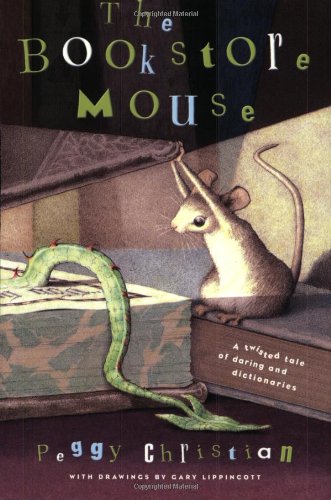
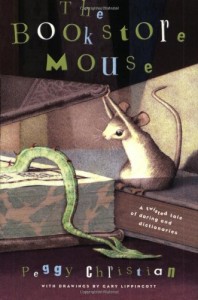 One day she brought this little book up to the register to purchase. Penny and I agreed it was a great find (the children’s books are not organized in any way, so the search is half the fun) and that it looked to be a very good book. I asked her to tell me about it once she’d read it because, of course, I love stories about bookstores and books.
A couple weeks later Penny brought her book back and handed it me…saying “You can borrow this to read yourself. My Dad helped me, we had to look up lots of the words, but I think you will really like it – it’s soooooooo good, but I want it back, please, when you’re done.”
I know, I know, let’s have a collective moment of awwwww. I especially like that she was quite firm — SHE WANTS HER BOOK BACK – a fellow book hoarder in the making.
So during this week I read The Bookstore Mouse.
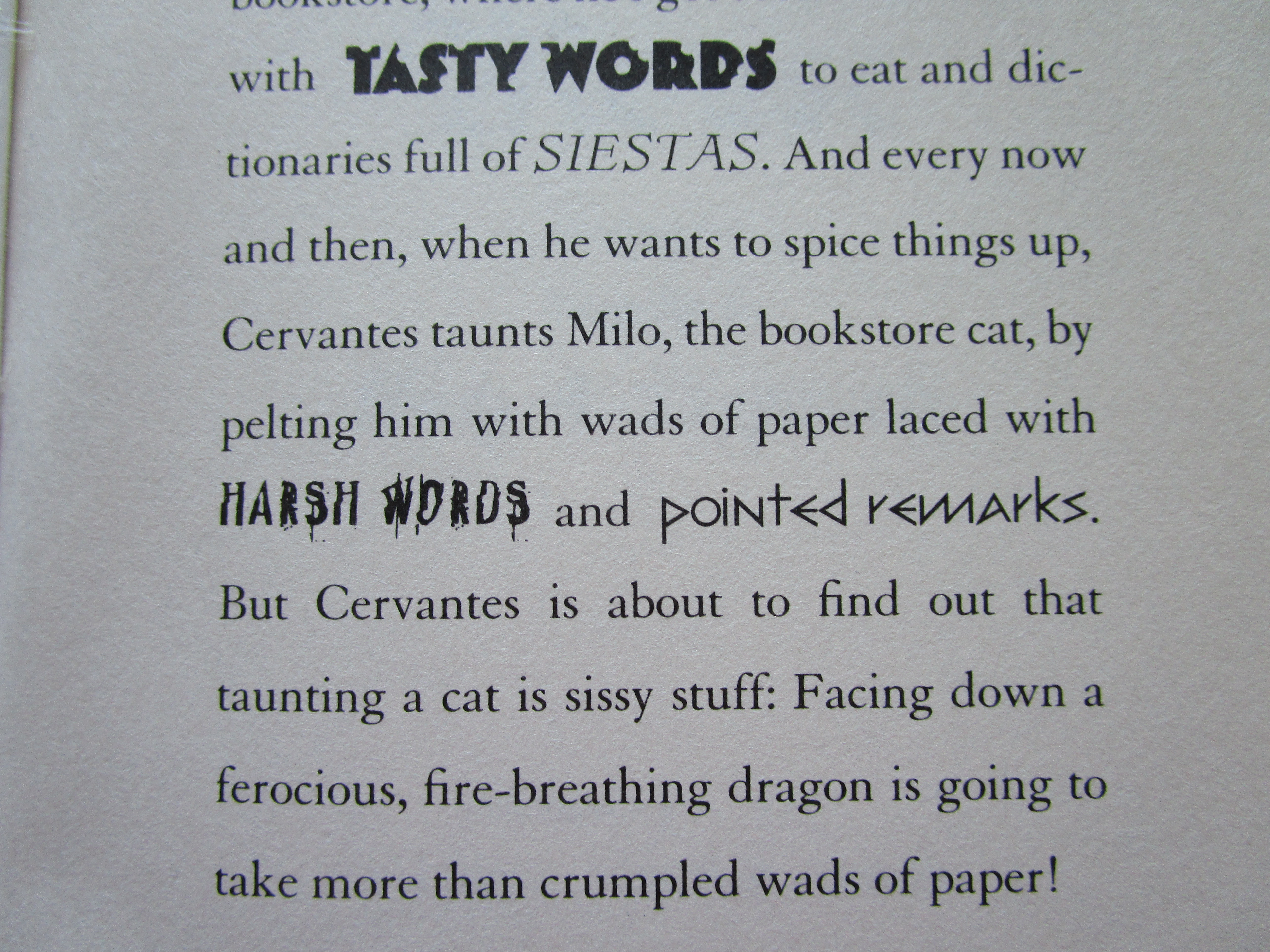
It’s the story of a mouse named Cervantes who lives in a bookstore and actually survives physically and emotionally on words – by eating them out of cookbooks, history books, novels. This little mouse has an impressive knowledge of words because the dictionary is his favorite book.
The words are typeset in differing fonts to show their meanings — anger, hunger, fright – as so…
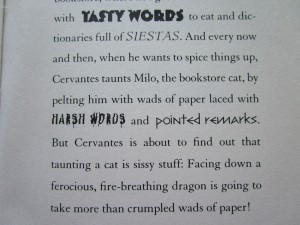
One day Cervantes, trying to escape the bookstore cat, jumps into a book and gets pulled into a story about a scribe who has to save a village from a dragon. The scribe has trouble finding the right words and Cervantes (and the child reading the story) tries to fill in just the right word. During the story they meet a giant who makes up very big words that mean nothing and we learn that big words can get in the way — smaller words often have more meaning.
I can see why Penny (and her Dad) had to look up words – here’s a sample of some of vocabulary I had to look up: prodigious, infandous, cacography — and then there are the made up words like nigmenog, whosits.
There is wordplay meant for very clever readers or adults. For example, the dragon is appropriately named Censor. Then there are underline worthy quotes such as this:
A page of print is like a secret passage that leads you to worlds so far away, you cannot imagine them until the magic of reading carries you there.
This is a tale where the words are the main character and these words need untangling and then become weapons, power and protection. This book will not only improve a young vocabulary, but deserves to be read aloud (while stopping to look up words together) with a bright young person in your life
Thank you Penny.
-
Helene Hanff – a love affair
Thanks to Simon at Stuck in A Book, I was reminded of my long-time love affair with Helene Hanff -a lesser-known author who has achieved cult status among bibliophiles. Ms. Hanff was a hard working writer–she wrote essays, television screen plays, magazine articles and industry trade publications –most anything to pay the rent. She was also witty, intelligent and incredibly well read. She put her love of literature, London and New York City into her wonderfully captivating writing. Her books are just plain terrific, based on her own experiences — no fiction necessary here — and none will take you long to read. I believe all are well-worth a permanent place in your personal libraries.
+++++++++++++++++++++++
Ms. Hanff (and yes she would have insisted on ‘Ms’) is most famous for her book 84 Charing Cross Road, which I have read and re-read so many times I had to buy myself a new copy.
 In case you don’t know of this book – it is must reading for any bibliophile. It chronicles the 20-year correspondence between Ms. Hanff and a London antique bookshop located at 84, Charing Cross Road. Ms. Hanff writes to this bookshop seeking various English literature titles in nice affordable volumes. To her delight, she receives not only affordable, but beautifully bound antique editions of her requests — “so fine they embarrass my orange-crate bookshelves”. The letters back and forth over the years are funny, warm and sometimes heartbreaking. The correspondence captures not only the shared love of literature, but family news, dental woes, wartime shortages (she sends the shop food packages during war rationing years) and finding book treasures at English estate sales. The book was made into a 1986 film which did a passable job of portraying the characters and the premise. It stars Anne Bancroft and Anthony Hopkins so you won’t be wasting your time. Remember tingle books? 84, Charing Cross is on my top 10 list.
+++++++++++++++++++++++
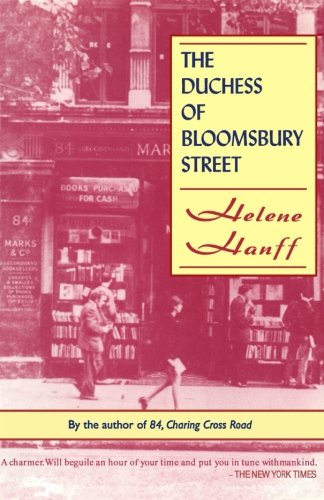
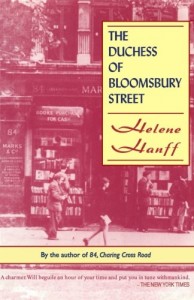 The Duchess of Bloomsbury Street chronicles Ms. Hanff’s experiences in London after the publication of 84, Charing Cross Road. She finally makes her first long overdue trip to London and meets her friends from the bookshop, as well as her fans. Taken completely by surprise, Ms. Hanff and her book are
celebrities in London. Here she tells of this once-in-a-lifetime trip where she is treated to a whirlwind of introductions, dinners, teas, tours and finally seeing her precious London.+++++++++++++++++++++
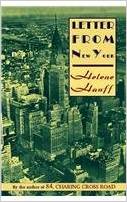 If you’re going to New York City, live there, or just love the city from afar, you need to find yourself a copy of Letter From New York.
 From the back cover: From 1978 to 1984, Hanff ( 84 Charing Cross Road ) recorded a five-minute broadcast once a month for the BBC’s Woman’s Hour about her everyday experiences as a resident of New York City.
Here you’ll meet her friends, neighbors and fellow apartment-house dwellers. She describes free concerts, out-of-the-way city parks, her favorite neighborhoods, people and dogs. This is Ms. Hanff’s New York City – sweetly old-fashioned, intimate and never pretentious.
++++++++++++++++++++++
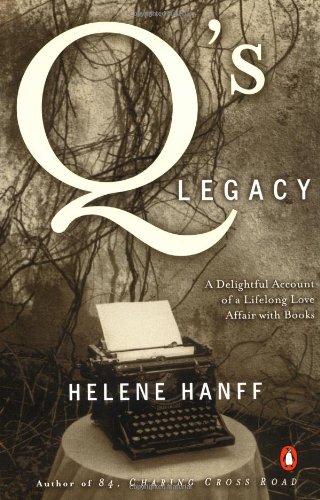
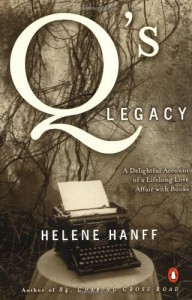 Ms. Hanff was unable to finish her college education, she simply ran out of money. So she decided to educate herself at the public library by working her way through English Literature A to Z. Q’s Legacy chronicles how she discovers Sir Arthur Quiller-Couch –the infamous Cambridge Dean of English Literature and his book “On the Art of Writing”. Reading “Q” spawns a long reading list which now includes English lit classics from Milton, Newman and Walton. Ms. Hanff is unable to find affordable or attractive copies in NYC bookstores. Then one day while reading The Sunday Review of Literature, she spots an advertisement for a bookshop in London …and so the story loops back to the genesis of 84, Charing Cross Road.
 ++++++++++++++++++++++
 Here’s a photo of the bookshop – Marks & Co.
 And a portrait of Ms. Hanff – her favorite.
Ms. Hanff passed away in 1997 – poor and without any surviving relatives. Her NY Times obit HERE.
I think that somehow she must know her books are beloved, re-read and cherished by many a book lover.
-
The Summer Guest by Justin Cronin
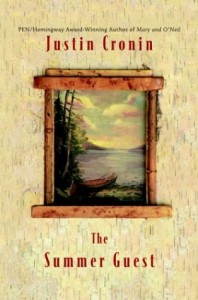 A question for my fellow book lovers: When you’ve just finished a truly moving book do you — like me, close the book, gaze lovingly at its cover, then exhale and hug it to your chest for a few moments? No? Really? OK it must be my own little book barmy quackery.
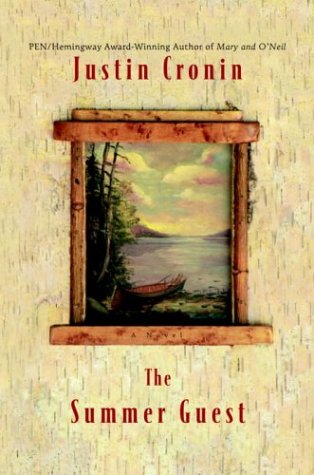
The Summer Guest was just such a hug-worthy book. An exceptionally beautiful novel which moved me to tears, laughter, and pure delight. The characters and setting were so real — so authentic, that when I’d lay the book aside — I had to take a moment to clear my head in order to resume my real life.
I’ve had this lovely book on my shelves for years (this is the 2005 paperback edition) and during a recent grey and foggy weekend I roamed my shelves looking for something “summery” to read…and chose this.
(Side note: This is how I justify my not-yet-read book
hoardingcollection — it is a true pleasure to wake up in my favorite PJ’s and with tea cup in hand, browse through my very own bookshelves and pick out just the perfect book for my mood and the San Francisco weather.)However, The Summer Guest is not a lightweight summer beach book. This is a complex story of a family over time, children and their parents, love and loss — all told simply and beautifully .
In Mr. Cronin’s spare but expansive novel we begin in 1947, aboard a train chugging through a snowy Maine night and end up in 1997 on a tranquil late-summer evening lake, aboard an old wooden rowboat. Included in between — the living, loving and loss of a family united by a remote Maine fishing camp with an expansive fish-rich lake – “lovely in its pure beauty of having been forgotten”.
“the camp held a ninety-year lease from Maine Paper for two hundred acres rimming the lake to the north and west … I didn’t know exactly where the lines fell, but I didn’t have to. It was so much land it didn’t matter.”
There are the obligatory rutted roads through the deep Maine woods to get to the camp, the idyllic rustic cabins, with fireplaces and creaky porches. The days are filled with early morning coffee with the loons, the intricate symphony of fly fishing and home cooked evening meals in the communal dining room. You can smell the pine trees, baked beans and wood smoke.
The title and the main story line refers to Harry — a guest who has been coming to the camp for many years and is now an old and dying man. Different characters narrate each chapter and tell the past and present story from their individual viewpoints. So there’s also Jordan, a local loner who has become fishing guide and winter caretaker of the camp. Then there are the long-time owners of the camp, Joe and Lucy who have an enviable inner strength and warmth.
Mr. Cronin knows the area and has rendered the voice of his story through dry and acerbic Maine eyes:
“He gave me a curt nod from the chin, the North Woods equivalent of a full body hug.” and then this,
“this was an inbred town in northwest Maine where, as we said, half the people spoke French and the other half yelled.”
When Jordan, the local fishing guide takes out a group of big city lawyers, the author deftly captures the inevitable situation.
“By this point Bill had actually managed to get his fish under control and was thrashing around in the shallows, his rod hand held high over his head to keep the line tight while, with the other, he made unsuccessful, scooping lunges with his net. Done properly, this can be one of the most satisfyingly graceful moments in the sport, but in Bill’s case it was like watching a man trying to hail a taxi while simultaneously chasing a piece of blowing litter down the street.”
Mr. Cronin has precisely penned the words to express emotions we have all felt — from mournful sections which wrap the reader into the characters’ brave sadness and loss – to the exquisite joy of first love…
“…the thought of Kate was suddenly woven like a thread through everything, all that had ever happened to me, the clean smell of the pines and the lake and the memory of my lonely winters, the very turning world we stood on. They say that the moment your life appears before your eyes will be your last, but I’m here to say that it’s not so very different when you kiss a woman like Kate, whoever your Kate may be.”
The scene where the summer guests are dancing on the dock to Ella Fitzgerald is so beautifully told it will bring tears to your eyes.
Justin Cronin paints a beautiful picture of this remote Maine camp where the summers of deep woods and deep lakes come alive on the pages — “enough silence to let you hear the planet spin or make you mad if you thought too long about it.”
The Philadelphia Inquirer called The Summer Guest — “A work of art, Justin Cronin has written a great American novel.”
That captures it perfectly. I can only add it’s a must read (and a must keep on my shelves) novel. I highly recommend it.
-
Tea Snobbery

It was a foggy, drizzly Sunday, so with great pleasure I went back into bed with a good book (review to follow) and a nice cup of tea.
This got me thinking about how much I love my tea and how picky I’ve become about tea preparation. I guess it’s time to admit, I’m a tea snob… I know annoying, right? Put me in a typical American breakfast joint and I can tell by a few questions to the wait person how they prepare their tea and whether or not I will order any. “Do you serve your tea in a tea pot?” “Does the water come from the coffee maker?” “Do you bring the tea bags on the side or in the pot?” My table companion(s) just shake their heads and pretend not to know me.
It always comes as a surprise when I see how my fellow Americans approach tea at home — a bag in a cup of microwaved water? I mean really – no tea pot? no tea kettle?
So my own tea prepared at home is my delight. First it has to be a good strong British tea. Yorkshire Gold, Barry’s Irish Breakfast, PG Tips are favorite everyday teas. Often however, when we travel I always seek out local tea shops and buy loose teas – Murchies on Victoria Island in BC, Canada was my most recent splurge (their Prince of Wales tea is excellent). These fancy teas I prepare on weekends, as a treat.
Then if I’m feeling especially British, I will use one of my proper tea cups and saucers rather than my typical weekday “reading” mug.
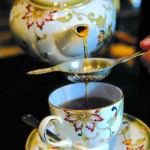
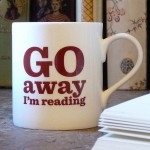
But then, this morning, quite serendipitously, I found the following article from George Orwell and in my head I cried “comrade”. I have a few differences with his tea preparation – six teaspoons of tea to a quart pot seems excessively strong, even for me… but nonetheless, here is tea snobbery at its best.

(Orwell with a Nice Cup of Tea)
A Nice Cup of Tea by George Orwell First published in The Evening Standard, January 12th, 1946
If you look up ‘tea’ in the first cookery book that comes to hand you will probably find that it is unmentioned; or at most you will find a few lines of sketchy instructions which give no ruling on several of the most important points.
This is curious, not only because tea is one of the mainstays of civilisation in this country, as well as in Eire, Australia and New Zealand, but because the best manner of making it is the subject of violent disputes.
When I look through my own recipe for the perfect cup of tea, I find no fewer than eleven outstanding points. On perhaps two of them there would be pretty general agreement, but at least four others are acutely controversial. Here are my own eleven rules, every one of which I regard as golden:
First of all, one should use Indian or Ceylonese tea. China tea has virtues which are not to be despised nowadays — it is economical, and one can drink it without milk — but there is not much stimulation in it. One does not feel wiser, braver or more optimistic after drinking it. Anyone who has used that comforting phrase ‘a nice cup of tea’ invariably means Indian tea.
Secondly, tea should be made in small quantities — that is, in a teapot. Tea out of an urn is always tasteless, while army tea, made in a cauldron, tastes of grease and whitewash. The teapot should be made of china or earthenware. Silver or Britanniaware teapots produce inferior tea and enamel pots are worse; though curiously enough a pewter teapot (a rarity nowadays) is not so bad.
Thirdly, the pot should be warmed beforehand. This is better done by placing it on the hob than by the usual method of swilling it out with hot water.
Fourthly, the tea should be strong. For a pot holding a quart, if you are going to fill it nearly to the brim, six heaped teaspoons would be about right. In a time of rationing, this is not an idea that can be realized on every day of the week, but I maintain that one strong cup of tea is better than twenty weak ones. All true tea lovers not only like their tea strong, but like it a little stronger with each year that passes — a fact which is recognized in the extra ration issued to old-age pensioners.
Fifthly, the tea should be put straight into the pot. No strainers, muslin bags or other devices to imprison the tea. In some countries teapots are fitted with little dangling baskets under the spout to catch the stray leaves, which are supposed to be harmful. Actually one can swallow tea-leaves in considerable quantities without ill effect, and if the tea is not loose in the pot it never infuses properly.
Sixthly, one should take the teapot to the kettle and not the other way about. The water should be actually boiling at the moment of impact, which means that one should keep it on the flame while one pours. Some people add that one should only use water that has been freshly brought to the boil, but I have never noticed that it makes any difference.
Seventhly, after making the tea, one should stir it, or better, give the pot a good shake, afterwards allowing the leaves to settle.
Eighthly, one should drink out of a good breakfast cup — that is, the cylindrical type of cup, not the flat, shallow type. The breakfast cup holds more, and with the other kind one’s tea is always half cold before one has well started on it.
Ninthly, one should pour the cream off the milk before using it for tea. Milk that is too creamy always gives tea a sickly taste.
Tenthly, one should pour tea into the cup first. This is one of the most controversial points of all; indeed in every family in Britain there are probably two schools of thought on the subject. The milk-first school can bring forward some fairly strong arguments, but I maintain that my own argument is unanswerable. This is that, by putting the tea in first and stirring as one pours, one can exactly regulate the amount of milk whereas one is liable to put in too much milk if one does it the other way round.
Lastly, tea — unless one is drinking it in the Russian style — should be drunk without sugar. I know very well that I am in a minority here. But still, how can you call yourself a true tea-lover if you destroy the flavour of your tea by putting sugar in it? It would be equally reasonable to put in pepper or salt. Tea is meant to be bitter, just as beer is meant to be bitter. If you sweeten it, you are no longer tasting the tea, you are merely tasting the sugar; you could make a very similar drink by dissolving sugar in plain hot water.
Some people would answer that they don’t like tea in itself, that they only drink it in order to be warmed and stimulated, and they need sugar to take the taste away. To those misguided people I would say: Try drinking tea without sugar for, say, a fortnight and it is very unlikely that you will ever want to ruin your tea by sweetening it again.
These are not the only controversial points to arise in connection with tea drinking, but they are sufficient to show how subtilised the whole business has become. There is also the mysterious social etiquette surrounding the teapot (why is it considered vulgar to drink out of your saucer, for instance?) and much might be written about the subsidiary uses of tealeaves, such as telling fortunes, predicting the arrival of visitors, feeding rabbits, healing burns and sweeping the carpet. It is worth paying attention to such details as warming the pot and using water that is really boiling, so as to make quite sure of wringing out of one’s ration the twenty good, strong cups of that two ounces, properly handled, ought to represent. Thanks to Kate Davies for this post.
+++++++++++++++++
So readers, what’s your snobbery all about?