The Bird in the Tree by Elizabeth Goudge

“Pick up an Elizabeth Goudge novel and from the first page you will feel your shoulders drop.”


The above quote comes from from Cornflower Books, one of my favorite book blogs.  Cornflower hails from somewhere in Northern England and her two blogs are filled with the joy of books such as this, but also gardening, knitting, cooking and art — a kindred spirit.  Click above or on the blog list to the left to see for yourself.
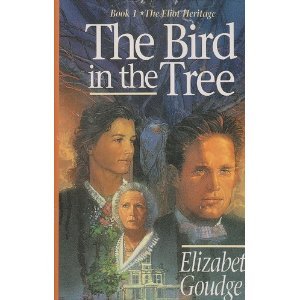
 

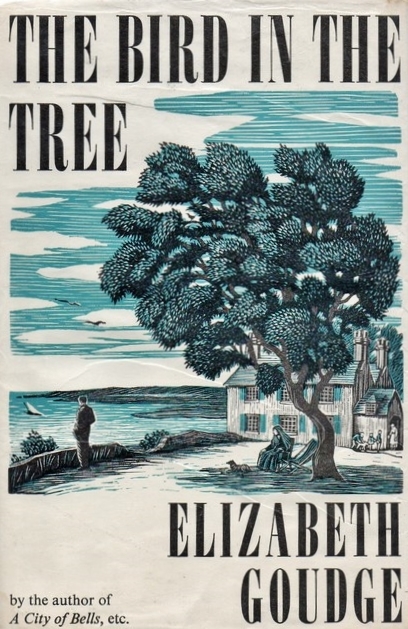
Based on Cornflower’s review and in a desperate mood for an old-fashioned read, I got The Bird in the Tree –with this dreadful cover — from the library.  (I much prefer the vintage cover above).

Elizabeth Goudge is a British writer, probably best known for her novel Green Dolphin Street (nope, haven’t read it). The Bird in the Tree is set in 1938 and is the first in a trilogy about the Eliot family and their beloved home, Damerosehay on the Hampshire coast.

Nothing better than a British house setting I thought as I opened the book, trying not to form images of the characters from the tacky 1980’s cover.

The first thing to strike this reader is that Ms. Goudge is verbose.  She obviously loved nature and takes pages to describe the beauty in her settings — from the gardens, to the sunsets, grand water views, and even   the individual birds.

Soon, however, as the quote above predicted, my shoulders lowered and I relaxed into the slow rhythm and realized I was enjoying some very nice writing.

Early in the novel there’s a flashback to when Lucilla and her young grandson first discover the house that would become Damerosehay.  The descriptions (there’s pages of them) of the abandoned home and its gardens makes for some enchanting reading.  Here’s just a taste:

…for it was such a garden as neither of them had seen before.  It was a wild, crazy garden, the kind of garden in which the sleeping beauty and her court lays sleeping for a hundred years.  Once it had been planted with orderly care and neatness, but now all the flowers and trees and bushes had gone mad together with a sort of jubilant madness that was one of the loveliest things Lucilla had ever seem. The rose trees, bright with their new green leaves, were running riot everywhere, climbing up over the old wall, festooning themselves over the cherry trees and oak trees, cherry trees to the east and oaks to the west that grew in the tangle of wild grass that had once been lawns and flowerbeds …

Lucilla,with the help of her children, purchase the house and it is transformed into the warm and beautiful place she wants as a safe haven for her children, their children and generations beyond.

Lucilla and her family are far from perfect.  The characters are revealed through both their actions and innermost thoughts and thus, we discover the Eliots share heartbreak and wounds — not to mention the art of manipulation and resentment — all bubbling just beneath the surface.  There’s an ill-advised love affair that threatens the Eliot family relations.  Some past secrets are revealed and others stay – well secret.  But mostly this is a novel about people and a home they love.

Lucilla’s son Hilary (don’t you just love British names) although the least clever of the Elliot family, turns out to be the happiest, in his role as village vicar:

…Fairhaven liked to hear the [church] bell tolling out every morning, sounding through the winter darkness as though to tell them that the night was over or ringing through the spring and summer birdsong like another bird calling in the sky.  The ungodly, rousing from sleep, set their watches by this bell, and the godly whilst also setting their watches, remembered that, at this hour Hilary was praying for them.  They were glad of that, for they liked Hilary.

Hilary as expected does give deliver advice and counsel, but it’s nothing compared to the morale high ground voiced by Lucilla and her long time ladies maid, Ellen (yes, there’s a lady’s maid).  I shook my head in amusement and dismay at their self assurance when weighing in on other people lives.

But in the end, the Eliots love each other and while they suffer from an excess of contemplation, they are good people who do the right thing – and yes, there’s a neatly-tied-up-fairly-happy ending.

Old fashioned, overly sentimental and, at times, melodramatic —  The Bird in the Tree was just what the doctor, or in this case, Cornflower Books recommended – I felt better having read it.

The second in this series – Pilgrim’s Inn is on my list for the next time I’m in need of a restorative read.
One Thousand White Women by Jim Fergus

This book has languished on my shelf for years, and for some reason the other day I decided to give it a try…and got lost in it for days.

I didn’t just read this book — I inhabited it.

Published back in 1998 (which may be how long I’ve had it), One Thousand White Women is a fictional re-imagining of a true event. In the author’s note, Mr. Fergus writes that he came across an interesting historical record.  In 1854 at a peace conference, a Cheyenne chief made a request to trade white women for horses. The Cheyennes astutely saw the future and were looking for a peaceful solution. The women would become brides and their children would allow easier assimilation into the white man’s society.   The request was soundly rejected by the US government. 

But, Mr. Fergus wondered, what if it did happen?  What if the government agreed to this absurd proposal and sent white women to marry into the Cheyenne tribe?  The result is this wonderful and devastating book.

The novel imagines that the government recruited women volunteers from brothels and institutions under a so-called BFI (Brides for Indians) program to “assimilate the heathens”.  One Thousand White Women centers on May Dodd whose story is told through her journals and letters. 

May Dodd comes from a prominent Chicago family. When she runs off with a common laborer and has two children out of wedlock, her influential father has her committed to an insane asylum and has taken her children away to educate properly.  With nothing left to lose, May volunteers for the program:

Frankly, from the way I have been treated by the so-called civilized people in my life, I rather look forward to residency among the savages.

And so we’re off with the first trainload of white women bound for the Great Plains and their new lives as brides of the Cheyenne nation.  On the train are a troupe of vulnerable women and these supporting characters start out predictably stereotypical.  We have Irish twins out to scam everyone, a fallen Southern belle (who hates blacks and uses the N word), a large homely Swiss woman — well the list goes on. I must admit, here the writing became clunky. But as the novel goes on, we learn each woman has their own reasons to want to start new lives.  During their long journey the women get to know each other, reveal their various sad backgrounds, and as Fort Laramie draws closer, they grow more frightened and are drawn closer.

Eventually, they reach Fort Laramie where they are told to take only what they can carry and continue their journey on horseback.  Once they arrive at the Cheyenne camp, there are nowhere near 1,000 women, merely 40-50 total and the women question their decision.

So what is our position then — officially speaking?  Are we nothing more than sacrificial lambs?  An interesting, but unsuccessful political experiment? Missionaries stranded in the line of duty?  Or perhaps easiest to explain, white women gone astray, taking up with savages of our own volition? 

After they are left behind, the women inevitably have to adapt to the camp and its inhabitants.  They are eventually paired off with Cheyenne men and wedding plans are made.  May is pleased to marry the chief, Little Wolf, some of the other women are less fortunate.  But all make the best of the situation. 

And here is where I fell headlong into the wonderful descriptions of the challenges, beauty and even the drudgery of daily life with the Cheyenne. The wild landscape, hunting for game, bathing in ponds, cozy teepees, and the Cheyenne wedding ceremonies.  But all is not idyllic, there are battles with other tribes, violent rapes (yes that’s plural), and the Cheyenne’s first experience with whisky (not good).  Mr. Fergus has done some fine research on 19th century native American culture, and his writing shows both compassion and insight.  

There’s a poignant turning point when, after six months, the women return with their husbands and tribe to visit Fort Laramie.  Wearing deerskin dresses and many now pregnant, they are not welcomed but rather met with revulsion and horror by the residents.  They now look, act, and smell like squaws and bear no resemblance to the white women they once were.

How strange to recall that six months ago we departed Fort Laramie as anxious white women entering the wilderness for the first time; and now, perhaps equally anxious, we leave as squaws returning home.  I realized anew as we rode into the cold north wind on this morning that my own commitment had been forever sealed by the new heart that beats in my belly; that I could not have remained even if I so wished.

Some readers may have trouble with the plausibility of this story and many other reviewers found One Thousand White Women ludicrous.  My only quibble was the modern day insights and actions that leaked into the journals and letters of what was supposed to be a typical 19th century woman. There were even some thoughts on global warming, which I doubt was on the minds of anyone living in the late 1800’s.

But still, I found One Thousand White Women captivating and completely different.  I often forgot reality and the fact that I was reading a novel.  I was living in a different world — in a different time. A stay-up-late adventure story filled with action, humor, romance, insight and beauty.


BookBarmy Warning: there is graphic sex and violence – this is not a book for the faint of heart or prude. Nonetheless, I’m passing it on to my mother – as she is neither.


The Music Shop by Rachel Joyce

I’m re-posting this review, because I found a copy of this gem in one of my little free libraries — and decided to re-read it the other night.  Maybe it was just my mood, but I enjoyed it just as much – if not more – with the second reading.  The Music Shop is deceptive novel, seemingly simple — but actually delves deep to celebrate the joy and comfort of music and the kindness of friends.   Perhaps a reminder we all need.

Right up there with my love of books and reading — is a love of music.  Music of all sorts really — from jazz to classical, early choral to classic rock.  There are CDs and records aplenty in the cupboards and I nerd out creating Spotify playlists for both entertaining and my quiet reading times.  There’s most always music playing in our house (with the exception of football season).

So when The Music Shop came to me, I was jazzed (sorry).   Not only because it was from the author that wrote THIS, but also because it had been highly touted by other book bloggers.

It’s 1988 in a provincial town in England, and down on Unity Street is a dingy music shop run by the shy, socially awkward Frank.

There was once a music shop. From the outside it looked like any shop, in any backstreet. It had no name above the door. No record display in the window. There was just a homemade poster stuck to the glass. FOR THE MUSIC YOU NEED!! EVERYONE WELCOME!! WE ONLY SELL VINYL!!”

Unity Street also boasts a pub and six shops facing a row of Victorian houses.  The neighborhood is slowly deteriorating as shops face economic decay and reluctantly sell out to developers.  We’re introduced to the cast of characters on Unity Street — a grim tattoo artist, a recovering alcoholic ex-priest who runs a religious gift shop, a hand-holding twin brother team of undertakers, a grumpy tea-shop waitress, the overly-enthusiastic adolescent music shop assistant, and of course, Frank, forty, single and living above his music shop.  This band of motley neighbors and shop owners are somehow endearing – as they care and help each other.

Frank is somewhat of a music savant — he can sense the music that will help those who come into the music shop searching for some sort of solace in a record.

Frank could not play music, he could not read a score, he had no practical knowledge whatsoever, but when he sat in front of a customer and truly listened, he heard a kind of song.

His shop was permanently occupied by people who would otherwise be roaming the streets or weeping in bedsits.

Frank made listening booths from old wardrobes:

[these booths] Frank had made himself from a pair of matching Victorian wardrobes of incredible magnitude he had spotted on a skip.  He had sawn off the feet, removed the hanging rails and sets of drawers, and drilled small holes to connect each one with cable to his turntable.  Frank had found two armchairs small enough to fit inside, but comfortable.  He had even polished the wood until it gleamed like black gloss paint, revealing a delicate inlay in the doors of mother-of-pearl birds and flowers.

I can just imagine listening to music cocooned is such loveliness.  Chapters start with music titles, so as I was reading The Music Shop, I would play the exact music.  And because this book is all about music — The Washington Post called it “an unabashedly sentimental tribute to the healing power of great songs”, The Music Shop has its own soundtrack.  I will link the music where I can throughout, making this an interactive review and will give you the entire playlist at the end — no charge.

For Maud (the tattooist), Frank recommends Samuel Barber’s Adagio for Strings, eight minutes of music that convinces her that while her life is not that great, or even fair, it may be worth living anyhow. (One of my favorite pieces of music ever, always brings tears to my eyes.)

For a groom whose bride cheated on him, Frank pulls out one of Aretha’s early albums and puts him in the listening booth to hear one song — Oh No Not My Baby

Frank’s unconventional and troubled mother, Peg taught him about music and the book flashes back to a younger Frank on the floor listening to records with his mother.    Just a couple of my favorite passages:

if you listen, the world changes. It’s like falling in love. Only no one gets hurt.

This is the record that will change history,’ said Peg. ‘Why?’ She blew a plume of smoke towards a tea-coloured patch on the ceiling. ‘Because it takes music to a whole new place. Miles Davis booked all the best players but they had hardly any idea what they were going to play. He gave them outlines, told them to improvise, and they played as if the music was sitting right with them in the studio. One day everyone will have Kind of Blue. Even the people who don’t like jazz will have it.’

But wait, there is a plot in The Music Shop.  One day, Ilse, a mysterious German woman faints outside the music shop and while Frank and his assistant come to her aid, Frank falls in love with her.

Ilse falls for Frank as well, but neither are ready or willing to show their feelings yet.  Ilse asks Frank to teach her about music and they meet every week in the tea shop (with the grumpy waitress) and Frank talks and talks about music. Not knowing how to express his love, he instead shows his heart through his love of music.

He was perfectly fine with emotions, so long as they belonged to other people.

Franks tells her of Pérotin a 12th century European Composer.

Once you’ve heard Beata viscera, you’ll never forget it.  It’s just a single human voice but it feels like stepping onto a bird’s back.  The moment it starts, you’re flying.  It takes you up, it swoops you down, and then it lifts you so high you’re a pinprick in the sky.  But if you close your eyes and really listen, it holds you safe the whole way.  Until I heard [it] I had no idea human beings could be so beautiful.

There’s a hidden identity, a misunderstanding, Ilse flees back to Germany and it appears Frank has lost the love of his life – or has he?   Meanwhile, the neighbors and shop owners must fight developers who want to take over Unity Street.  The threat of gentrification looks inevitable and Frank’s beloved shop may have to close. Broken hearted Frank no longer cares – or does he?   You’ll have to read the book to find out —  no spoilers here.

Where Ms. Joyce really shines is in her literary ability to bring music to life — all forms of music.   The solace and joy of music. Why we listen and why we need music in our lives.  But most importantly — how music can change a life and perhaps even save one.

 The silence at the beginning of a piece of music is always different from the silence at the end.

As you may have surmised, this is not Dostoevsky, it’s a simple plot, but with a great deal of heart. The Music Shop is a book you’ll read with a smile. This is the type of book I love reading and I suspect you will too. 

We can tackle The Brothers Karamazov later.

Complete soundtrack:

You Tube

Spotify

A digital review copy was provided by Random House via Netgalley

The Wonky Donkey

What’s this?

A children’s book on Book Barmy?


Just watch this lovely Scottish lady reading the book to her grandson…

I’ll wait right here. Turn the sound up. And be sure to watch to the end.

Didn’t that just make you smile?

This video is all over the web right now.  I decided to see if I could find a copy of this hysterical book for some favorite parents and grandparents.

Obviously, everyone else had the same idea — it’s out of stock and a few grubby folks with used copies are asking $500!

I imagine the publisher is furiously reprinting The Wonky Donkey as we speak.  I’ll be buying multiple copies…

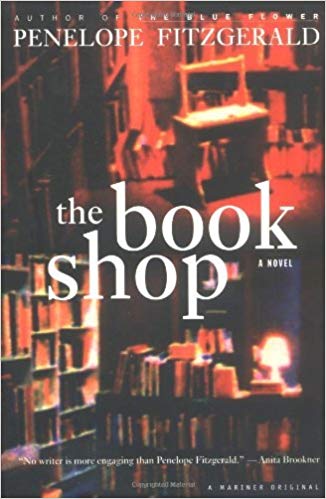
The Bookshop by Penelope Fitzgerald

Another of my favorite books — The Bookshop has been made into a film.

If you’ve not discovered Penelope Fitzgerald, well I’ll just say — you should.  She was a Booker Prize English novelist, poet, essayist and biographer. And The Times included her in their list of the 50 greatest British writers.


The Bookshop is a human satire that plays out in a dreary, almost forgotten English seaside village, aptly named Hardborough. Florence Green opens her Old House Bookshop with some immediate success but is soon met with hostility from the town’s less prosperous shop owners.  But the most vocal is Mrs. Gamart, the local arts patron who had wanted the bookshop space for her high-minded art center.

Florence is strong, yet kind —  introspective but naive.  Her dream of bringing literature to Hardborough is met with  backbiting politics, and parochialism of a village resenting the intrusion of a relative newcomer.

To make matters worse, Florence discovers her bookshop comes with a leaky cellar, and even a ghost. 

Florence does have some friends, the reclusive Mr. Brundish, and the precocious eleven-year-old Christine who comes to work in the bookshop. But the thing that puts everyone over the edge in this 1959 English village is her window display of the new and controversial novel Lolita

It’s a good book and therefore you should try to sell it… They won’t understand it, but that is all to the good. Understanding makes the mind lazy.

Ms. Fitzgerald gives the reader a subtle, yet razor sharp, view into the insularity of a small village and how petty people can be when faced with change.

 Only too late does she begin to suspect the truth: a town that lacks a bookshop isn’t always a town that wants one.

I won’t sugar coat — this is not a feel-good bookstore novel.  The Bookshop is an often harsh story and there’s not a bit of romanticism.  And, sorry folks, there’s no happy ending, with everyone coming around to embrace the new bookshop.  The ending leaves many unanswered questions which, if you’re like me, you’ll ponder long afterwards.  I imagine just as the author wanted.  To quote from the book itself:

[She] loved the moment when you finished a book and the story keeps playing like the most vivid dream in your head.

The Bookshop is a lovely, sly little novel in which a morality tale becomes both simultaneously humorous and tragic

And a final warning, Ms. Fitzgerald requires slow and attentive reading, all the better to appreciate the gorgeous writing and sly humor.

The film opened a couple of days ago and I’m looking forward to seeing it.  The casting looks superb, I can only hope they don’t sprinkle it with too much saccharine.

Film trailer HERE

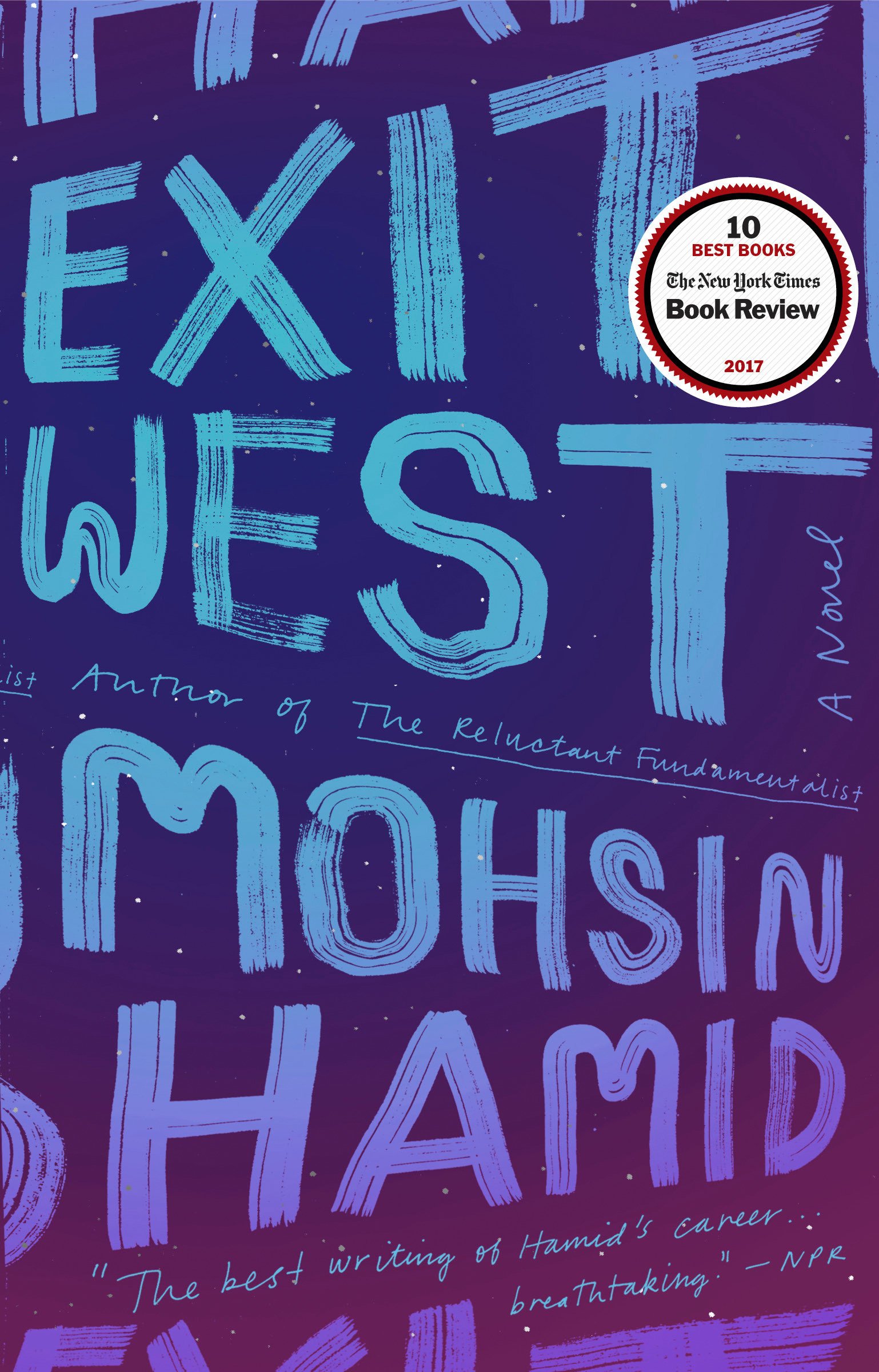
Exit West by Mohsin Hamid

It’s taken me forever to write this review.

It took me forever to read the book.

This is one of those Very Important books.  Nominated for a Manbooker Prize, high praise from NPR, and named one of The New York Times 10 best books.  Exit West has been on many must read lists since it came out in 2017. 

Timely  — a love story set in a world descending into chaos over a massive influx of refugees.  Okay I will read Exit West, this Very Important novel.  And then, I thought, I’ll have something to talk about at parties (if I ever went to any).

As one reviewer said:

…both lyrical and urgent, this globalist novel evokes the dreams and disillusionment that follow Saeed and Nadia…peels away the dross of bigotry to expose the beauty of our common humanity.

The story centers on Saeed and Nadia who fall in love despite religious and societal differences in their unnamed country in the middle east, and as civil unrest builds in their country, they are forced to flee as refugees.

They secure escape through a series of magic doors that connect one country to another.  Passage through the fictional doors is both risky and expensive — an obvious metaphor to the truth.  The couple journeys to Greece, England, and eventually the United States through these doors, joining other immigrants along the way.  As the borders are perforated by the magic doors, the refugees become their own humongous nationality regardless of national origin. There are serious impacts to both the new country and their personal lives.

See?  Very Important book — Very Important topic

It’s a short book and should have taken only a few hours to read —  yet, I kept putting it down.

I struggled to keep reading, struggled further to even finish it. And I’ve squandered an inordinate amount of time thinking about why I didn’t like Exit West.

It comes down to this ~~

This is just not a good book. Often poorly written, usually boring, and at times felt like I was reading an early draft.  There are half page run-on sentences.  The cool, detached narration meant I never warmed to the story, the characters, or their plight.

The concept of magical doors in a war torn country sweeping refugees to the peaceful west had such potential – but alas, it never really works.  I never really believed in them.  (Remember I read time travel books, so I can fall into magical realism.)  The fictional doors remained a gimmick, not the metaphor both I, and I think the author, hoped for.   It made me wonder why fictional doors?  Isn’t the true refugee experience harrowing enough?

There are superfluous vignettes which introduce other poor souls but these are never re-introduced into the plot and were left unresolved.

The book ends without any sort of  view into the future and had a post-apocalyptic feel about it.

After all the Very Important book hype, I anticipated a powerful novel that would not only sear into my heart, but also provide insight into the issue of immigration and the hard issues surrounding their resettlement.  

I almost exited (!) the book several times, but I kept with it, so you won’t have to.

That’s just the kind of service we aim to provide here on Book Barmy.  You can thank me later.

I’m off to find something to cheer me up.

I know, a nice cup of tea and the season 5 Great British Baking Show saved for marathon watching — and, perhaps this…

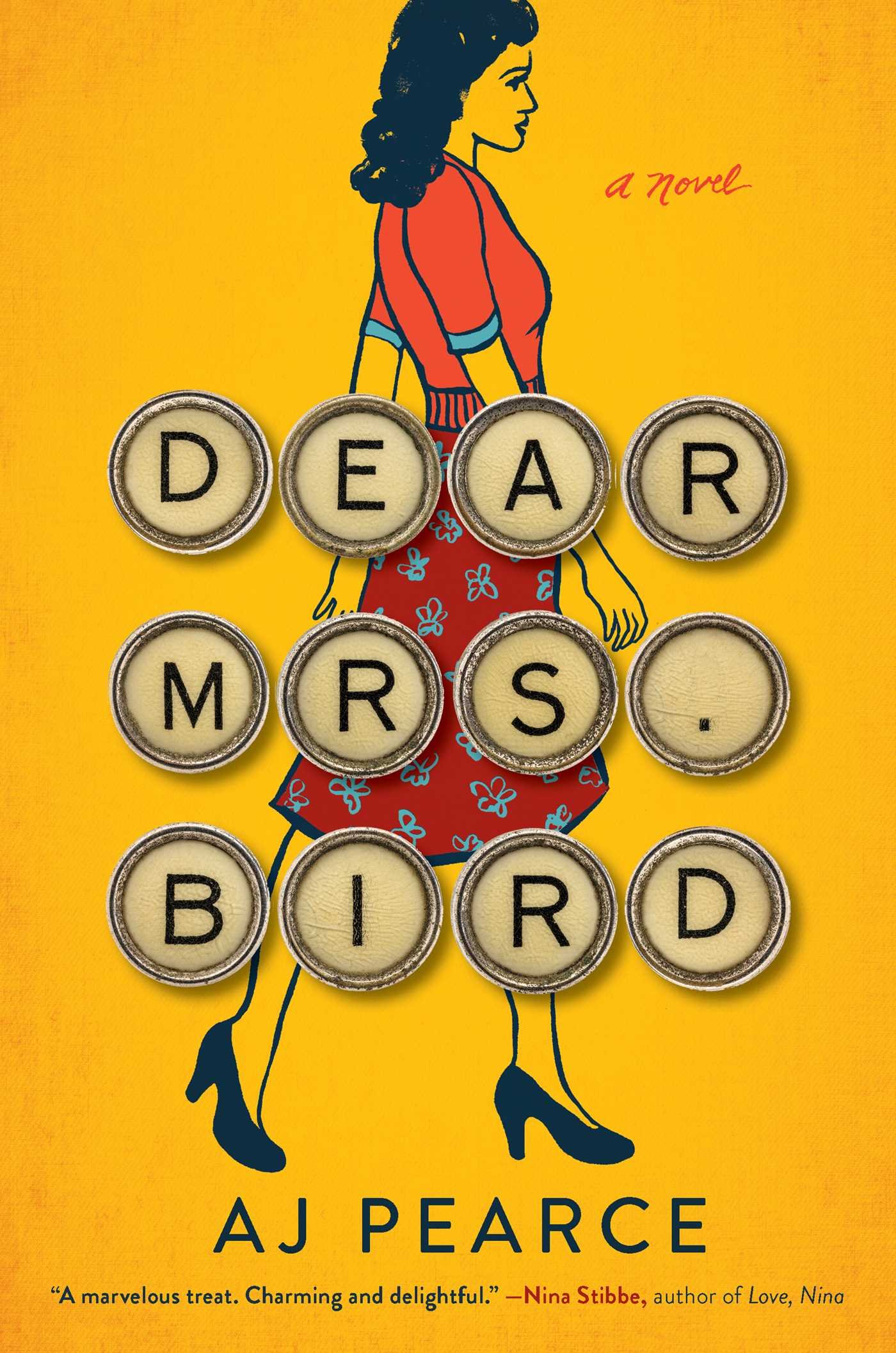
Dear Mrs. Bird by A. J. Pearce

Coming out of my re-reading of The Guernsey Literary Potato Peel Pie Society, I remembered I had a copy of Dear Mrs. Bird which is touted as:

…a warm, funny, and enormously moving story for fans of The Guernsey Literary and Potato Peel Pie Society 

Unable to return to present-day reading, I dove right into another novel based on a plucky young woman in war-torn London.


The novel opens with Emmy Lake, aged 23, riding the bus home from volunteering as a telephone operator with the Auxiliary Fire Services.  She is carrying her handbag, gas mask, and a prized onion for stew. But, most importantly she has seen an advertisement for a position at the London Evening Chronicle.  Emmy dreams of becoming a journalist, and with the war on, she imagines herself reporting from dangerous locations. With great excitement she applies for the job and gets the position, only to discover she’s actually working for the formidable Mrs. Bird who writes an advice column  in the stodgy (and failing) Woman’s Friend magazine.  

Emmy has to sort the incoming letters discarding any that are deemed as off limits.   Mrs. Bird refuses to even read letters contain any mention of premarital, marital, and/or extramarital relations.  No political or religious activities or opinions – no Hitler.  Mrs. Bird ignores pleas from women who are troubled by Unacceptable Topics, which includes just about everything except questions about cooking or skin care. Everyone else needs to take Brisk Walks and have a Cheerful Attitude.

Emmy, can’t bear to see these heartbreaking letters so callously dismissed and decides to respond to a letter, then another, directly, without Mrs. Bird knowing. Okay, you’re thinking, I know how this is going to end, how quaint — it’s just a matter of time before Emmy will be found out. Is that it?

Never fear, the author has given us much more.  Through the first person narrative, the reader is immediately drawn into Emmy’s world.  The narrative alternates between her thoughts (almost like reading her journal) and her correspondence. Yes, she’s young, full of hope, excitement — with her emotions in capital letters — so much is Important or Exciting.

There is humor, with chapter titles such as  A Quandary over Next Steps, or A Rumour of Pineapple Chunks

And then there are Emmy’s observations at once naive but also insightful:

My mother steadfastly referred to the war as This Silly Business, which made it sound like a mild fracas over a marmalade sponge.

Emmy and her friends are resilient and hard-working young people, making do with rationed food and altering hand-me-down clothing — they’re just trying to get on with their lives, their jobs, friendships, going to dances, and love complications ~~ all with the nightly backdrop of bombs falling on their beloved London.

Noise was coming from everywhere at once, as if we were being eaten by the very sound itself

Dear Mrs. Bird also deals with some serious issues.  The plight of women left behind in widowhood or with lost lovers, trying to rebuild their lives.  We see how post traumatic stress collides with the British stiff upper lip.  The loss of lives, rationing, and the weight of constant fear.  And there’s poor Emmy, in her volunteer fire service role, dispatching her male friends into bombed and burning buildings — with tragic results.

Emmy is the most fully characterized with her guileless faults and strengths (she reminded me of Jane Austen’s Emma) and we see a view of the London Blitz through the eyes of this young woman who wanted more out of life than society was willing to give her. Other characters could have been more fleshed out.  Mrs. Bird was especially one-dimensional, I wanted to know her background and character a bit more.

But otherwise, this debut novel is just lovely — inspiring and intelligent and will have you alternately giggling and crying.

A digital review copy was kindly provided by Scribner via Netgalley

Ms. Pearce was inspired to write this novel after obtaining a women’s magazine from 1939.  Interview with the author HERE

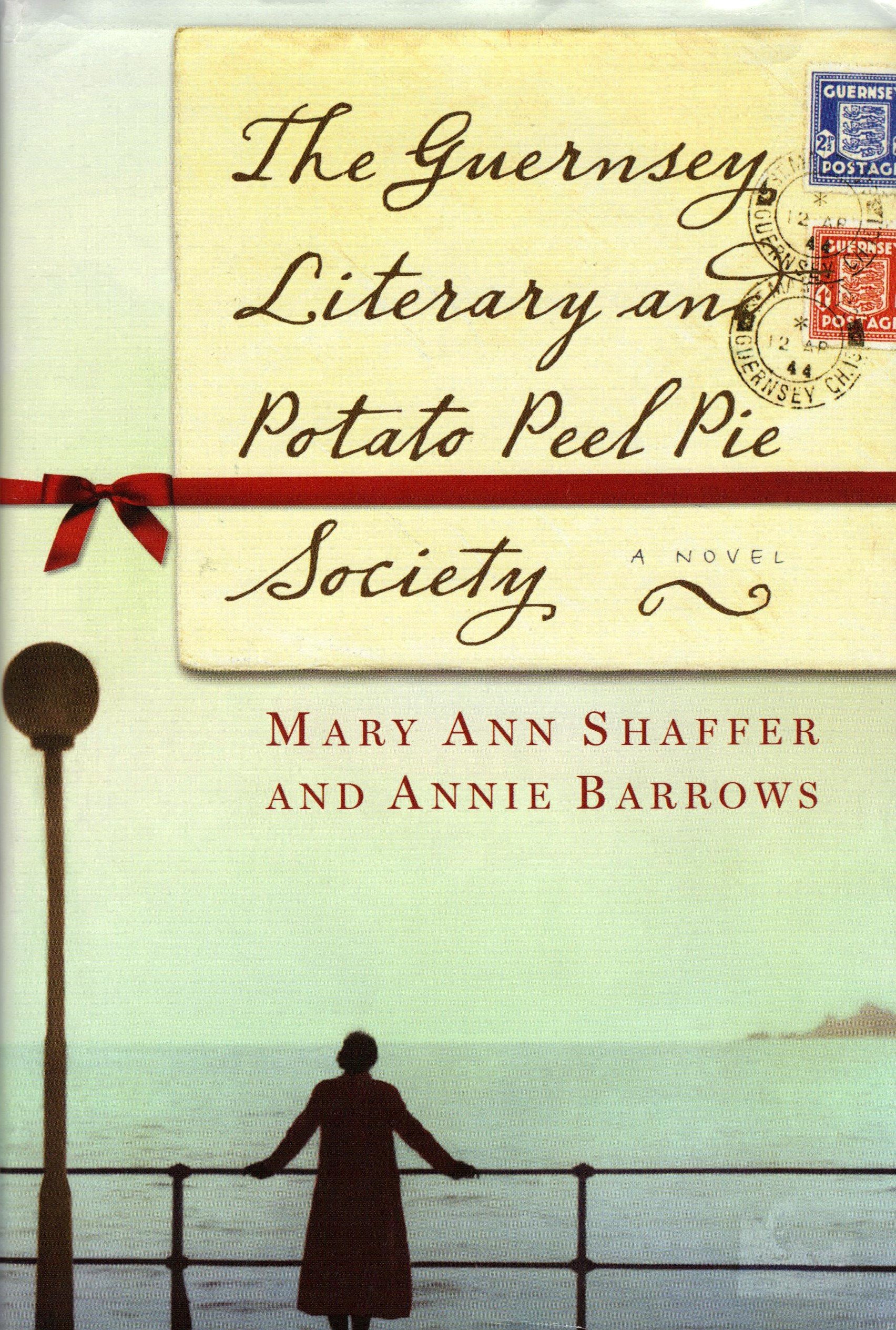
The Guernsey Literary & Potato Peel Pie Society

The Guernsey Literary & Potato Peel Pie Society

by Mary Ann Shaffer and Annie Barrows

There are beloved books I keep on my shelves just to re-read and The Guernsey Literary & Potato Peel Pie Society is just such a book.  Netflix is releasing a film based on the book, so last night I reached for my copy to read — yet again.

This morning, I woke with the realization I’d never talked about this epistolary novel here on Book Barmy.  By now, I’m sure you have already read this bestseller.   But just in case, let me tell about about this this little gem just to tempt you into reading it (or re-reading) before the film debuts.

Mary Ann Shaffer spent years doing background research for The Guernsey Literary & Potato Peel Pie Society but sadly passed away just after the first draft manuscript went to the publishers.  Her daughter, Annie Barrows, an author herself, completed the final editing.

Juliet Ashton, is a 32-year-old author and survivor of WWII London. She’s struggling to find a subject for her next book when she receives a letter from a stranger on isle of Guernsey which was occupied by the Germans during the war.  Mr. Dawsey Adams tells that a used book by Charles Lamb called `Selected Essays of Elia’, kept him sane during the war.  Turns out this tattered volume was once owned by Juliet and her address was written in the jacket cover.  (Only in a book lovers world would this not be considered stalking.) 

He goes on to tell her that the residents of Guernsey — namely the members of  The Guernsey Literary and Potato Peel Pie Society — are starved for books and could Juliet help him find other books on Charles Lamb.

Thus begins this wonderful story and a correspondence which grows to include a number of characters who lived through the German occupation and were all, for the most part, members of the Guernsey Literary and Potato Peel Pie Society (I’ll let you discover the origins of the intriguing title).  The society includes pig farmers to phrenologists (you learn more about Phrenology in your reading)  — all literature lovers who outsmart the Germans.   The letters are witty, poignant, and for this reader, eye-opening.  Although it’s probably common knowledge to most (especially those in the UK), somehow I never knew Guernsey was occupied during the war.

Although the subject matter is serious — the Nazi occupation of Guernsey and the resulting cruelty inflicted on the residents of the beautiful island — (here’s where the author’s in-depth research shines*)— the manner in which the story is told endears the reader to each and every character.

So if you haven’t yet read The Guernsey Literary and Potato Peel Pie Society, get yourself a copy by hook or crook, because I agree with Juliet Ashton’s prediction:

There is some secret sort of homing instinct in books that brings them to their perfect readers.

The film starts airing on Netflix in early August. I’ll give it a try, but it looks like it might be a bit overly-romantic — trust me the book is much more — much richer.    Film trailer HERE


*I gave a copy to a friend who was a child in Germany during WWII, and she said the bulk of the book rang true, however some of the German marching scenes were not technically correct — something about inappropriate goose-stepping.

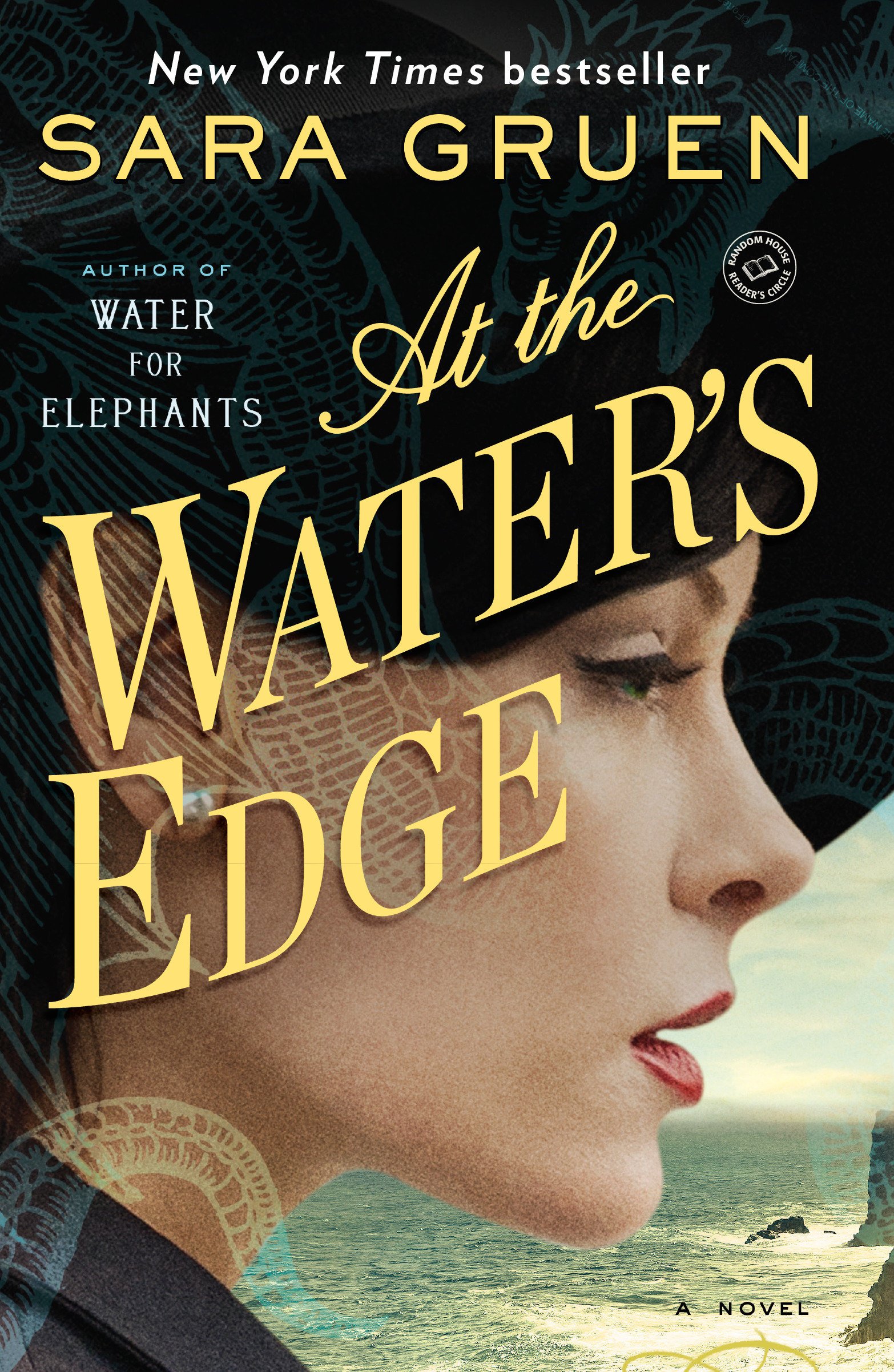
At the Water’s Edge by Sara Gruen

How do I decide which books to take on holiday? My requirements:  They must be an easy read, yet intelligent enough to hold my interest when I’m sure to be reading in fits and starts.  I read At the Water’s Edge while galloping across Central Europe and it fit the bill beautifully.

From the blurb:

After disgracing themselves at a high society New Year’s Eve party in Philadelphia in 1944, Madeline Hyde and her husband, Ellis, are cut off financially by his father, a former army colonel who is already ashamed of his son’s inability to serve in the war. When Ellis and his best friend, Hank, decide that the only way to regain the Colonel’s favor is to succeed where the Colonel very publicly failed—by hunting down the famous Loch Ness monster—Maddie reluctantly follows them across the Atlantic, leaving her sheltered world behind.

WWII is raging and yet this unlikely trio arranges passage across the Atlantic sailing through U-boats to a small Scottish village on the shores of Loch Ness.  The only inn falls far below their usual standards, there is no electricity at night, there are severe food shortages, and rations on what little food is available. 

Ellis and Hank are unwilling to adapt to the war-time conditions, expecting room cleaning, laundry service, and extravagant meals after their outings attempting to photograph the Loch Ness Monster.

Maddie, happily left behind during the men’s outings, starts to become friendly with the two young women who work in the inn and begins to see beyond her wealthy Philadelphia background.  Maddie soon dons an apron and helps out around the inn, grows even fonder of her new friends — and especially the rugged Scotsman inn manager.

Meanwhile, our hapless American males grow even more obnoxious as they set out to interview locals who have reportedly seen “Nessie”.  The villagers are having none of these monster seekers. They have no interest in helping out, so tell conflicting stories and give wildly inaccurate locations.  As Ellis and Hank continue to fail in their quest, they drink excessively, stay out for days, and there are repercussions, not only to the marriage and their friendship– but throughout the village.  Maddie grew on me, just as she did with the Scottish villagers. And the range of village characters were well drawn and unique.

This novel isn’t just about a Scottish village or searching for the Loch Ness Monster — there’s a hint of murder, a haunted castle, ghosts, a war story, superstitions, abuse and romance– and in the end — good versus evil.

I’ll admit there were some downright silly elements to the book. Normally I would roll my eyes but for some reason I was able to forgive them in this story.  (See above — requirements for books when I travel.)

While the ending is a bit predictable, and sometimes the characters were either a bit all-too-good or all-bad, but this historical romance was a fun read with a beautiful setting and compelling story line.

Good vacation reading.


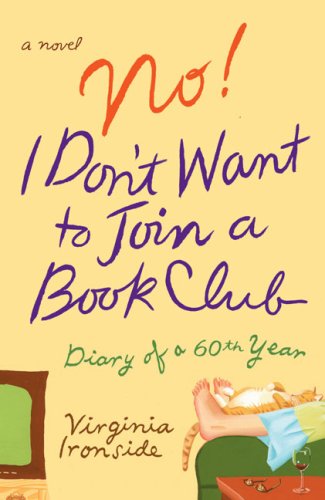
No! I Don’t Want to Join a Book Club by Virginia Ironside

A joke birthday gift from a friend, No! I Don’t Want to Join a Book Club languished on my shelf for several years now.  I plucked it out the other evening, needing a break from a serious read.

Virginia Ironside is a British humor writer well known for her writings about getting older.   She’s also an agony aunt (British for advice columnist) with a column in the Independent, and once had a one-woman show,’Growing Old Disgracefully’.

In this novel/fictionalized diary, Marie has just turned sixty and decides to chronicle her life. Often funny, sometimes a bit sad, and usually snarky, this book has a cover blurb that calls it an AARP-issued ‘Bridget Jones Diary’.  

She has a curmudgeonly outlook on growing old gracefully,

~~ or not:

The thing is: I don’t want to join a book group to keep young and stimulated.  I don’t want to be young and stimulated anymore.

I’ve done fascinated, I’ve done curious.  I want to wind down,  I want to have the blissful relief of not being interested.  Like being able to spend a day doing nothing instead of being obliged to cram it with diversionary activity to avoid guilt and anxiety.

Ms. Ironside uses the diary format to up the humor.  She calls memory lapses CRAFT moments  —  as in ‘can’t remember a f***ing thing’.  She journals about a party discussion wherein no one can remember an actress’s name from a famous film.   Then two days later, this appears as the single entry, ‘Glenn Close’.

Here she argues with a friend, who talks about getting older as a time to have adventures and learn new things:  Marie just wants to put her feet up and ‘start doing old things’.

That’s what’s so great about getting old. You no longer have to think about going to university, or go bungee jumping. It’s a huge release! I’ve been feeling guilty about not learning another language for most of my adult life. At last I find that now, being old, I don’t have to! There aren’t enough years left to speak it. It’d be pointless!

Marie’s life is constantly changing and evolving, there’s the arrival of a grandson, and the loss of some dear friends.   And, although she hasn’t had sex in five years, she doesn’t lose sleep over it. She’s thinking of giving it up – unless a nice, rich and attractive crush from her childhood can change her mind.

This novel is an honest look at life as we age and, at times, I found it both touching and humorous.

However, half way through, the journal format starts to loose it’s charm and her continued grumpy treatises on the same points became tiresome.

Ms. Ironside has much more to say about being old (sorry, older) as there are two other books the Marie series all with equally funny titles:  No I Don’t Need Reading Glasses and No Thanks, I’m Quite Happy Standing.

The title cracked me up, but sadly No! I Don’t Want to Join a Bookclub got put aside unfinished.  Marie (and the author) would be OK with that, she would understand and give me a high five — it’s our age –we don’t have to finish a book or go bungee jumping.


N.B.:  While we’re on the subject of humorous essays on aging, I found Nora Ephron’s “I Feel Bad About my Neck” and “I Remember Nothing” ever so much better, and well worth whatever free time you have when not learning Swahili.