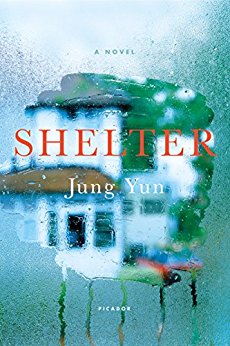
This debut novel opens with a suburban family struggling with debt. Kyung and his wife, with their young son, are financially underwater – they owe more on their house than it is worth, their credit cards are maxed out, and the bills have been pilling up for months.
Their sense of want was always more powerful than their sense of reason.
Kyung and his parents came to the United States from Korea when he was small. But as an adult, Kyung has been estranged from his family for years, and is unwilling to ask them for help, despite the fact they are wealthy and live in an ultra-exclusive neighborhood just up the hill.
As the book opens, Kyung and his Irish-American wife, Gillian are showing their home to a realtor, who is less than enthusiastic about the probability of a good sale.
It is here, right in the first chapter, that Ms. Yun rips this typical-seen-it-before plot open and twists it into a completely unexpected direction.
As the realtor is explaining the less than ideal prospects for their home sale, they suddenly see Kyung’s mother wandering, naked and beaten, in their back yard — crying and babbling in her native Korean.
Whoa — didn’t see that coming.
I don’t want to give too much away about this compelling, but unsettling story line. There are many layers and deep issues within Shelter that must be read in context and first-hand. So, very carefully I will tell you a bit more, just to entice you to read this well crafted, but brooding novel.
The estranged family is thrust together in the wake of a violent attack on Kyung’s parents. They must live together – in Kyung’s tiny, over-mortgaged home.
Tensions quickly surface, there are old resentments, generational mistrust, and the guilt of wanting, but not being able to –forgive. Ms. Yun stirs this together with cultural dynamics, family secrets and the pressure of immigrants wanting to be American at any cost.
Ms. Yun has delivered not only a driving, suspenseful plot but also an exploration of the complexities of family, the immigrant experience, domestic violence, and the grace of forgiveness.
I warn you, Shelter is not a lighthearted read, but at the same time, I found it utterly compelling and finished it in two days.
Shelter is well worth your time. Upon finishing, you’ll be sad, but this complex and beautifully rendered novel will stick with you, as there is much to contemplate and consider.
And isn’t that why we read? For these occasional gems that stay with us long after we’ve closed the last page.
A digital advanced readers copy was provided by Picador Publishing via Netgalley in 2016.
The Book Barmy reading list has adapted to the past couple of months of endless rain and a bout with the flu. I gravitated toward thrillers, wanting plot driven, hold your attention type escapism – as if I were on a long, mind-numbing plane trip
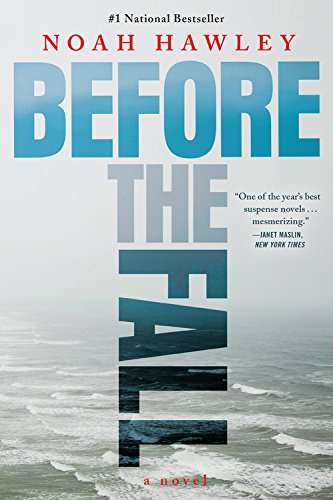
As with Dark Matter, Mr. Hawley, the author of Before the Fall is an award winning television writer, most famous for the strange but compelling series Fargo, so I hoped I was in for gripping story line.
Before the Fall bit me hard from the start and didn’t let go.
A private jet crashes minutes after departing Martha’s Vineyard. Just two passengers survive, an artist and a 4 year old boy. With J.J., the boy in tow secured to a seat cushion, the middle-aged painter Scott Burroughs swims across the ocean to the Long Island shore. Turns out Scott is an accomplished swimmer, inspired as a young boy witnessing Jack LaLane swim from Alcatraz to San Francisco.
The mystery of why the plane crashed is told by weaving together the crash investigation and the survivors aftermath with the backstories of the deceased passengers and crew members. The flight recorder reveals nothing amiss with the plane and it is decided that the crash was due sabotage. A classic locked room mystery, but up in the air. The mystery is unwrapped by revealing each character’s personal history and point of view.
The deceased include a financier facing federal indictment and his clueless wife; the head of a Fox-like cable news network with his wife and child; an Israeli bodyguard haunted by war; a career pilot; a hotshot co-pilot; and a flight attendant in her own life crisis.
In the aftermath of the crash, Mr. Hawley gives center stage to Bill Cunningham the larger-than-life newscaster for the cable news network. He makes the story of the plane crash and the network’s lost leader tabloid news — by asking leading questions, ignoring the facts, assuming the worst, and using illegal means to get information.
It was fascinating to see how the news was no longer the facts of what happened, it became a “story” presented to make the headlines and grab audience numbers. I cringed as Cunningham digs into the personal life of the hero, Scott Burroughs, using a hacker to monitor his private activities, which Cunningham then announces in his news broadcasts.
All this a thinly veiled, yet very relevant stab at tabloid media and Fox news
Cunningham was the angry white man people invited into their living rooms to call bullshit at the world . . . who told us what we wanted to hear, which was that the reason we were losing out in life was not that we were losers, but that someone was reaching into our pockets, our companies, our country and taking what was rightfully ours.
[He appealed to] the people who had been searching their whole lives for someone to say out loud what they’d always felt in their hearts.
Just when the mystery of the downed plane seems connected to the corrupt financier, or perhaps the mysterious bodyguard — no no, it must be connected to the news network somehow– the story line shifts to the characters’ blurred boundaries and questionable pasts. The characters, are after all, just humans – fraught with guilt, frailties, and unresolved resentments.
In the end, it’s not money or power, but human vulnerabilities which drive our actions.
Before the Fall reads like a film — it was a fast paced, entertaining and exciting thriller. And what do you know? Sony Pictures has acquired the rights to the story.
A digital advanced readers copy was provided by Grand Central Publishing via Netgalley.
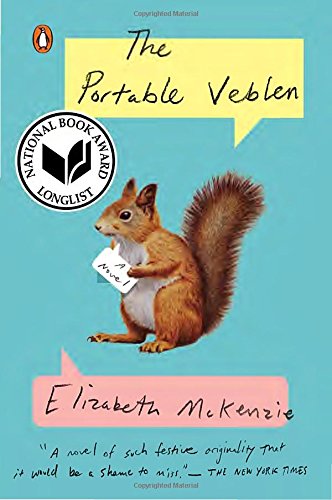
The Portable Veblen was a National Book Award nominee, a Bailey’s prize finalist and talked about on NPR. I found I had an advance copy — and gave it try…especially after reading the book’s publicity blurbs.
“A delightfully cockeyed love story that enfolds two splendidly dysfunctional families and a winningly persistent squirrel.”
“No matter how many novels you’ve read, it’s safe to say you’ve never read a novel like The Portable Veblen.”
The main character, Veblen Amundsen-Howda was named after Thorstein Veblen, an early twentieth century economist who despised corporations, materialism, and the consumer class – a sort of Norwegian Henry Thoureau.
Okay, once I had that figured out, I carried on reading.
Our Veblen is plagued by a hypochondriac, verbally abusive mother. Her father is in a mental institution. There’s a stepfather who suffers from PTS. And Veblen herself has a bizarre obsession with squirrels. She talks to squirrels, convinced they’re the only ones who care and understand her life situation.
A few more chapters and we discover that Veblen bites her own arm in times of stress, there’s a strangulation attempt, and the final straw — attempted humor around the abuse of a disabled child.
Had there been a fire in the fireplace I would have burned the thing* — so instead I threw The Portable Veblen on the floor in disgust.
I was forewarned that there would be family dysfunction – (see the blurbs above)…
But these characters go beyond dysfunctional — they are nasty pieces of work and season ticket holders on the crazy train.
And, my friends, child abuse is never, ever funny.
* When I was a little girl, there was a famous incident in which, disgusted with what he was reading, my grandfather threw the errant book across the room into the fireplace.
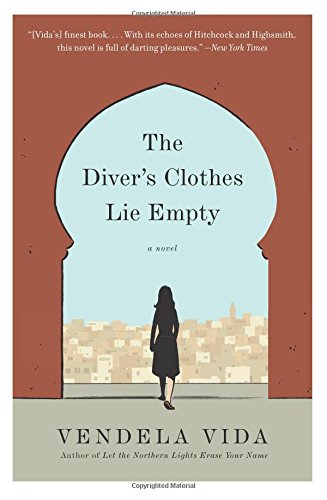
It’s every travelers nightmare ~~ jet lagged, tired, disorientated, and at your most vulnerable ~~ you’re robbed. This is exactly what happens to a nameless American woman in the unconventional novel, The Diver’s Clothes Lie Empty.
While checking into her disappointing hotel in Casablanca, her backpack, holding her wallet, passport, computer, and all her money, is stolen while her back is turned.
(Let me stop here to say I heard Vendela Vida –don’t you love her name?–interviewed on Fresh Air — the author got the idea for this novel after her own experience of being robbed in a foreign country.)
The police investigating the theft are blatantly incompetent, perhaps in on the theft, and in the end return a backpack, but it’s not hers. It contains another woman’s wallet, money, passport, and (still working) credit cards.
While she is understandably panicked by the crime, she realizes she is also strangely free to become anyone she wants to be. Our nameless narrator takes the backpack and assumes the new identity.
Little by little, during this slim little novel, we are given her backstory An ugly divorce and a betrayal by her twin, allows us to understand why she escaped to Morocco and her need to create new personas.
The novel is written in second person singular (i.e.: you)
“You know who you are; other people do not need to.”
This voice is actually more intimate than the first person singular, as if we are co-inhabiting each new identity. She is recruited to play a famous actress’s stand-in for a film being filmed in Casablanca, she substitutes for the actress on a dreaded date with an older gentlemen, and even meets Patti Smith.
Ms. Vida describes the details of our narrator’s experiences through all the senses — we feel the heat, smell the traffic exhaust, but most impressive are the scene descriptions — almost as if they were stage sets:
“…(you) enter an enormous lobby. Its sofas are mocha colored and deep and plush. The kind of sofas that are easy to relax into, and difficult to rise from. White orchids are staged artfully throughout the lobby and Lauryn Hill must pulses softly through the speakers. Everyone is dressed as though going to a business meeting in London or an upscale lunch in New York. No one is dressed as though they are in Morocco…”
Smart and witty, The Diver’s Clothes Lie Empty, explores the possibility of freeing ourselves from the shackles of our identity. How easily appearances, and identities, can be changed. What happens when we choose to become a creation of our own making? When we are able to fully escape our past history?
This is not a travel novel, but rather a reflection on reinvention, lying, and an endless world of possibilities. Shedding her painful past, our narrator restyles herself through several new personas, and finds a surrealistic new freedom on her journey.
The title, by the way, is from a Rumi poem, of the same name which ends,
“Your hidden self is blood in those, those veins that are lute strings that make ocean music, not the sad edge of surf, but the sound of no shore.”
Similarly, Ms. Vida leaves the ending open to the endless possibilities of having “no shore” ~~ as our character assumes yet another identity, but this time, with a hint of future happiness.
An appropriate ending for such a wonderfully unconventional and affecting story.
Vendela Vida, a San Francisco resident, is the co-founder of the literary magazine The Believer. Her husband, Dave Eggers, founded the literary journal McSweeney’s and the wonderful San Francisco literacy project 826 Valencia.
An advanced readers copy was provided by Harper Collins Publishers back in 2015.
I will spare you the details, but I’ve been unwell. The upside was permission to remain pajama clad and read in bed (in between some epic catatonic naps).
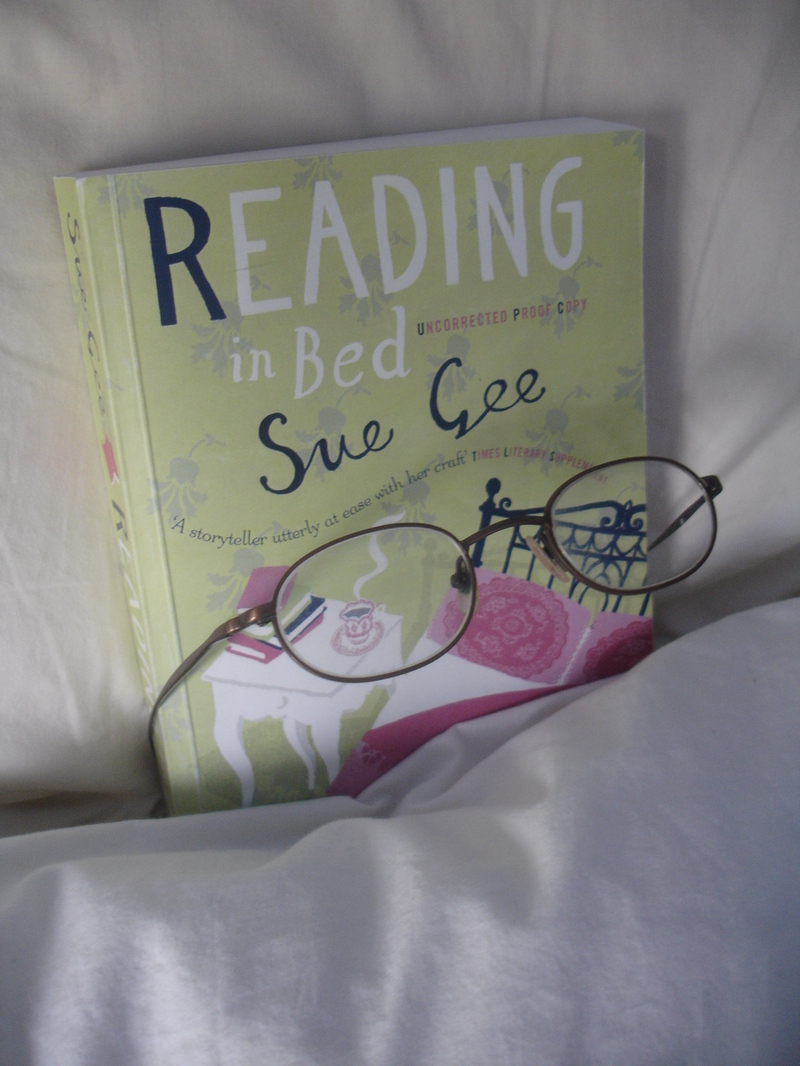
But what to read? I knew I wasn’t up for any Booker prize titles, and reading my Kindle gave me a headache. Then I remembered I had the perfect book for this predicament – Reading in Bed by Sue Gee.
After unearthing it from my shelves and with dutiful tea service provided by Husband, I snuggled in.
One of my favorite British book bloggers Cornflower Books has long recommended anything by Sue Gee. She had me with this statement:
All (her) books are of quality and integrity – they are not showy, not gimmicky, they are perfect examples, I think, of what it means for a writer to be artist and craftsman in equal measure. (The image above is from her blog post.)
The book opens with long time friends Dido and Georgia as they depart the infamous Hay-on Wye book festival(on my bucket list), and as they make their separate ways home their thoughts and frailties emerge and, in this way, Ms. Gee introduces her readers to her central characters.
Two upper middle class Oxford couples, share not only a life-long friendship but also a mutual appreciation of art, classical music, architecture, summer holidays together, – and especially literature:
“Dido and Jeffrey, Georgia and Henry… had reading at the heart of everything, touching and defining everything, a ceaseless inner life so rich it’s hard to say where life and literature begin and end.”
Then death took one half of a partnership. Georgia, widowed a year, is alone with daughter Chloe nearby. Dido, comfortably secure and settled, secretly revels in her seemingly perfect life and husband:
(Her new book) “Justin Cartwright, The Promise of Happiness, just what she needs. She slips off her dressing gown, pulls back the covers. She’s tucked up, her specs on her nose, the pillows just right. She settles into chapter one, is turning page six by the time Jeffrey joins her, fresh from a shower. ‘Hello, my darling.’ ‘Hi’, Jeffrey reaches for his own books, put on his specs. They settle down. Dido is restored. What sweet companionship is this, to read, to sleep, to lie night after night against the man you love – still love after all these years. Poor Georgia.”
I’ll admit Reading in Bed is formulaic, it doesn’t demand much from a reader, but the characters are multi-faceted, intelligent, well developed and flawed — and I cared desperately for each of them. There’s narrow expectations for their children, resulting in the inevitable problems, an eccentric cousin who is loosing her mind, infidelity, illness, and building new beginnings — in other words Ms. Gee has beautifully rendered a well-lived, and loved, set of lives filled with problems, sorrows and joy.
Because I’m an admitted Anglophile, what I (and probably only I) enjoyed most about this British book, was just that — its wonderful, unapologetic, not trying to be anything else — British-ness. The book captures drinking tea in rose filled gardens, shopping in the village, and posh N1 London drinks by a fireplace. There are references to BBC4 shows (the Archers), the Brits keen walking (hiking) outings, and Knickerbocker glories (ice cream sundaes).
Reading a book about women of my same age, with similar views, with my shared love of literature, and so British-ily described was just what the doctor ordered. I’m feeling much better and now I’ve got a new author to follow!
N.B. Ms. Gee’s book are published in the UK, and are only available to us Yanks in their British editions. You can order HERE.
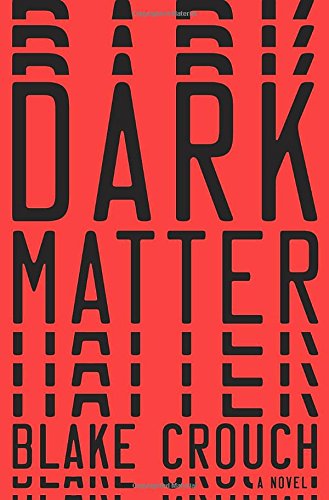
I would never have expected this to be my first read of the new year. In truth, I never would have opened this sci-fi thriller, except for a favorite bookstore customer.
He’s an older gentleman (OK, not that much older) who brings in his once read, bestseller hardbacks to donate — we love patrons like this. Often, he’ll press one into my hands and recommend I read it before donating. His reading tastes run to spy thrillers and political intrigue, so I usually take a look but then put them in the donation box after he’s left.
This time, however, I opened Dark Matter and sat down at the register to give it a try — half an hour later, customers were clearing their throats and uttering plaintive “excuse me”s to get my attention.
I took it home, read very late into the night and then finished it the next (luckily, rainy) morning.
It’s going to be tough to tell you about Dark Matter without spoiling it.
Suffice it to say ….
This is the story of Jason who has a pretty great life, a wife, a son, a comfortable home. He has regrets, a lackluster career, missed opportunities, but overall, he’s content. Walking home, after meeting a friend at a bar, he is abducted and, just before he is injected with a serum, is asked; “Are you happy with your life?”.
He wakes to find his family gone. Not dead, not abducted, but gone — they never existed. His home isn’t where it should be, his life as he knew it, never was. Dark Matter is the tale of Jason trying to get back to the life he so loves.
Like most of us, only after this loss does Jason fully realize that he has (whoops had) everything he could ever want. The power of this love, the anguish of the loss, and his journey to find his (now) lost life is the premise of Dark Matter.
But, that makes the story sound simple and it’s anything but. There’s quantum physics (there’s even a reference to Schrödinger’s cat, which my scientist sister had to explain to me). There are parallel universes (yes that’s plural). And there’s dark matter:
Most astrophysicists believe that the force holding stars and galaxies together—the thing that makes our whole universe work—comes from a theoretical substance we can’t measure or observe directly. Something they call dark matter.
Mr. Crouch writes for television* and his style reflects that medium. The writing simple but powerful.
He also writes in very short sentences.
And fragments.
Like this.
So, you see.
Why it is a quick read.
The other reason Dark Matter is a quick read is that it is ruthlessly compelling. Just when you think you got it, and you know where the book is going – Mr. Crouch hurdles you in whole new direction. I found myself empathizing with poor Jason throughout his quest to get his life back, imagining his turmoil, his loss as my own.
No one tells you it’s all about to change, to be taken away. There’s no proximity alert, no indication that you’re standing on the precipice. And maybe that’s what makes tragedy so tragic. Not just what happens, but how it happens: a sucker punch that comes at you out of nowhere, when you’re least expecting. No time to flinch or brace.
I’m sure you can tell that Dark Matter surprised me. At first appearance this is a sci-fi thriller — in the style of Patterson or Koonz. But the story line is insightful, human and will cause the reader to contemplate their own life and their choices. It’s the Road Not Taken – on a whole new level.
It’s terrifying when you consider that every thought we have, every choice we could possibly make, creates a new world.
Yes, Dark Matter is an adrenaline-fueled thriller, a keep you up all night page turner, but what keeps it from being a cliche is Jason — an authentic, faithful and heart-warming hero, or should I say heroes? – (whoops enough said).
Well, I didn’t see that coming, my first book of the new year – way — way outside of my reading comfort zone and, much to my surprise I fell hard for this book. It’s high entertainment with a heart.
*Mr. Crouch is the creator/writer behind one of my favorite TV series Good Behavior, as well as Wayward Pines (which I don’t know)
I’m guessing you may be in the mood to escape and, as it just so happens, I have some reading recommendations to take you away for a bit– (you’re quite welcome). Taking you away to one of my favorite guilty reading pleasures – Time Travel.
Now don’t scoff, this genre is tricky – one false move and the novel is relegated to those dusty bookstore shelves of either fantasy or science fiction.
Accomplished authors convince the reader that time travel is not only credible, but enticingly possible. Like watching a magician perform or a classic Disney movie — the reader is happily ensconced between reality and make believe. Bring it on, I say — bring it on.
And so, without further ado, my favorite time travel tales…
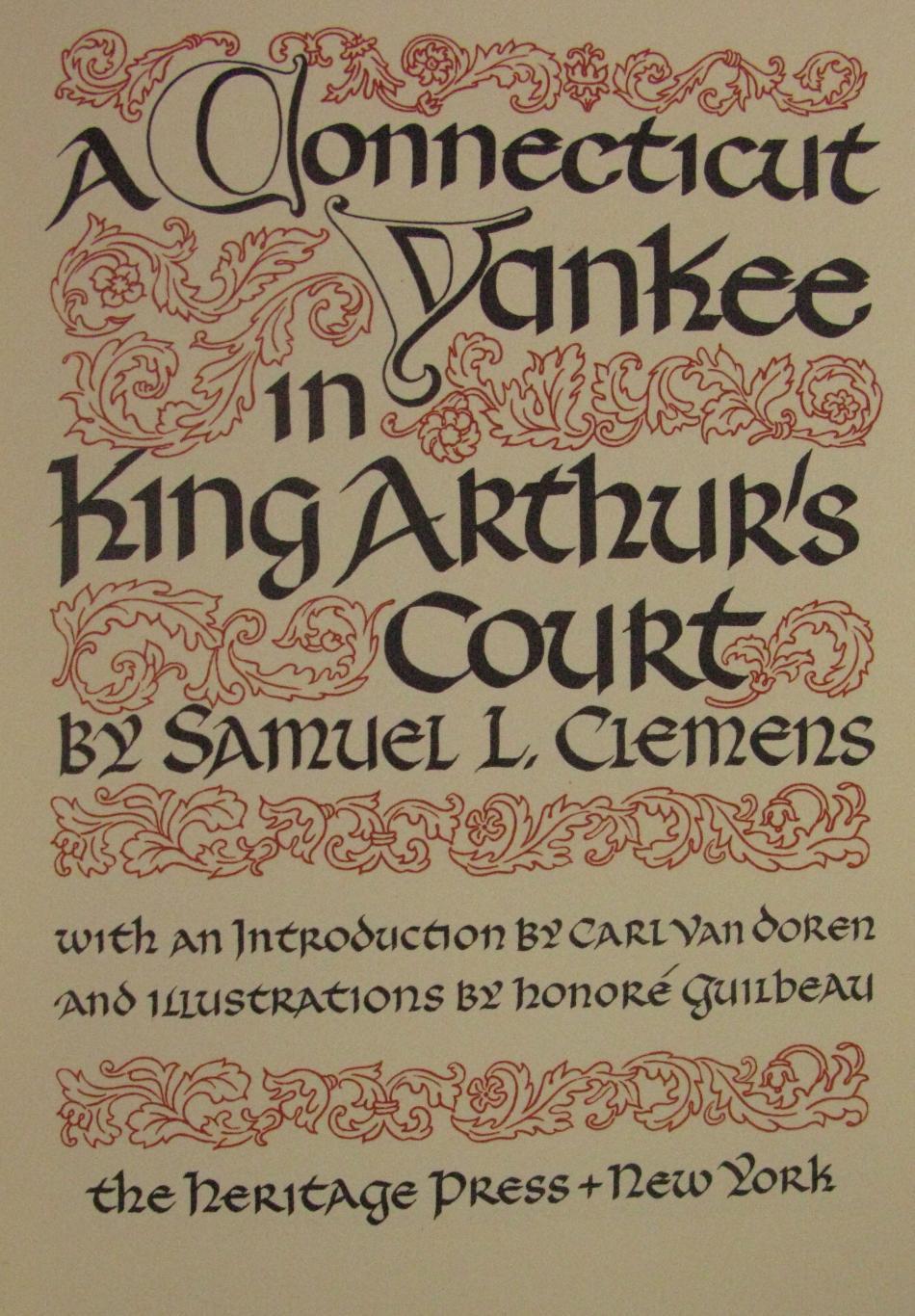
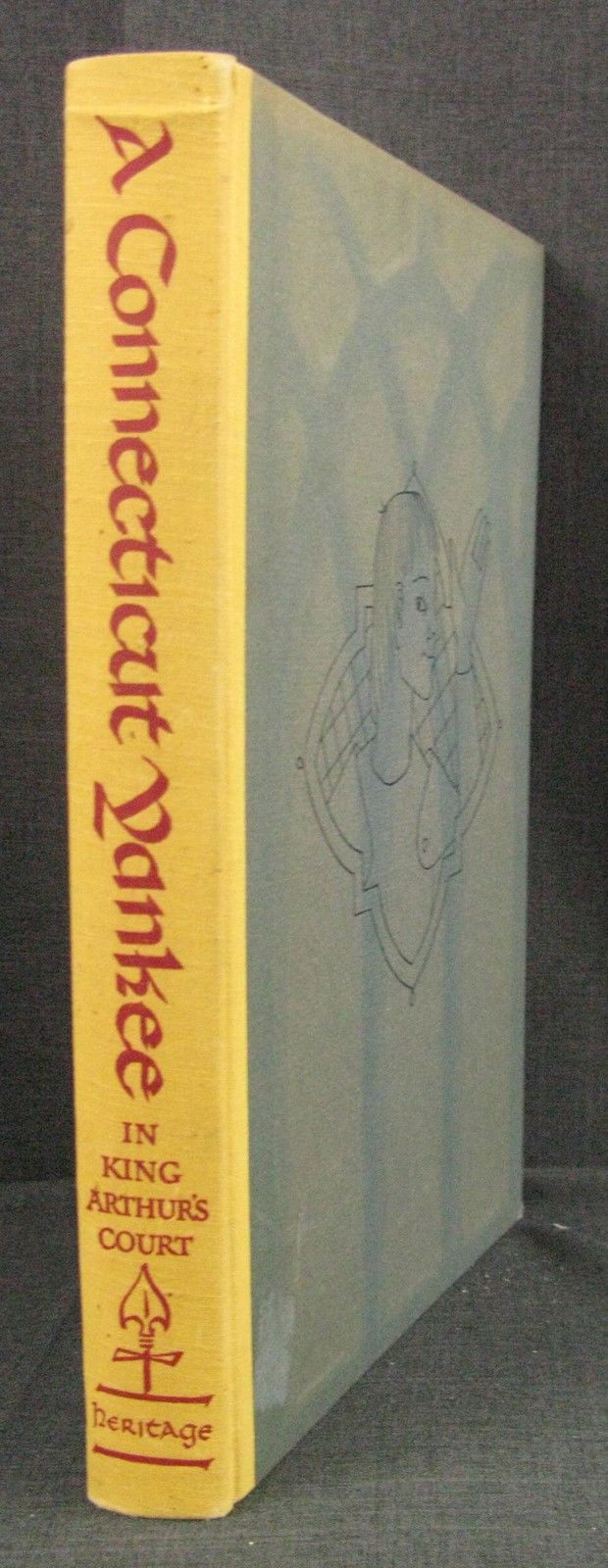
A Connecticut Yankee in King Arthur’s Court, by Mark Twain (Samuel L. Clemens)
Near, and dear to my heart, this was my introduction to time travel, aged 12, sitting on the floor of my grandfather’s library, this book spread open in front of me.
In 1889, a practical Yankee is hit on the head and wakes up in England — in the year 528. He fools the inhabitants of the time into thinking that he is a magician and becomes Sir Boss of the Round Table. The Yankee believes that he is the saving grace for the people of Camelot, using capitalism as his means to set them free. The societal commentary and satire was above my head during that first reading. But upon adult re-reading, the lampooning of social class institutions and of inherited rank is pure Twain — witty (but sobering) sarcasm.
Here’s my cherished original copy from my grandfather’s library.
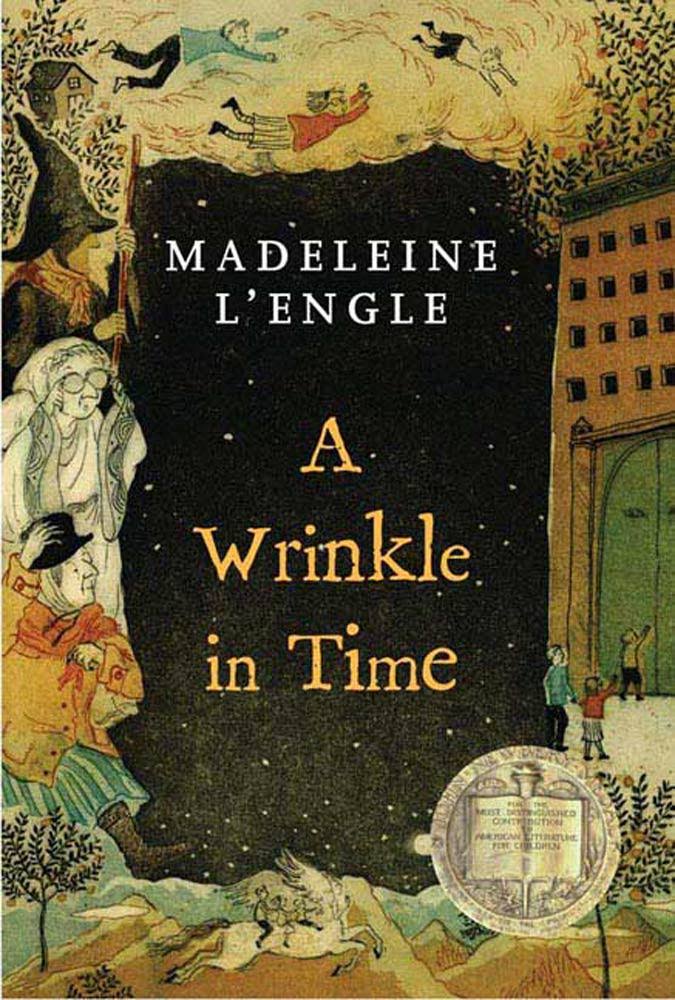
A Wrinkle in Time by Madeleine L’Engle
I also read this as a young girl and have re-read it several times since. A Wrinkle in Time is written for young adults but can be enjoyed at any age. Winner of the 1963 Newbery award, it spins a captivating tale, which opens (wait for it) on a dark and stormy night. Meg Murray, her little brother Charles Wallace, and their mother are having a midnight snack when an unearthly stranger appears at their door. He claims to have been blown off course, and goes on to tell them that there is such a thing as a ‘tesseract’, or a wrinkle in time. Meg’s father had been experimenting with time-travel when he suddenly disappeared. Meg, Charles Wallace, and their friend Calvin venture to outwit the forces of evil as they search through space for their father. Pure fantasy, pure deligh
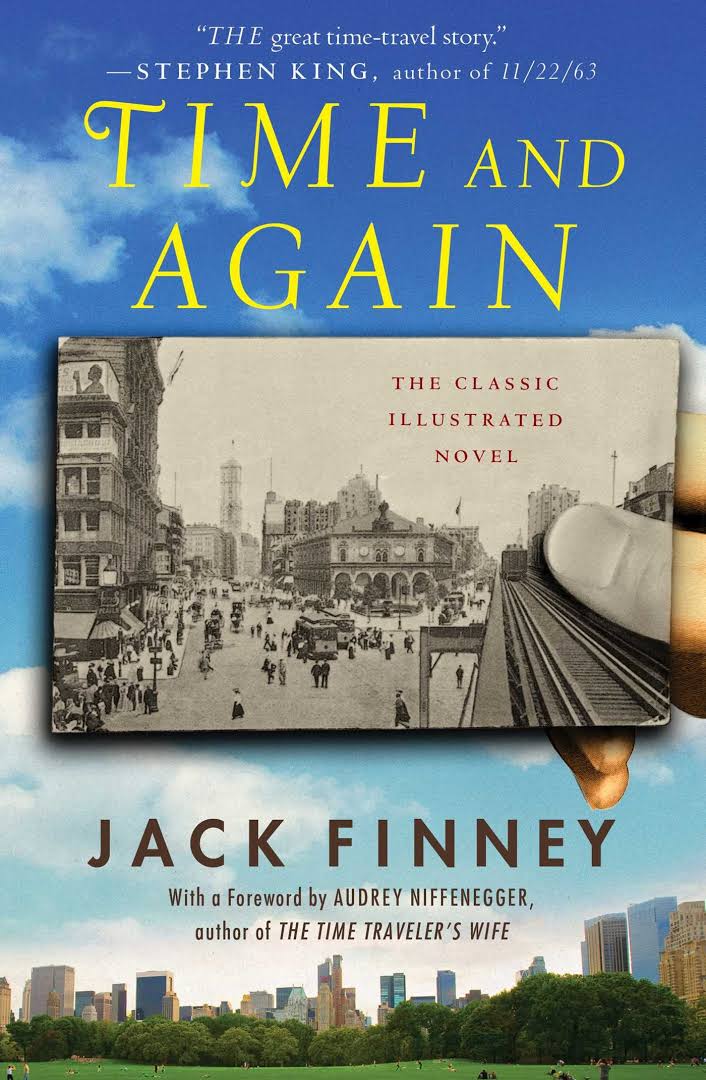
Time and Again by Jack Finney
When asked about my all time favorite books — Time and Again has a permanent place on that list. I have bought and given away many copies of this book over the years.
In 1970, Simon Morley, an advertising sketch artist, is approached by U.S. Army to participate in a secret government project, which involves — in case you haven’t been paying attention here — yes, time travel.
Simon or ‘Si’, as he’s called, jumps at the chance to leave his twentieth-century existence and step into 1882 New York City. Aside from his thirst for experience, he has good reason to return to the past—his girlfriend Kate has a curious, half-burned letter dated from that year, which holds a mystery about her lineage. But when Si begins to fall in love with a woman he meets in the past, he will be forced to choose between two worlds—forever.
What sets this classic time travel novel apart from any other is the detail, the exquisite illustrations and curated photographs. Mr. Finney’s highly detailed descriptions bring the period to life – from the interior of the Dakota residence to the often pock-marked faces of the people, unprotected (as they were then) from small pox.
Warning, these descriptions may slow you down, but that’s fine, as this is a book to be read slowly and richly savored.
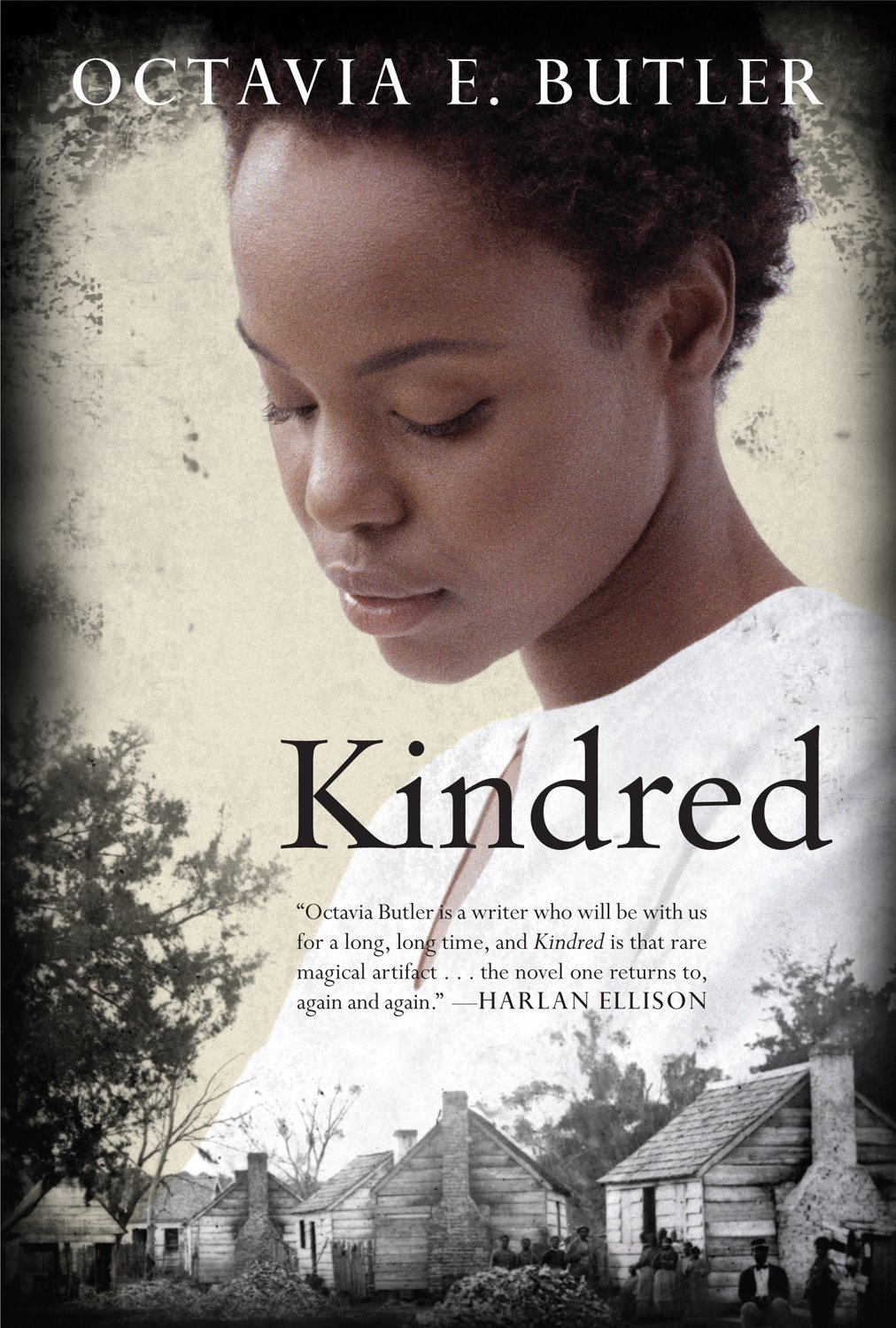
Kindred by Octavia E. Butler
Equal parts time travel and slave narrative, this novel is still as popular as it was when it was first published in 1979.
Often studied as high school required reading, Kindred is the first-person account of a young African-American writer, Dana, who finds herself shuttled between her California home in 1976 and a pre-Civil War Maryland plantation. There she meets her ancestors: a spoiled, self-destructive white slave owner and the proud black freewoman he has forced into slavery and concubinage (I checked, yes, that’s a word…). As her journeys into the past become longer, Dana becomes intimately entangled with the plantation community, making difficult compromises to survive slavery and to ensure her existence in her own time.
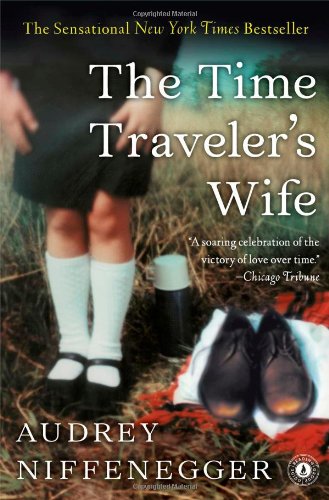
The Time Traveler’s Wife by Audrey Niffenegger
A highly imaginative novel in which the author has combined time travel with the intricacies of love, marriage, children, sickness, loss, joy and sorrow.
Henry is a time traveler, although not by choice. A genetic mutation causes him to spontaneously travel through time without warning and he finds himself in the past or future, usually at a time or place of importance in his life. Clare, his wife has been with him through most all his time travels, and his various life stages. She waits for each of his visits throughout the years until they can meet in real time. Together they hold fast to their love and attempt to have some semblance of a normal life.
This is a complex story, and even with Henry shuttling back and forth in every chapter, the author deftly keeps the plot clear, compelling and, at times heartbreaking. But, as the Washington Post said, this is “ a love that works despite all travails and impediments.”
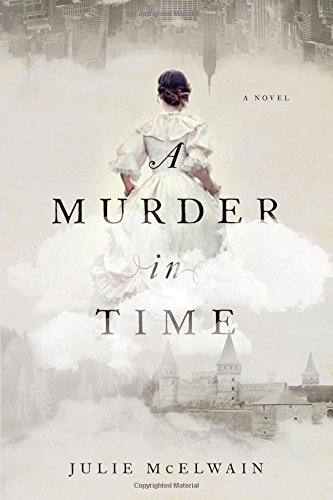
A Murder in Time by Julie McElwain
I just finished my most recent time travel read the other night. Kendra is a tough FBI agent who goes rouge in order to assassinate the killer who brought down half her FBI team mates. She pursues the killer to Aldrich Castle in England and hides in a stair well only to emerge still in the same castle — but in regency-era 1815.
Mistaken for a lady’s maid hired to help with weekend guests, Kendra is forced to quickly adapt to the time period until she can figure out how she got there; and, more importantly, how to get back home. However, after the body of a young girl is found on the grounds of the county estate, she starts to feel there’s some purpose to her bizarre circumstances. Stripped of her twenty-first century FBI tools, Kendra must use her wits alone in order to unmask a cunning serial killer.
Pure entertainment with enough action and adventure to keep the reader entertained. Kendra, and her bad-ass self, turn the 19th century on its ear.
A digital review copy was provided by Pegasus Books via NetGalley
So, dear Book Barmy readers, choose any of these books to take you away — away from your worries to these wonderful tales of other times — and other places.
I recently read two books , well one I read and the other I abandoned, but neither were for me. I’ve decided that’s OK, as Simon, one of my favorite book bloggers says — someone else may love these novels.
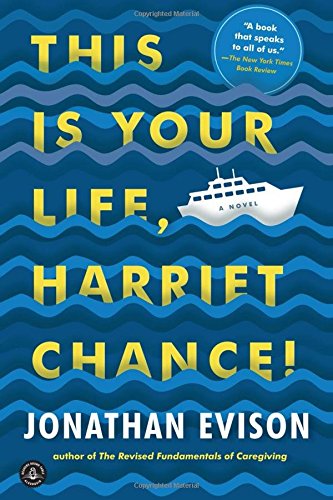
This is Your Life, Harriet Chance!
by Jonathan Evison
I was initially drawn to this novel, because of its unique premise, which mirrors the 1950’s television series “This is your life”. In the show, a famous person’s life was re-told with flashbacks to life changing moments, the places they lived, the important people who played a vital part in said lives. See a sample of the show HERE.
The cover gives the appearance of a light-hearted novel (there I go again judging a book by its cover). Harriet is 78, her husband has recently died and she decides to go on an Alaskan cruise he planned before he got Alzheimer’s.
Ahh, a cheery-new-lease-on-life story you would think…but we are being led terribly astray. There is nothing cheery about Harriet Chance’s life.
Like the television show, we go back and forth in time to experience Harriet Chance’s life. But her life is littered with bitter heartbreak. There are betrayals at every turn. And the litany of tragedy goes on and on — there’s child molestation, rape, unwanted pregnancy, unfaithful marriage, alcoholism, drug addiction and as a final blow, bitter adult children trying to get her money. After awhile, I stopped keeping count of the awful events in hapless Harriet’s life.
As added angst, Harriet’s mean, dead husband appears to her in a caught-between-life-and-death role, which never feels fully developed and causes Harriet’s children to harbor suspicions about their mother’s mental stability.
The author is remorseless in his portrayal of seniors and dementia. Harriet herself is characterized as a terrible mother, a distant wife and a bitter old women. Her husband’s Alzheimer’s is portrayed with sneering and unfeeling sarcasm.
I kept reading, hoping for a ray of sunshine in this story, some sort of redeeming act or event that would make Harriet’s life, if not great, then at least OK. But nope, there is nothing — nothing to resurrect poor Harriet’s life
This is Your Life Harriet Chance! (I never really got the use of the exclamation point) is well written, but one of the most depressing books I have ever read.
A digital review copy was provided by Algonquin Books via NetGalley
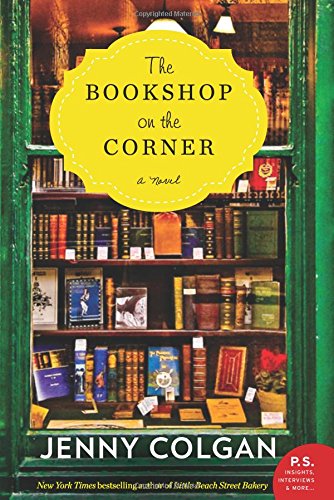
The Bookshop on the Corner
by Jenny Colgan
The Bookshop on the Corner, came home with me from the library’s new arrivals shelf. I’m a sucker for a book about books or a bookshop and this one is set in Scotland – double points. Took it to bed with me that evening and set it down after five or six chapters and went to sleep somewhat disappointed.
In the morning I checked some of the reviews and publicity for this novel and found I was in the distinct minority. Ms. Colgan’s novel has been liked by one and all — just not me.
Nina, a recently laid-off librarian decides to travel to one of Scotland’s remotest areas. She discovers their library is closed and there is no bookmobile. So she decides to move up there with her vast collection of books and buy a van from which to sell her books throughout this remote corner of Scotland. Ah ha, this book is not about a bookshop, it’s about a book van – well I guess that’s OK, I’ll keep reading. After all Parnassus on Wheels was one of my favorite books.
But, turns out this is chick lit – disguised as a book for book lovers. Straining all credibility, there’s a handsome train engineer who leaves Russian poetry books for Nina in tree branches – really?. And just as in The Little Paris Bookshop, Nina feels compelled to recommend books to solve every problem or malady, with trite results.
I finally returned the book to the library, when I got tired of the Scots Nina encounters being uncharitably portrayed as if caricatures — less than bright and seldom clean.
Even though I’ve lived in San Francisco for 35 years, I never tire of its physical beauty, architecture, diverse culture, and most of all, this city’s colorful, and often, disreputable history.
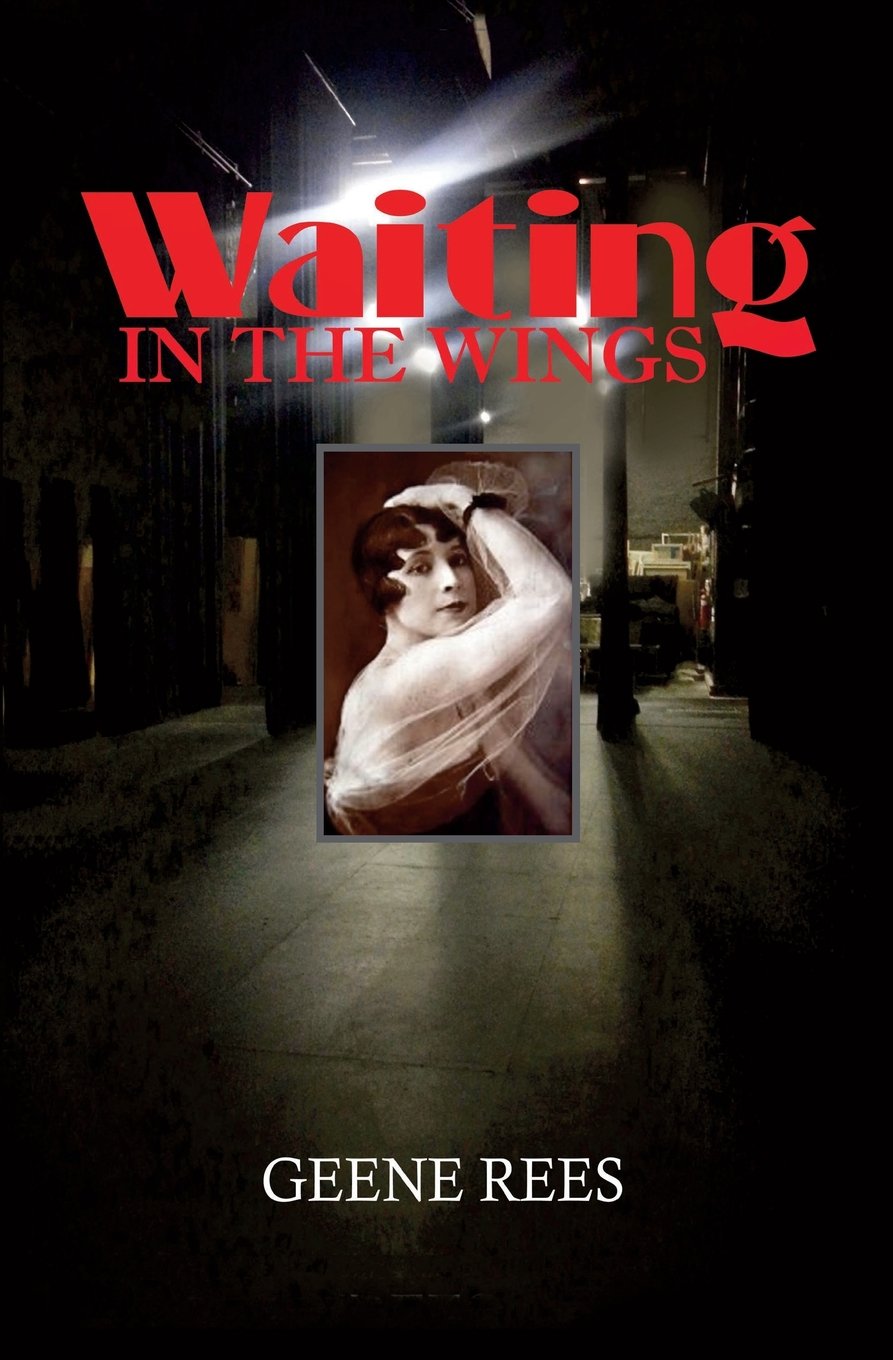
So, I was very excited to receive Waiting in the Wings, a historical novel set in prohibition-era San Francisco and based on the true story of the author’s great aunt.
From the introduction: Hidden in a compartment of my grandmother’s bottom dresser drawer was an old scrapbook. Pressed inside were photographs of a beautiful young woman and hundreds of newspaper clippings about vaudeville shows and the movie industry. This, is how I learned about my great aunt Ruby Adams.
This is no dry historical biography, in just the first pages, both Ruby, a beautiful, spunky vaudeville performer, and 1920’s era San Francisco sparkle to life. For a San Franciscan, the opening chapter is pure delight as we walk the sidewalks of the city with Ruby — leaving the original St. Francis Hotel, crossing street-car-crowded Market Street, and into the historic Strand theater. On our way, doormen greet her and others smile in delight –everyone knows Ruby and her delightful vaudeville review.
This is a time of transition for vaudeville theater, as the moving picture industry is starting to encroach. Ruby, with her striking looks, is contemplating a move to moving pictures, but still gaily performs her vaudeville routine in the historic theater where she practically grew up.
We join Ruby as she prepares for her nightly performance, observing both the back stage workings and the show performance itself. We are also with Ruby, that fateful evening, when she is injured in a back stage accident.
Ruby’s injuries are extensive and the accident, upon investigation, reveals negligence. Her career over, Ruby files a lawsuit…and here Waiting in the Wings takes a compelling turn. Ms. Reese takes us into the corruption and prevailing attitudes of the time, with unscrupulous lawyers and shady dealings behind the scenes.
At this point in the novel, some non-San Franciscans may get bogged down with the name dropping. And yes, there are numerous names to keep track of — greedy politicians, questionable judges, and shady lawyers. Many of these names are still famous here today — Spreckles, Newsom, Davis –and, while I found it rough going at times, it was still fascinating.
Throughout it all, Ruby is resilient and carries on with unflagging spirit. There is romance as Ruby is buoyed through the ordeal by the affection of quirky, but lovable, speakeasy owner “Coffee Dan”.
This story of legal shenanigans and “death by a thousand delays” moves ahead with the help of actual newspaper clippings (with photos) and snippets of court documents. I won’t spoil the outcome, except to say, the case ends up in Superior Court. I found Waiting in the Wings fascinating and compulsive. I had to keep reading to find out what happens to our brave Ruby Adams.
It is clear that Ms. Reese did an enormous amount of research. This gives Waiting in the Wings pitch perfect realism — from the jargon and dialogue of the era, to the weather, the newspapers of the time, even the popular boxed candy gifts of the era (some still in business today).
But, most strikingly, this realism allows the reader a time capsule view of 1920’s San Francisco — with lovingly re-created scenes that pull from our city’s rich history, buildings, diverse neighborhoods and the never-ending, conga line of eccentric and questionable characters — nothing much has changed.
A copy of the book was provided by the author, in exchange for a honest review.
I never do, I always — always race to read the book before seeing the film. I even avoid the trailers as I don’t want the character images in my head shattered by the Hollywood portrayal.
The Light Between Oceans is a enthralling tale, capturing me from this first line:
On the day of the miracle, Isabel was kneeling at the cliff’s edge, tending the small, newly made driftwood cross,
This is a debut novel by M.L. Stedman, who was born and raised in Western Australia. Her knowledge and descriptions of the coast of Australia are beautifully rendered. There’s even a map at the beginning. (I love me a map with a novel). The author has also done her homework on light houses — but I’m getting ahead of myself.
Tom Sherbourne has miraculously survived World War I, but only just. Still shattered, he is hired to keep the lighthouse on Janus, an island off the coast of Australia. As the sole inhabitant of the tiny island, he finds comfort with the precision and routine of manning the lighthouse;
Stick to the solid. To the brass fittings which had to be polished, the glass which had to be cleaned. Getting the oil in, keeping the cogs moving, topping up the mercury to let the light glide. He gripped each like a rung of a ladder, by which to haul himself back to the knowable; back to his life.
But then during a break on the mainland, he falls in love with Isabel, they marry and return to the island to run the lighthouse together. The chapter where he shows Isabel around the lighthouse and explains how it works is pure magic with lovely descriptive writing. Isabel sees the lighthouse as…”a palace of prisms, like a beehive made of glass”.
At this point in the story I believe the reader should adapt what is called a willing suspension of disbelief. Isabel and Tom have suffered two miscarriages and tragically, a third stillbirth.
A few weeks later, a canoe washes ashore containing a dead man and a live baby girl. Tom wants to report the dead man and take the baby to the mainland to find her family — but Isabel begs him to keep the child. He reluctantly agrees and this begins the cycle of consequences.
Thus, the suspension of belief – I kept reading, entranced but amazed at their actions. They bury the man and keep the baby. Both Tom and Isabel fall completely in love with the little girl they name Lucy. When they found Lucy, all that was with her was a beautiful silver rattle. There is no other identification.
Do they wonder about the baby’s grieving family on the mainland? Don’t they want to know the circumstances of the man’s death, not to mention his identity? Aren’t they concerned by the fact that they have broken the law? The couple suspend all rational actions and thoughts, and they blithely build their idyllic life on the island, with their magic baby.
Now dear readers, we’re at the middle of the novel and this is where my willingness to suspend belief almost became a willingness to suspend reading. But, I had to carry on, keenly interested to know the outcome for our little family on the island.
Now we read through redundant circles of Tom grappling with his love and loyalty to Isabel and his sense of morality of what they have done We experience the anguish and consequences of the decisions made, and not made. We meet the real mother and discover how nothing is purely right or wrong — all beautifully written but overwrought. In the back of my mind I kept thinking, “This would make a great film”.
The second half of the book is stoked with pathos and emotions on full power. And the ending, though probably right and ultimately quite moving, leaps over many of the key events – leaving much for the reader to question.
I gave my copy of The Light Between Oceans to a departing house guest and decided to only say, “this will be a great plane book” – which I am positive it will be.
Because, despite my criticisms, I was smitten by this best-seller and I kept reading to the end. I’m sure it will make a lovely, tear jerking, Hallmark sort of film — not to mention, a very successful new author.
If you want to see the film trailer before reading this novel you can see it HERE.