Bibliomysteries

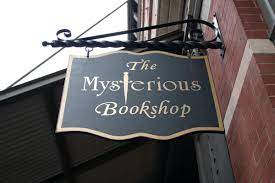
When we were in New York City a few years ago, I was able to talk Husband into venturing into Tribeca, home of the famous (at least to me) Mysterious Bookshop. It’s a wonderful shop run by the infamous Otto Penzler and devoted entirely to mysteries.

Most tempting was this section of Bibliomysteries.
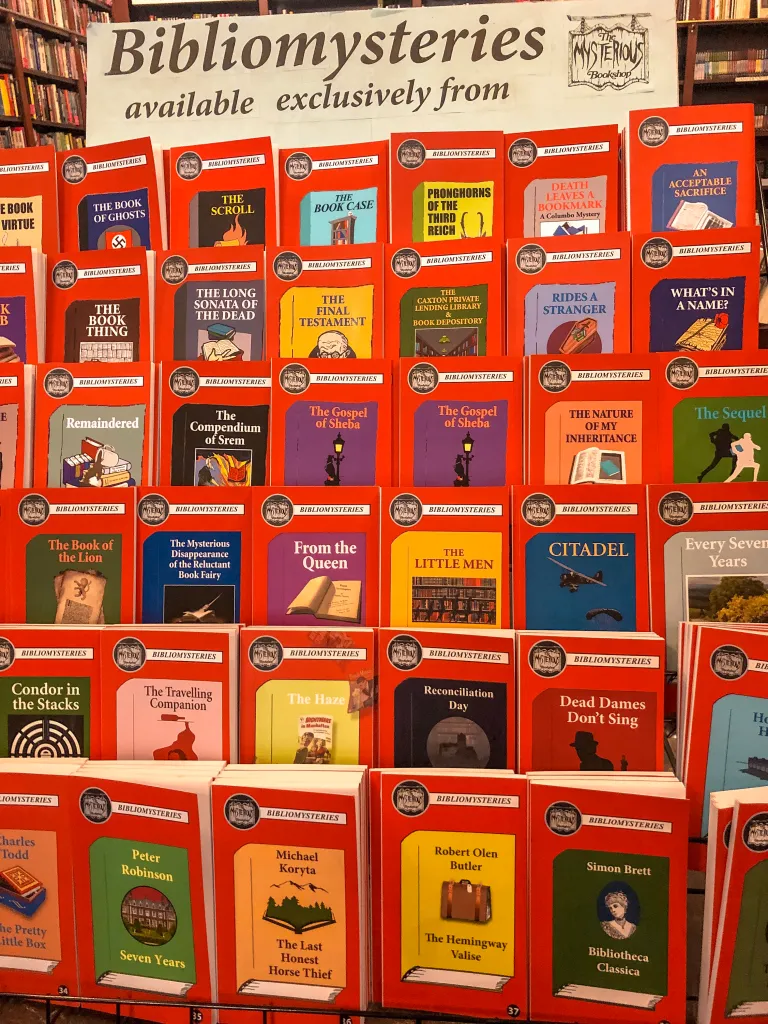
Found only at this bookshop, these small volumes are short mysteries stories themed or set in bookstores, libraries, or just involving books. I purchased up a few, I mean, how could I resist – really? They are perfect to put in pocket, stash in the glove compartment or tucked into a carry-on – just in case you get caught without something to read (gasp!).

During our last trip I experienced such an occasion and lucky for me, had this in my purse:
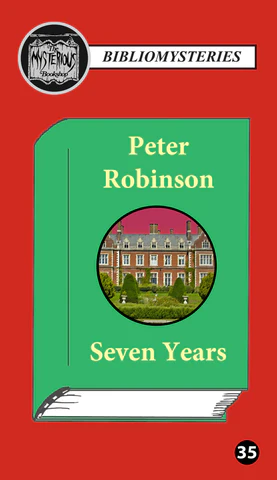
Seven Years by Peter Robinson

Retired professor, Donald Aitcheson, spends his time driving through the English countryside, exploring small villages and dipping into whatever used bookstores he can find. (A man after my own heart.)

It is one of the greatest pleasures of my retirement to set out early on a fine morning for some ancient town or city renowned for the quantity and quality of its second-hand bookshops.

On one such outing, he finds a collection of Robert Browning’s poetry with an inscription that uses lines from “Porphyria’s Lover” to threaten the book’s original recipient. Perhaps this note was only a joke made in poor taste; still, something about its tone captivates Aitcheson’s otherwise unoccupied mind, and leads him to a remote boarding school to investigate. But when what starts as a harmless game of detective comes too close to a deadly truth, Aitcheson finds himself face-to-face with a killer, and learns that some pages are best left unturned…

A short read, but extremely well-plotted and with an unexpected ending –there’s substance in this novella.

Peter Robinson is best known for his Inspector Banks series (of which I’ve read a few) and remember admiring his writing style, his characters come alive, and the settings in Yorkshire were wonderfully rendered.

I thoroughly enjoyed reading this short novel during my hour wait.

And, there’s so many more to choose from…
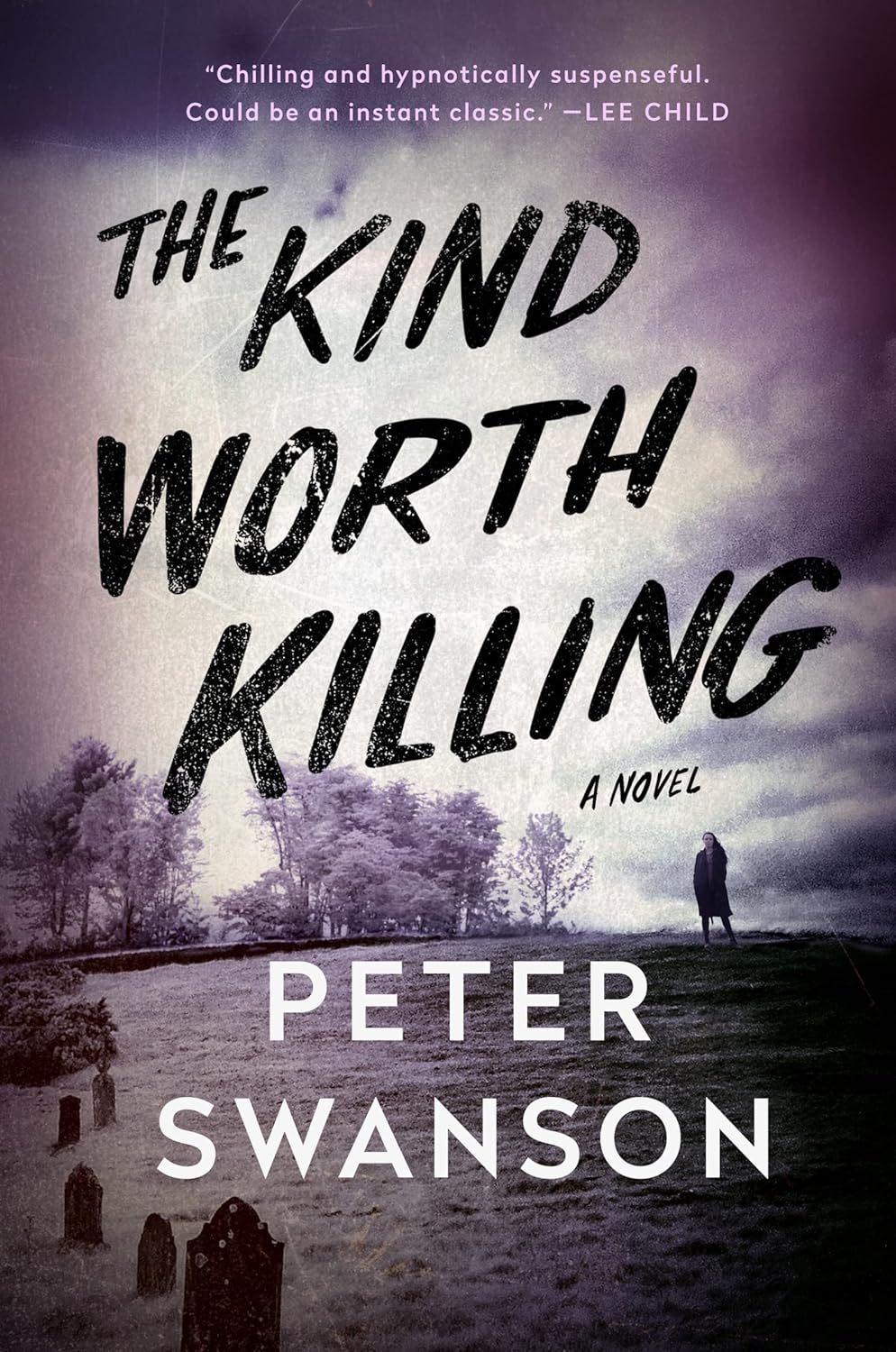
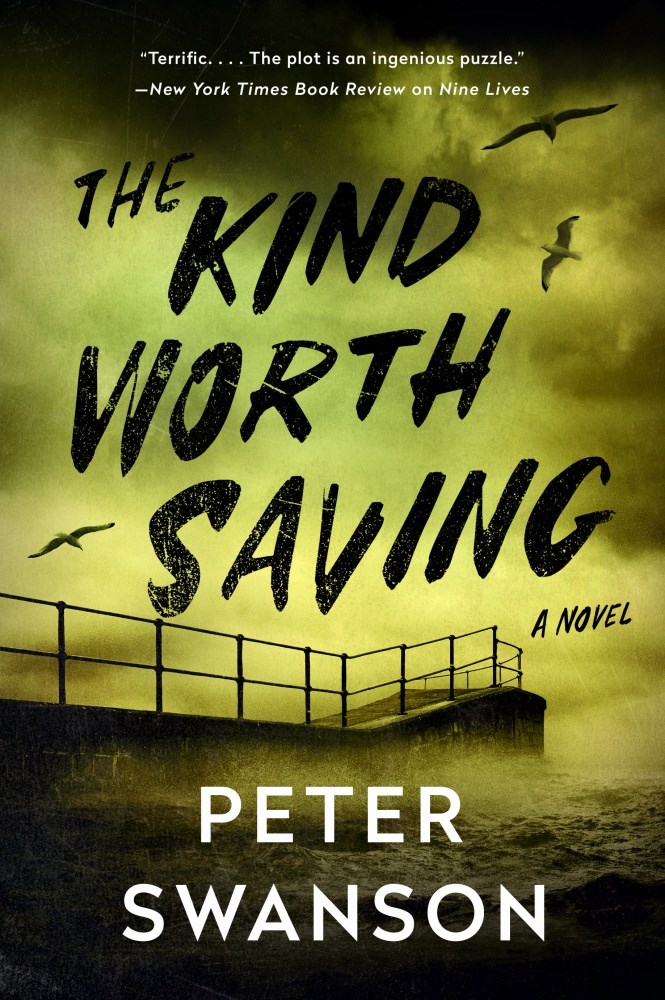
The Kind Worth Killing by Peter Swanson

Thrillers are not my go-to reading genre, but I do like them when traveling. The tedious airplane trips especially call for a good page-turner. My only thriller requirement is that it has to be well written with good reviews.

I chose the The Kind Worth Killing because the Washington Post said “it should be a contender for crime fiction’s best first novel of 2014.” It has also been compared to Gone Girl, a thriller which I really admired (the film, not so much). This is a modern re-imagining of Patricia Highsmith’s 1950 classic thriller, Strangers on a Train, but trust me, with many different and unique twists.

The flight from London to Boston is delayed and Lily, a young beautiful woman sits down next to Ted and as alcohol loosens his tongue, he tells her about his cheating wife. It turns out they are on the same flight and arrange to sit next to each other. By the end of the flight and more discussion, Lily says:

Truthfully, I don’t think murder is necessarily as bad as people make it out to be. Everyone dies. What difference does it make if a few bad apples get pushed along a little sooner than God intended? And your wife, for example, seems like the kind worth killing.

At first, it is very, very similar to “Strangers on a Train” but about a third of the way through The Kind Worth Killing takes some jaw-dropping twists and turns, and things get more and more complicated. (turns out murder is really hard, you guys.)

The novel uses alternating narratives of the main characters, and it switches between past and current timelines. Mr. Swanson does this masterfully, using the past narratives to provide details, previous connections and clues. At the same time, he manages to hold back enough specifics to keep you guessing on how everything is going to end.

The writing never feels gimmicky or contrived. Every time I thought I knew where it was going, more twists would happen but the writing kept it natural and soberly real. What I found most enjoyable, was when the layers were peeled back to reveal more information about each character, and new ones were introduced.

It’s a game of cat and mouse…but just who is the cat and who is the mouse? My head was spinning – who is the killer? Who is the victim? Is there anyone you can trust?

I was shocked at the ending, and read it twice. I did not see it coming and the story ends a far cry from what I expected…hmmmm.

And I think I will stop here, and not reveal anything further so I don’t spoil it for you. Because if you like thrillers, or need a good vacation read – you must read A Kind Worth Killing.

And because I will never learn…

There is a second in this series, which I hope picks up where this left off.

And another to add to my list — Mr. Swanson also wrote The Girl with a Clock for a Heart—which the Washington Post raves, “should be a contender for crime fiction’s best first novel of 2014.”

Yes, two more books to add to my pile – it’s a sickness I tell you, but I don’t need or want help…Okay?

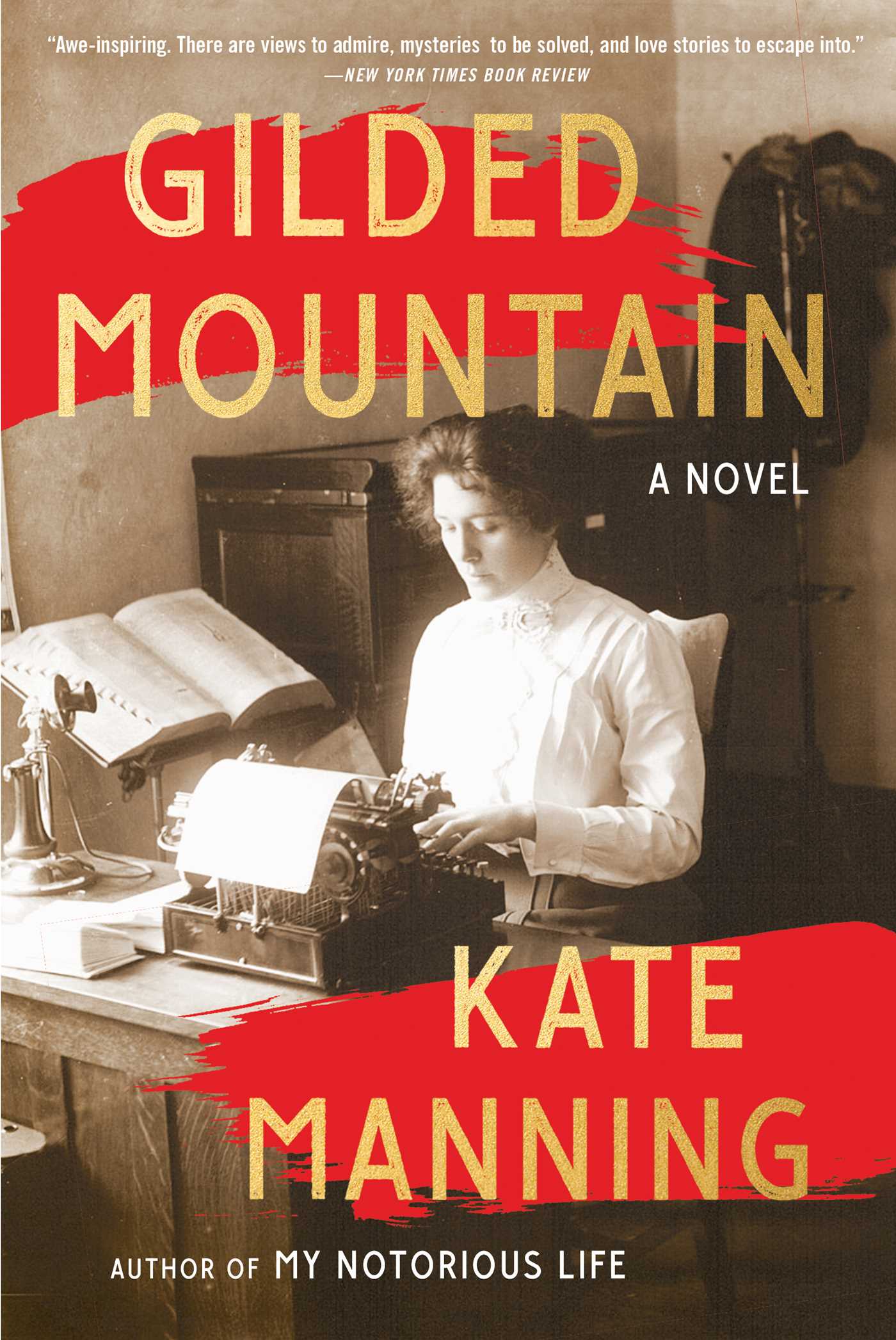
The Gilded Mountain by Kate Manning

I very much enjoy reading and learning about history through fiction. The few non-fiction history books I’ve read were quite worthy, but I’ll admit, a struggle. I decided to finally read this much-touted historical novel which the publisher kindly sent me two years ago .

The novel revolves around early 20th-century Colorado mine workers and their struggles to unionize.

Hmm, I thought, this could be really interesting part of American history, of which I know nothing about.

The Gilded Mountain is set in a 1907, and opens with the Pelletier family’s treacherous journey from the east to Colorado to join their father who has secured work in a mine.  Sylvie, her mother and two brothers travel through winter storms and rough terrain until they reach Moonstone Colorado, the mining town where they reunite with their father.

Once there Sylvie and her family endure hunger and dismal living conditions in a company-owned shack.  Her father faces the dangerous conditions working in the marble mine and like the other workers, struggle for the paltry wages that are eaten up by rent and sparse food.  Often the workers are not paid at all.  Thus begins the roots of the Colorado mine workers labor movement.

As we follow Sylvie she first gets hired as the personal secretary to the mine owner’s wife and spends a summer observing the gilded life that the other half lives. The next summer, she gets a job with the town newspaper and begins to report and write about the mine labor issues and their attempts to form a mine workers union. She finds herself falling for Jace, the idealistic son of the mine owner, as well as George, a union organizer. Sylvie struggles with what to do with her life and her heart.

Still with me? Well good for you, because even trying to write about this book – I’m bored. And that’s exactly what happened with this novel. Oh readers, I wanted to like it, and the first half of the book was good, absorbing the reader in the grim realities of the Pelletier family trying to just survive just a day, a week — in the mining camp. The author does a nice job of settings – the descriptions of the dazzling white marble being mined by overworked miners, in unsafe conditions, often without pay, really stuck out.

But eventually it dawned on me, I had been putting this book down, and reading it became more and more laborious — I was bored, disinterested and had been forcing myself to keep on reading – but why?

Truth be told, I did not care a wit about any of the one-dimensional characters, I kept expecting more development – more depth to any of them. Sylvie became especially unbearable. But a bright spot before I left the book was Mother Mary Harris Jones — yes that Mother Jones – a force to be reckoned with. She marched and protested for the miners, with great energy and despite her ancient age. Her dialogue was snappy and real, but not enough to keep me reading.

There are racial issues brought up in the story line, even including quotes from one of the black writers of the time, W.E B. DuBois. But while racial conflicts had great consequences during this time – it felt forced into this story line.

Although I would have liked to know how everything ended, I looked at my pile of un-read books and thought this low key boredom is not why I read.

What did I take away from what I did read?

The Gilded Mountain is a stark treatise on the harsh life of miners in early 20th Century and I learned a bit about mining, union organizing and busting, entitled rich and the ways they kept their workers desperately poor.

But none of it had any real soul. I should have read a history book.

N.B. You all know how much I dislike bashing books and their authors and I truly recognize all the pain, work and dedication it takes to write and publish a book. But I have to be honest about my (and only my) assessment. Others obviously disagree — there are many rave reviews for this book — but well – that’s what makes the world go ’round.

There are plenty of other books and stories out in the world — many of them here at Book Barmy headquarters.

I’m off to start something new.

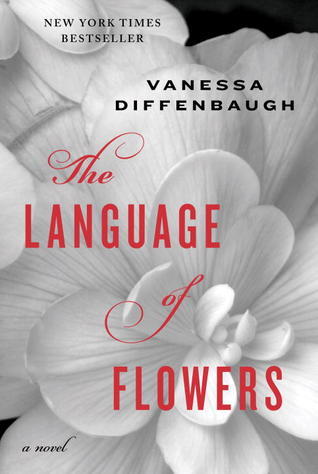
The Language of Flowers by Vanessa Diffenbaugh

It has been rainy and windy, my garden daffodils got pelted, and I was gloomy. So, as usual, I turned to my book shelves searching for something springlike.

I found this book, which I read ages ago — it even had my notes written up inside. I decided to revisit The Language of Flowers and ended up re-reading the entire book – ignoring the other stack of books awaiting me.

The novel follows Victoria Jones, a young woman who grew up in foster care system. Emotionally damaged by being abandoned at birth and childhood abuse, she is unable to maintain healthy relationships. She chooses self-destructing behavior and pushes herself away from those who might care.

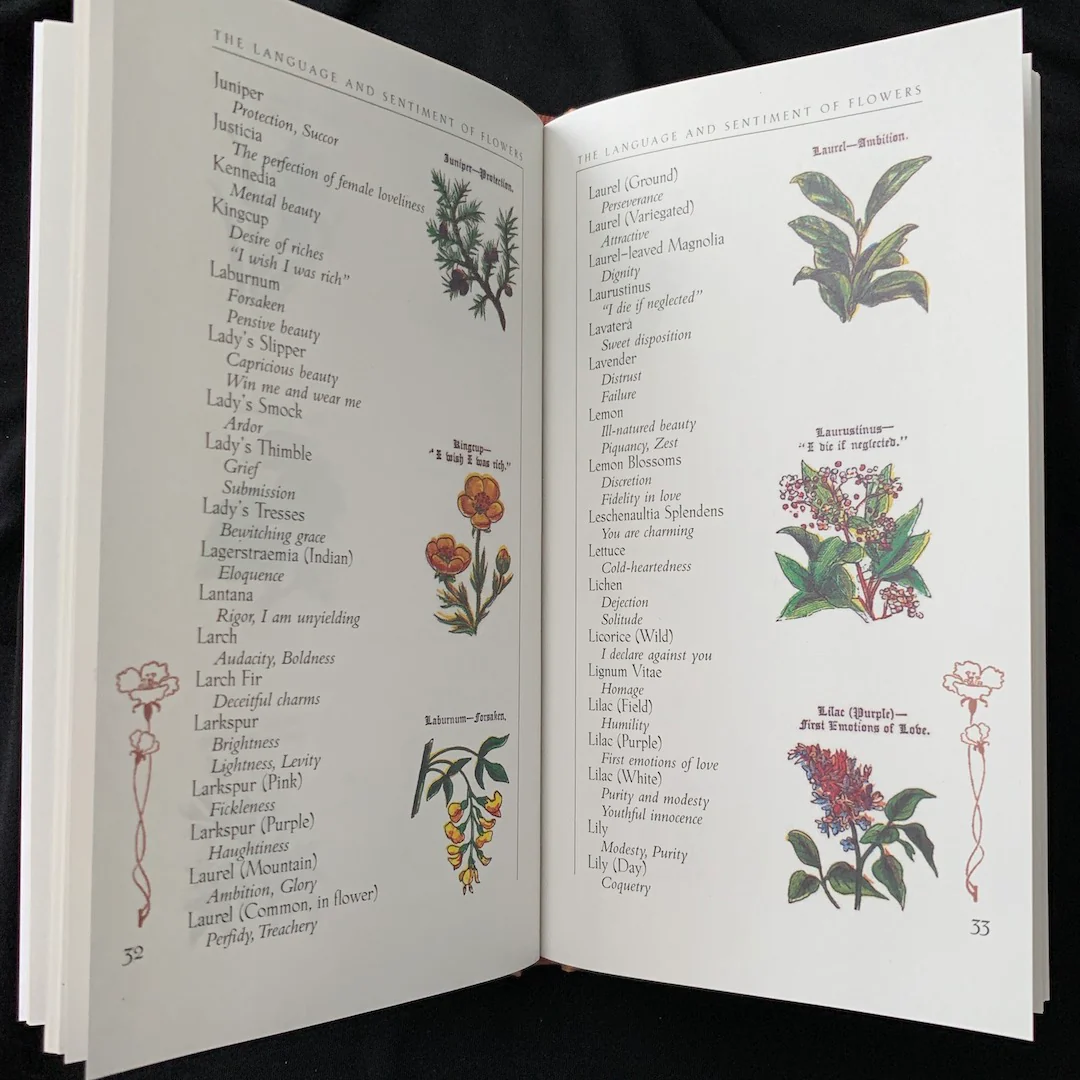
Her one true connection is to flowers, and as a flower arranger, Victoria realizes she has a gift for helping others through the flowers she chooses for them. Each plant and flower holds a meaning and when placed skillfully and precisely in an arrangement, conveys deep meaning. The novel was inspired by a flower dictionary, a type of Victorian-era book which defines what different types of flowers mean (more on that at the end).

Victoria is flawed, insecure and yet strong — an often quite unlikeable. Nevertheless, she stole my heart from the beginning and I grew to empathize and love her more with each page. There were times when I just wanted to yell at her to wake up and get a grip. And, just when I thought she wouldn’t, she did just that. I truly enjoyed following Victoria’s journey. The characters and relationships that surround and shape her are complex and layered. Many of Victoria’s personal choices had me shaking my head, but as I re-read this fine novel, I found I was rooting for her to find her true happiness and contentment.

The flowers and their meanings are not just a gimmick of the novel — they add much depth and feelings to the story.

“I’m talking about the language of flowers. It’s from the Victorian era, like your name. If a man gave a young lady a bouquet of flowers, she would race home and try to decode it like a secret message. Red roses mean love; yellow roses infidelity. So a man would have to choose his flowers carefully.”

The Language of Flowers, offers a story of survival, strength and love, and it made my heart smile.

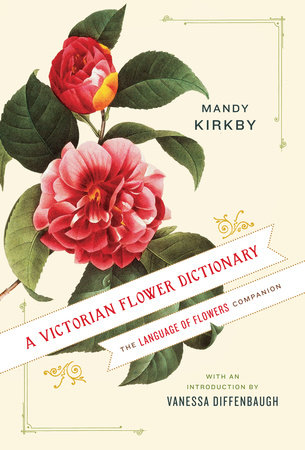
N.B. As I finished the book, I remembered a book in my gardening section (Yes, no surprise here, I have collections/and sections in my shelves.) someone in a former book group gave me this little gem. I put it next to my stack of books I plan to read – just to dip into – fascinating.

And our author, Ms. Diffenbaugh, has written the introduction to modern and updated take on this Victorian classic – but, I will stick with my cherished version above.

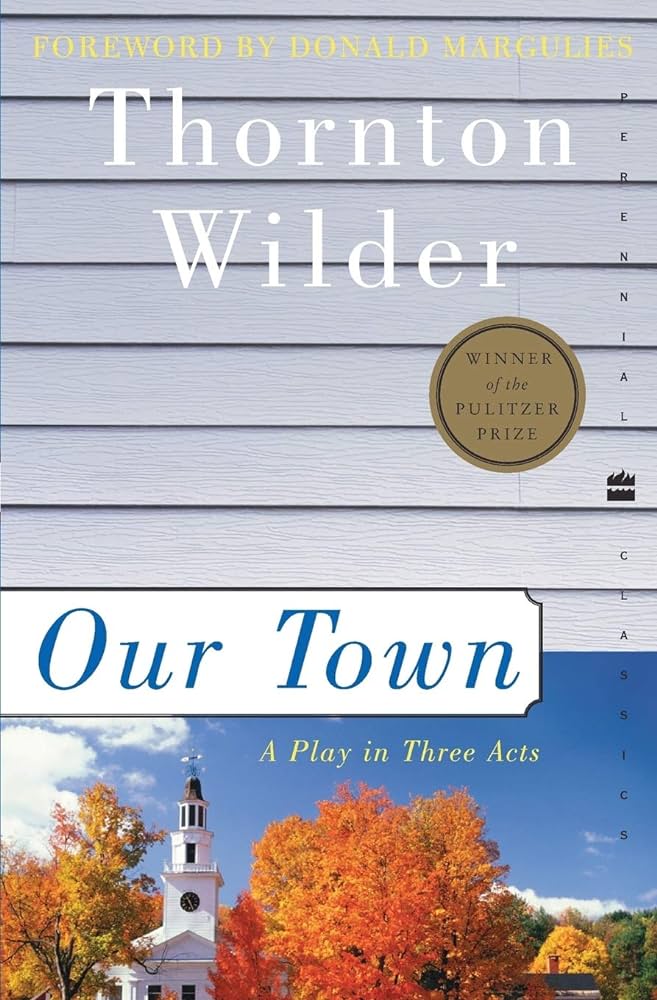
Our Town by Thornton Wilder

Every January I like to re-read the play Our Town.

I know, I know Our Town has a terrible reputation. Every high school has performed this play with often pathetic results. Please try to sweep those memories away and let me convince you to read, really read this play.

I believe it is some of the best writing out there – strong words you say, well stick with me here…

First published in 1938, it delivers a hauntingly real look at life….and death….and love. It takes place in Grover’s Corners a small New England town, actually based on a real town called Peterborough where Wilder often spent his summers and near where I lived in New Hampshire.

The three acts of this play are structured in a manner that encompasses the most basic features of human life: everyday living, love/marriage, and of course death. Much attention is usually paid to the third act of the play because it is here Wilder really closes in to make his point most obviously.

Yes, the third act is brilliant, and still chokes me up every time, but I like to linger in the first two acts – which are about the ordinariness of life — and it’s the ordinary that actually makes life extraordinary — just as it is. Mr. Wilder gently pushes this point, all life, any life, is special –and perhaps most of all, sharing this amazing life with others around you.

These subtle life observations give even greater rewards as one gets older, when time has passed and life has slapped you around – the words suddenly become heart achingly real and relevant.

Reading this little play always snaps me out of my post holiday blues (thus, why I re-read it in January) as I once again realize that what Mr. Wilder is urging – what we should, but seldom (or never) actually do.

I chuckled this time at this quote ~~ “We don’t have time to look at one another” ~~ if that was true in 1937, imagine how much more true it is today.

You may agree with the many critics who have charged Our Town with being overly sentimental and perhaps it is, but I don’t consider this a negative — we should be sentimental about the things we love.

Now, if I have you convinced to give it a try once again –every library has a copy and it’s very short.

Here are my favorite underlined passages:

Wherever you come near the human race there’s layers and layers of nonsense.

We all know that something is eternal. And it ain’t houses and it ain’t names, and it ain’t earth, and it ain’t even the stars… everybody knows in their bones that something is eternal, and that something has to do with human beings. All the greatest people ever lived have been telling us that for five thousand years and yet you’d be surprised how people are always losing hold of it. There’s something way down deep that’s eternal about every human being.

Good-by, Good-by, world. Good-by, Grover’s Corners… Mama and Papa. Good-by to clocks ticking… and Mama’s sunflowers. And food and coffee. And new-ironed dresses and hot baths…and sleeping and waking up. Oh, earth, you’re too wonderful for anybody to realize you.

Yes, now you know. Now you know! That’s what it was to be alive. To move about in a cloud of ignorance; to go up and down trampling on the feelings of those…of those about you. To spend and waste time as though you had a million years. To be always at the mercy of one self-centered passion, or another. Now you know — that’s the happy existence you wanted to go back to. Ignorance and blindness.

Only it seems to me that once in your life before you die you ought to see a country where they don’t talk in English and don’t even want to.

Read Our Town and perhaps it will remind what a gift it is to be alive and you must, must pay attention — to everything.

NB: Our Town was recently recommended by Ann Patchett as good background for her new novel Tom Lake, which I haven’t read, but is getting great reviews. Many recommend the audio version narrated by Meryl Streep. I don’t get along very well with audio books, but that sounds like it might be worth a try.

Here we are.

Well, here we are folks, a New Year and almost midway through January (how did that happen?).

It’s been a string of rainy and dull January days. The Christmas decorations are put away, the tree is down, the house is back to everyday, the bills are coming in, and wannabe dictators threaten on the horizon.

But, hey lets cheer up and talk about books, always a good place to go when things seem grim.

I only read one (only one!) Christmas book, I picked up and put down several before settling in on a lovely novel set in an English bookshop, (of course). It’s put away with my notes to tell you about next year.

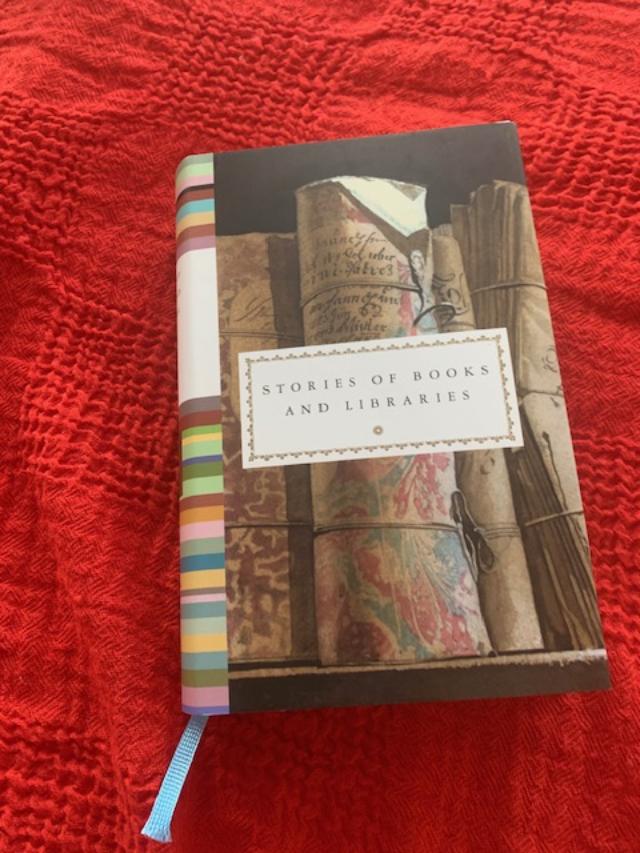
Santa gave me a lovely book…no, no, truth be told, I bought it for myself. While at favorite independent bookstore, buying a book for a friend, I stumbled across this little gem – and how could I resist?

This is a new addition to the Everyman’s Pocket Classics series. These are beautiful smallish books, bound with cloth in Germany. The dust jackets are, without exception, stunning. The books in this series are always nice to hold in the hand. (Funny how some books aren’t great to hold…)

Everyman’s Library was conceived in 1905 by London publisher Joseph Malaby Dent, whose goal was to create a 1,000-volume library of world literature that was affordable for, and that appealed to, every kind of person, from students to the working classes to the cultural elite.

All the Everyman’s editions come with this circa 1905, somewhat stilted, introduction and a sewn-in ribbon bookmark.

From the inside flap:

An enchanting book about books: a beautiful hardcover Pocket Classics anthology of stories that testify to the irresistible power of the written word.
The characters in the delightful stories collected here range all the way from the ink-stained medieval monks in Umberto Eco’s The Name of the Rose to the book-besotted denizens of Ali Smith’s Public Library and Other Stories. In these pages readers are invited to enter the interior lives of librarians in Lorrie Moore’s “Community Life” and Elizabeth McCracken’s “Juliet” and are ushered into a host of unusual libraries, including the infinite rooms of Jorge Luis Borges’s “The Library of Babel” and a secret library in Helen Oyeyemi’s “Books and Roses.”

I’ve been happily skipping around reading a story here, a snippet there. So far, a wonderful collection of stories for book lovers, it even includes excerpts from 84 Charing Cross Road.

So, I’m closing the drapes, making a cup of tea I got for Christmas, and enjoying my new book.

So goodbye old year. Hello new year – bring it on!

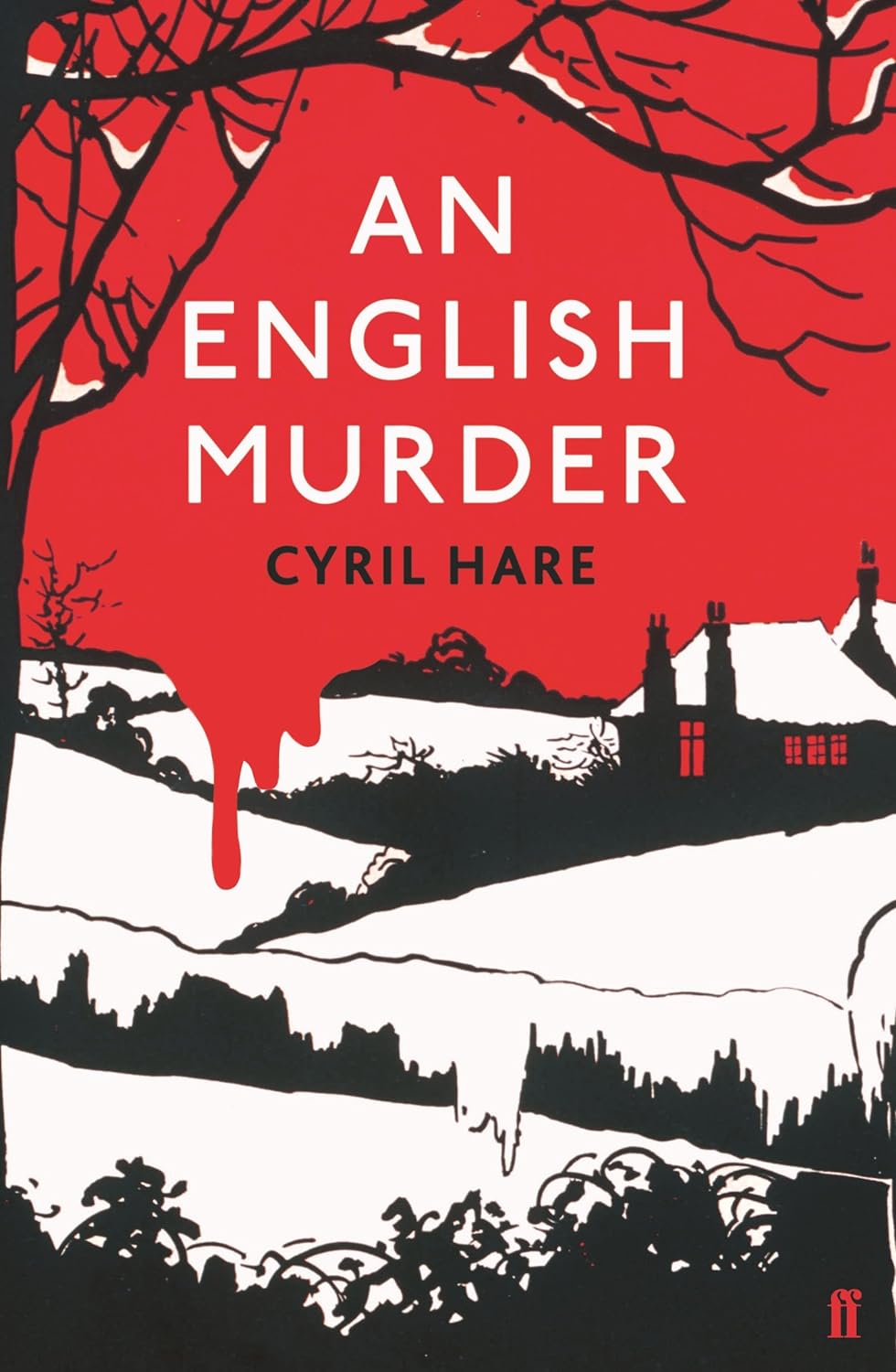
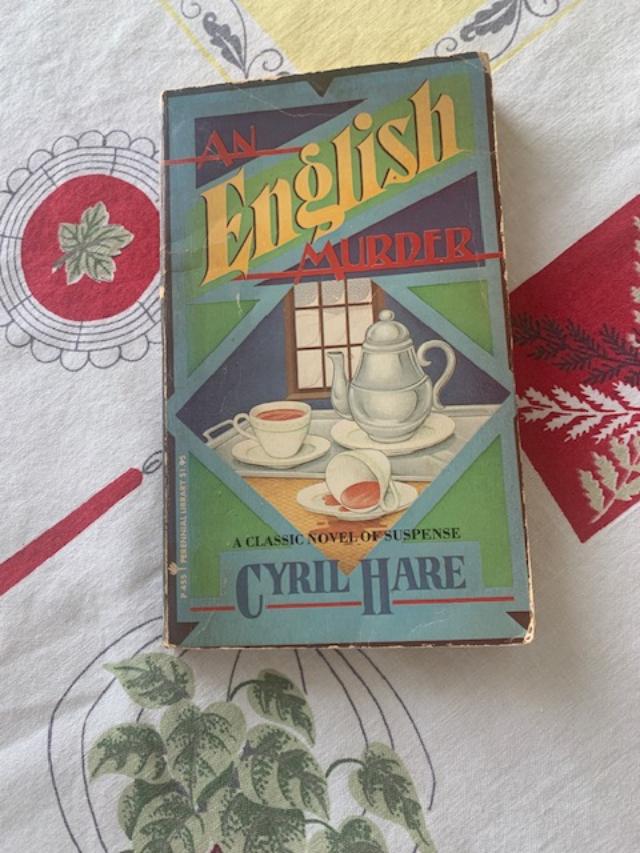
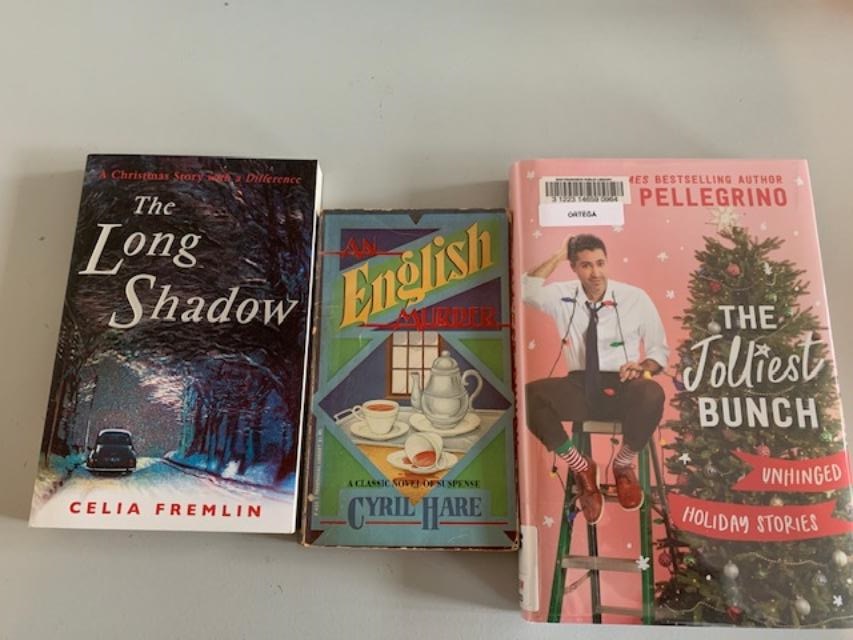
An English Murder by Cyril Hare

First published in 1951, this Christmas mystery takes place in the favorite setting of British murder mysteries — the large country home.

Lord Warbeck summons his remaining family to the ancestral home for a holiday gathering. This country home is rather run-down with a greatly reduced staff — the result of high postwar British income taxes. It’s a very mixed group of people who arrive and there are creepy undercurrents from the very first pages. This house party is snowbound on Christmas Eve, and of course a murder ensues.

Thank goodness an eccentric little Sargent from Scotland Yard is present, but the historian saves the day, with the help of William Pitt. If all that sounds a lot like Agatha Christie — well, that’s because it is. The mystery plot turns on — well, I don’t want to give it away, suffice it to say our author, Mr. Hare, was a British barrister.

This a classic English murder mystery in all the right ways — the snowbound setting, odd characters with funny names, the sly British sense of humor, and of course, the Christmas-y feel.

At only 202 pages, it is the perfect quick holiday read with a cup of cocoa after a busy day of your own holiday preparations.

Treat yourself to that beautiful copy of An English Murder shown above – don’t-cha love that cover?

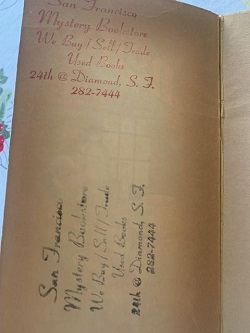
I re-read my old battered copy found used at the now defunct Mystery Bookshop in San Francisco.

It doesn’t look very Christmas-y, but it’s a keepsake.

It’s raining here, the tree is up and decorated, most gifts are wrapped, and I may shall take a break, and read another Christmas book.

Stay warm and safe people. Cheers!

The Eyes & the Impossible by Dave Eggers

My favorite 7 (almost 8) year old friend, let me borrow one of his recently acquired books.

One glance at this stunning book and I had to look further. Luckily, my young friend trusts me and let me bring it home to read by myself.

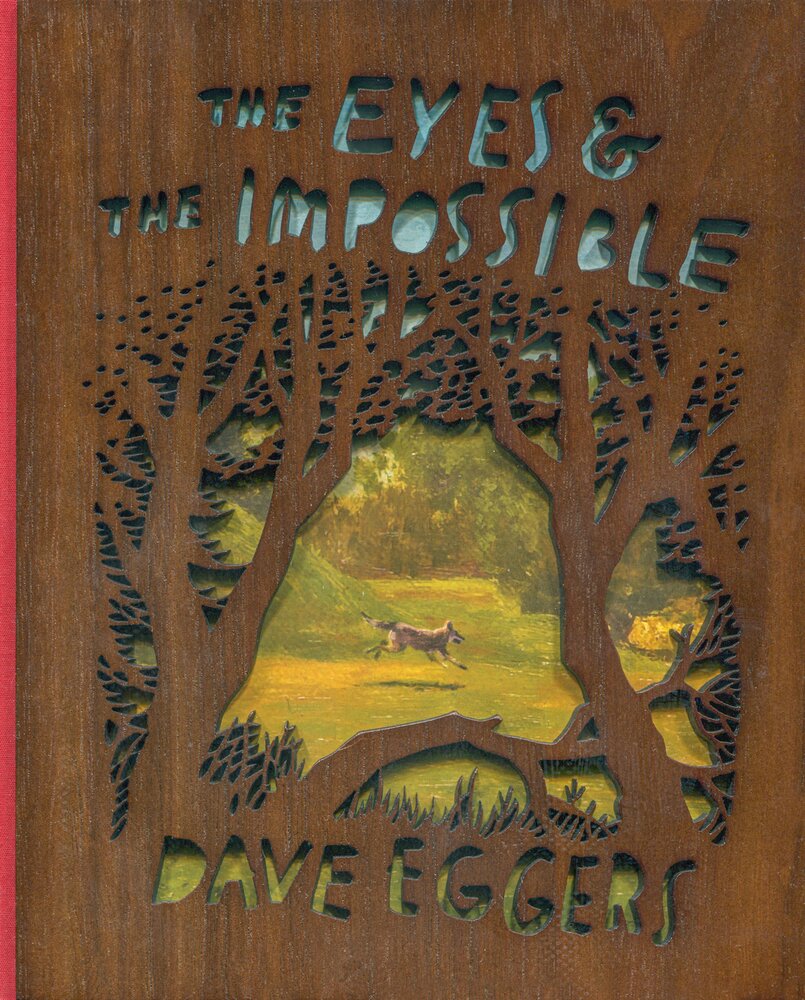
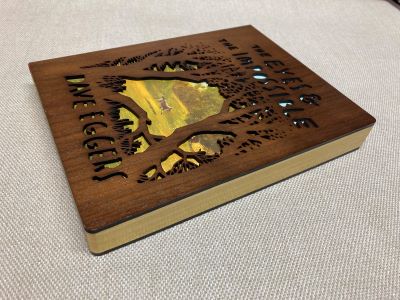
The photos here don’t do it justice. This is a special edition of The Eyes — and it is a most beautiful book.

Let me try and describe it’s beauty. It has a die-cut wood front cover, with a painting showing through. The back cover is also made of wood. There are gleaming gold embossed edges, and double paged-edge-to-edge painted illustrations from 1600’s – 1800’s into which illustrator, Shawn Harris, has cleverly placed our hero, Johannes (more about him later).

This remarkable edition is only available at independent bookstores (yes!) for an amazing $28 cover price (the price of any other, run-of-the-mill hardback).

Mr. Eggers is a literary force here in San Francisco/Bay Area. Not only is he an award winning author, he is also the founder of McSweeney’s, an independent publishing company, co-founder of 826 Valencia, a non-profit youth writing center, and a major force among our literary community — from supporting independent bookstores, to funding new writers.

So, let me tell you about the story — which is just as beautiful as the book’s production value.

Johannes is a free dog, who lives in an urban park by the sea, thinly disguised as our own Golden Gate Park. His job is to be the Eyes—to see everything that happens within the park and report back to the park’s elders, three ancient Bison. His friends—a seagull, a raccoon, a squirrel, and a pelican—work with him as the Assistant Eyes, observing the humans and other animals who share the park and making sure the equilibrium is in balance. 

But changes are afoot. More humans, including Trouble Travelers, arrive in the park. A new building, containing mysterious and hypnotic rectangles, goes up. And then there are the goats—an actual boatload of goats—who appear, along with a shocking revelation that changes Johannes’s view of the world.

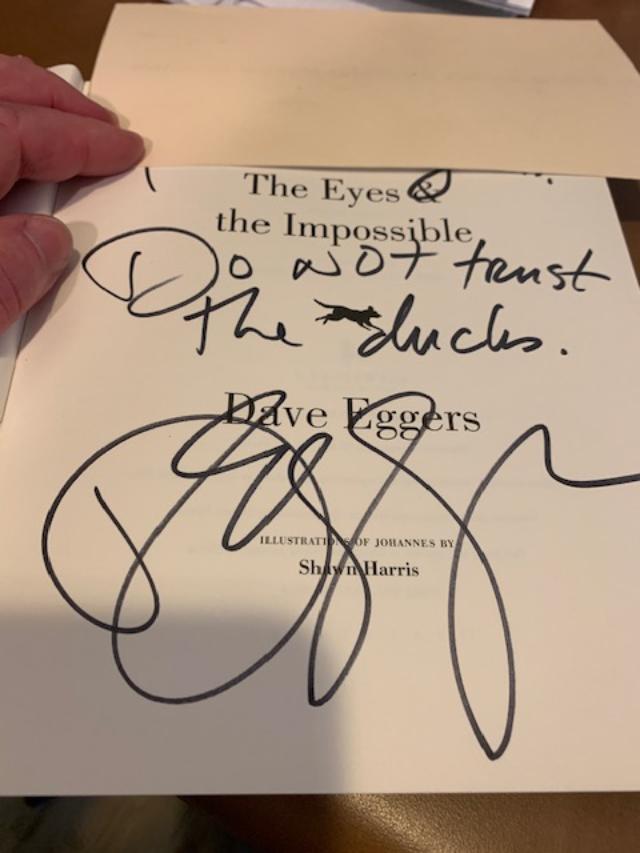
It’s a delightful story, with adventure and strong themes of friendship. And I laughed out loud as Johannes directly addresses the reader in a very folksy (and funny) voice throughout the novel. And whether it’s his inability to estimate numbers, or his antipathy towards ducks (don’t trust the ducks!), I was enchanted.

I had a wonderful time with this middle-grade book, and I was happily in the hands of a gifted storyteller. The tale of free dog Johannes is profound, poignant, and very, very clever (what do you have against ducks, Mr. Eggers?). An exhilarating read about friendship, beauty, freedom, and running very, very fast:

“When I run, I pull at the earth and make it turn”

Everyone should read The Eyes & the Impossible – a story that will have readers of all ages seeing the world around them in a wholly new way

My friends copy* was personally autographed by Mr. Eggers at an author event with that same duck warning. You’ll have to read the book to understand the problem with ducks (I’ll never look at ducks again without smiling).

*I’ve blocked his name for obvious reasons


Now I’m on to some Christmas reads — two mine and one from the library – now which one first?

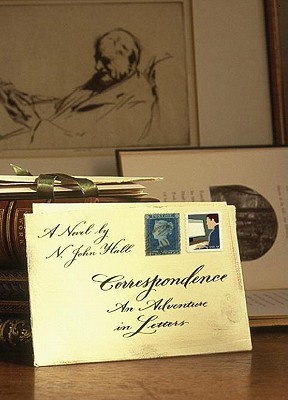
Correspondence An Adventure in Letters by N. John Hall

I recently rediscovered this book, which I bought in cold blood and at full price after its release in 2011 when it was said to appeal to fans of 84, Charing Cross Road and Victorian fiction.

Discovered my book mark in the middle of the third chapter and I have no idea why I put it back on my shelf for all these years. I love me an good epistolary novel so re-started it from the beginning.

The book imagines a correspondence between a retired American banker, Larry Dickerson, who inherited more than 200 letters to and from his great-great-great grandfather, a London bookseller, and his correspondents, who included Charles Dickens, Anthony Trollope, William Makepeace Thackeray, George Eliot and spouse, Thomas Hardy, Willkie Collins, Mrs. Gaskell, Samuel Butler and Charles Darwin, together with all of his great-great-great grandfather’s letters to these authors.

Dickerson hopes to sell these letters for the highest price through Christie’s auction house. An so begins the correspondence with Stephen Nicholls, head of Christie’s manuscript department. Of course, Christie’s is delighted at the prospect of handling an invaluable collection of never-before-seen letters from some of the greatest writers of the Victorian era.

Dickerson is portrayed as a bright, eager and not uneducated man who spent his career in banking and has a passion for baseball, a world far removed from antiquarian books and scholarly learning. While he could simply ship this letter trove to London, brush his hands of it, and eventually get a fat check, he has intellectual curiosity about these authors and their work, researching the letters himself. It’s fascinating to watch Nicholls, with a deep knowledge of books and manuscripts, take this new student under his wing. Dickerson takes on the challenge with wit and gentle jabs to Nicholl’s very British viewpoints:

Dickerson writes, “If you ever feel impatient with me and my ignorance of things in this field, remember that my old man was one of the troops who knocked out Hitler for you.”

Dickerson insists on carefully reading and hand transcribing the letters before sending them to the auction house. As he is drawn deeper into the letters, he begins reading their authors’ books. The ever-patient Nicholls, explains concepts and phrases Dickerson is discovering — everything from the meaning of “et al”, to some of the authors backstories, and themes common to the famous Victorian works.

As months go by, Nicholls worries about Dickerson’s insistence on handling the valuable stash himself, failing to insure them, and reluctance to send even photocopies. Are the letters real? Is Dickerson on the up and up? This reader began to worry too.

The letters between Dickerson’s great-great-great grandfather (Dickerson abbreviates it to gggf) and the great novelists are delightful realistic. Mr. Hall, the author, is a scholar of Victorian literature (especially Anthony Trollope) and only such an expert could have conceived them and so skillfully replicated the style and language of the various authors – not to mention making them sound distinctive and authentic to the period. There are lively discussions about choosing illustrators and using illustrations in their novels (Dickens loved them; Trollope hated them) as well as their reactions to good and bad reviews – just as any writer today. I found myself chuckling at Trollope’s irony and Thomas Hardy’s dry wit.

There is a quick and surprising ending which I won’t reveal the details. Just suffice it to say that everyone benefits from the letters and their eventual sale.

Turns out Correspondence was just my cup of geeky, bookish tea. However, this book won’t likely appeal to most of you – it is very much a bookish-bookerly book. Mr. Hall has peppered the novel with many, many literary references, which had me turning to my bookshelves to pull out my own grandfather’s copies to check the illustrations, quotes, and characters.

I have come away re-energized to try Trollope again (I found him unbearable in my first attempt) and I have vowed to finally read Thackeray’s Vanity Fair.

It’s okay, carry on with choosing another read for yourselves — I understand, but very few understand me…

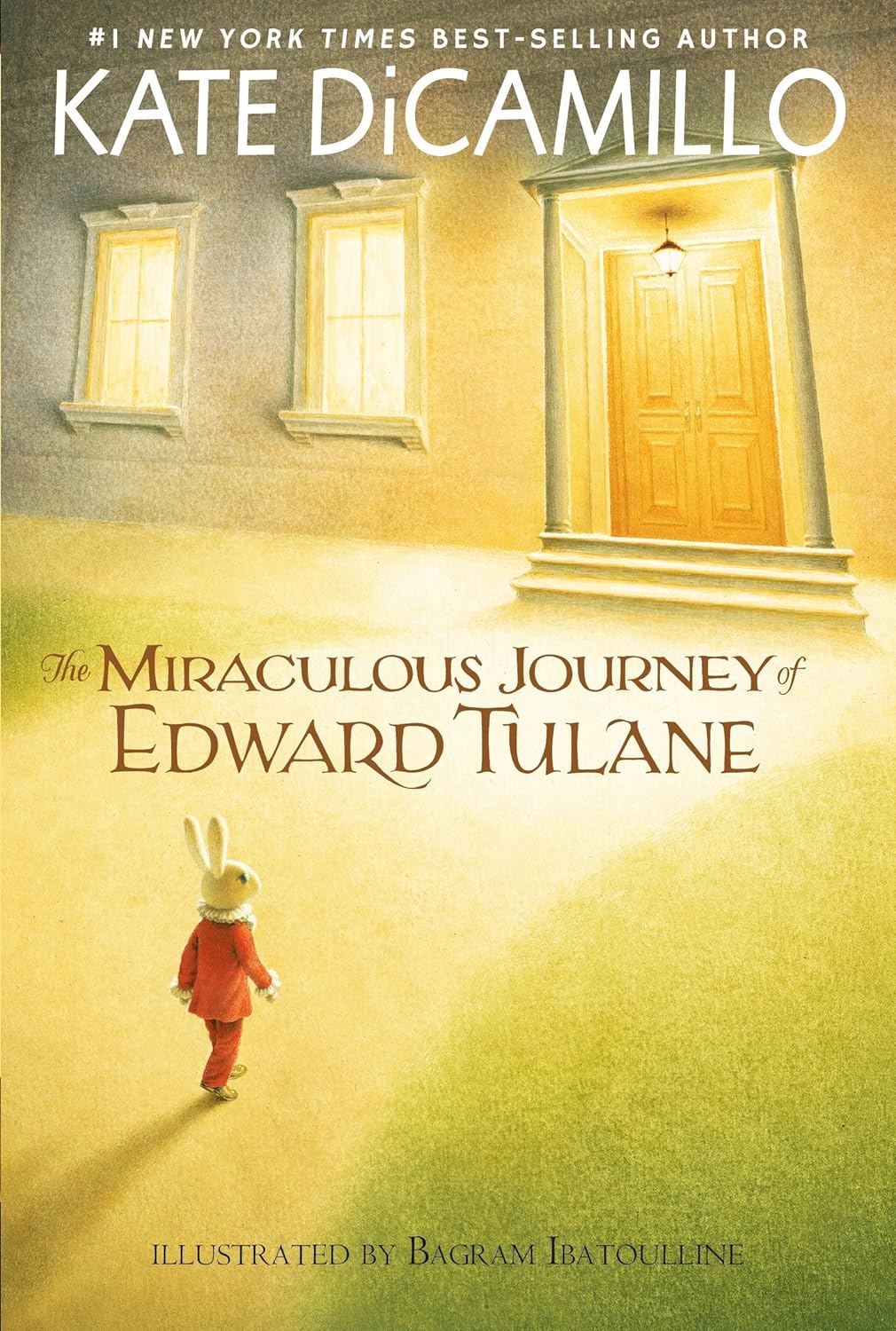
The Miraculous Journey of Edward Tulane by Kate DiCamillo

Kate DiCamillo is a Newbery Medal award winning author, and one of my favorite authors, Ann Patchett raves about her books for children — especially this one. And I needed a present for for our 7 (almost 8) year old friend.

My justifications all in a row, I went to one of my favorite independent bookshops and bought The Miraculous Journey of Edward Tulane as his Christmas present

Full disclosure, after looking through this beautiful book, I knew I wanted to read it myself. This little guy has loaned me a few of his books before — so he won’t mind.

This tale tells the life story of a vain and prideful china rabbit – the uppity Edward Tulane. Edward’s story begins in the 1930’s when he is given as a birthday present to Abilene; an adoring ten year old girl who loves Edward unconditionally. He has beautifully made outfits, comes to the dinner table with the family, and has a special bed. In short, Edward is adored, but the rabbit’s arrogant disposition prevents him from appreciating or returning this affection.

Edward’s life soon changes when he is lost overboard on a family trip aboard the Queen Mary. From then on, he is acquired and lost by a variety of owners, some of whom treat him with kindness and some who are cruel.

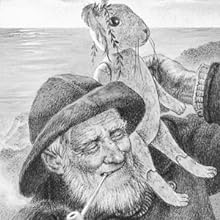
As Edward travels with the various people who own him, including a fishermen and a group of hoboes, he he slowly loses his pride, coming to realize that “if you have no intention of loving or being loved, then the whole journey is pointless.”

Still, his journey leads him on a long series of adventures. Some of his adventures are not so bad, and some are downright horrible. Along the way, he begins to understand the meaning of love and hope. He realizes that love can be different things to different people. And sadly, he finds out that sometimes hope is lost. Edward’s journey teaches him how to love and in the end, he finds his way back to the arms of a little girl who squeezes him tight and also calls him Edward.

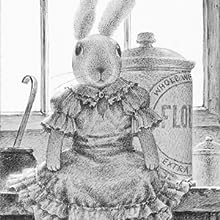
The Miraculous Journey of Edward Tulane is beautifully illustrated by Bagram Ibatoulline, just look at these

As I closed the book, I pondered the magic, yet melancholic tone of the story. I thoroughly enjoyed this fairy tale which is written both beautifully and delicately, but it’s also very sad. There’s the death of a young child in the book, another child’s father is an absent drunk and other tragedies unfold during Edward’s journey
I decided this could be difficult for a still-too-young and sensitive reader like my young friend — so, I’ll put it away for next year.