The Secret Place by Tana French

Without intention, I ended up taking a month-long break from this little blog — my favorite place. Turns out it was necessary to clear my head, sweep the decks clean, and get back into reading — my happy place.

I’ve read two (no three) very different, but engrossing, books, and now that I’m back, let me tell you about the first of them.

See how I’m stringing you along for my other reads? All part of my plan, dear readers.
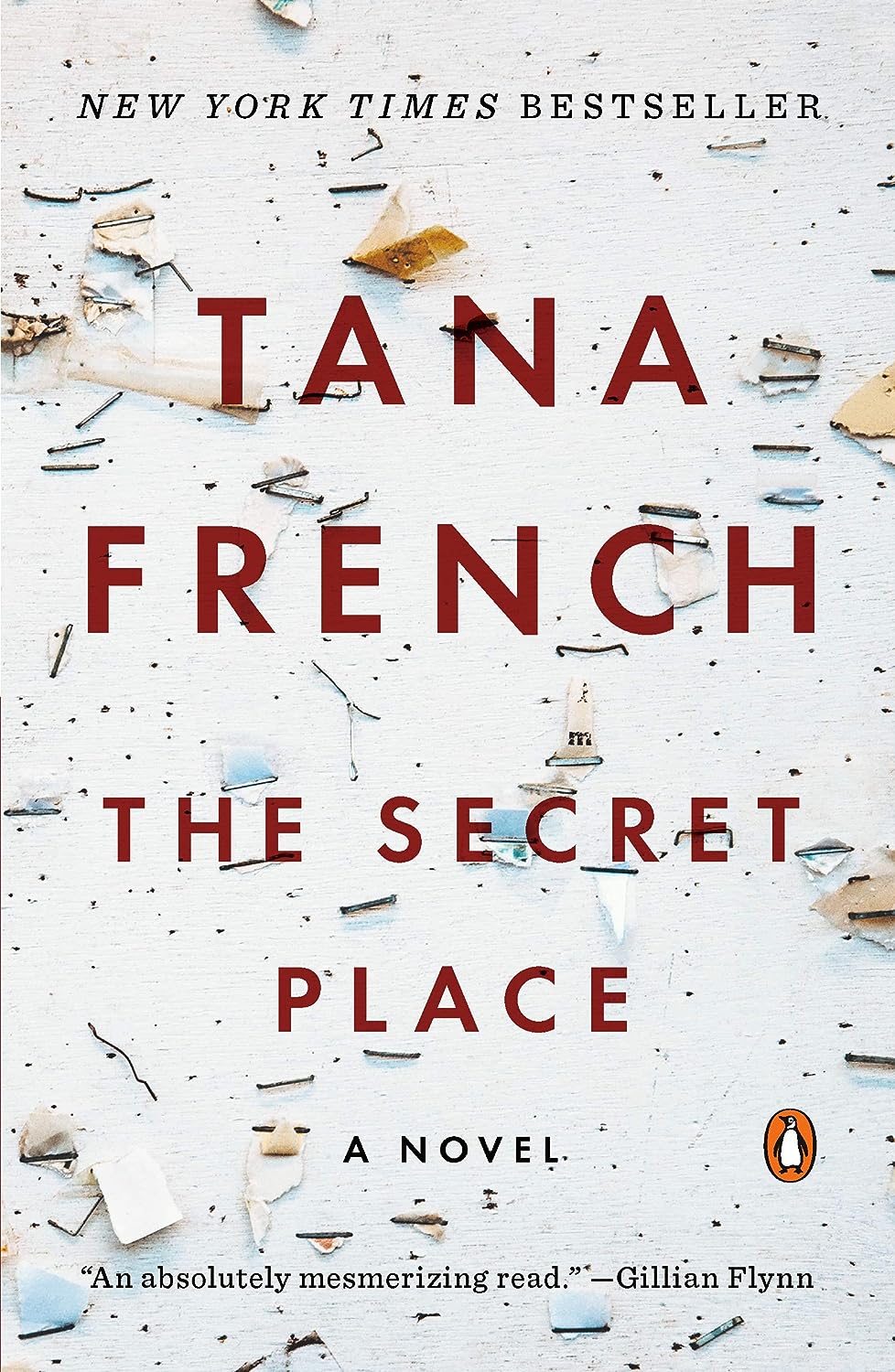
This is the fifth installment of the Ms. French’s Dublin Murder Squad series. I got hooked on this series years ago and I should have hunkered down and read them closer together, but other books distracted me (I’m looking at you Ms. Louise Penny).

Each of these books tells of a murder from the view of a different member (or adjacent member) of the Dublin Police Murder team. While, you can read them in any order, I suggest you try them in order.

THIS is the first in this wonderful series.

But don’t take my word for it,

The New Yorker critic Laura Miller says:

The Dublin Murder Squad series [is] the object of an intense, even cultic fascination. French’s readers like to go online and rank the books (six so far, counting “The Trespasser”) in order of preference, and while there’s no consensus, it’s taken for granted that anybody who’s read one will very shortly have read them all…Most crime fiction is diverting; French’s is consuming.

It only took me a few chapters to get drawn in again to another one of Ms. French’s mysteries and to remember the connections to the previous books. (I know, I know — I can’t remember the name of a person I just met, or the password for my Netflix account, but I’m Rain Man when it comes to plots, characters, and books I’ve read.)

We once again meet Holly Mackey, daughter of Frank Mackey both from the previous books The Likeness and Faithful Place when Detective Stephen Moran briefly worked her father. Anyway, Holly has come to Moran’s office with a photo of Chris Harper who was found murdered at Holly’s boarding school, a year ago – on the photo was pasted letters from a magazine saying “I KNOW WHO KILLED HIM”. This is a case which Detective Moran has been trying to solve from the Cold Cases unit. Moran takes the photo to Murder Squad, hoping he can get in on the action.

I work Cold Cases. When we bring witnesses in, they want to believe this doesn’t count: not really a murder investigation, not a proper one with guns and cuffs, nothing that’ll slam through your life like a tornado. Something old and soft, instead, worn fuzzy round the edges.

He joins forces with the coveted Murder Squad and Antoinette Conway, who had been in charge of the case twelve months previously, and together they tackle interviews of the students at Holly’s all-girls boarding school. This exclusive boarding school has the bulletin board where Holly found the photo – a bulletin board where students can put up anonymous confessions about boys, their bodies, their friends — their secret place.

They focus on two girl cliques, and here is where things get really interesting. Ms. French shows a deep understanding of the teenage girl psyche. She writes with an empathy and understanding of adolescence and the boarding school experience which perhaps comes from her own personal experience. The Secret Place brings back that transitory but intense time, before the real world changes everything. It captures this teenage stage when friendships are everything, future plans are wild yet seem obtainable, and first love entices around every boy.

Things don’t make sense, when you’re that age; you don’t make sense.

Some of Ms. French’s best scenes are as Moran and Conway conduct their interviews with the girls at the school. I soon had a perfect picture of each girl, which left me suspecting almost every one. There are two mysteries here; who pasted up the card, and who committed the murder. The way the two play off each other is as brilliant as well as devastating — and often funny:

After a moment she sighed noisily. “Because out there in the dark was a better place to talk, is why. And because probably you never broke any rules in school, but not everyone always feels like doing everything exactly like they’re supposed to. OK?”
“OK,” I said. “That makes sense. I get that.”
Thumbs-up.

“Wahey. Good for you.”
Almost four years of her teens left.

I didn’t envy her parents.

As in her previous books I became invested in each character — not wanting them to be the killer, and almost hoping that if they are, they get away with it. Ms. French writes the most compelling characters — hands down.

The writing deftly constructed the often romanticized British boarding school — I could smell, feel, and sense the place in every scene.

I agree with another review I read — The Secret Place turns out to be more than just the bulletin board where girls can anonymously post messages and juicy gossip. The secret place also refers to a special place on the grounds of the Academy where the girls sneak out after hours to hang out with some privacy, or, perhaps meet a boy from the nearby boys school. It also refers to the secret place where one student hides the key that lets her and her friends sneak out at night. Finally, and most importantly, Ms. French opens up the secret place within each of the her characters where they keep their deepest and darkest secrets.

I hesitate to give away too much about the culmination of this mystery — the girls, and their motives — this is to discover on your own — and to savor. There is an inclusion of a supernatural element — where the girls discover their powers to conjure spirits, which felt to this reader a bit contrived. But where The Secret Place shines is at contrasting the adolescent and adult worlds. Ms. French writes a beautiful passage of the thoughts dawning on (what could possibly be) the murderer:

Real isn’t what they try to tell you. Time isn’t. Grown-ups hammer down all these markers, bells schedules coffee-breaks, to stake down time so you’ll start believing it’s something small and mean, something that scrapes flake after flake off of everything you love till there’s nothing left; to stake you down so you won’t lift off and fly away, somersaulting through whirlpools of months, skimming through eddies of glittering seconds, pouring handfuls of hours over your upturned face.

My only small (very small) quibble, and maybe it’s definitely my age, but at times, I found it a bit tiring to keep track of eight teenage girls and their beauty habits, cell phone usage, and their day to day interactions that often did little to advance the plot Not to mention a bunch of hormone-charged teenage boys.

The Dublin Murder Squad series takes the run-of-the mill crime suspense thriller/police procedural into the realm of literary fiction.
If you are a mystery reader looking for a complex, well written mystery series, peopled with multi-layered characters, Tana French is for you.

The Trespasser is next to read in the series and, (sob) it’s the final one.

A digital review copy of The Secret Place was kindly provided by ‎Penguin Books via Netgalley.
I Got Nothing …

Sorry dear readers, I have nothing to share at present.

No book recommendations, no reviews, nothing.

I can’t seem to land on a book, nothing is grabbing my interest beyond the first few pages…

I know it’s my mood and definitely not my books. I have hundreds many great possible reads awaiting me. Most of which I know I’m going to devour, but nothing is clicking…

Here’s what I’ve tried and discarded so far…

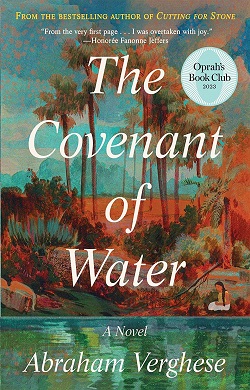
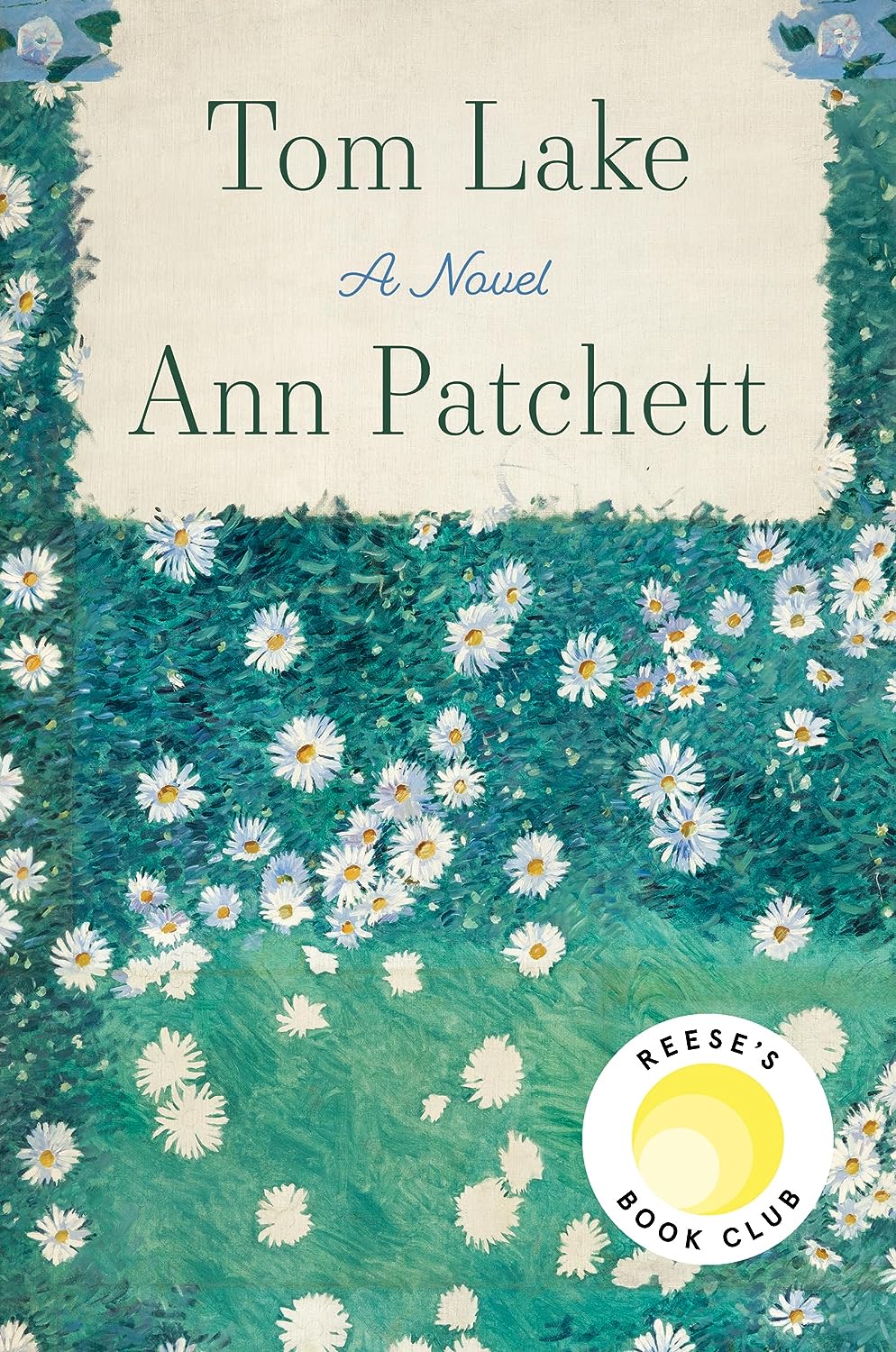
I was very keen to read The Covenant of Water as the author’s previous book was one of my all time favorites. But, one-third of the way through, I suddenly got bogged down…again not the book’s fault. Ann Patchett is always a favorite, but even her beautiful writing couldn’t seduce me further than a few pages.

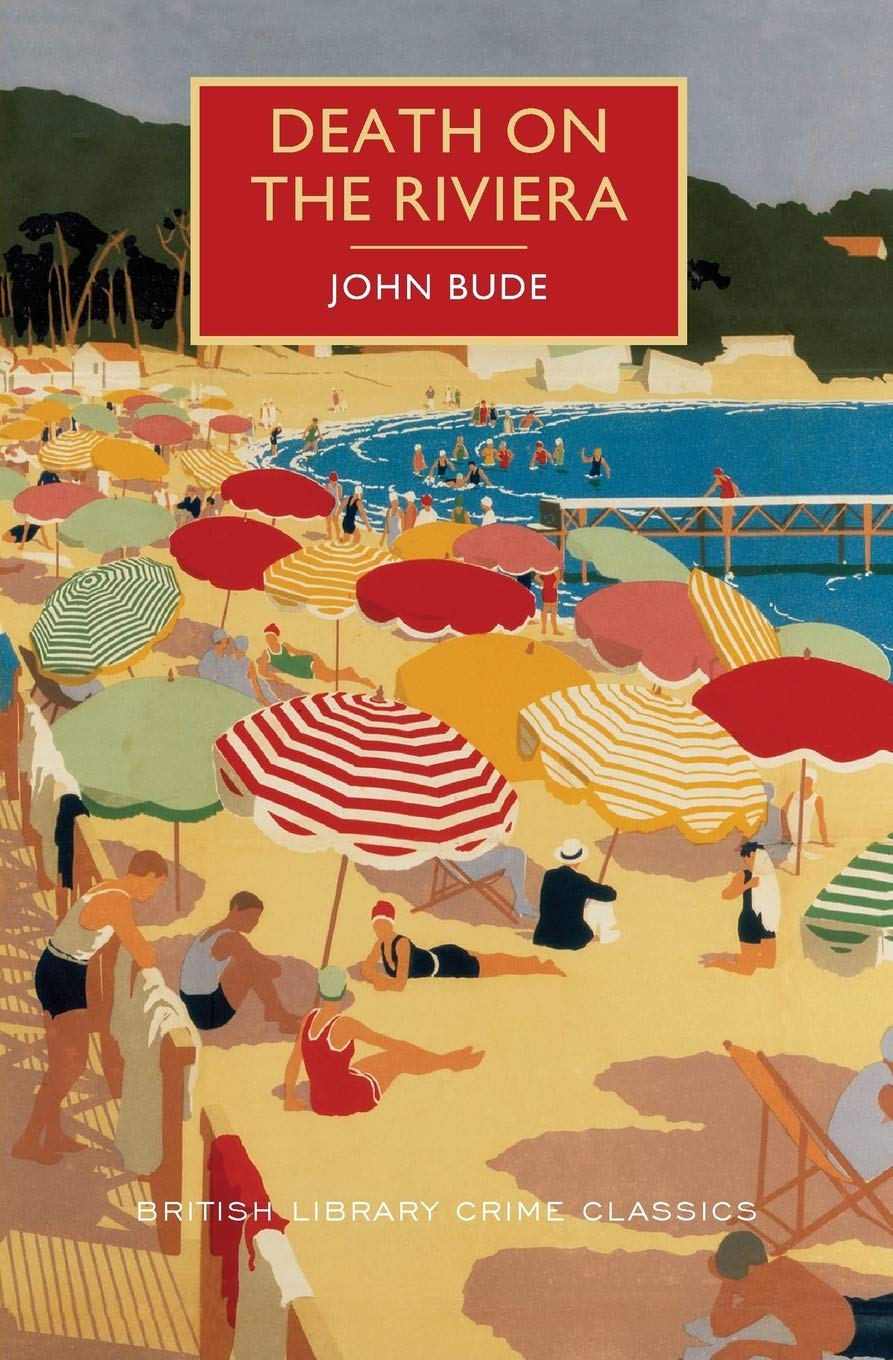
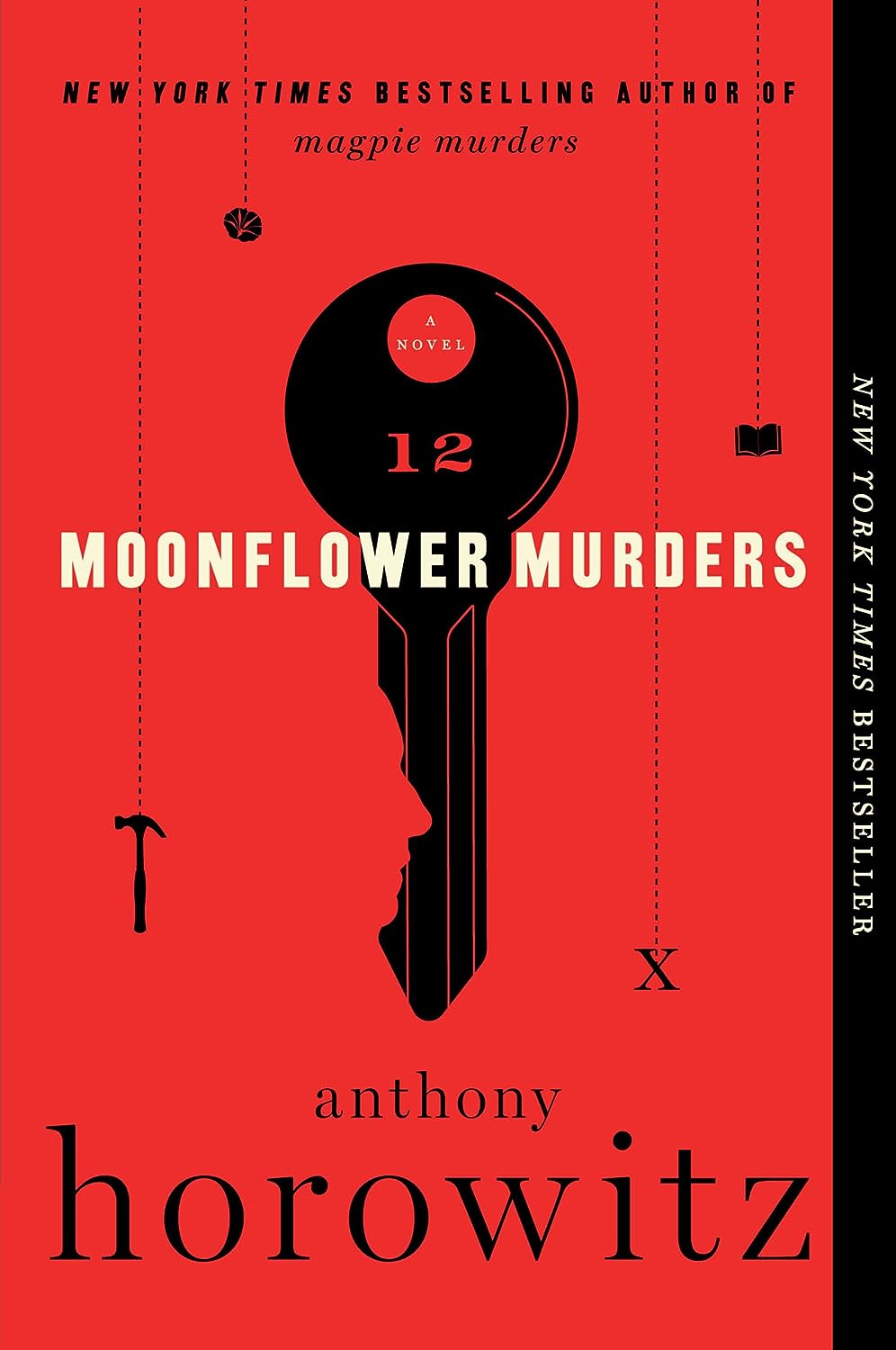
So I turned to my trusty mystery collection, thinking a good mystery will be perfect – but no, nothing grabbed my attention. Moonflower Murders is a sequel to The Magpie Murders ,which I really enjoyed. Rumors are that there will be a PBS mystery sequel as well (yes, please PBS). And just look at the cover from the very classic British Library Crime series. But again, no – nothing clicked.

And then there’s these enticing advanced reading copies for books coming out next year. Yup, tried these too…

Please know, it’s not these books’ fault – it’s my scatterbrained mood.

Restless and despondent (hey, it’s my blog I can be as dramatic as I want) I rearranged some books, did some more dipping in and out of other books and came across this last evening. An old work friend (who sadly passed away during COVID) gave me this book. I found her note in the book, saying she thought I would enjoy these stories. Well, that’s depressing I thought, but, oh well – I’ll give it a try…

From the back blurb:

For many years Pulitzer Prize-winning author Robert Olen Butler has collected picture postcards from the early twentieth century, not so much for the pictures on the fronts, but for the messages written on the backs, little bits of the captured souls of people long since passed away. Using these brief messages of real people from another age, Butler creates fully imagined stories that speak to the universal human condition.

I am not a big short story reader, I often find they leave me wanting more. But, given my mood, I thought maybe, just maybe this will be the one – finally the book to grab me, and it did.

I read two last night and one this morning with my tea. It’s too early to give you my full take on this book and admittedly, Mr. Butler uses a gimmick here – but so far, it’s a wonderful one. Using actual picture postcards he’s collected over the years, he creates a story from the messate on the postcard. He crafts characters, situations, and emotions — all from a few lines of personal communication between two unknown people.

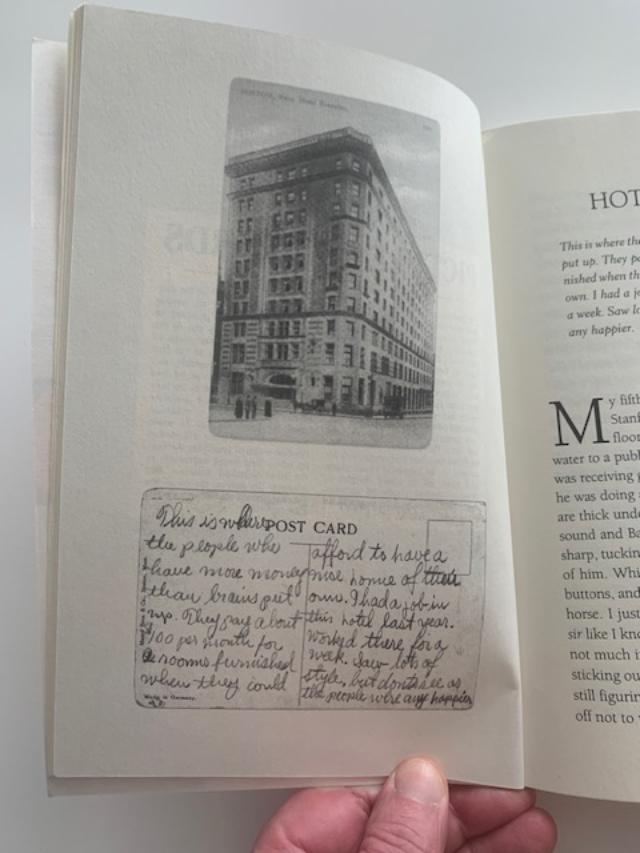
Here’s a photo of the first story postcard, the message says:

This is where the people who have more money than brains put up. The pay about $100 per month for two rooms furnished when they could afford to have a nice home of their own. I had a job in this hotel last year. Worked there for a week. Saw lots of style, but don’t see as the people were any happier.

Mr. Butler gives us a story of a new bus boy working at a fancy hotel who meets a rich guest about his own age and they form a prickly relationship that ends in a most surprising way.

Stay tuned folks, I will try and read some more of these little stories and give you a full report.

Promise, I will have something for you next time.

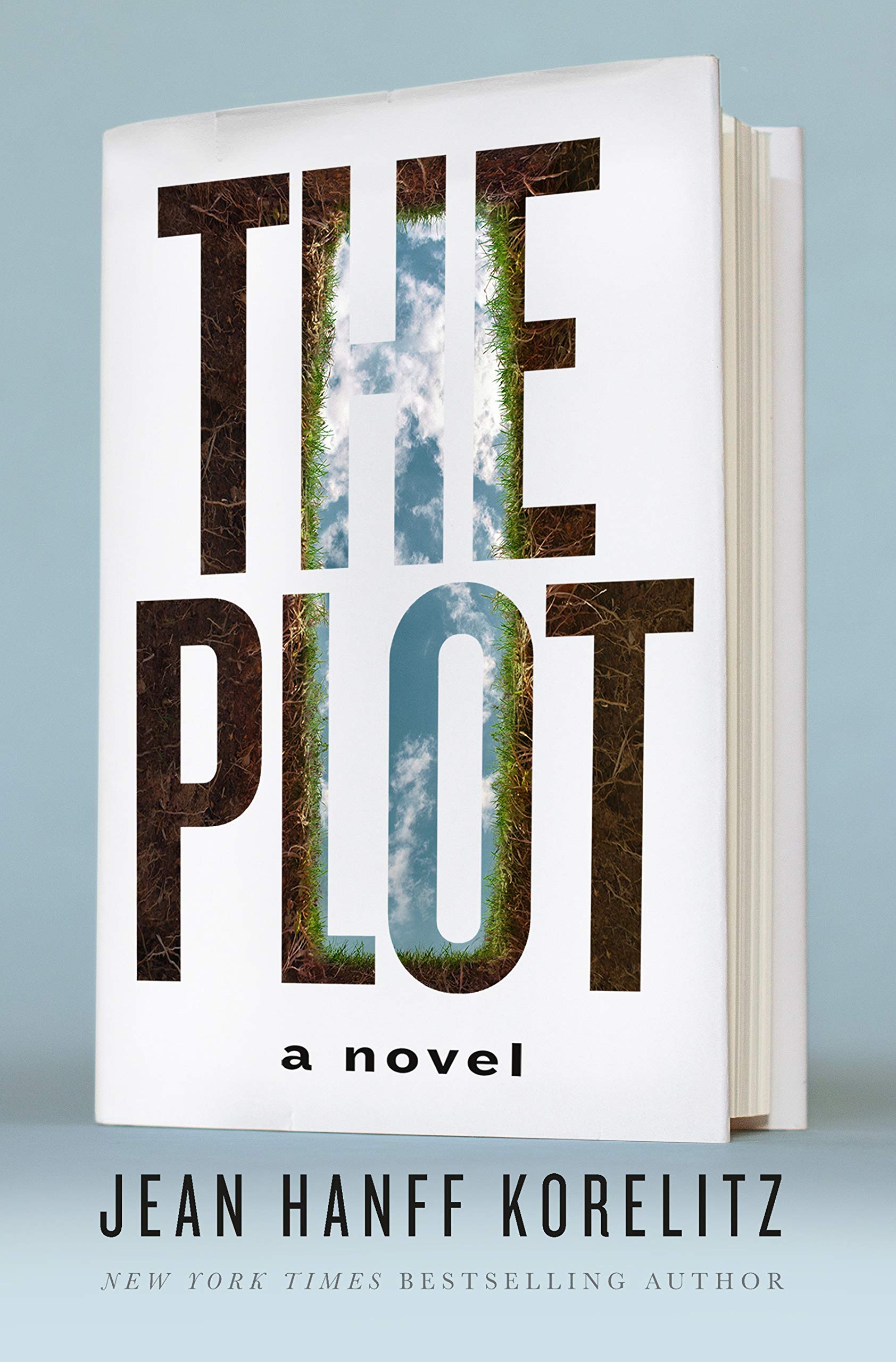
The Plot by Jean Hanff Korelitz

After my recent bout with unsatisfying and abandoned books, I turned to a summer reading favorite – mystery novels. I picked this one because the plot of The Plot involves a best-selling writer, a stolen plot, literary treachery, and an examination of what defines plagiarism.

Jake is a novelist who experienced early modest acclaim, but he hasn’t been able to replicate that success in his subsequent books. He is now a writing instructor at small, second-rate writing program in Vermont.

Jake meets with his new student, Evan Parker, who has an incredible confidence in himself and his work, although he won’t share much other than a cursory few pages of work. After reading these few pages, Jake assumes Evan is without writing skill and in a one-on-one meeting shares his concerns about a lack of produced pages. Evan reluctantly shares his novel’s plot line with Jake, who realizes it is indeed a blockbuster plot – in fact — The Plot.

Over the years, Jake morosely works on his writing only to have rejections. Meanwhile he awaits the publication of Evan’s novel which he expects to be a best seller. Then Jake learns that Evan died before completing the book — so Jake sits down and writes his own version based on the infamous plot.

The resulting novel has phenomenal success, New York Times best seller list, Oprah, book tours, media interviews and even movie rights. Jake should be riding high on this success. Yet he lives with the constant dread that someone, somewhere knows this plot, his book, wasn’t his original idea.

But his worst fears come true, someone does know and starts sending him messages about the fraud and threatening to expose him. Jake sets out to try and find out who could possibly know, as most of the deceased Evan’s family is dead.

Now, usually when I read mysteries I try and figure out who dun it – half the fun in reading mysteries. Usually I’m wrong – or way off — case in point The Murder of Roger Ackroyd.

About three quarters of the way through The Plot I did figure out who was the culprit behind the messages and threats – I was certain this time and I was correct. However, no gold stars for me — I’m pretty certain Ms. Korelitz did this will full intention — she wanted the reader to know, and Jake to be in the dark.

Even so, I kept reading, kept turning the pages — greatly appreciating the author’s plot twists and the devious suspense building.

What I also found interesting, was the insights into what is, and, is not plagiarism. Jake based his novel on an idea someone else had. The Plot discusses other such novels based on someone else’s works, such as Jane Smiley’s, A Thousand Acres, based on King Lear.

The ending, well it wasn’t what I wanted – but then again, I’m not an author. And after reading The Plot, I’m very glad I’m not…who knows where any writing ideas might come from?

Without giving any more away, I will close with this enticement. You see, Jake thought the threats were all about plagiarism, but he was totally wrong. The anonymous email writer had much more to settle with him.

And that, my Book Barmy friends, is the real plot.

I recommend The Plot as a page-turning, suspenseful mystery/thriller, perhaps your summer vacation read.

A digital review copy was provided by Celadon Books via Netgalley.
Abandoned Reading

Humble apologies to my Book Barmy followers for the lack of content here. Sadly, I’m in a reading slump, a reading desert if you will, with several recent books cast aside in disappointment.

I know this is natural and happens to every reader, but oh how I miss being lost in a good — nay, a great book. Without such diversion, my evenings are not spent in my lovely reading nook, with said good/great book — but instead re-watching episodes of West Wing.

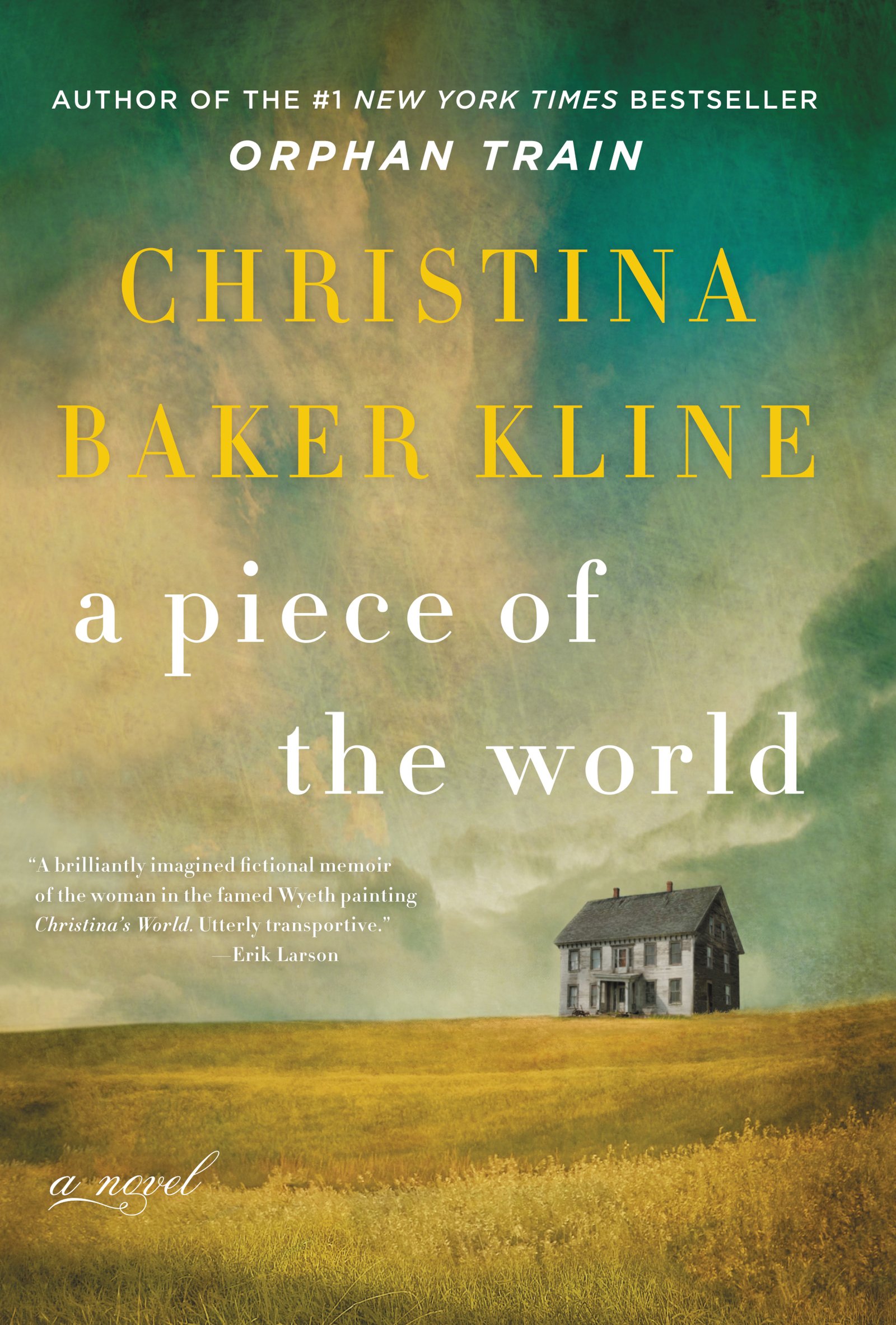
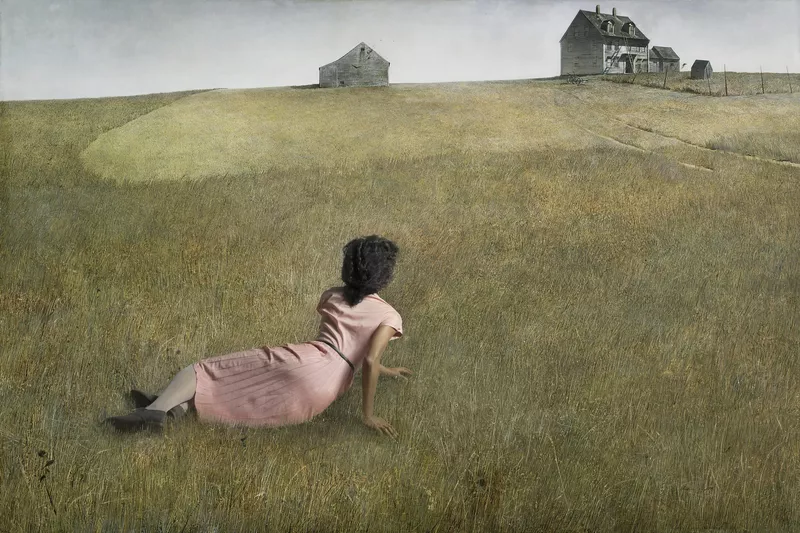
I had such high hopes for this novel, inspired by Andrew Wyeth’s painting Christina’s World and told from the point of view of the woman herself. Christina seemed destined for a small life. Instead, for more than twenty years, she was host and inspiration for the artist Andrew Wyeth, and became the subject of one of the best known American paintings of the twentieth century.

I actually got well into A Piece of the World and was quite enjoying it, so much so, I sent a friend a copy to read during her up-teenth snowstorm.

But, alas, after a great start, the novel became belabored with the focus on Christina’s disability and struggles quite dreary. So, I put it down. Perhaps another day, I’ll try it again.

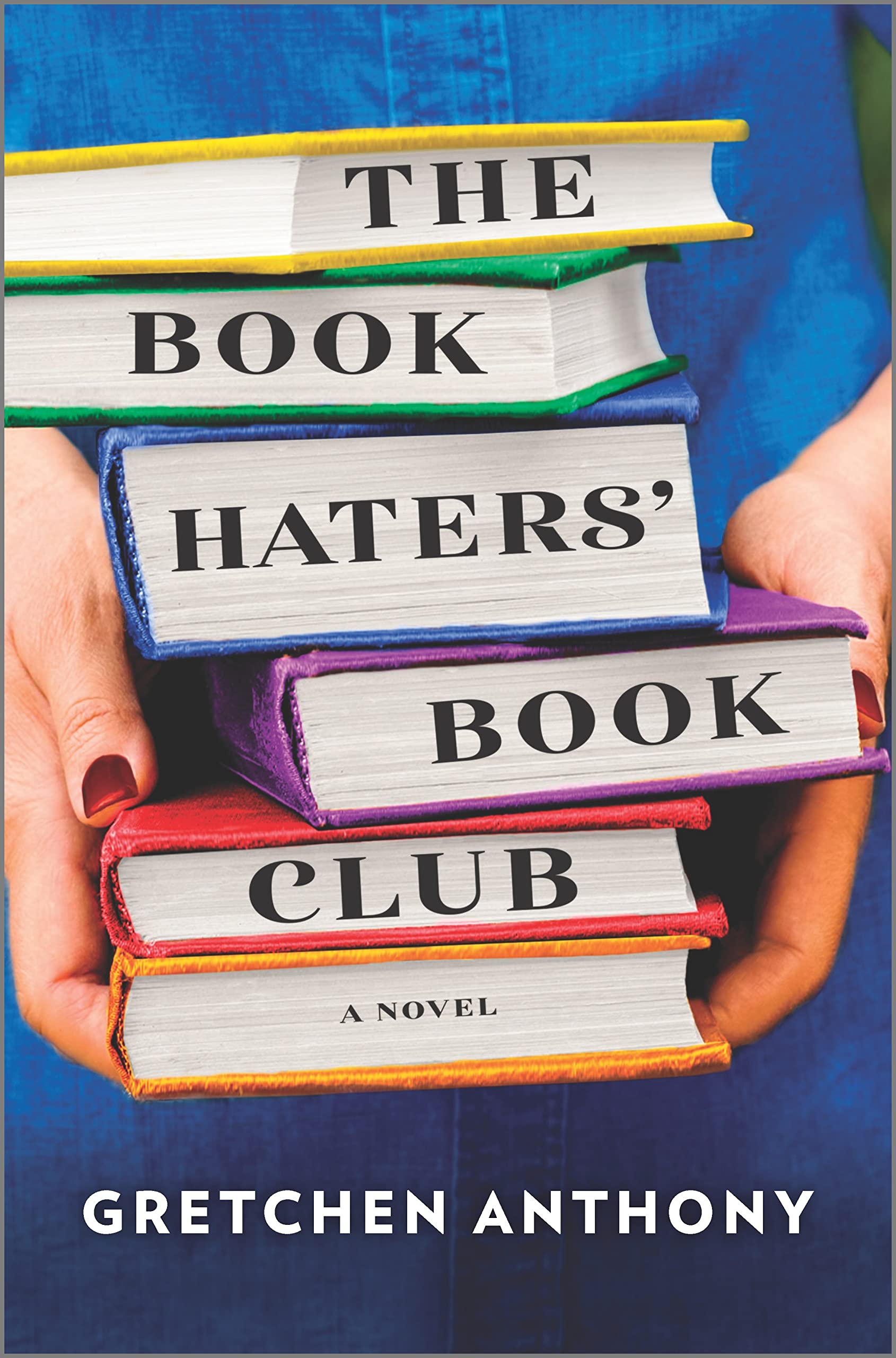
The Book Hater’s Book Club was sent to me by the publisher for review. A blog aptly named Book Barmy tends to attract such books, for which I am grateful. The book’s blurb “All it takes is the right book to turn a Book Hater into a Book Lover” had me intrigued.

I usually enjoy books about book stores and the very interesting people that run them. So knowing this would be a lighter read, I tried it.

Elliott, co-owner of Minneapolis’ Over the Rainbow bookshop, has recently passed away, leaving the other co-owner, Irma, in trouble. Business is failing and the bills are piling up. Irma is also grieving the death of her longtime boyfriend.
Irma calls a meeting with her two daughters, Bree and Laney, and Elliott’s partner, Thom, at the lawyer’s office. She has decided to sell to a developer who plans to raze it and replace it with high-rise condominiums. Hmm I thought, okay, just give it another few chapters…

I tried folks, I really tried, but the characters were a bit too simplistic and plot very predictable from the outset. Another book tossed aside. Sorry ‎Park Row publishing.

I picked this up at my local library from the new arrivals shelf. (I have a special weakness for library new arrivals or librarian recommendation shelves.)

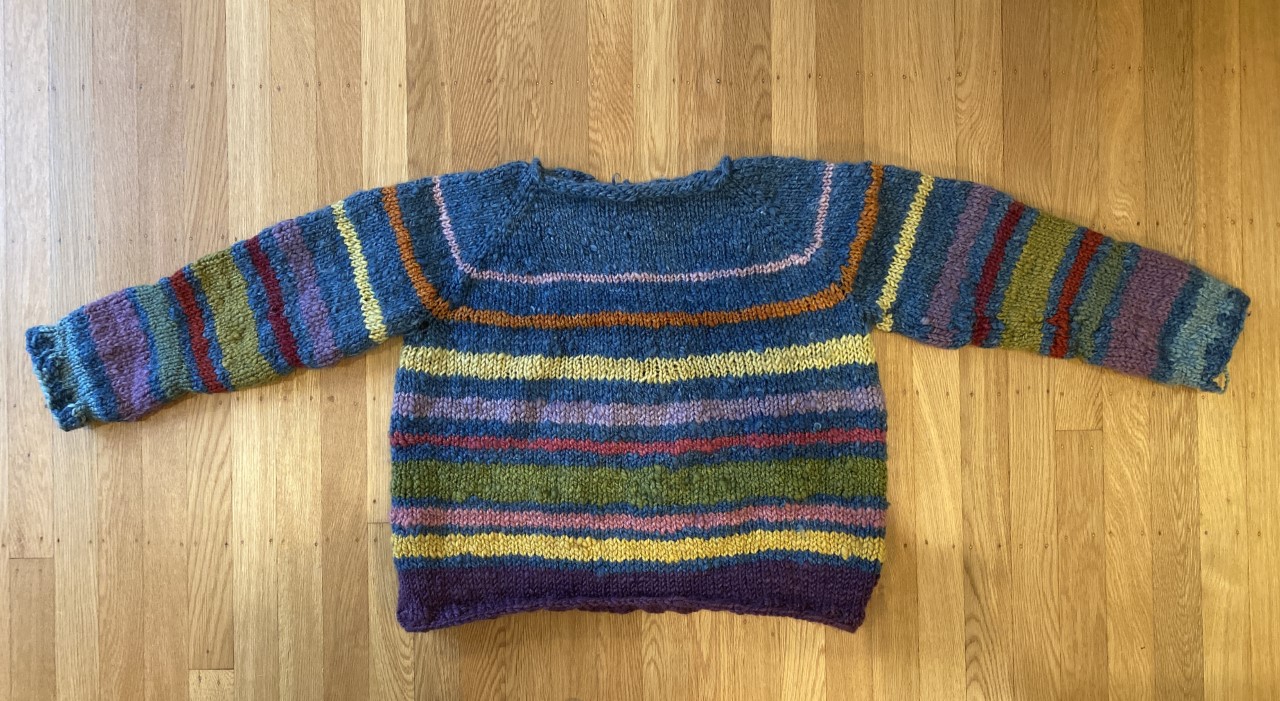
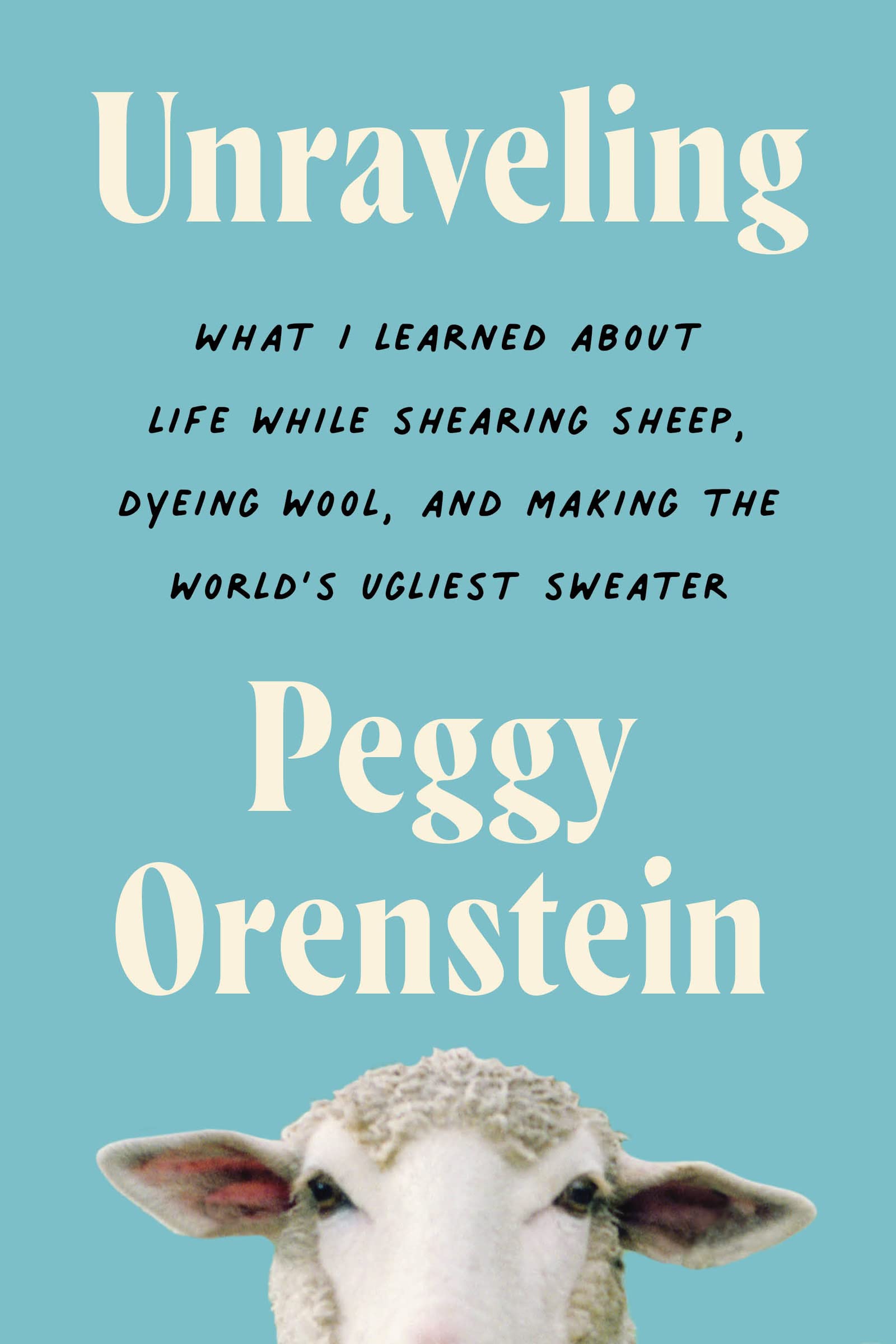
It sounded fun, a memoir about how Ms. Orenstein got through the pandemic by shearing a sheep, carding the wool from said sheep, spinning it into yarn and then making a sweater. I’ve never really been interested in spinning, but am a knitter, so I thought this will cure my reading slump – something completely different…and, as it turns out, completely BORING.

My eyes crossed at the detail; every little step of finding someplace that would teach her to shear a sheep, the minutiae of that practice, the endless discussion of choosing dyes for her wool, and the struggle to learn to knit. I know everyone needed something to do during the lock down time, and I’m happy Ms. Orenstein found her own coping mechanism. I just wish she had made it more fun and entertaining. But as Unraveled is written – it just felt like a forced march.

One thing is for certain – as the book cover proclaims — she did produce a very ugly sweater.

So here I am, aimlessly searching my bookshelves and Kindle for something to read – I need something to read. Perhaps I’ll just let it go and not put pressure on myself.

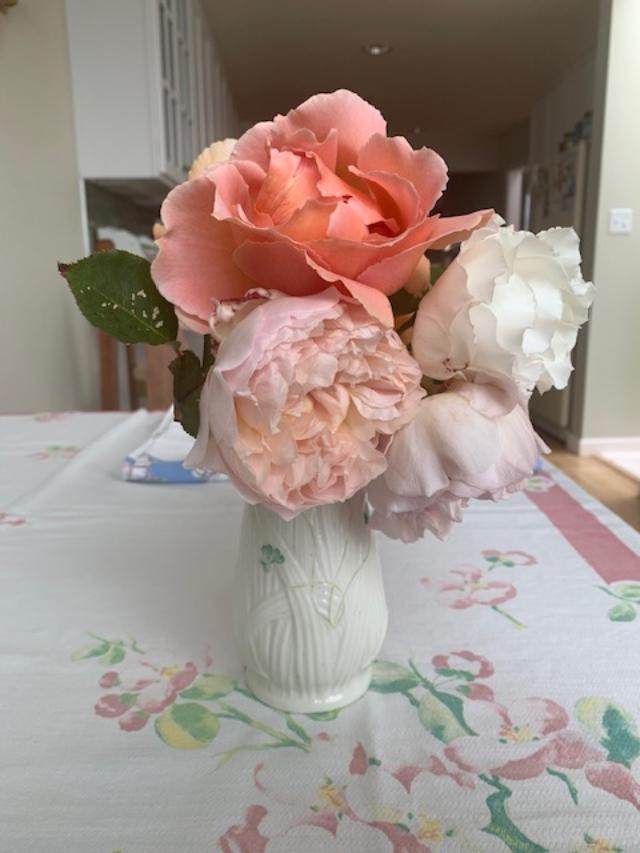
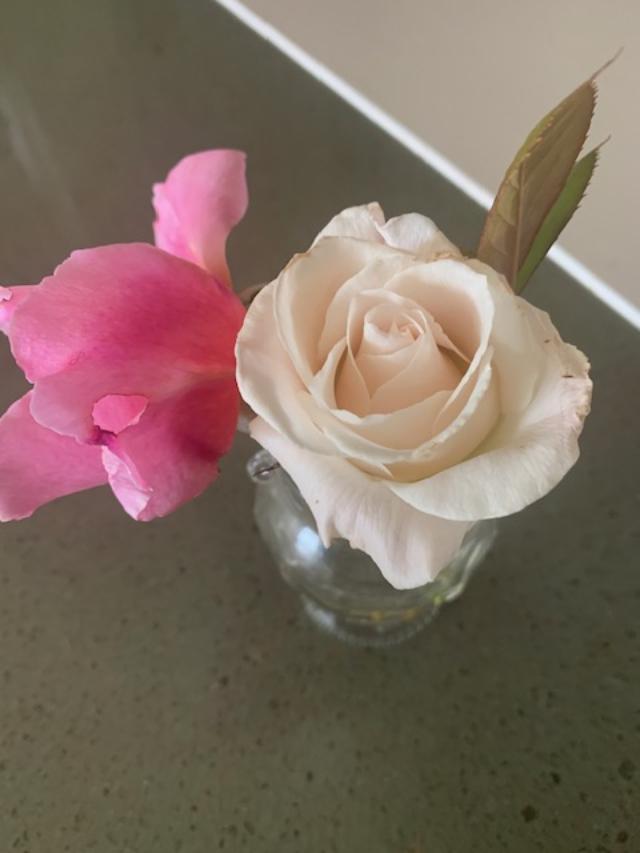
As a distraction, our record setting rainfall this winter has resulted in some of my best rose blooms ever.

So, I’m off to the garden – there are always aphids to spray with soapy water and dead-heading. Yes, that’s what I’ll do.

And “West Wing”, in case you’ve forgotten, was a great show, and I’m really enjoying re-watching the series one episode an evening – from the beginning.

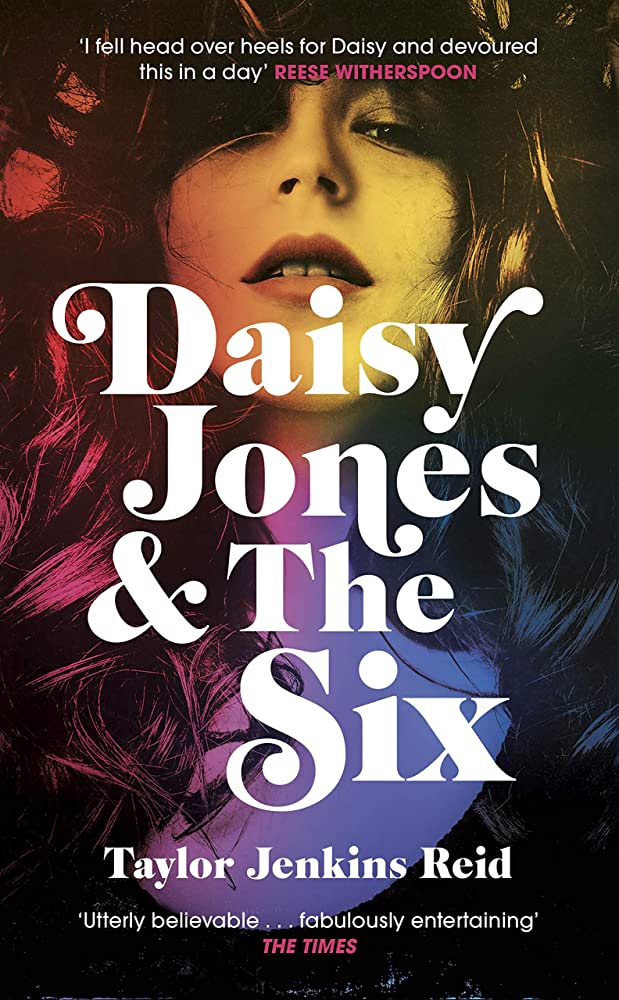
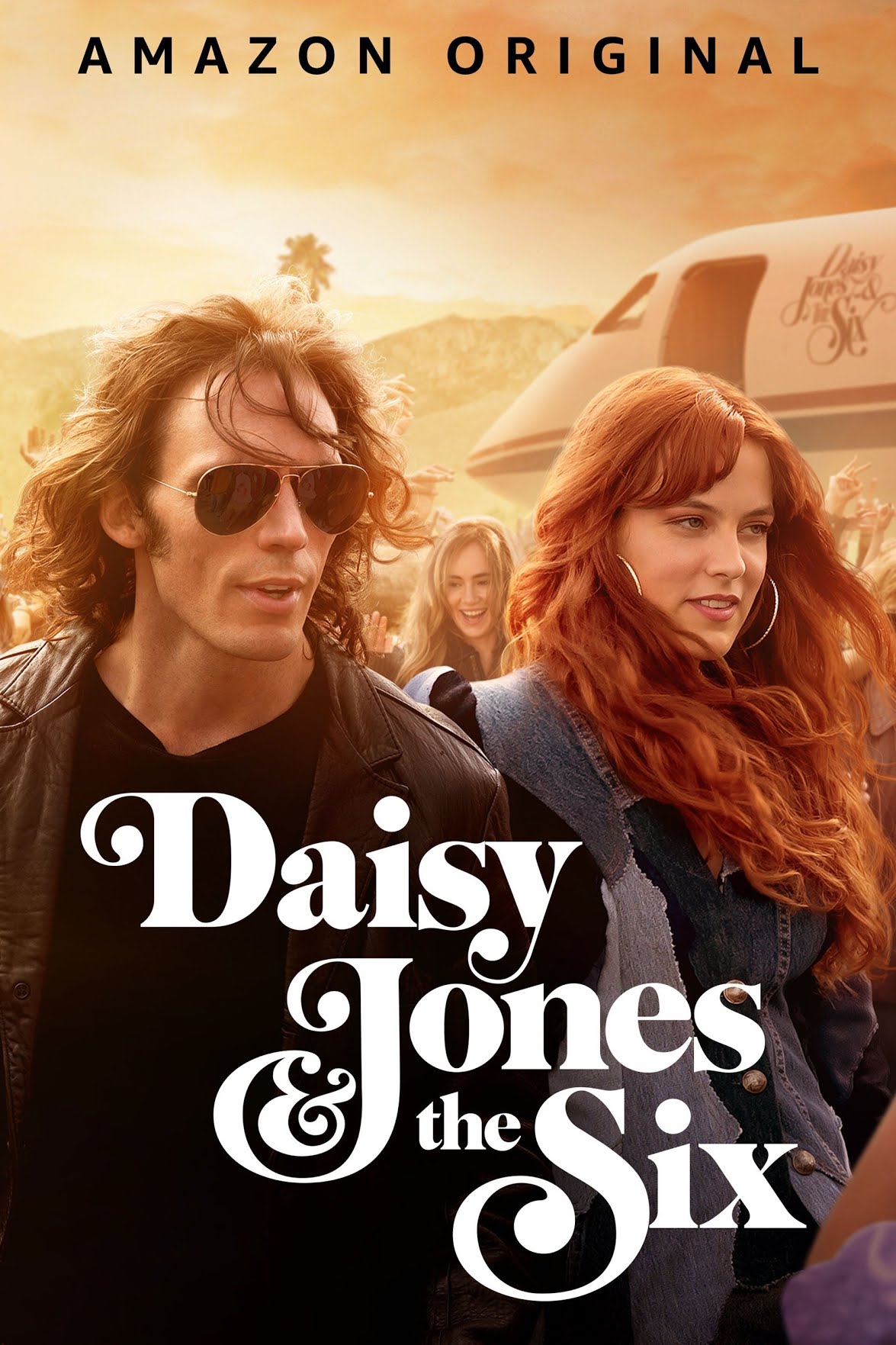
Daisy Jones and the Six

Once again I found a screen adaptation better than the book. It rarely happens, so I must come clean that this is my second admission. The other was the PBS adaption of Magpie Murders.

When Daisy Jones and the Six first came out, an advanced reading copy was kindly sent to me by the publisher, but I never felt right attempting a review. You see, I barely plodded my way through half of the novel before tossing it aside. It later became a blockbuster bestseller and adapted into a TV series.

Guess we let you down here at Book Barmy. But let me explain

The premise was, and still is, intriguing — the making and wild success of an iconic rock band. In 1977, Daisy Jones & The Six were on top of the world; the band had risen from obscurity to fame, and then, after a sold-out show at Chicago’s Soldier Field, they called it quits. Now years later, the different band members and associates are being interviewed to finally uncover the true story of their experiences, and what went on behind the scenes.

But herein lies the problem, the story line is told through a series of interviews years after the band broke up and I really struggled with this format. I found it hard to keep the different characters straight through the interview format, and the different narratives were confusing. And these same characters never came to life even with their sex, drugs and rock and roll – it all fell flat for me.

I was a bit sad because 70’s rock and roll is the nostalgia of my high school and college years.

And yes, if all that sounds familiar, Daisy Jones and the Six is loosely based on Fleetwood Mac, with Daisy thinly disguised as Stevie Nicks.

____________________________________________________

I’d heard about the TV series and one evening I gave it a try – and I was immediately hooked – line and sinker. I was transported back to the 70’s – the clothes, the original music throughout, and the cast was finally interesting and sprung to life. (Fun fact, Daisy is played by Elvis’s grand daughter, Riley Keough).

There’s sex, of course, drugs, yes – but mostly it’s about creating music which doesn’t always resonate with the band, but become hits — all while the band struggles to elevate themselves from the cliché.

The main relationships are portrayed with gritty realism, the male lead struggles with sobriety, his wife wants her family back, and then there’s Daisy who wants fame:

I had absolutely no interest in being somebody else’s muse.
I am not a muse.
I am the somebody.
End of f*****g story.

This is not a consistently great series, some episodes are better than others. And many of the characters are unnecessarily portrayed as jerks, which is supposed to make them more authentic to the 70’s LA music scene, but actually makes them hard to care about. Daisy wears flowing dresses and dances in circles, actually making a caricature of Steve Nicks – which is distracting.

Overall, it’s a somewhat stereotypical drama involving a rock band which becomes more compelling as the members alternately work their way through fame, success, love triangles, drugs, alcohol and angst.

It’s like some of us are chasing after our nightmares the way other people chase dreams.

I watched every single episode and adored being back in the 70’s. The Daisy Jones and the Six TV series is very well-produced, the sets are spot-on realistic – and the music — well, it was my music.

What else can I say — I had fun.

Try it, maybe you will too.

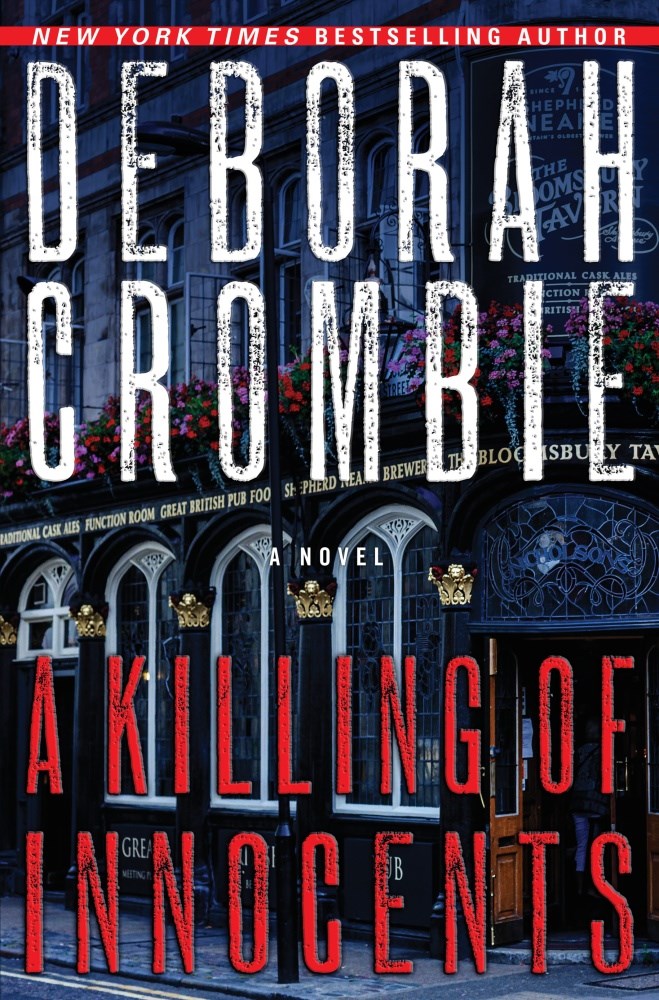
A Killing of Innocents by Deborah Crombie

Ms. Crombie writes one of my best loved mystery series. I’ve raved about her books here on Book Barmy for many years. Her devoted readers had to wait a a very long four years for this newest installment, A Killing of Innocents. My library hold finally came through a couple of weeks ago and I happily dove right in.

Duncan Kincaid and Gemma James are back, and once again, we get to read about their professional and personal lives. Their relationship and their children (one his, one hers, and one adopted) continue to change and develop throughout the series. These characters are so so well drawn, they’ve become almost real to me after 19 installments.

But wait, there is a mystery. Duncan is in a local pub waiting for his fellow officer, Dog Cullen, when he sees a young woman in hospital scrubs leaving the pub — both upset and worried . Later, when he and Doug go to leave, cutting through a park, a distraught woman and child call out to them. When they go to take look, they realize it’s the same woman, lying dead in the grass, The victim, Sasha Johnson, was a junior doctor at a nearby hospital and was stabbed. Duncan regrets that he should have known the woman was in trouble and feels an extra responsibility to solve her murder.

Duncan and his team, with the help of Gemma, his wife, try to track down a killer. The motive is not immediately apparent, and before they can uncover any clues — another body is found stabbed in the same way, but at a different location. Are the two murders connected? What connects them? The stabbings set up the suspense, but the setting in a cold and damp London which grows dark early in late November, adds a creepy atmosphere to the story-line.

Meanwhile, back at Gemma’s and Duncan’s busy household, everyone is stretched thin with ballet rehearsals, children’s nightmares, and the older son both studying and working at the cafe. While other readers may complain that these domestic details detract from the mystery, I find it gives the story depth. The sometimes strained friendship (or is it more?) between their co-workers Melody and Doug hits some bumps –and these personal tensions add to the plot.

Sometimes The Killing of Innocents teetered from an abundance of characters, as if Ms. Crombie needed to include every protagonist, their acquaintances and friends from previous novels. But I carried on, realizing that not all the characters were directly involved in the mystery itself – but rather background characters.

And just to keep the reader guessing, there is an italicized narrative by an unknown speaker throughout the mystery — which is unsettling and somewhat confusing. However, in the end, Ms. Crombie pulls off a big reveal that pulls the ending together.

The mystery–the slaying of an ambitious young doctor and other victims — has some twists and turns, as the different threads of the story come together at the end. This was a twisty mystery and I was unable to guess the solution

A Killing of Innocents is a hard-hitting portrayal of the work of busy homicide detectives, with an intriguing, multi layered plot which, turns out, is not easy to figure out.

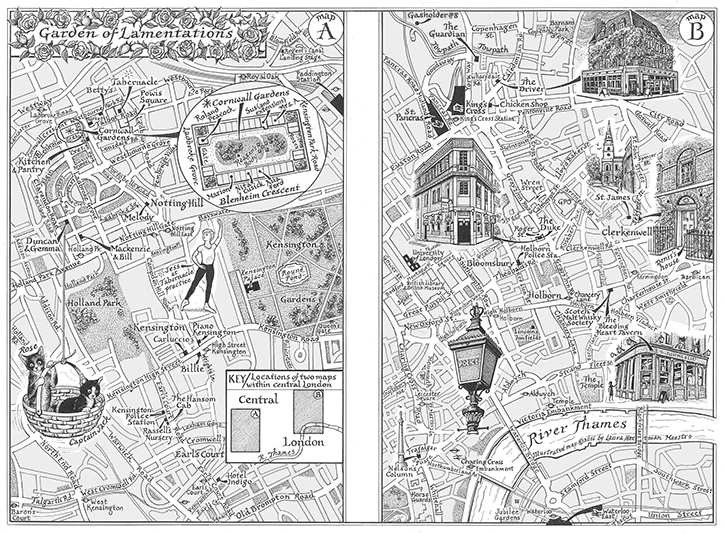
N.B. Darn it, I forgot to take a photo of the charming hand-drawn map which have become a typical bonus with Ms. Crombie’s hardback editions. I had to return the library book.

Here’s a sample of a map from a previous book, just so you can appreciate what I’m rattling on about.

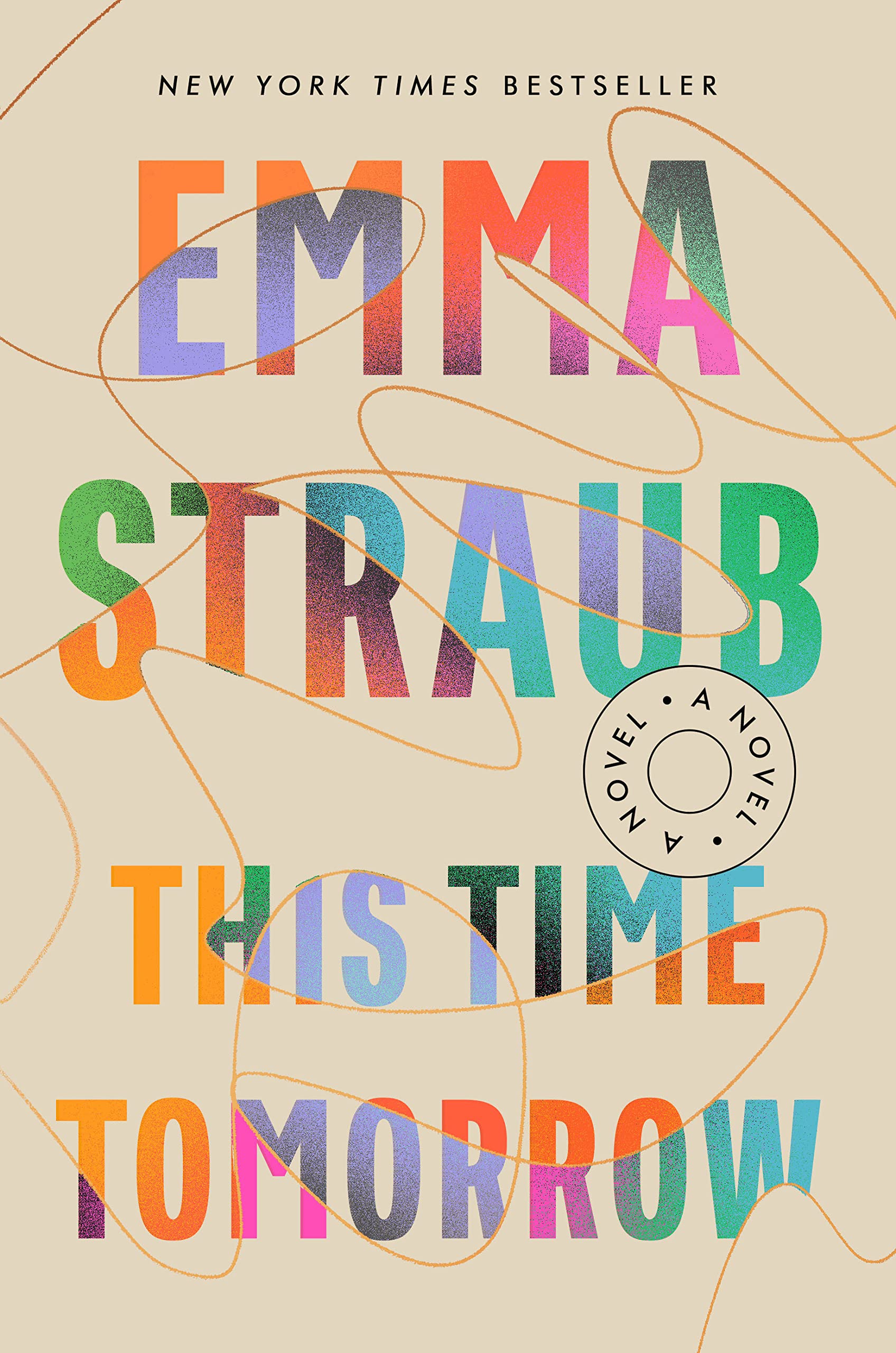
This Time Tomorrow by Emma Straub

My library holds list is always a surprise, as books I put on hold ages ago (and forgotten) unexpectedly become available. Such was the case with This Time Tomorrow, a time travel novel, which is a favorite genre here at Book Barmy. I’m definitely fascinated by the concept.

I dove right in…abandoning the other books on my teetering stack.

The novel opens with Alice on the eve of her 40th birthday taking stock of her life. Her career dreams have fizzled, her love life is empty, and her father is lying in a hospital bed, nearing the end of his life. Understandably, Alice has already begun grieving.

Grief was something that moved in and stayed. Maybe it moved from one side of the room to the other, farther away from the window, but it was always there.

After drinking way too much, Alice wakes up in 1996 on her 16th birthday. Her father, Leonard, is in the prime of his life — young, and vibrant in ways she failed to appreciate at 16. He is a famous author, having written his own highly successful time travel novel which is going to be made into a television program. This first time back in time (yes there will be others) Alice is star struck by her father and overwhelmed with love and regret.

When she was young, she’d thought he was old, and now that he was old, Alice realized how young he’d been. Perspective was unfair.

Alice herself is full of life and bubbly at 16. She also has the teenage angst and heartbreak which she can remedy with hindsight. She makes choices she was afraid of at 16 and corrects hurtful actions with her closest friend. It also turns out that high school is just as dreadful as she remembers. (Just imagine what would it be like to see and appreciate your world at 16, but with 40-year-old perspective.)

Now I’m going to stop for a moment here and reflect on the time travel genre. Usually these novels focus on the well known trope – the ‘do-over’; what can be changed, making different choices, and catastrophic events avoided – and there are good ones and bad ones.

Instead, Ms. Straub focuses on the smaller, more intimate human character changes. This Time Tomorrow lets Alice change things that are more subtle –to change the future for her father — helping her father get healthier, encouraging him to continue with a second novel, making sure she shows up at his publicity junkets. There’s also self-reflection for Alice, cultivating her own self-trust – and also sharpening her love and appreciation for what actually did happen. I found this so interesting and refreshingly different.

Alice discovers that she can return to this day again and again, always going back to her 16th birthday and then forward to age 40. Each trip back in time increases her awareness and appreciation of her past, as well as the joys in her present day.

Maybe that was the trick to life: to notice all the tiny moments in the day when everything else fell away and, for a split second, or maybe even a few seconds, you had no worries, only pleasure, only appreciation of what was right in front of you.

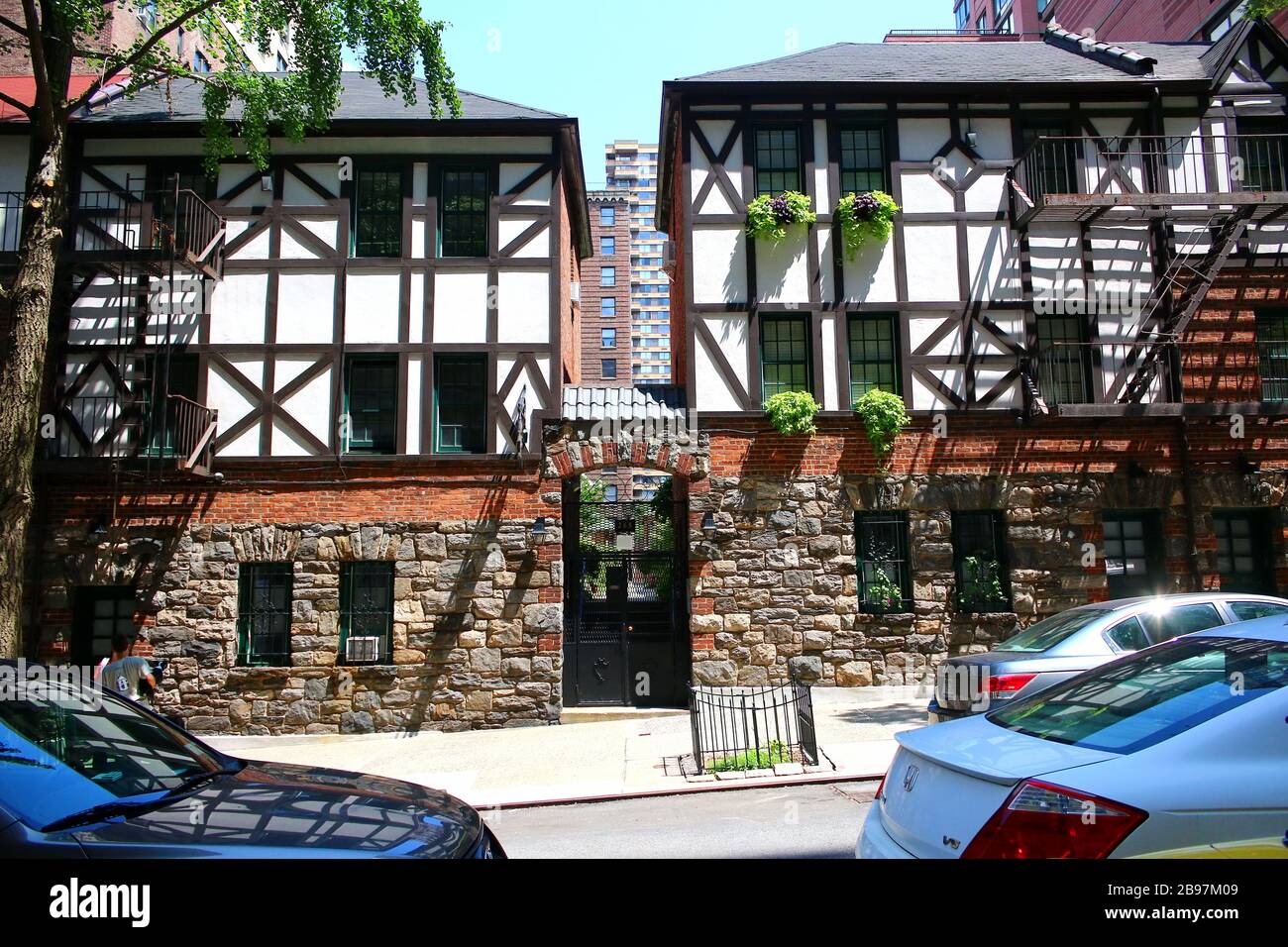
This highly readable novel is filled with lovely little gems that stick with the reader. There’s the never aging cat Ursula (named after Ursula Le Guin), the embarrassing teenage years, and the wonderful descriptions of New York City (shout outs throughout to Gray’s Papaya). I found the depiction of the gated Pomander Walk where young Alice and Lawrence live so charming, that I had to look it up. Here are some photos.

This is an engaging, hopeful and entrancing novel about about regret, about alternatives and above all about love with an ending that’s as satisfying as it is bittersweet. It choked me up and caused me to think about how the pieces of our lives can be rearranged, to form a new picture, simply by being mindful of the choices we make.

This Time Tomorrow reflects on the transitory nature of life and reminds us of the need to tangibly appreciate our closest friends and loved ones in the here and now. Alice gets a second chance to do this through time travel – a reminder to us mere mortals, stuck in the present time.

It’s not about the time. It’s about how you spend it. Where you put your energy.

This Time Tomorrow is very reminiscent of one of my favorite films – “About Time” which I also loved.

You can see it on Amazon Prime.

Where Coyotes Howl by Sandra Dallas

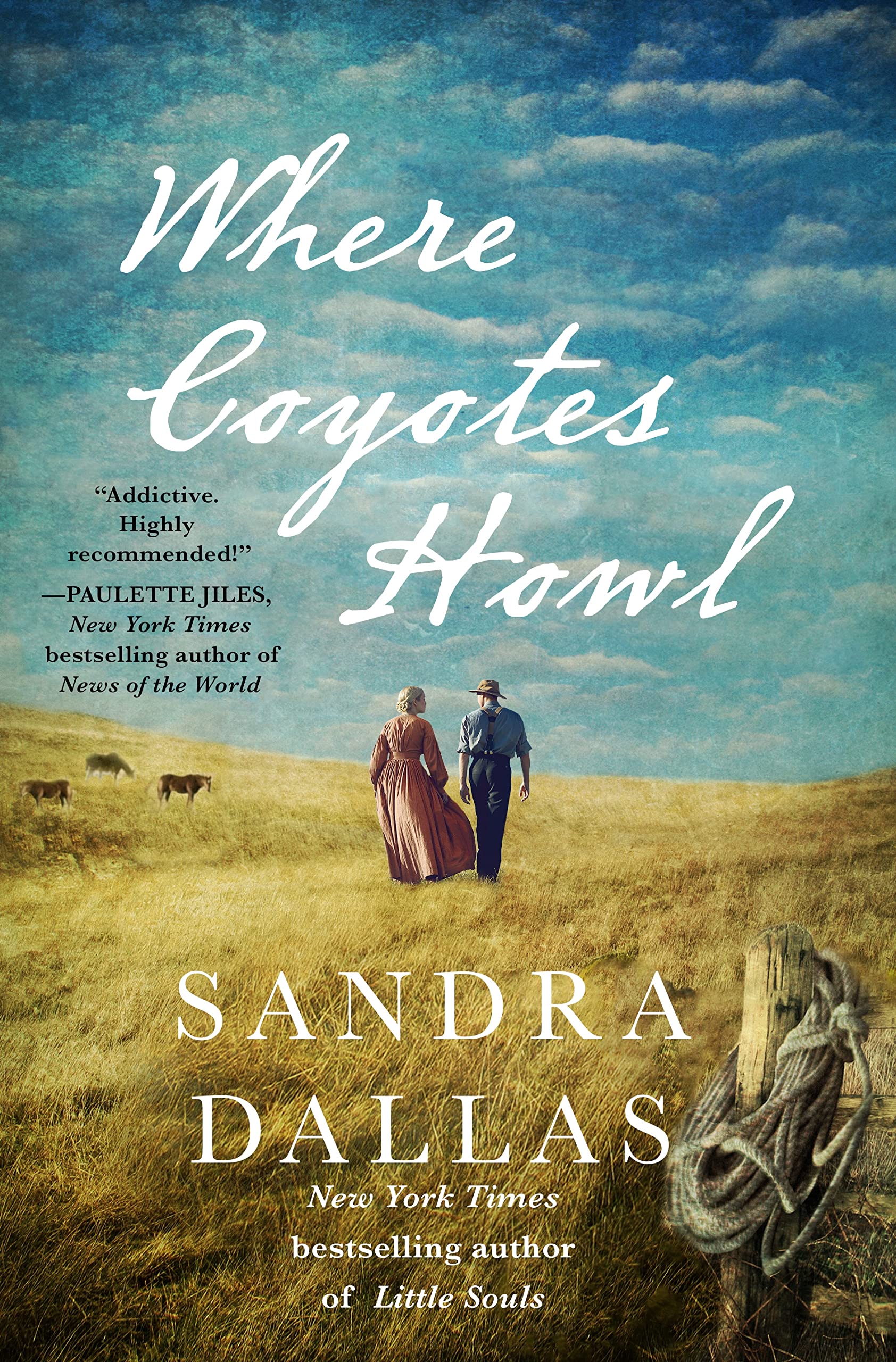
You may remember my earlier post about Ms. Dallas. I mentioned that I had read an advanced reading copy of her latest novel- Where Coyotes Howl. Well, it’s just been published, so now I can talk about it.

Ellen has accepted the post of the new schoolteacher in Wallace, a tiny Wyoming town in 1916. A monumental change from the big city she comes from– characterized by dusty streets, desolate surroundings, and seedy-looking men lounging under a tree “stove-up cowboys down on their luck”. She finds a room in a run-down shack with a poor woman and her abusive husband. Things are looking pretty grim for Ellen.

Until she meets Charlie – a young cowboy who is working on a nearby ranch. He is a good man and they begin to court and soon married.

Charlie owns a bit of land so he builds her a house made of wood because she abhors snakes which live in regular sod houses on the prairie.

Let me stop here for a moment, because I have to admit I don’t read romance and at this point in the novel it appears – whoops, this is indeed a tale of love – okay a love story – but stick with me, this is no Hallmark story.

Ellen leaves her teaching post, because living on the prairie requires that she keep the household going while Charlie is at the ranch.

It’s a full time, no more like 24/7, job. Keeping the snow from coming inside the house as the wooden structure couldn’t keep out the storms, and with water brought in barrels from a mile away were only a few of the challenges Ellen faces every day – not withstanding, the constant lonely nighttime howling of coyotes.

Ellen forms friendships with other women both in town and on the prairie, and these woman are just as strong as Ellen as they keep their husband’s land, cattle, and children sustained amidst the isolation and challenges.

Once again, as with all the other Ms. Dallas novels I’ve read, I became totally absorbed in this poignant, yet tragic story of two people’s lives during the early years of settlement in the west. Charlie and Ellen experience horrific weather, tragedies and extreme travails. But they survive – bound together by the love they had for each other.

The novel really shines with the descriptions of the landscape, the isolation, and severe hardship, but also the understanding and care for those facing even harder times. The sense of community was inspirational and I found their losses and those of their neighbors just heart breaking.

Where Coyotes Howl is highly recommended as absorbing historical fiction — but it’s really more than that. It’s also part western, and yes, part love story — but mostly it’s a full and gripping tale of early America and the struggles of it’s settlers.

Many thanks to St. Martin’s Press for an advanced digital review copy via Netgally.

The Sandcastle Girls by Chris Bohjalian

Here at Book Barmy headquarters, we are thrilled when a friend gives us a book they enjoyed, especially when it comes with their review and backstory.

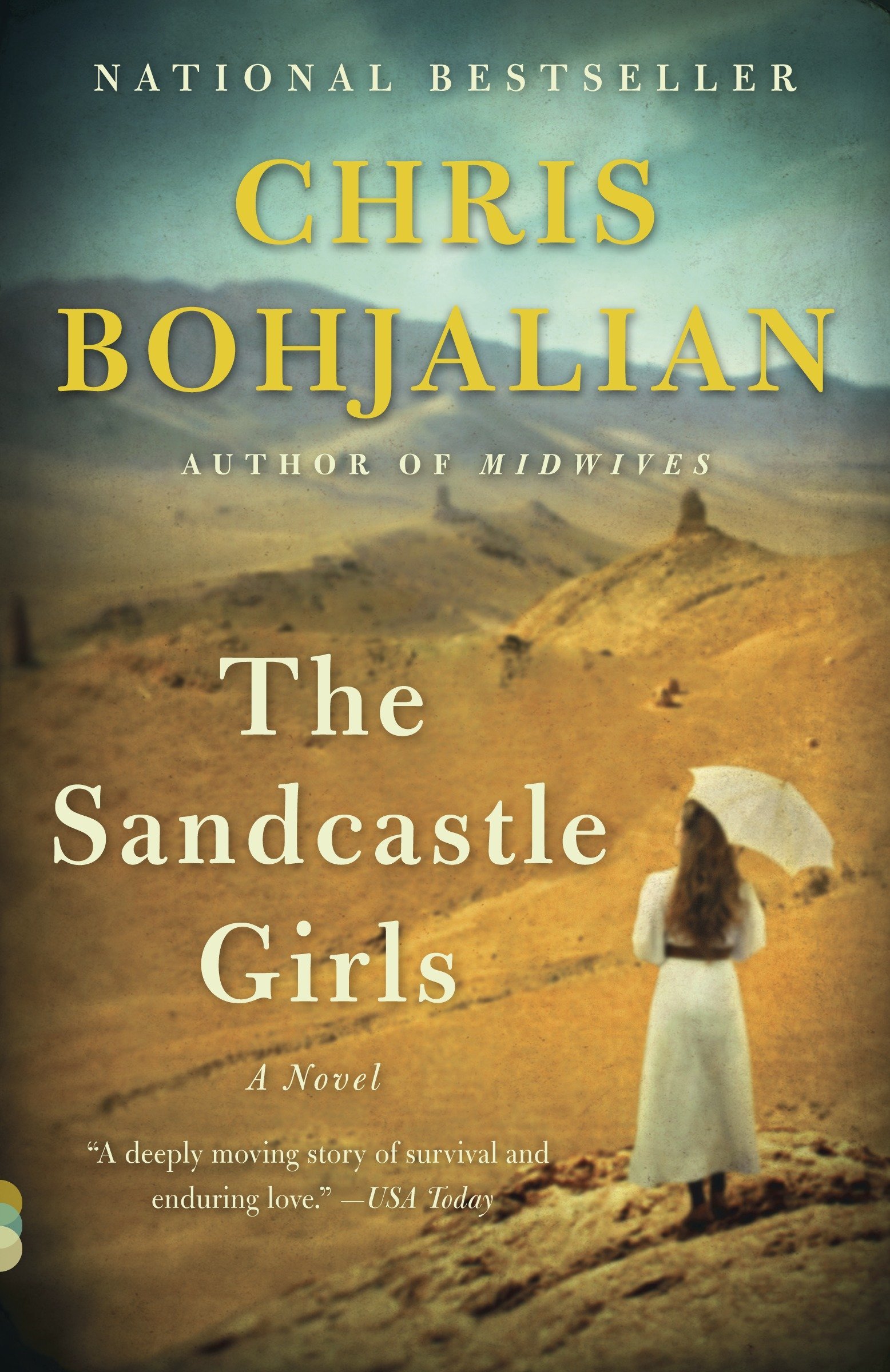
Such was the case with The Sandcastle Girls. My friend included a note with the book which told of her friendship with with a daughter of Armenian immigrants and how this story is about a little-known chapter of Middle-Eastern history.

Mr. Bohjalian has taken this little known, but horrific piece of history — the killing of thousands of Armenians by Turks in 1915, and used it as the backdrop for a love story of two very different people who meet in Aleppo (modern-day Syria) — the Ottoman Empire during World War I.

Aleppo served as a way-station for refugees who had already been marched through the desert with no food or water. Americans, Brits and others, including some Muslims, ministered to them and tried to save lives during the refugees’ brief respite before they were marched out into the desert yet again – to a camp which almost guaranteed their eventual deaths. In Aleppo, Elizabeth Endicott, is a young, wealthy woman from Boston who, with her father, is administering aid to the refugees. She falls in love with Armen Petrosian, an Armenian engineer searching for his wife and infant daughter who have been rounded up by the Turks.

The Sandcastle Girls interweaves of the story of Elizabeth and her father Silas, along with others in Syria to aid the refugees along with the secondary story of their granddaughter Laura who is researching information about her grandparents.

In the early pages of this novel, Laura sets the stage for this undiscovered story of her grand-parents:

Nineteen-fifteen is the year of the Slaughter You Know Next to Nothing About. If you are not Armenian, you probably know little about the deportations and the massacres: the death of a million and a half civilians. Meds Yeghern. The great crime. It’s not taught in school, and it’s not the sort of thing most of us read before going to bed. And yet to understand my grandparents, some basics would help. (Imagine and oversized paperback book with a black-and-yellow cover. The Armenian Genocide for Dummies.)

Through vivid detail the author takes us to the dry, harsh deserts of death, and into the protected circle of the American compound in Aleppo. From there we are brought back to America, and the pieces of the family puzzle come together through long forgotten details, sadness, love and finally understanding.

Mr. Bohjalian gives us a well-paced story line with his characters’ stories and their relationships. However, I found that the sections detailing the actual history of war, were interesting, but slow reading — I had to force myself to carry on and often put it away to read something else.

That is not the only reason why it has taken me so long to finish this book, this is a difficult and oftentimes disturbing book about the atrocities and horrors of this great crime — a genocide that is still impossible to discuss in today’s Turkey, where denial is the rule.

In a burst of resolution the other evening, I finally finished it and have to say The Sandcastle Girls is well worth reading even with the troubling content. Such historical fiction like Mr. Bohjalian’s is important – because it reaches readers like myself who learn of the past through stories told.

N.B. I wish I were a reader of history tomes, I want to be, but the David McCulloughs sit on my shelf, unread to this day. Maybe, like poetry, I will venture in…

The Physick Book of Deliverance Dane

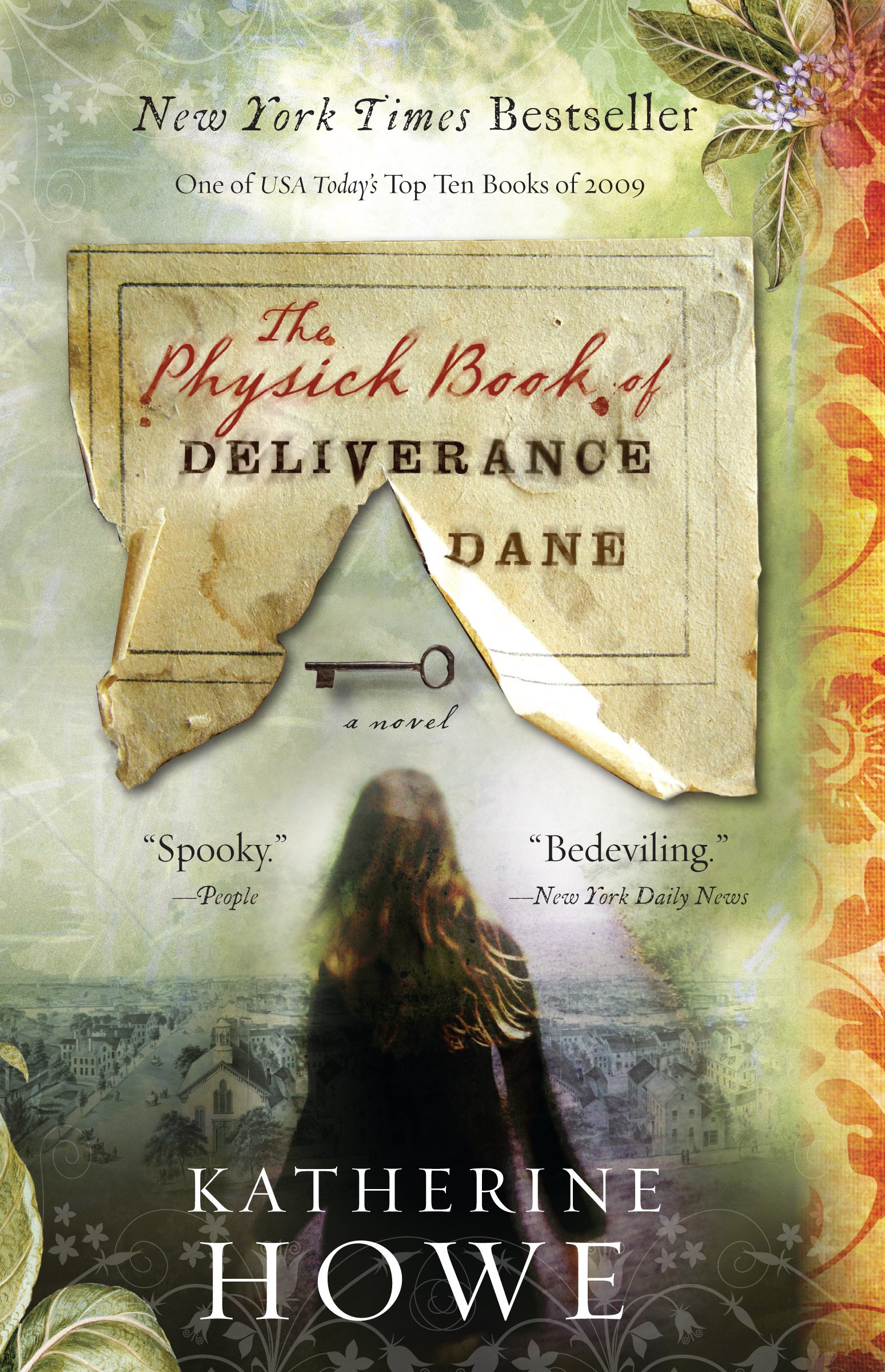
This book has been on my shelf for years, I pulled it down the other day, trying to remember where I got it (I can’t). and decided to give it a go.

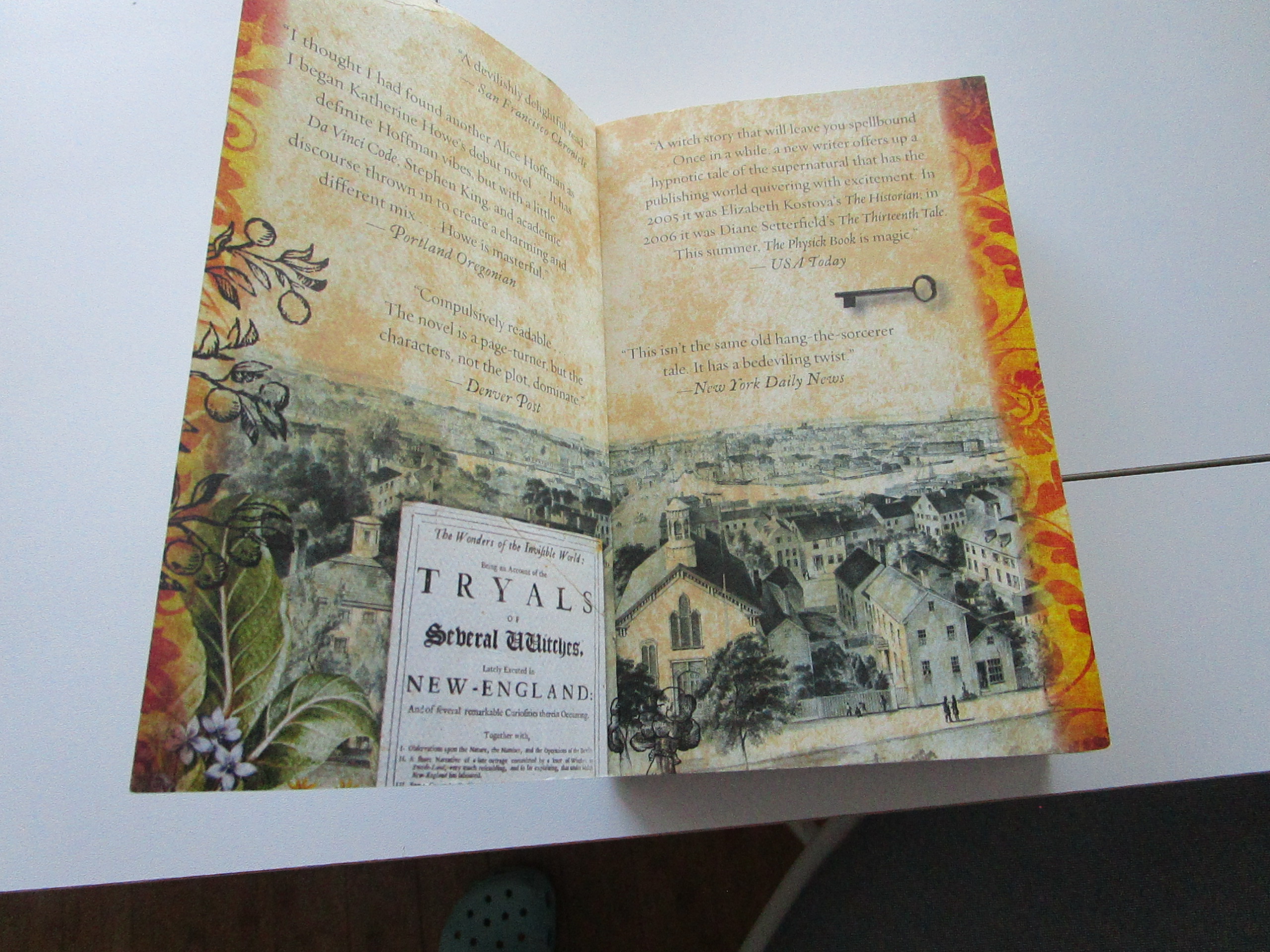
Its a beautifully printed book with deckled edges and a stylish cover with an illustration of colonial Salem, Massachusetts inside. One of those books that is a pleasure to have in the hand.

From the book blurb:

Harvard graduate student Connie Goodwin needs to spend her summer doing research for her doctoral dissertation. But when her mother asks her to handle the sale of Connie’s grandmother’s abandoned home near Salem, she can’t refuse. As she is drawn deeper into the mysteries of the family house, Connie discovers an ancient key within a seventeenth-century Bible. The key contains a yellowing fragment of parchment with a name written upon it: Deliverance Dane. This discovery launches Connie on a quest–to find out who this woman was and to unearth a rare artifact of singular power: a physick book, its pages a secret repository for lost knowledge.

I loved the concept of a physick book (a book of herbal remedies aka a spellbook) being uncovered in modern times with flashbacks to the Salem Witch trials of 1692. There’s intrigue — stir in sinister people who want to acquire the book, and you’ve got a potential of a historical mystery adventure to enjoy.

The author, Katherine Howe, is descended from an accused witch in Salem and had another relation who died there — so she is ideally qualified to create such a story.

I gobbled up the beginning — the set up was intriguing, an old crumbling house, Connie, a PhD student doing research on the Salem witch trials, and discovering the story of Deliverance Dane, an herbal healer in Salem, 1692 — who, of course was suspected of being a witch.

Then just over 100 pages, the plot become light-weight and the book ventures into a romance. Connie meets and falls for Sam, a colonial preservationist and his work could have been a fascinating component to her research – but instead he is a shallow, undeveloped character.

Also annoying, while Connie is searching for the psysick book the clues become blatantly obvious. This reader found it hard to believe that an American colonial history PhD candidate wouldn’t be oblivious to these clues and be much further ahead in her quest. Then as I was still turning the pages, I laughed out loud when Connie has the revelation that her real name was Constance. Did she really not know the origins of her nickname of Connie?
Ms. Howe’s attempts to have some of the characters speak with a Boston accent are fingernails-on-a-chalk-board irritating. And the house — the crumbling house — well Connie doesn’t do anything to clean up this vermin infested house – yet she seems to keep living in it throughout.

Even with all these faults, I did find the chapters about Deliverance and her ordeal in early Salem interesting. Those parts of the book give a picture of the harshness of colonial life, and the level of ignorance and superstition that prevailed.

Full disclosure, I did not finish this book which I really wanted to like, but it just fell apart for me. The Psysick Book of Deliverance Dane was published back in 2009 and is the author’s first novel with first-novel flaws. I admire any author’s struggles to write, complete, and finally get a book published. Ms. Howe has since written several other novels since this one — it seems to me she has potential. I may try a more recent book to see how she has grown as a writer.